This is the current affairs 6 May 2026. Here are questions and answers of daily current affairs for better preparation of competitive exams for government jobs.
1. Who is the President of the 80th session of the United Nations General Assembly (UNGA) who arrived in India for a visit in May 2026?
a. Roger Russell
b. Wokar Mannan
c. Peter Enleva
d. Annalena Baerbock
Answer: d. Annalena Baerbock
– She visited New Delhi on 27–28 April 2026.
– She previously served as Germany’s Foreign Minister from 2021 to 2025.
– She is the fifth woman in the world to preside over the UNGA.
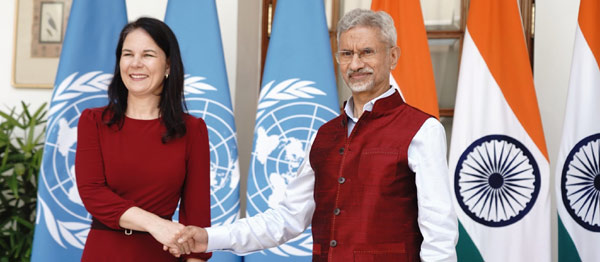
Agenda of the India Visit
– Annalena Baerbock met India’s External Affairs Minister Dr. S. Jaishankar. During the meeting, discussions were held on issues such as global governance, multilateralism, and reforms in the United Nations.
– She participated in a special session with representatives of India’s Ministry of Electronics and Information Technology (MeitY). The objective was to share India’s experiences regarding the regulation of Artificial Intelligence (AI) and the use of new technologies in governance.
– She emphasized the need for reforms in global institutions in the context of the ‘UN80’ initiative (80th anniversary of the United Nations), so that they can address present-day challenges effectively.
– During her visit, she paid floral tribute to Mahatma Gandhi at Rajghat, symbolizing her commitment to peace and global cooperation.
– After completing her India visit, she traveled to China on 29–30 April 2026, where her objective was to discuss the global order and the importance of the UN Charter.
—————-
2. Which country raised objections with India and China regarding the Kailash Mansarovar Yatra via the Lipulekh route, claiming Lipulekh as its own territory?
a. Bangladesh
b. Myanmar
c. Sri Lanka
d. Nepal
Answer: d. Nepal
Lipulekh, Kalapani, and Limpiyadhura
– These three regions are part of Pithoragarh district in the Indian state of Uttarakhand.
– This area is highly strategic due to its proximity to China.
– Since India is positioned at a higher altitude here while China is at a lower level, in case of war, India could gain a strategic advantage from this location.
– The Kailash Mansarovar Yatra through the Lipulekh route is scheduled to begin in July.
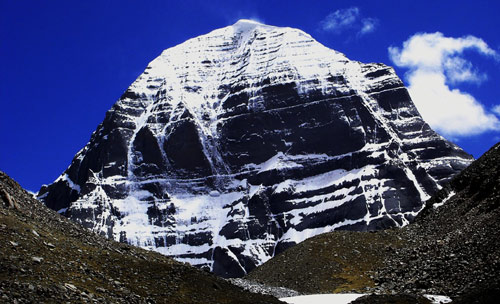
About Kailash Mansarovar
– Kailash Mansarovar is one of the holiest religious sites for Hindus.
– Mount Kailash is believed to be the sacred abode of Lord Shiva and Goddess Parvati and is considered to be around 30 million years old.
– The mountain is also highly revered by followers of Jainism, Buddhism, and Tibetan traditions.
– Every Indian citizen requires a visa to undertake this pilgrimage, as Mount Kailash is located in Tibet, which is under Chinese control.
Routes to Kailash Mansarovar
– Via Lipulekh Pass (Uttarakhand): takes about 24 days
– Via Nathu La Pass (Sikkim): takes about 21 days
– Via Nepal (Shigatse route in Tibet): takes about 13 nights and 14 days
Agreements for the Yatra
1) In May 2013, India and China signed the first agreement for the Kailash Mansarovar Yatra via the Lipulekh Pass route.
2) In September 2014, a second agreement was signed for the route via Nathu La Pass.
Note:
– An earlier India-China agreement in 1954 had permitted this pilgrimage.
– The yatra was suspended in 1959 due to the Tibetan uprising and again in 1962 due to the India-China war.
– It resumed in 1981 after a new agreement between India and China.
When the Yatra Was Suspended
– The Kailash Mansarovar Yatra had been suspended since 2020.
– In June 2020, tensions arose between India and China (Doklam-related developments).
– The first wave of COVID-19 also began in March 2020.
– A decision was taken in 2025 to resume the yatra.
Nepal’s Objection
– In May 2026, the Government of Nepal urged Indian pilgrims not to undertake the Kailash Mansarovar Yatra via the Lipulekh route.
– Nepal’s Ministry of Foreign Affairs (under the government of Balen Shah) issued a statement on 4 May 2026, citing the Treaty of Sugauli (1816), according to which – Limpiyadhura, Lipulekh, and Kalapani belong to Nepal.
– Nepal stated that it had conveyed its objections and concerns diplomatically to both India and China.
– Previously, Nepal had issued banknotes depicting Lipulekh, Kalapani, and Limpiyadhura as part of its territory, even though these areas are under India’s control.
Nepal’s Map Dispute
– According to the Treaty of Sugauli (1816) between the British and the King of Nepal, the Mahakali River serves as the international boundary between India and Nepal.
– However, like many rivers, the Mahakali has multiple streams.
– India considers the stream near Lipulekh as the boundary.
Nepal argues that the river originates from Limpiyadhura, and that stream should define the boundary.
– The dispute resurfaced in November 2019 when India released a revised political map after reorganizing Jammu & Kashmir and Ladakh.
– In 2020, then Prime Minister K. P. Sharma Oli, considered pro-China, raised the issue, and Nepal’s Parliament passed a new map.
– Before 2020, Nepal’s own maps showed these three areas as part of India.
– The disputed region is about 400 square kilometers, and India currently exercises actual control over it.
Nationalism in Nepal
– Just as the idea of “Akhand Bharat” exists in India, some political parties in Nepal promote the concept of “Greater Nepal.”
– They claim that Uttarakhand, parts of Himachal Pradesh, and Sikkim belong to Nepal.
– When the new map was passed in 2020, people in Nepal celebrated it like a festival, believing it to be a step toward victory.
– China’s role in the entire matter is considered highly suspicious.
India’s Response
– Official spokesperson of the Ministry of External Affairs, Randhir Jaiswal, stated:
– India’s position has always been clear and consistent.
– Lipulekh Pass has been an established route for the Kailash Mansarovar Yatra since 1954.
– India rejected Nepal’s territorial claims as unfounded and not based on historical evidence.
– India expressed willingness to resolve pending boundary issues through dialogue and diplomacy.
————–
3. Who bought the IPL franchise Rajasthan Royals?
a. Lakshmi Niwas Mittal
b. Aditya Mittal
c. Adar Poonawalla
d. All of the above
Answer: d. All of the above
– The IPL franchise Rajasthan Royals has been acquired by Lakshmi Niwas Mittal and Aditya Mittal, along with Adar Poonawalla as a partner.
– The estimated enterprise value of the deal is around 1.65 billion US dollars (approximately ₹15,660 crore).
– This is the second-largest deal in IPL history.
– After completion, the Mittal family will hold approximately 75% stake, Adar Poonawalla about 18%, and the remaining 7% will remain with Manoj Badale and other existing investors.
– The deal is subject to regulatory approvals from the BCCI, IPL Governing Council, and other authorities.
– It is expected to be completed by September 2026.
Lakshmi Mittal
– Born in Rajgarh, Churu
– Ranked 72nd richest in India and 9th in the world
– Net worth: $24.98 billion (approx. ₹2.26 lakh crore)
– In 2019, acquired Essar Steel with Nippon Steel for ₹59,000 crore
– In 2021, handed over the CEO position to his son Aditya Mittal
– Executive Chairman of ArcelorMittal
Adar Poonawalla
– Owner of Serum Institute of India
————–
4. In which city and state is the Bargi Dam located, where a cruise carrying tourists sank on April 30, 2026?
a. Bhopal, Madhya Pradesh
b. Jabalpur, Madhya Pradesh
c. Tehri, Uttarakhand
d. Akola, Maharashtra
Answer: b. Jabalpur, Madhya Pradesh
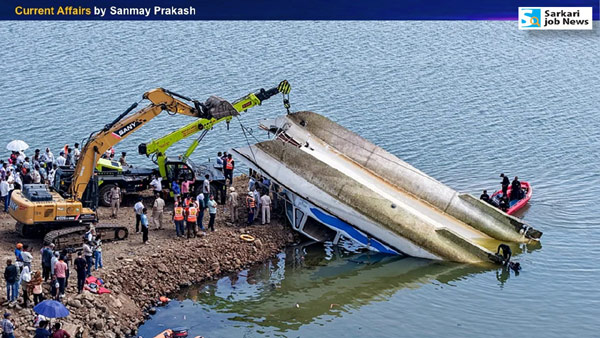
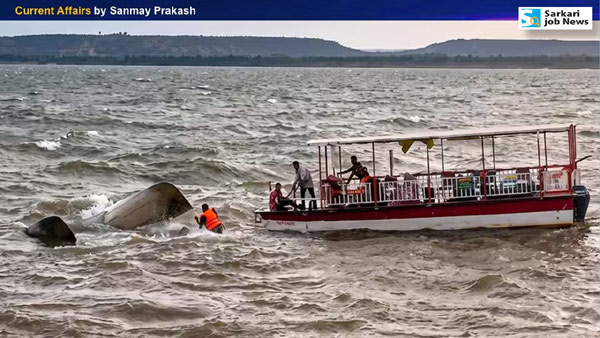
– The incident occurred in Jabalpur, Madhya Pradesh, on the evening of April 30, 2026.
– Around 39 tourists and 2 crew members were on board the cruise.
– The accident occurred approximately 300 meters from the dam shore, at a depth of about 20 feet.
– 9 deaths have been confirmed; some people managed to swim to safety.
– The cause of the accident is believed to be a sudden storm.
– Tourists were not wearing life jackets at the time of the incident. When the cruise began sinking, staff started distributing life jackets.
– Chief Minister Mohan Yadav stated that due to negligence, the services of cruise pilot Mahesh Patel, helper Chhotelal Gond, and ticket counter in-charge Brijendra were terminated immediately.
About the Cruise
– Built in 2006
– Capacity: 60 passengers
– Another cruise is currently non-functional
Lack of Time to Wear Life Jackets
– Pilot Mahesh stated that he has been working for 10 years.
– All safety equipment was available, but the storm struck so suddenly that passengers did not get time to wear life jackets.
—————
5. Which institution in India developed the Cell Broadcast Alert System, known as the ‘SACHET Emergency Alert System’?
a. ISRO
b. DRDO
c. C-DOT
d. NIC
Answer: c. C-DOT
‘SACHET Emergency Alert System’
– It is an indigenous, cell broadcast-based system developed by the Government of India.
– It was developed by the Centre for Development of Telematics (C-DOT) in collaboration with the National Disaster Management Authority (NDMA).
– The Department of Telecommunications (DoT) conducted a nationwide test on May 2, 2026.
– During the test, smartphones received a loud beeping sound and vibration along with a pop-up message labeled “Extremely Severe Alert.”
What is Cell Broadcast (CB) Technology?
– It allows sending messages simultaneously to all mobile phones in a specific geographical area.
– Developed in the early 1990s by the European Telecommunications Standards Institute (ETSI).
– In India, it has been indigenously developed and tested in May 2026.
– It is a “one-to-many” technology capable of reaching millions simultaneously.
– It does not require mobile numbers, ensuring user privacy.
SMS vs Cell Broadcast
– SMS: one-to-one; CB: one-to-many
– SMS may be delayed in heavy traffic; CB works instantly
– SMS cannot target precise areas; CB can
– SMS may be missed in silent mode; CB generates loud alerts even in silent mode
– SMS requires numbers; CB does not
Importance for India
– Helps in early warning for disasters like cyclones, floods, heatwaves, and landslides
– Reduces loss of life and property
– Supports multiple languages
– Promotes technological self-reliance
– Aligns with the UN’s “Early Warnings for All” initiative
Global Context
– Used in over 30 countries
– Japan: J-Alert (2007)
– USA: Wireless Emergency Alerts (2012)
– EU: EU-Alert system
—————
6. Who is the host of the 2026 Women’s T20 World Cup?
a. Australia
b. England and Wales
c. New Zealand
d. India
Answer: b. England and Wales
– Tournament duration: 12 June to 5 July 2026
– India’s captain: Harmanpreet Kaur; vice-captain: Smriti Mandhana
– Total teams: 12
Most Successful Team
– Australia is the most successful team with six titles
– England won the first edition in 2009
– West Indies won in 2016
—————
7. When is the International Day of the Midwife celebrated?
a. 2 May
b. 3 May
c. 4 May
d. 5 May
Answer: d. 5 May
– Theme 2026: “One Million More Midwives”
– Established in 1992 by the International Confederation of Midwives (ICM)
– Recognizes the contribution of midwives to maternal and newborn health
– Midwives provide care during pregnancy, childbirth, and postnatal periods
– They also act as community leaders and emergency responders, especially during crises
– They are considered defenders of human rights and champions of reproductive justice
—————
8. When is World Hand Hygiene Day celebrated?
a. 2 May
b. 3 May
c. 4 May
d. 5 May
Answer: d. 5 May
– Initiated by the World Health Organization (WHO) in 2008
– Observed annually to promote safe hand hygiene practices in healthcare settings
– Aims to raise awareness about preventing infections and diseases
—————-
9. The President of which country, Emmanuel Macron, announced his retirement from politics after completing his term?
a. Germany
b. France
c. Poland
d. Finland
Answer: b. France
– Emmanuel Macron announced he will retire from politics after completing his second term in 2027
– He stated he has no intention of remaining in public life after leaving office
– In 2017, he became France’s youngest President at the age of 39
– He was re-elected in 2022
– The French Constitution does not allow a third consecutive presidential term
– The presidential term in France is five years
—————-
10. Under the ‘SAARC Currency Swap Framework 2024–27’, which country was provided ₹30 billion in May 2026?
a. Iran
b. Vietnam
c. Nepal
d. Maldives
Answer: d. Maldives
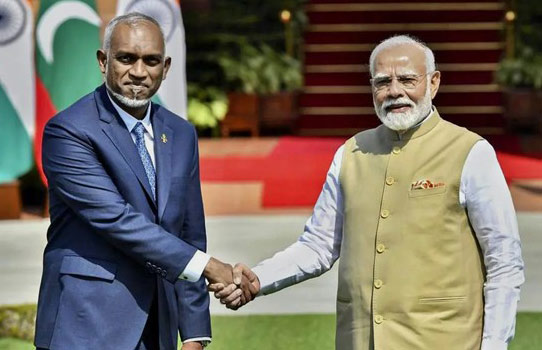
– On April 24, 2026, India approved a ₹30 billion (₹3,000 crore) swap facility for Maldives
– The objective is to maintain financial stability and support foreign exchange reserves
– It is part of India’s “Neighborhood First” policy
Currency Swap Explained Simply
– Maldives was facing a shortage of foreign currency like the US dollar
– India provided ₹30 billion so it could continue its financial operations
– This arrangement is called a “currency swap”
Why Currency Swap?
– To prevent economic crisis
– Helps Maldives pay for imports
– Maldives had repaid earlier loans on time, increasing India’s trust
Benefits for India
– Strengthens the Indian rupee in international trade
Improves bilateral relations with Maldives
Under Which Scheme?
– India maintains a fund for SAARC countries
– Under RBI’s SAARC Currency Swap Framework 2024–27, ₹250 billion (₹25,000 crore) is allocated under the INR window
– It acts as an emergency fund for neighboring countries like Nepal, Bhutan, and Maldives
– This assistance helps improve Maldives’ economic condition
PDF Download: Click here