This is the current affairs 1 to 3 July 2026. Here are questions and answers of daily current affairs for better preparation of competitive exams for government jobs.
1. In which country did India launch the relief operation ‘Operation Amistad’ following a devastating earthquake?
a. Türkiye
b. Venezuela
c. Nepal
d. Philippines
Answer: b. Venezuela
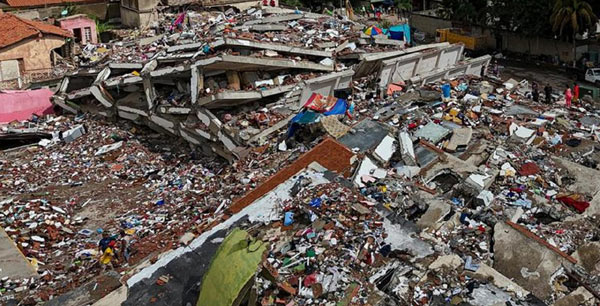
– On the evening of June 24, 2026, two powerful earthquakes of magnitude 7.2 and 7.5 struck Venezuela.
– It was one of the strongest earthquakes to hit Venezuela in more than a century.
– The death toll exceeded two thousand, while thousands of people were injured.
– The country’s infrastructure was severely devastated.
What is Operation Amistad?
– The name is derived from the Spanish word “Amistad,” which means Friendship.
– The name reflects India’s solidarity with the South American nation during its time of crisis.
– According to the Ministry of External Affairs, both countries have enjoyed long-standing cordial relations and have shared similar views on major international, political, and economic issues. Along with strengthening bilateral relations, they have also cooperated on multilateral platforms.
Humanitarian Relief
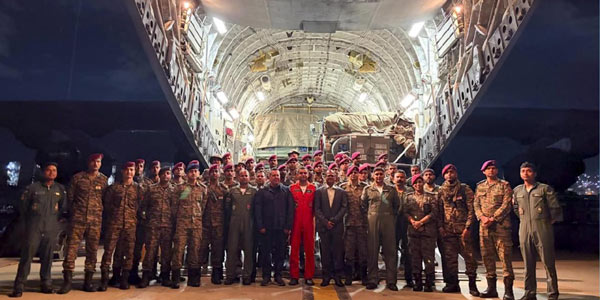
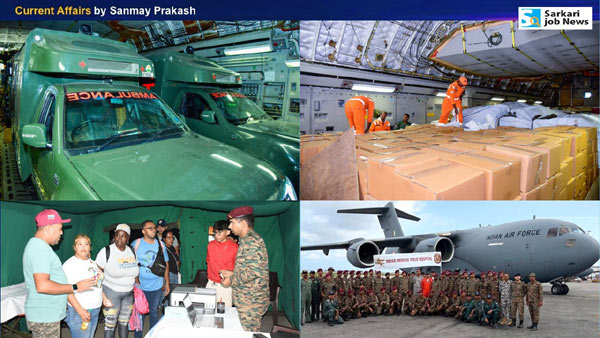
– Two Indian Air Force C-17 aircraft departed for Venezuela on the morning of June 26, carrying humanitarian assistance along with a 41-member rescue team to support relief and rescue operations.
– The relief material included a self-contained Indian medical task force, an Indian Army field hospital unit equipped with HADR pallets and medicines, 30 tonnes of relief material, six tonnes of medicines and medical equipment, and two BHISHM Cube portable hospitals.
Previous Disaster Relief Operations Conducted by India
– Operation Amistad: Relief operation in earthquake-hit Venezuela (June 2026)
– Operation Sagar Bandhu: Relief operation in Sri Lanka after Cyclone Ditwah (2025)
– Operation Brahma: Relief operation in Myanmar after the earthquake (2025)
– Operation Dost: Relief operation in Türkiye after the earthquake (2023)
– Operation Maitri: Relief operation in Nepal after the earthquake (2015)
– Operation Rainbow: Relief operation in Sri Lanka after the 2004 tsunami.
– Operation Castor: Relief operation in the Maldives during the 2004 tsunami.
Some Rescue Operations
– Operation Sindhu (June 2025): To bring Indian citizens back from Iran amid the conflict between Iran and Israel.
– Operation Indravati (2024): During criminal gang violence in Haiti.
– Operation Ajay (2023): During the Hamas–Israel war.
– Operation Kaveri (2023): During the civil war in Sudan.
– Operation Ganga (2022): After the Russian attack on Ukraine.
– Operation Rahat (2015): During the conflict in Yemen.
————–
2. In which South American country did two powerful earthquakes with magnitudes of 7.2 and 7.5 occur in June 2026, causing significant damage to nationwide infrastructure?
a. Chile
b. Brazil
c. Venezuela
d. Colombia
Answer: c. Venezuela
– On the evening of June 24, 2026, two powerful earthquakes measuring 7.2 and 7.5 struck Venezuela.
– It was one of the strongest earthquakes to hit Venezuela in more than a century.
– The death toll exceeded two thousand, while thousands of people were injured.
– The country’s infrastructure was severely devastated.
Impact of Earthquake Magnitudes
Richter Scale – Impact
0 to 1.9: Detected only by seismographs.
2 to 2.9: Slight vibration.
3 to 3.9: Feels like a truck passing nearby.
4 to 4.9: Windows may break, and objects hanging on walls may fall.
5 to 5.9: Heavy objects such as sofas and trunks may move.
6 to 6.9: Building foundations may crack, and upper floors may suffer damage.
7 to 7.9: Buildings collapse, and underground pipelines burst.
8 to 8.9: Buildings and large bridges collapse.
9 or above: Massive devastation. The ground visibly shakes, and there is also a risk of a tsunami.
Venezuela
– Capital: Caracas
– President: Nicolás Maduro (imprisoned in a U.S. prison)
– Acting President: Delcy Rodríguez
– Currency: Venezuelan Bolívar
– Neighbouring Countries: Colombia, Brazil, Guyana, Trinidad and Tobago
————–
3. Name the Foreign Secretary whose tenure has been extended by the Central Government for one year (until July 14, 2027)?
a. Vinay Kwatra
b. S. Jaishankar
c. Harsh Vardhan Shringla
d. Vikram Misri
Answer: d. Vikram Misri
– The Appointments Committee of the Cabinet (ACC) has extended his tenure by one year beyond July 14, 2026, until July 14, 2027, under Fundamental Rule 56(d).
– This rule allows the Government to extend the service of certain key officials beyond the retirement age of 60 years.
– The decision is significant because India will host the BRICS Summit in New Delhi in September 2026, and the Government wanted to maintain continuity in its diplomatic strategy during this period.
– It also covers the ongoing trade negotiations with the United States, efforts to finalize the India–EU Free Trade Agreement (FTA), and preparations for major international events, such as the upcoming BRICS Summit and the postponed India–Africa Forum Summit.
About Vikram Misri
– Vikram Misri, a 1989-batch Indian Foreign Service (IFS) officer, is the only diplomat in the country to have served as the Private Secretary to three different Prime Ministers (Inder Kumar Gujral, Dr. Manmohan Singh, and Narendra Modi).
– Vikram Misri assumed the office of Foreign Secretary on July 15, 2024. He succeeded Vinay Kwatra.
————–
4. Name the Chairperson of the Central Board of Direct Taxes (CBDT) whose tenure has been extended until December 2026?
a. Vinod Agrawal
b. Ayaj Vikram
c. Ravi Agrawal
d. Anand Patel
Answer: c. Ravi Agrawal
– The Appointments Committee of the Cabinet (ACC) approved the extension.
– Ravi Agrawal’s tenure has now been extended until December 31, 2026.
– He is a 1988-batch Indian Revenue Service (IRS) officer.
What is the Central Board of Direct Taxes (CBDT)?
– CBDT: Central Board of Direct Taxes.
– It is a part of the Department of Revenue under the Ministry of Finance, Government of India.
– CBDT is the administrative authority of the entire Income Tax Department and supervises its functioning.
– It is the apex body in India responsible for all matters related to Direct Taxes, such as Income Tax and Corporate Tax.
– Its functions include formulating policies, rules, and laws relating to direct taxes, ensuring the proper implementation of the Income Tax Act across the country, and preventing tax evasion.
– CBDT has the status of a Statutory Body under the Central Boards of Revenue Act, 1963.
– It consists of one Chairperson, who is an officer of the rank of Special Secretary to the Government of India.
————–
5. The Central Government implemented the VB-G RAM G Act, 2025, effective from July 1, 2026. Which law has it replaced?
a. MGNREGA
b. Jai Shri Ram Bill
c. Jaymaha Rozgar
d. None of these
Answer: a. MGNREGA
– VB-G RAM G Act, 2025: Viksit Bharat – Rozgar Evam Aajeevika Mission (Grameen) (VB-G RAM G) Act, 2025.
– To ensure smooth implementation from the very first day, the Central Government made an interim allocation of approximately ₹95,692.31 crore to the States and Union Territories.
Major Changes
– Extension of Employment Guarantee Days: Under MGNREGA, every rural household was guaranteed 100 days of employment. Under the VB-G RAM G Act, this has been increased to 125 days.
– “Pause” in Employment Guarantee During the Agricultural Season: For the first time, the Act provides for a 60-day pause in the employment guarantee during the major agricultural seasons of sowing and harvesting to ensure the availability of rural labour for farming. During this period, work under the employment scheme will not be provided. This is intended to ensure labour availability for farmers.
– Centre–State Financial Partnership: Under MGNREGA, the Central Government bore the entire wage expenditure. Under the VB-G RAM G Act, a 60:40 financial sharing model has been introduced for regular States and a 90:10 model for the North-Eastern and Himalayan States.
– Financial Mechanism: Instead of being controlled through budget expenditure and the “Labour Budget,” funding will now be regulated on the basis of a predetermined “Standard Allocation” for each State.
– Weekly Wage Payment: The proposed Act provides for weekly wage payments, unlike MGNREGA, under which wages were to be paid within 15 days.
Possible Criticisms / Challenges
– The 60-day employment pause may conflict with the basic principle of employment guarantee, as the guarantee will no longer remain available throughout the year.
– The financial burden on States may increase, especially for resource-constrained States.
– An analysis by The Hindu found that States will have to spend at least ₹51,000 crore in 2026–27, whereas they spent around ₹7,700 crore in 2024–25.
————–
6. Japanese Prime Minister Sanae Takaichi visited India in July 2026 to participate in which edition of the India–Japan Annual Summit?
a. 12th
b. 14th
c. 15th
d. 16th
Answer: d. 16th
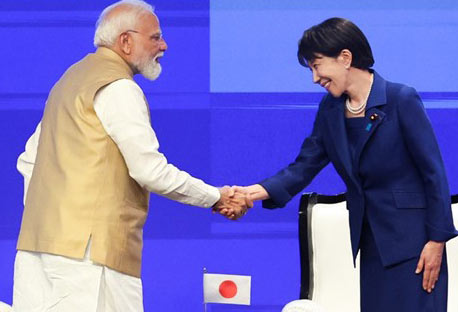
– Japanese Prime Minister Sanae Takaichi visited India from July 1 to 3, 2026.
– This was her first official visit to India after becoming Prime Minister.
– She participated in the 16th India–Japan Annual Summit held in New Delhi.
– Earlier, the 15th India–Japan Annual Summit was held in Japan, which Prime Minister Narendra Modi attended during his visit to Tokyo in August 2025.
Japan
– Capital: Tokyo
– Emperor: Naruhito
– Currency: Japanese Yen
————–
7. When is National Doctor’s Day celebrated?
a. July 1
b. June 30
c. June 28
d. June 27
Answer: a. July 1
– This day is celebrated in honour of Dr. Bidhan Chandra Roy, a physician and the second Chief Minister of West Bengal.
– He was born on July 1, 1882, in Bihar, and also passed away on the same date in July 1962.
– Dr. Bidhan Roy served as the Chief Minister of West Bengal for 14 years.
– He made significant contributions to the field of medicine.
– He is also known as the Architect of Bengal for his visionary leadership.
– He was awarded the Bharat Ratna in 1961.
– National Doctor’s Day has been observed in India since 1991.
————–
8. When is World UFO Day observed?
a. July 2
b. July 1
c. June 30
d. June 29
Answer: a. July 2
– UFO stands for Unidentified Flying Object and is also commonly known as a flying saucer.
– Amid the ongoing debate over the existence of UFOs, World UFO Day has been observed since 2001.
– Its objective is to encourage worldwide discussion and public research on UFOs and the possible existence of aliens.
– Any object seen in the sky that is not made by humans and cannot be explained by any natural theory is generally referred to as a UFO.
– In 1953, the United States Air Force officially adopted the term UFO so that such sightings could be properly recorded and reviewed. During the 1940s and 1950s, these objects were commonly referred to as flying discs.
– Area 51 is an extremely secretive location in the United States.
– Until a few years ago, the United States denied the existence of such a place.
– However, in 2013, the U.S. government released certain documents acknowledging that Area 51 is a special testing area where even UFO-related activities are tested.
————–
9. When is World Sports Journalists Day celebrated?
a. July 2
b. July 3
c. July 4
d. July 5
Answer: a. July 2
– The International Sports Press Association (AIPS) established World Sports Journalists Day in 1994.
————–
10. Who assumed charge as the 51st Vice Chief of the Air Staff (VCAS) of the Indian Air Force on July 1, 2026?
a. Air Marshal Amar Preet Singh
b. Air Marshal Ashutosh Dixit
c. Air Marshal Nagesh Kapoor
d. Air Marshal Tejinder Singh
Answer: b. Air Marshal Ashutosh Dixit
– Air Marshal Ashutosh Dixit assumed charge as the 51st Vice Chief of the Air Staff (VCAS) of the Indian Air Force (IAF) on July 1, 2026.
– He succeeded Air Marshal Nagesh Kapoor, who retired on June 30, 2026.
– Important Position: Before becoming the Vice Chief, he was serving as the Chief of Integrated Defence Staff (CISC).
– He played a significant role in coordinating the three armed forces during Operation Sindoor in May 2025, the military operation launched after the Pahalgam terrorist attack.
————–
11. Who assumed charge as the new Vice Chief of Army Staff (VCOAS) of the Indian Army on July 1, 2026?
a. Lieutenant General Upendra Dwivedi
b. Lieutenant General Sandeep Jain
c. Lieutenant General N. S. Raja Subramani
d. Lieutenant General M. V. Suchindra Kumar
Answer: b. Lieutenant General Sandeep Jain
– He is an alumnus of the Indian Military Academy (IMA), Dehradun, and was commissioned into the Mahar Regiment in December 1986.
– He has extensive experience in counter-terrorism operations and operational planning.
————–
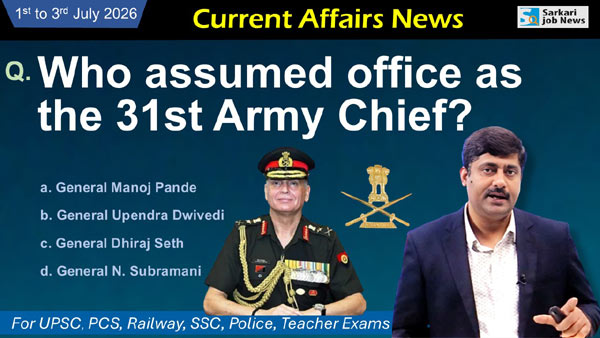
12. Who assumed office as the 31st Chief of Army Staff (COAS) of the Indian Army on June 30, 2026?
a. General Manoj Pande
b. General Upendra Dwivedi
c. General Dheeraj Seth
d. General N. S. Raja Subramani
Answer: c. General Dheeraj Seth
– General Dheeraj Seth assumed office on June 30, 2026, succeeding General Upendra Dwivedi.
– General Dheeraj Seth is an alumnus of the National Defence Academy (NDA), Khadakwasla. He was commissioned into the 2 Lancers Armoured Regiment on December 20, 1986.
– Along with him, Lieutenant General Sandeep Jain assumed charge as the new Vice Chief of Army Staff (VCOAS) on July 1, 2026, giving the Army a new top leadership team.
PDF Download: Click here