
This is the current affairs 7 to 11 May 2026. Here are questions and answers of daily current affairs for better preparation of competitive exams for government jobs.
1. Whom has the Central Government appointed as the new Navy Chief (Chief of the Naval Staff)?
a. Krishna Swaminathan
b. Radhakrishnan Tripathi
c. Ratnesh Verma
d. Vijay Joseph Stalin
Answer: a. Krishna Swaminathan
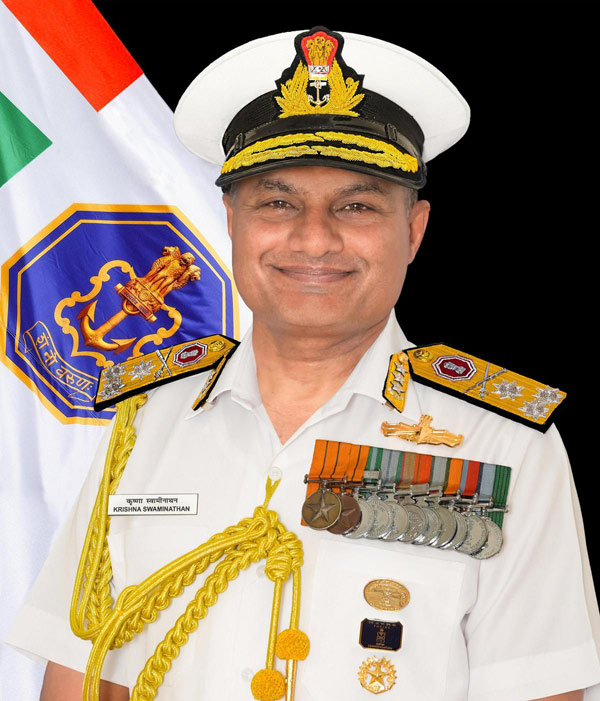
– The Government of India has appointed Vice Admiral Krishna Swaminathan as the new Chief of the Naval Staff of the Indian Navy.
– Upon assuming office as Navy Chief, his rank became that of Admiral.
– Earlier, he served as the Flag Officer Commanding-in-Chief (FOC-in-C) of the Western Naval Command.
– He has been appointed in place of Admiral Dinesh Kumar Tripathi, whose retirement date was May 31, 2026.
– The new Navy Chief Krishna Swaminathan had earlier also served as the Vice Chief of Naval Staff at the Naval Headquarters (NHQ).
—————-
2. Whom has the Central Government appointed as the new Chief of Defence Staff (CDS)?
a. Krishna Swaminathan
b. Radhakrishnan Tripathi
c. Rajendra Vishwakarma
d. N.S. Raja Subramani
Answer: d. N.S. Raja Subramani
– He has been appointed in place of General Anil Chauhan, whose retirement was due on May 30, 2026.
– As CDS, N.S. Raja Subramani will also hold the responsibility of Secretary of the Department of Military Affairs (DMA).
– He is the third Chief of Defence Staff (CDS) of India. All three CDS officers have belonged to the Indian Army. The first CDS was General Bipin Rawat, the second was General Anil Chauhan, and the third is N.S. Raja Subramani.
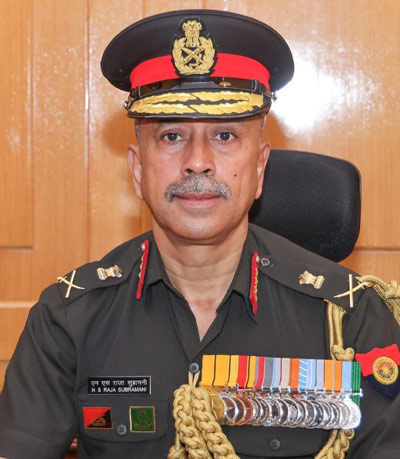
Lieutenant General N.S. Raja Subramani: Career Profile
– He is an alumnus of the National Defence Academy (NDA) and the Indian Military Academy (IMA).
– He was commissioned into the 8 Garhwal Rifles in December 1985. His military career spans more than four decades (40 years).
– He retired from the Indian Army in February 2026. At that time, he was serving as the Vice Chief of the Army Staff.
– Immediately after retirement, the government appointed him as Military Adviser in the National Security Council Secretariat (NSCS).
Can retired military officers become CDS?
– In 2022, the government amended the rules for appointment of the CDS, under which retired Lieutenant Generals or General-rank officers below the age of 62 years can also be appointed as CDS.
– N.S. Raja Subramani is the second such officer to be recalled after retirement for this top post. Before him, General Anil Chauhan was also appointed as the country’s second CDS after retirement.
What is the post of Chief of Defence Staff and why was it needed?
– The Chief of Defence Staff is a four-star rank officer.
– The retirement age of the CDS is 65 years.
– The recommendation for the CDS post was made by the Subrahmanyam Committee after the Kargil War.
– The report stated that during the Kargil War, there was a lack of coordination among the three armed forces. Therefore, a CDS was needed for better coordination.
– Eventually, on January 1, 2020, General Bipin Rawat became the first CDS. Thereafter, General Anil Chauhan assumed the post on September 30, 2022, and General N.S. Raja Subramani on May 31, 2026.
Rank
– Like the service chiefs, the CDS also holds the rank of a four-star General.
– A CDS cannot accept any government post after retirement.
– After retirement, the CDS also cannot take up any private job for five years.
– Salary and additional facilities are equivalent to those of the Service Army Chief.
Principal Military Adviser to the Defence Minister
– The CDS is the principal military adviser to the government.
– He is also the principal military adviser to the Defence Minister regarding all matters related to the three armed forces. However, the chiefs of the three services also retain the right to advise the Defence Minister regarding matters concerning their respective services.
– The Chief of Defence Staff cannot command the chiefs of the three armed forces, nor can he exercise authority over any other military command, so that he can provide impartial military advice to the political leadership.
What are the roles of the CDS?
– He is the permanent Chairman of the Chiefs of Staff Committee.
– In the role of principal military adviser regarding the three armed forces, he advises the Defence Minister.
– He is responsible for bringing jointness among the three services in matters such as operations, logistics, transport, training, support services, and communications. This task is to be completed within three years.
– Preparing war strategy plans.
– Submitting the annual planning report to the Defence Minister.
Chairman of the Chiefs of Staff Committee
– Apart from heading the Department of Military Affairs, the Chief of Defence Staff is also the Chairman of the Chiefs of Staff Committee.
—————–
3. When is World Asthma Day observed?
a. First Monday of May
b. First Tuesday of May
c. First Wednesday of May
d. First Thursday of May
Answer: b. First Tuesday of May (May 5 in the year 2026)
Theme for 2026
– “Access to anti-inflammatory inhalers for everyone with asthma – still an urgent need.”
– World Asthma Day began in 1993, when it was first observed by the Global Initiative for Asthma in collaboration with the World Health Organization (WHO).
– Asthma is a chronic lung disease that causes inflammation and narrowing of the airways, making breathing difficult. Symptoms include coughing, wheezing, shortness of breath, and chest tightness.
—————-
4. Which court launched ‘One Case One Data’?
a. Patna High Court
b. Madras High Court
c. Allahabad High Court
d. Supreme Court
Answer: d. Supreme Court
– Chief Justice of India (CJI) Justice Suryakant launched a new era of technology in the judiciary on May 11, 2026.
– The Supreme Court officially launched the digital initiative ‘One Case One Data’.
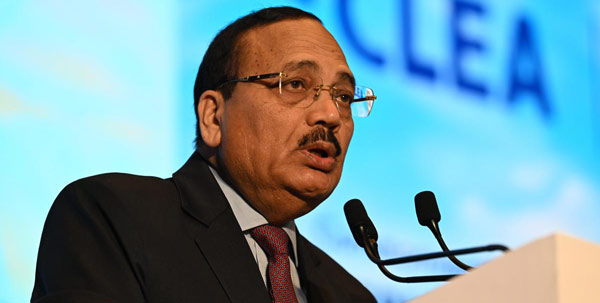
‘One Case One Data’: Integrated Judicial System
– ‘One Case One Data’ means that the file or information related to any case will no longer need to be entered repeatedly at different places.
– Unique ID: At present, when a case moves from a Taluka Court to the High Court and then to the Supreme Court, it is re-entered at every level. With ‘One Case One Data’, a case will receive a single digital identity (Unique ID). This means the same data file will continue from beginning to end.
– Entire history in one click: Through this system, every small and major detail related to the case (such as lower court judgments, witness statements, dates, and evidence) will be stored at one place.
– Benefit: If a case reaches the Supreme Court, judges will not have to wait for old files; they will immediately be able to see what happened in the lower courts.
– Linking courts together: It will connect Taluka Courts, District Courts, High Courts, and the Supreme Court through a single network. This will eliminate duplication of data and reduce delays caused by paperwork.
– It will also be integrated with the ‘Su Sahay’ chatbot to make information more accessible.
For example
– Just like your Aadhaar card has a single number that remains the same whether you use it for banking, SIM cards, or ration services, the data connected to you remains the same. Similarly, case data will also remain the same regardless of the court in which the matter is heard.
– A major benefit of this system will be faster case management and reduction in the time required for disposal of cases.
—————
5. The Supreme Court has launched ‘Su Sahay’—what is it?
a. AI-powered chatbot
b. New e-court portal
c. Women’s safety legal helpline
d. Digital library for lawyers
Answer: a. AI-powered chatbot
– Chief Justice of India (CJI) Justice Suryakant launched the digital initiative ‘Su Sahay’ on May 11, 2026.
– ‘Su Sahay’ is an Artificial Intelligence (AI)-based chatbot developed with the support of the National Informatics Centre (NIC).
– Its main objective is to help litigants and the general public easily search for case status, court services, and other essential information on the Supreme Court website.
‘One Case One Data’ and ‘Su Sahay’
– One Case One Data: This works on the backend. Its job is to securely store and organize judicial data from courts across the country at one place. It simplifies court functioning so that judges do not waste time searching for case history.
– Su Sahay: This works on the frontend. When a citizen seeks information, the AI chatbot retrieves accurate information from the vast database of ‘One Case One Data’ and presents it in simple language. It is designed for common citizens so that they do not need to visit courts repeatedly and can know the status of their cases from home through AI assistance.
—————-
6. Referring to which crisis did PM Modi appeal to the public to conserve fuel, work from home, refrain from purchasing gold, and reduce foreign travel?
a. Russia-Ukraine War
b. West Asia Crisis
c. Global Trade Crisis
d. Climate Crisis
Answer: b. West Asia Crisis
– In May 2026, the Prime Minister repeated his appeal to citizens to save fuel and reduce gold purchases.
– PM Modi said, “The crisis in West Asia is one of the worst crises of this decade. Just as we overcame the COVID-19 pandemic, we will also overcome this crisis.”
PM Modi sought cooperation from citizens
– Fuel Conservation: Considering India’s heavy dependence on West Asia for crude oil and LPG, the PM appealed to people to reduce fuel consumption at the individual level.
– Electric Vehicles and Public Transport: He urged citizens to prioritize public transport and electric vehicles (EVs) instead of private vehicles.
– Work From Home: Suggesting the return of this pandemic-era practice, the PM said that wherever possible, people should work from home to reduce road congestion and fuel consumption.
– Avoid Gold Purchases: Since large amounts of foreign exchange are spent on gold imports, he requested people to postpone gold purchases for one year considering the current global situation.
– Reduce Foreign Travel: The PM advised citizens to avoid unnecessary foreign tours and other activities that involve foreign exchange expenditure.
India’s Energy Dependence
– India imports a very large portion of its petroleum and gas requirements.
– Around 2014, India’s oil import dependence was approximately 70%, which increased to nearly 88% by 2026.
– Rising energy imports put pressure on foreign exchange reserves.
– The Iran conflict is only an immediate trigger; the real issue is the weakness in long-term energy policy.
Criticism
– India has not invested sufficiently in solar and wind energy.
– China invested heavily in solar energy and electric vehicles over the last 25–30 years and reduced its dependence.
– India still lags behind in energy transition.
Solutions
– Promoting solar and wind energy.
– Expanding electric vehicles (EVs).
– Moving towards a hydrogen economy.
– Considering cooperation with Chinese technology and companies.
Foreign Exchange Crisis
– India imports more and exports less.
– This increases the Current Account Deficit.
– Earlier, this gap was covered through foreign investment (FDI/FPI).
– Now the inflow of foreign capital is declining.
Reasons for decline in FDI
– Lower investments are coming into new technologies such as EVs, solar, batteries, and semiconductors.
– Policies such as restrictions on Chinese investment reduced opportunities, although investment up to 10% has now been opened.
Reasons for FPI outflow
– The value of the rupee is declining.
– Indian stock markets are showing weak performance.
– Foreign investors are not receiving better returns.
ECB (External Commercial Borrowing) becoming expensive
– Taking foreign loans has become costly.
– Depreciation of the rupee increases the burden of debt repayment.
Fall in the Rupee
– The rupee has been continuously weakening against the dollar.
– If the situation does not improve, the rupee may fall to 100 per dollar.
– Reasons: fewer dollar inflows, more dollar outflows, and decline in foreign investment.
– Impact: imports will become expensive, petrol and diesel prices may rise, and inflation may increase.
The Gold Problem
– India has a huge demand for gold.
– Importing gold consumes foreign exchange reserves.
The RBI is also purchasing gold on a large scale. – Former Finance Secretary Subhash Garg stated that the RBI purchased around 200 tonnes of gold over two and a half years.
– On one hand, the Prime Minister is appealing to people to reduce gold purchases, while on the other hand, the RBI itself is buying gold in large quantities.
– This is contributing to rising gold prices.
Reasons for Gold Purchases
– China and Russia are reducing dependence on the dollar.
– After the United States froze Russia’s dollar reserves, many countries increased gold purchases.
– This strategy may suit China because it has massive foreign exchange reserves.
– However, for India, this policy may prove harmful.
China versus India
– China’s achievements: Around 70% contribution to the global EV sector, dominance in solar and battery technology, and reduced energy dependence.
– India’s situation: Slow EV adoption, limited solar manufacturing capacity, and lower technological investment.
Data Centres and Electricity Crisis
– India is still struggling with electricity shortages.
– Despite this, large concessions are being provided to data centres.
– Data centres are “Electricity Guzzlers,” meaning they consume massive amounts of electricity.
Will a 1991-like crisis occur?
– No, a situation similar to 1991 is unlikely.
– India has foreign exchange reserves of around 700 billion dollars.
– The Current Account Deficit is still under control.
– However, if long-term reforms are not implemented, economic pressure may continue to rise.
India’s Three Major Economic Weaknesses
– Dependence on energy imports.
– Weakness in foreign exchange.
– Excessive gold imports.
Major Solutions
– Large investments in solar and wind energy.
– Promoting EV and battery manufacturing.
– Attracting foreign investment.
– Reducing gold imports.
– Strengthening schemes such as Sovereign Gold Bonds (SGBs).
– Long-term economic policy reforms.
How much oil and gas reserve does the country have?
– Underground reserves at Visakhapatnam, Mangaluru, and Padur have the capacity to store 5.33 MMT (Million Metric Tonnes) of crude oil.
– At present, around 64% (3.37 MMT) of this capacity is filled, which can meet the country’s needs for about 9.5 days.
– If oil company stocks and strategic reserves are combined, the country currently has reserves equivalent to 60 days of crude oil, 45 days of natural gas, and 45 days of LPG.
What is considered an adequate stock?
– According to international agency standards, countries should maintain reserves equivalent to at least 90 days of imports.
– India is slightly behind this target, but a backup of 60–74 days is still considered a safe level.
—————
7. When is World Thalassemia Day observed?
a. 7 May
b. 8 May
c. 9 May
d. 10 May
Answer: b. 8 May
Theme for 2026:
– “No Longer Hidden: Finding the Undiagnosed. Supporting the Unseen”
– Thalassemia is a genetic blood disorder in which hemoglobin is not formed properly in the patient’s body. Due to this, the patient frequently requires blood transfusions.
—————-
8. In which southern state were 12,000-year-old fossils discovered following heavy rainfall in 2023—fossils that the Archaeological Survey of India (ASI) has now identified as belonging to the Holocene epoch?
a. Tamil Nadu
b. Kerala
c. Andhra Pradesh
d. Karnataka
Answer: a. Tamil Nadu
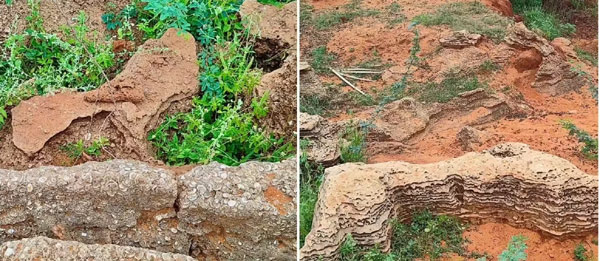
– The fossils were mainly discovered in the regions of Panaiyur, Pattinamarudur, and Kayalpattinam near Thoothukudi.
– The ASI collected a total of 104 samples for investigation.
– Union Environment Minister Bhupender Yadav announced on April 29, 2026, that these fossils are around 12,000 years old.
– According to the report, the identified fossil organisms are living species or genera found in the Gulf of Mannar and nearby water bodies.
– The morphological similarity between the fossils and modern samples, along with the absence of extinct species, indicates remarkable environmental continuity over the past several thousand years.
What did scientists say?
– Scientists involved in the research stated that these fossils can provide important information about the kinds of species that once inhabited this region and the environmental conditions during the Holocene epoch.
– By analyzing these fossils, researchers can determine whether the region was once covered with forests, grasslands, or influenced by marine conditions.
– This discovery is especially important for scientists because fossil records from this period in South India have been explored very little.
Holocene Epoch
– The Holocene epoch began around 11,700 years ago, when the last Ice Age ended. The period from then until today is called the Holocene.
– After the Ice Age ended, Earth’s temperature began to rise and the ice sheets started retreating.
– The greatest feature of this epoch has been its stable climate — neither extremely cold nor extremely hot. This stability allowed human civilization to flourish.
—————-
9. When is BRO (Border Roads Organisation) Raising Day celebrated?
a. 7 May
b. 8 May
c. 9 May
d. 10 May
Answer: a. 7 May
– Its objective is to strengthen India’s borders and develop infrastructure, especially in remote regions of northern and northeastern India.
BRO (Border Roads Organisation)
– The Border Roads Organisation is a road construction executive force in India.
– It undertakes the construction and maintenance of roads and bridges in border areas of India under difficult conditions.
– It is a statutory body under the ownership of the Ministry of Defence, Government of India.
—————-
10. Which Indian space startup company placed the world’s first ‘OptoSAR’ satellite, ‘Mission Drishti’, into space?
a. SpaceX
b. Skyroot
c. GalaxEye
d. Agnikul
Answer: c. GalaxEye
– Bengaluru-based space startup GalaxEye successfully placed its first satellite, ‘Mission Drishti’, into orbit in May 2026.
– The satellite was launched aboard Elon Musk’s company SpaceX’s Falcon 9 rocket from Vandenberg, California.
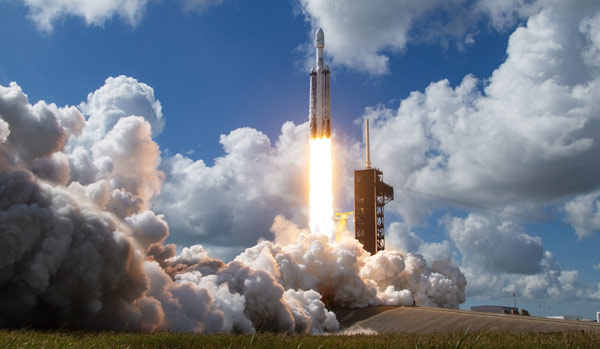
Why is ‘Mission Drishti’ special?
– Weighing 190 kilograms, ‘Mission Drishti’ is India’s largest privately developed Earth Observation satellite so far. Its biggest feature is its OptoSAR technology.
– First in the world: It is the world’s first satellite to combine Electro-Optical (EO) and Synthetic Aperture Radar (SAR) sensors on a single platform.
– Usually, satellites either have Optical (EO) sensors, which work like cameras but cannot function properly through clouds or at night, or SAR sensors, which can see through clouds but produce images that are harder to interpret.
– What is new: GalaxEye’s ‘Mission Drishti’ is the first satellite to integrate both sensors on a single satellite. It combines both datasets together through “SyncFusion” technology to produce images that are both clear and functional in all weather conditions.
– All-weather capability: Due to this hybrid technology, the satellite can capture high-quality images during both day and night and even under cloudy conditions. This overcomes the limitations of conventional satellites.
Benefits in defence and agriculture
– GalaxEye founder and CEO Suyash Singh stated, “This mission is the result of five years of intensive research and development (R&D). We are already witnessing strong global interest in this data.”
– It is a dual-use satellite and can be used for:
Defence: Border surveillance.
– Agriculture: Accurate crop monitoring.
– Disaster management: Immediate data during floods or cyclones.
– Maritime surveillance and infrastructure planning.
—————-
11. With what primary objective has the ₹5,600 crore Cotton Productivity Mission 2026–31 been launched?
a. To increase tax on cotton exports
b. To increase cotton productivity and quality
c. To shut down the textile industry
d. To promote only organic cotton farming
Answer: b. To increase cotton productivity and quality
– On May 6, 2026, the Central Government took a major step to increase farmers’ income and strengthen the textile sector.
– On May 5, 2026, the Union Cabinet approved a budget of ₹5,659.22 crore for the “Mission for Cotton Productivity.”
– The scheme will be implemented for the next five years, from 2026–27 to 2030–31.
Main objectives of the mission
– 5F Vision: The scheme is based on the government’s 5F formula — Farm to Fibre to Factory to Fashion to Foreign.
– Massive rise in productivity: The government aims to increase cotton productivity from 440 kg/ha to 755 kg/ha.
– Production target: The target is to produce 498 lakh bales of cotton in the country by 2031.
– Seed improvement: Developing seeds capable of withstanding climate change and pests.
– Kasturi Cotton Bharat: Branding Indian cotton globally as a premium product.
Cotton cultivation
– Cotton is called “White Gold,” but its cultivation requires specific geographical conditions:
Temperature: 21°C to 27°C (minimum 15°C for germination).
– Soil: Alluvial soil in northern India and black soil in central and southern India.
– Major producing states: Maharashtra, Gujarat, Telangana, Karnataka, and Rajasthan.
Challenges faced by the sector
– Pest attacks: Pests such as Pink Bollworm and Whitefly cause heavy damage to crops.
– Dependence on monsoon: Around 65% of India’s cotton cultivation area is rain-fed.
– Price fluctuations: International market conditions create price instability.
India: The world’s second-largest cotton producer
– India is a global leader in cotton production, consumption, and trade.
– According to the latest trends and data for 2025–26, India is the world’s second-largest producer of cotton.
– China ranks first, India second, and Brazil third.
– India contributes around 20–25% of the world’s cotton production.
– India has the largest acreage under cotton cultivation in the world, but productivity per hectare remains lower than that of China and the United States. This is why the Mission for Cotton Productivity has been launched.
Position in exports
– India is among the world’s leading cotton exporters, but its strategy has changed in recent years.
– Raw Cotton: Instead of exporting raw cotton, India is now focusing on exporting value-added products such as yarn and textiles by using cotton domestically.
– Main markets: Bangladesh, Vietnam, and China are the biggest buyers of Indian cotton and yarn.
– India frequently remains the second or third largest exporter globally, competing with the United States and Brazil.
Position in imports
– It may seem surprising that despite being the second-largest producer, India also imports cotton.
– Why? India mainly imports Extra Long Staple (ELS) cotton, which is extremely fine and premium quality cotton (such as Egyptian cotton). Since its domestic production is limited, India imports it from countries like the United States and Egypt for luxury textiles.
Position in consumption
– India is also the world’s second-largest consumer of cotton.
– India’s huge textile industry, including hubs like Surat, Ludhiana, and Tiruppur, consumes enormous quantities of cotton.
—————-
12. What percentage of Foreign Direct Investment (FDI) has the Central Government permitted in insurance companies through the automatic route?
a. 49%
b. 74%
c. 100%
d. 20%
Answer: c. 100%
– In May 2026, the Central Government officially notified 100% Foreign Direct Investment (FDI) in insurance companies under the “automatic route.”
– This decision has completely opened the doors of the Indian insurance market to foreign investors.
– The notification came after the passage of the “Sabka Bima Sabki Raksha (Insurance Laws Amendment) Bill, 2025,” which received parliamentary approval in December 2025. Earlier, in February, the Department for Promotion of Industry and Internal Trade (DPIIT) had also issued a notification permitting 100% FDI in the sector.
Key points and conditions
– Mandatory license: Companies receiving FDI must obtain the required license or approval from IRDAI (Insurance Regulatory and Development Authority of India).
– Indian leadership: In Indian insurance companies with foreign investment, at least one among the Chairman, Managing Director (MD), or CEO must be an Indian resident citizen.
– Legal compliance: All investments must comply with the provisions of the Insurance Act, 1938.
Separate rules for LIC
– Separate investment limits have been retained for the Life Insurance Corporation of India (LIC).
– The foreign investment limit in LIC has been capped at 20%, which will also be through the automatic route.
– This investment will be regulated under the provisions of the LIC Act, 1956.
100% FDI allowed in these sectors too
– Along with insurance companies, major relief has also been provided to insurance intermediaries, including:
– Insurance brokers and reinsurance brokers.
– Insurance consultants and corporate agents.
– Third Party Administrators (TPAs).
– Surveyors and loss assessors.
Note
– In simple terms, this means that not only main insurance companies such as LIC or ICICI Prudential, but also supporting companies involved in selling insurance and settling claims can now receive full (100%) foreign investment.
What is the automatic route and how many types of investment routes exist?
– In India, Foreign Direct Investment mainly comes through two routes: the Automatic Route and the Government Route.
– The primary difference between them is whether prior government approval is required.
Automatic Route
– Under this route, the process is simple and fast.
– Foreign investors do not need prior approval from the Government of India or the RBI before making investments.
– Investors can directly invest and only need to inform the RBI within a specified period after the investment is received.
Government Route
– Under this route, government control is higher.
– Investors must obtain mandatory approval from the concerned ministry or department before investing.
– Applications are submitted online through the “FDI Confirmation Portal.”
– The concerned ministry examines security and economic aspects before granting or rejecting approval.
– This route is applicable to sectors linked with national security, sovereignty, or sensitive industries.
—————-
13. What is the foreign investment limit (FDI cap) set for the Life Insurance Corporation of India (LIC)?
a. 100%
b. 20%
c. 50%
d. 74%
Answer: b. 20%
– In May 2026, the Central Government notified 100% Foreign Direct Investment (FDI) in insurance companies under the automatic route.
– However, a separate investment limit has been maintained for the Life Insurance Corporation of India (LIC).
– The foreign investment limit in LIC has been capped at 20%, which will also be through the automatic route.
– This investment will be regulated under the provisions of the LIC Act, 1956.
—————
14. Which medal did the Indian men’s team win in the prestigious ‘Thomas Cup’ badminton tournament?
a. Gold
b. Silver
c. Bronze
d. None of these
Answer: c. Bronze
– In May 2026, the Indian men’s badminton team won the bronze medal in the Thomas Cup.
– The Thomas Cup is the world’s biggest badminton team championship.
– India faced France in the semifinal.
India lost to France by 0–3.
– Earlier, India had defeated Chinese Taipei 3–0 in the quarterfinals to secure a medal.
– This is only India’s second medal in the 78-year history of the Thomas Cup. Earlier, India won the gold medal in 2022.
Singles players
– Lakshya Sen: The team’s main player, although he could not play in the semifinal due to injury.
– H.S. Prannoy: An experienced player who strengthened the team.
– Kidambi Srikanth: Former world number one and senior member of the team.
– Ayush Shetty: Champion of the 2025 US Open, who earned a place in the Thomas Cup team for the first time.
– Kiran George: Included to provide backup and depth in singles.
Doubles players
– Satwiksairaj Rankireddy and Chirag Shetty: One of the world’s best doubles pairs, who delivered the decisive win against Chinese Taipei in the quarterfinals.
– Dhruv Kapila and M.R. Arjun: The second major doubles pair.
– Hariharan Amsakarunan: Included in the team as an additional doubles option.
—————-
15. What height did Kuldeep Kumar set as a new national record in the pole vault at the ‘Indian Indoor Open Competition 2026’?
a. 4.40 metres
b. 5.41 metres
c. 5.40 metres
d. 5.41 metres
Answer: d. 5.41 metres
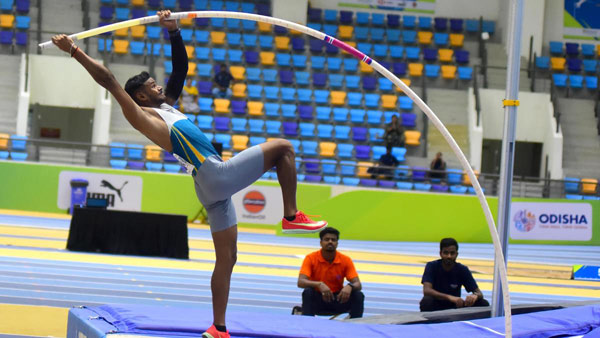
– Kuldeep Kumar is a 21-year-old athlete from Madhya Pradesh.
– He created a new national record in pole vault.
At the ‘Indian Indoor Open Competition’ held in – Bhubaneswar, he cleared a height of 5.41 metres.
– He broke the previous national record of 5.40 metres set by Dev Kumar Meena in July 2025 and became India’s highest pole vaulter.
What is pole vault?
– Pole vault is one of the most exciting and challenging events in athletics (track and field).
– In simple terms, it is a sport in which an athlete uses a long pole to jump over a high bar.
– Kuldeep Kumar’s national record means that he successfully crossed a bar placed at a height of 5.41 metres above the ground, which is now the highest jump ever achieved by an Indian athlete.
—————-
16. When is World Red Cross Day celebrated?
a. 7 May
b. 8 May
c. 9 May
d. 10 May
Answer: b. 8 May
Theme for 2026
– “United in Humanity”
– This day is also observed as the birth anniversary of Jean Henry Dunant, the founder of the International Committee of the Red Cross (ICRC).
– Henry Dunant was born on May 8, 1828, and was also a recipient of the Nobel Peace Prize.
Red Cross
– The Red Cross is a global humanitarian network whose objective is to help suffering people without discrimination.
– The mission of the Red Cross is to protect life and health and ensure respect for human beings.
– It helps people affected by natural or man-made disasters, conflicts, and chronic poverty.
The Red Cross consists of three parts:
– International Committee of the Red Cross (ICRC)
– International Federation of Red Cross and Red Crescent Societies
– 192 National Red Cross and Red Crescent Societies
—————
17. Which Indian shipbuilding company acquired Sri Lanka’s ‘Colombo Dockyard’?
a. Cochin Shipyard Limited
b. Mazagon Dock Shipbuilders Limited
c. Garden Reach Shipbuilders & Engineers
d. Goa Shipyard Limited
Answer: b. Mazagon Dock Shipbuilders Limited
– India’s leading defence public sector undertaking (PSU), Mazagon Dock Shipbuilders Limited (MDL), acquired a 51% controlling stake in Colombo Dockyard PLC (CDPLC) of Sri Lanka.
– This ₹452 crore (approximately 53 million dollar) deal in 2026 is the first acquisition of an international shipyard in India’s maritime history.
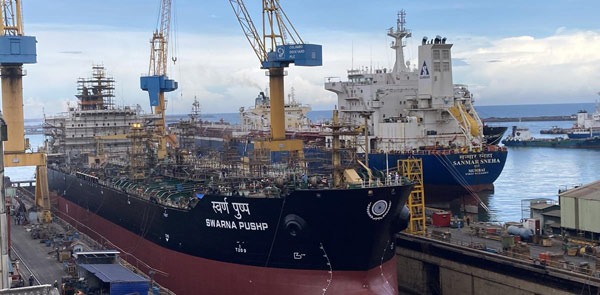
Strategic and commercial milestone
– This acquisition is not merely a business step, but also a major move to strengthen India’s strategic presence in the Indian Ocean Region (IOR).
– MDL Chairman and Managing Director Captain Jagmohan described the deal as “mutually beneficial” for both countries and stated:
“This acquisition holds long-term significance for bilateral relations. We see significant synergy between the two companies.”
How did this deal happen?
– Beginning of the process: In January 2025, Japan’s Onomichi Dockyard Company, the majority stakeholder in Colombo Dockyard, decided to exit.
– Entry of Mazagon Dock: MDL emerged as the successful bidder. In June 2025, the MDL board approved the investment.
– Government approval: After approval from India’s Ministry of Defence and Ministry of Finance (DIPAM), the acquisition process was completed in April 2026.
– Capital investment: After the acquisition, MDL infused an additional 40 million dollars to improve the dockyard’s operational capacity.
A lifeline for Sri Lanka
– For Colombo Dockyard, which had been struggling with financial crisis and heavy debt for several years, this investment proved to be a turning point.
– Job security: The deal secured the livelihoods of around 3,000 employees.
– Revenue growth: With new orders and fresh capital, revenue is expected to increase by 20% in the current financial year.
Strong message to China and future plans
– This move is strategically important because Sri Lanka’s Hambantota Port is already under a 99-year lease to China.
– India’s presence at Colombo Port will help maintain strategic balance in the region.
– MDL is now also exploring opportunities at Sri Lanka’s Trincomalee and Hambantota ports.
– It is also planning expansion into high-margin sectors such as ship repair, which could promote local industries and employment.
Clarification: Only for commercial use
– Initially, concerns were raised in Sri Lanka regarding whether the dockyard would be used for Indian defence manufacturing.
– However, MDL clarified that the operations of Colombo Dockyard would remain completely commercial, helping restore confidence locally.
Key figures
– Deal value: ₹452 crore for 51% stake.
– MDL market capitalization: More than ₹1.1 lakh crore.
– CDPLC target: Achieving full profitability and expansion within the next three years.
Mazagon Dock Shipbuilders Limited (MDL)
– Location: Situated in the Mazagon area of Mumbai.
– Importance: It is one of India’s oldest and most important defence shipyards.
– Work: It primarily builds and repairs warships and submarines for the Indian Navy.
—————
18. When is World Athletics Day celebrated?
a. 7 May
b. 8 May
c. 9 May
d. 10 May
Answer: a. 7 May
– World Athletics Day began in 1996.
– This day is celebrated to encourage various sports activities and promote the importance of fitness and health.
– Athletics includes events such as running, jumping, throwing, and walking.
World Athletics
– Headquarters: Monaco
– Established: July 17, 1912
—————
19. On the occasion of International Nurses Day on May 12, 2026, how many nursing professionals received the National Florence Nightingale Award 2026?
a. 5
b. 10
c. 15
d. 25
Answer: c. 15
– In a dignified ceremony held at Rashtrapati Bhavan, President of India Droupadi Murmu honored 15 nursing professionals with the National Florence Nightingale Award 2026.
– The award symbolizes their selfless dedication and extraordinary services in the healthcare sector.
Nature of the award and recognition
– Each awardee received:
– An official certificate of recognition.
– A medal of honor.
– A cash prize of ₹1 lakh for outstanding service.
Importance and objective of the award
– Established by the Ministry of Health and Family Welfare, Government of India, this award is among the most prestigious honors in the nursing profession.
– Special recognition: The award recognizes the invaluable contributions of Auxiliary Nurse Midwives (ANMs), registered nurses, and nursing educators at the national level.
– Appreciation of service: Its primary objective is to encourage professionals who demonstrate courage, dedication, and commitment to healthcare services even under difficult conditions.
Major awardees of 2026
– Ayesha Beevi from Lakshadweep was honored for conducting a safe childbirth under critical conditions at midnight on a remote island. Her work was regarded as an outstanding example of healthcare service in rural and difficult areas.
– Kulvinder Parhi, an Auxiliary Nurse Midwife from Ladakh, was honored for serving for nearly 30 years in difficult high-altitude regions. Despite harsh weather and limited resources, she continued healthcare services consistently.
– Dr. Sharwan Kumar Dhaka from Delhi received recognition for his contribution to the COVID-19 vaccination campaign and public health services.
– Major General Lissama P.V. of the Armed Forces Medical Services was honored for her special contribution to military healthcare services.
—————-
20. Which female cricketer was appointed as the fielding coach of the England Senior Men’s Test Team?
a. Sarah Taylor
b. Smriti Mandhana
c. Sidra Ameen
d. Ellyse Perry
Answer: a. Sarah Taylor
– One of the greatest players in women’s cricket, former England wicketkeeper Sarah Taylor, has been appointed as the fielding coach of the senior men’s – Test team for the upcoming series against New Zealand.
– The announcement was made by ECB Cricket Director Rob Key.
– The 37-year-old Taylor, who played 226 international matches across all formats, has previously worked with the England Lions (England A) team under Andrew Flintoff.
– Her impressive work there earned her promotion to the senior team’s support staff.
PDF Download: Click here