This is the current affairs 30 & 31 May 2026. Here are questions and answers of daily current affairs for better preparation of competitive exams for government jobs.
1. Who has been appointed as the Chairperson of the High-Level Committee on Demographic Changes (HLCDC)?
a. Mrityunjay Kumar Narayan
b. Justice Prakash Prabhakar Navlekar
c. Justice Durga Shakti Verma
d. Balaji Srivastava
Answer: b. Justice Prakash Prabhakar Navlekar
– Committee Name: High-Level Committee on Demographic Changes (HLCDC)
– Constituted by: Ministry of Home Affairs (MHA)
– Mandate: To examine “unnatural demographic changes” allegedly arising from illegal immigration and other abnormal factors.
– The committee was constituted in May 2026, a few months after the Prime Minister’s announcement regarding a “Demographic Mission” during his Independence Day address on 15 August 2025.

Composition of the Committee
– Chairperson: Justice P.P. Navlekar (Former Judge, Supreme Court of India and former Lokayukta of Madhya Pradesh)
Members:
– Mrityunjay Kumar Narayan (Census Commissioner)
– Durga Shankar Mishra (Retired IAS officer and former Chief Secretary of Uttar Pradesh)
– Balaji Srivastava (Retired IPS officer and former Director General, BPR&D)
– Dr. Shamika Ravi (Member, Economic Advisory Council to the Prime Minister)
Member Secretary:
– Joint Secretary (Foreigners-I), Ministry of Home Affairs
Proposed Structure and Terms of Reference
– Institutional Mechanism and Policy Framework: To propose a comprehensive policy framework for coordination between the Central and State Governments in addressing illegal migration and demographic imbalances.
– Permanent Operational System: To recommend a permanent mechanism for the fair, legal, and time-bound identification, detention, and deportation of illegal migrants residing in the country.
– Population Stabilization: To recommend suitable measures for maintaining balanced and stable demographic patterns.
– Autonomy in Inquiry and Consultation: The committee will have the authority to seek documents and records from any ministry, state government, or public authority, and may constitute sub-committees or working groups.
—————-
2. In which state was the foundation stone laid for the infrastructure of the fifth-generation stealth fighter aircraft (AMCA) project?
a. Odisha
b. Andhra Pradesh
c. Karnataka
d. Tamil Nadu
Answer: b. Andhra Pradesh (Puttaparthi, Sri Sathya Sai District)

– Defence Minister Rajnath Singh and Andhra Pradesh Chief Minister N. Chandrababu Naidu laid the foundation stone for the infrastructure of this mega project in May 2026.
– Location: Puttaparthi, Sri Sathya Sai District.
– With an investment of ₹15,803 crore, a state-of-the-art Aviation and Defence Manufacturing Complex will be developed.
– This infrastructure will serve as a common platform for the private company or consortium eventually selected by the Ministry of Defence to manufacture the aircraft.
—————–
3. Which companies/consortia have been shortlisted by the Ministry of Defence for the prototype development of the fifth-generation stealth fighter aircraft (AMCA) project?
a. Tata Advanced Systems
b. Consortium of Larsen & Toubro (L&T) and Bharat Electronics Limited (BEL)
c. Consortium of Bharat Forge and BEML
d. All of the above
Answer: d. All of the above
(L&T-BEL Consortium, Tata Advanced Systems, and Bharat Forge-BEML Consortium)
– The Ministry of Defence has issued a Request for Proposal (RFP) to three shortlisted private-sector entities for developing India’s first indigenous fifth-generation stealth fighter aircraft.
– AMCA: Advanced Medium Combat Aircraft.

Major Development
– Government-owned Hindustan Aeronautics Limited (HAL) has been excluded from the prototype development phase.
– The project is being positioned as a private-sector-led initiative.
Cost of the Infrastructure Project : ₹15,803 crore
Shortlisted Companies/Consortia
– L&T-BEL Consortium
– Tata Advanced Systems
– Bharat Forge-BEML Consortium
What Happens Next?
– These companies will submit responses to the government’s RFP within the next 4–5 months.
– After technical and commercial evaluations, one company or consortium will be selected.
– The selected entity will collaborate with the Aeronautical Development Agency (ADA) to build five prototypes of the aircraft.
Three Key Features of AMCA
– Stealth: Designed to minimize detection by enemy radar systems.
– Supercruise: Capable of flying faster than the speed of sound without using afterburners.
– Advanced Technologies: Equipped with AESA radar and sophisticated electronic warfare systems.
Preference to the Private Sector
– The decision to issue the RFP to private consortia instead of HAL reflects the government’s intent to provide major opportunities to private defence industries under the “Make in India” initiative.
– The Ministry of Defence’s Program Execution Model provides equal opportunities to both public and private sectors, either independently or through joint ventures.
How Does Stealth Technology Work?
– The term “stealth” means operating secretly or remaining difficult to detect.
– In military technology, stealth (or low observability) refers to technologies that reduce the visibility of aircraft, ships, or missiles to radar, infrared sensors, and other detection systems.
—————–
4. Shereen Ratnagar, an expert on the history of which civilization, passed away on May 25, 2026?
a. Harappan Civilization
b. Maya Civilization
c. Persian Civilization
d. Mesopotamian Civilization
Answer: a. Harappan Civilization
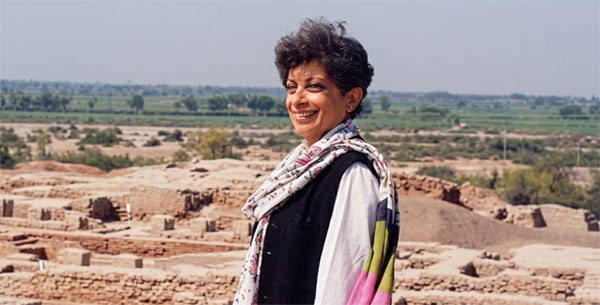
– Renowned archaeologist and historian Shereen Ratnagar, one of the foremost experts on the Harappan Civilization, passed away on 25 May 2026 at the age of 82.
– She had been suffering from Parkinson’s disease for several years.
Major Books and Research Works
– Encounters: The Westerly Trade of the Harappan Civilization
– Harappan Archaeology: Early State Perspectives
– The End of the Great Harappan Tradition
Association with JNU
– She was associated for many years with the Centre for Historical Studies at Jawaharlal Nehru University (JNU), where she taught Ancient History.
– After retiring in 2000, she continued working as an independent researcher.
About the Harappan Civilization
– The Harappan Civilization, also known as the Indus Valley Civilization, was one of the world’s earliest and most advanced river-valley civilizations.
– According to radiocarbon dating, its mature phase is generally dated between 2600 BCE and 1900 BCE.
—————-
5. Who took the oath of office as the Sikyong (Prime Minister) of the Tibetan government-in-exile, the Central Tibetan Administration (CTA)?
a. Lobsang Sangay
b. Penpa Tsering
c. Tenzin Gyatso
d. Sonam Norbu
Answer: b. Penpa Tsering
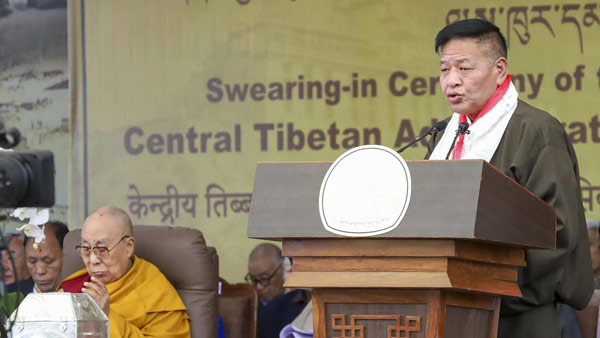
– Penpa Tsering, the newly elected leader (Sikyong) of the Central Tibetan Administration (CTA), took oath for his second term.
– The ceremony was held in Dharamshala, Himachal Pradesh.
– Tibetan spiritual leader Dalai Lama was also present at the event.
– China, however, regards Tibet as an integral part of its territory and considers the CTA an illegal and unconstitutional organization and a “separatist political group.”
Central Tibetan Administration (CTA) and Democratic Process
Establishment and Nature
– The CTA was established in 1959 after the suppression of the Tibetan uprising and the Dalai Lama’s arrival in India.
– In 2011, the Dalai Lama transferred his political authority to democratically elected institutions.
Sikyong
– The Sikyong is the political head (Prime Minister) of the Tibetan government-in-exile.
– Penpa Tsering secured 61% of the vote and was re-elected for a second consecutive term.
Parliament
– The Tibetan Parliament-in-Exile has 45 members, representing approximately 150,000 Tibetans living across the world.
– It includes representatives from traditional provinces, religious traditions, and the global Tibetan diaspora.
Ground Reality of Tibet’s Administration
– Tibet is currently under Chinese control.
– China officially refers to it as the Tibet Autonomous Region (TAR).
– It is an autonomous region within the People’s Republic of China.
– Administration, security, military affairs, and policymaking are controlled by the Chinese Communist Party.
– Therefore, China exercises de facto control over Tibet.
Government-in-Exile
– The CTA, based in India, considers itself the democratic representative of the Tibetan people.
– It has no administrative control over Tibetan territory.
– Its primary functions include:
– Welfare of Tibetan refugees
– Preservation of Tibetan culture and language
– Raising the Tibet issue internationally
– Thus, it represents a form of symbolic and political representation, rather than territorial governance.
—————
6. The Central Government has approved the ₹25,530 crore ‘Sarthak-PDS’ scheme to reform the Public Distribution System (PDS). Which advanced technologies are included in its implementation?
a. Blockchain, AI, Machine Learning, NLP
b. Genetic Engineering, CRISPR, Stem Cells
c. Nanotechnology, Hybrid Seeds, Remote Sensing
d. Nuclear Fusion, Geothermal Energy, Biofuels
Answer: a. Blockchain, AI, Machine Learning, NLP
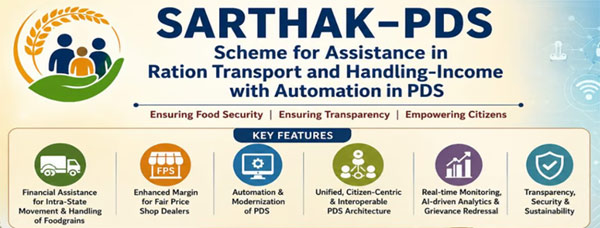
– In May 2026, the Cabinet Committee on Economic Affairs (CCEA) approved the Sarthak-PDS Scheme to modernize and strengthen India’s Public Distribution System (PDS).
– Budget and Duration: ₹25,530 crore for the next five years (up to 2031).
– Objective: To digitally monitor the entire food grain supply chain—from warehouses to beneficiaries.
– Beneficiaries: Approximately 81.35 crore ration card holders covered under the National Food Security Act (NFSA).
– The scheme will not replace the existing system; rather, it will improve delivery, logistics, transparency, and grievance redressal mechanisms.
– It is a technology-driven initiative aimed at helping India move closer to achieving SDG-2 (Zero Hunger).
Merger of Two Existing Schemes under Sarthak-PDS
1) Financial assistance provided to states under NFSA for transportation of food grains and fair price shop (FPS) dealer margins.
2) SMART-PDS (Scheme for Modernization and Reforms through Technology in Public Distribution System).
—————-
7. Which state became the country’s fifth fully literate state under the ULLAS programme?
a. Sikkim
b. Uttar Pradesh
c. Assam
d. Uttarakhand
Answer: a. Sikkim
– Sikkim has officially been declared a Fully Literate State.
– The announcement was made on 28 May 2026 during the convocation ceremony of Sikkim University in Gangtok in the presence of President Droupadi Murmu.
– Sikkim became the fifth state in India to achieve this distinction.

The other four fully literate states are:
– Mizoram
– Goa
– Tripura
– Himachal Pradesh
(Mizoram was the first state in the country to attain this status.)
About the ULLAS Programme
– ULLAS (Understanding Lifelong Learning for All in Society) was launched by the Ministry of Education in line with the National Education Policy (NEP) 2020.
The initiative aims to provide:
– Basic literacy
– Adult education
– Vocational skills
– Opportunities for lifelong learning
to individuals aged 15 years and above.
ULLAS in Sikkim
– The programme was launched in the state on 14 November 2022.
– It was implemented across all six districts and gram panchayats of Sikkim.
—————–
8. The police force of which Northeastern state was awarded the ‘President’s Police Colours’ in May 2026?
a. Tripura
b. Sikkim
c. Arunachal Pradesh
d. Sikkim
Answer: b. Sikkim
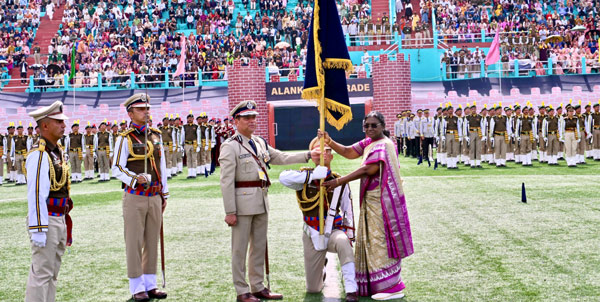
– During her two-day visit to Sikkim, President Droupadi Murmu awarded the President’s Police Colours to the Sikkim Police.
– The ceremony was held on 28 May 2026 at Paljor Stadium, Gangtok.
– The President’s Police Colours is regarded as the highest honour bestowed upon a police force in India for distinguished service, discipline, and public service.
Significance
– Sikkim Police became the 15th state police force in India to receive this prestigious honour.
– It is the third police force from Northeast India to receive the award.
– Earlier recipients from the region include: Assam Police, Tripura Police
—————-
9. Dr. Bashir Badr, known as the “Emperor of Urdu Ghazal,” passed away on May 28, 2026. Which honours had he received?
a. Padma Shri
b. Sahitya Akademi Award
c. Saraswati Samman
d. All of the above
Answer: d. All of the above
– Renowned Urdu poet Dr. Bashir Badr passed away on 28 May 2026 at the age of 91.
– He had been suffering from dementia for nearly fourteen years, which gradually affected his memory.
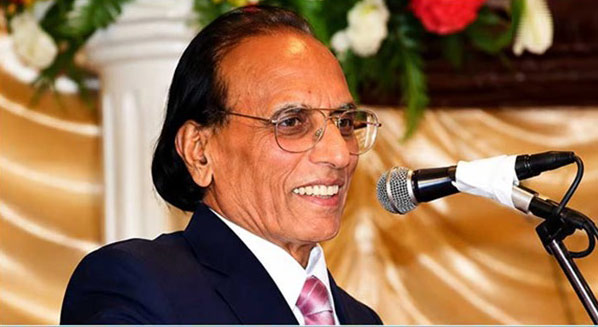
Honours and Awards
– Padma Shri (1999) for his outstanding contribution to literature.
– Sahitya Akademi Award for his contribution to Urdu literature and his ghazal collections.
– Saraswati Samman and several other literary honours for works such as: Aahatein & Kulliyat-e-Bashir Badr
Contribution to Urdu Literature
– Bashir Badr is credited with making Urdu poetry more accessible by moving away from highly complex vocabulary and embracing simple, conversational language.
– His poems and couplets have been translated into English and French.
– There was a time when literary gatherings and Mushairas were considered incomplete without his presence.
—————-
10. The Supreme Court has upheld the validity of the Election Commission’s ‘SIR’ campaign for purification of the electoral roll. What does ‘SIR’ stand for?
a. Special Internal Revision
b. System of Electoral Reforms
c. Special Intensive Revision
d. State Intensive Registration
Answer: c. Special Intensive Revision
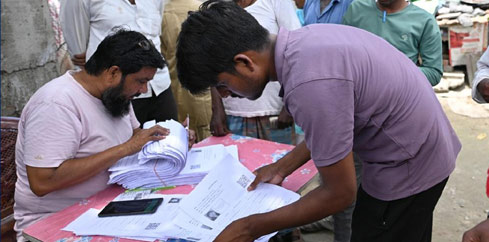
– The Supreme Court upheld the constitutional validity of the Special Intensive Revision (SIR) of electoral rolls conducted by the Election Commission of India (ECI).
– The judgment was delivered on 27 May 2026 by a Bench comprising: Chief Justice of India Surya Kant & Justice Joymalya Bagchi
Key Observations of the Court
Free and Fair Elections
– The Court observed that free and fair elections are not limited to the voting process alone.
– A clean and accurate electoral roll forms the true foundation of democracy.
Authority to Verify Citizenship
– The Court held that the Election Commission possesses constitutional authority to undertake limited verification of citizenship while adding or deleting names from electoral rolls.
– This authority flows from:
– Article 324 of the Constitution
– Section 21(3) of the Representation of the People Act
No Citizenship Screening Test
– The Court rejected the petitioners’ argument that the SIR exercise amounted to a backdoor citizenship screening mechanism.
—————-
11. When is the International Day of United Nations Peacekeepers observed?
a. 28 May
b. 29 May
c. 30 May
d. 31 May
Answer: b. 29 May
Theme for 2026 : “Invest in Peace”
Background
– Since 1948, more than two million uniformed and civilian personnel have served in UN peacekeeping operations around the world.
– On 29 May 1948, the first UN peacekeeping mission, the United Nations Truce Supervision Organization (UNTSO), began operations in Palestine.
– UN peacekeepers are popularly known as the “Blue Helmets.”
India’s Contribution to UN Peacekeeping
– India currently has approximately 5,900 personnel deployed in 12 UN peacekeeping missions.
– Overall, India has contributed nearly 275,000 personnel to UN peacekeeping operations since their inception.
—————-
12. When is Hindi Journalism Day celebrated?
a. 29 May
b. 30 May
c. 31 May
d. 1 June
Answer: b. 30 May
– Hindi Journalism Day is celebrated every year on 30 May.
– The day commemorates the publication of the first Hindi newspaper, Udant Martand, on 30 May 1826.
About Udant Martand
– It was launched in Calcutta (Kolkata) as a weekly newspaper.
– The newspaper was founded, published, and edited by Pandit Jugal Kishore Shukla.
Related Day : World Press Freedom Day: 3 May every year.
PDF Download: Click here