

This is the current affairs 21 May 2026. Here are questions and answers of daily current affairs for better preparation of competitive exams for government jobs.
1. Who won the 2026 International Booker Prize?
a. Yang Shuang-zi
b. Lin King
c. Daisy Rockwell
d. Rahini Ahuja
Answer: a. Yang Shuang-zi

– Yang Shuang-zi is a 42-year-old Taiwanese author.
– The International Booker Prize 2026 was announced in London on May 19, 2026.
– Yang Shuang-zi became the first Taiwanese author to win the Booker Prize.
– She received the International Booker Prize for her book Taiwan Travelogue.
– The book is written in Mandarin Chinese.
– Its English translation was done by Lin King.
————–
2. For which novel did author Yang Shuang-zi receive the 2026 International Booker Prize?
a. Siddhartha
b. Taiwan Travelogue
c. Kairos
d. The Canterbury
Answer: b. Taiwan Travelogue
– Taiwanese author Yang Shuang-zi was selected for the International Booker Prize for her book Taiwan Travelogue.
– The book presents Yang Shuang-zi’s Taiwan travel narrative.
– It was originally written in Mandarin Chinese.

Translator
– The English translation was done by 32-year-old Lin King.
– In 2024, this English translation also received the “American National Book Award” for translated literature.
– The Booker Prize carries an award amount of £50,000 (64,000 US dollars), which is equally divided between the author and the translator.
A Love Story Set Against the Background of Taiwan
– The book is a love story and travel narrative set in Taiwan during the 1930s, when the island was under Japanese occupation.
– The story begins in 1938, when a Japanese writer named Aoyama Chizuko travels to Taiwan.
– Far from the imperial spectacle, Chizuko wishes to experience the real life and authentic history of Taiwan, including local cuisine.
– During the journey, a Taiwanese woman develops deep affection for her companion and even urges her to break off her engagement, but Chizuru maintains emotional distance.
– Whether Chizuko’s feelings will be reciprocated becomes the central question driving the novel forward.
– Their relationship, shaped by differing social backgrounds from empire and colony, reflects complex power dynamics.
————-
3. In which country was the 3rd India-Nordic Summit held in 2026?
a. Denmark
b. Norway
c. Sweden
d. Iceland
Answer: b. Norway
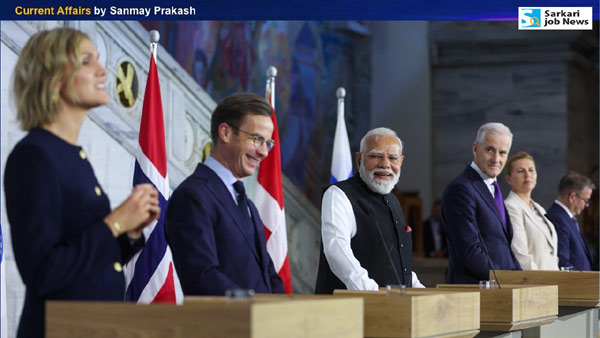
– The summit was held in Oslo, the capital of Norway, on May 19, 2026.
– This was the first visit by an Indian Prime Minister to Norway in 43 years. Before this, former Prime Minister Indira Gandhi had visited Norway in 1983.
List of Nordic Countries
– Denmark
– Norway
– Sweden
– Finland
– Iceland
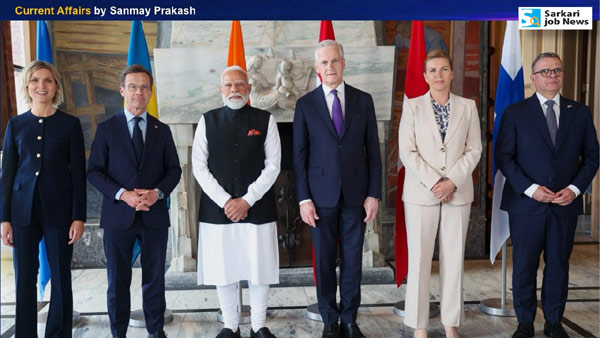
Countries and Leaders Participating in the 3rd India-Nordic Summit
– Iceland PM: Kristrún Frostadóttir
– Sweden PM: Ulf Kristersson
– Norway PM: Jonas Gahr Støre
– Denmark Acting PM: Mette Frederiksen
– Finland PM: Petteri Orpo
– India PM: Narendra Modi
List of India-Nordic Summits So Far
– First (2018): Stockholm, Sweden
– Second (2022): Copenhagen, Denmark
– Third (19 May 2026): Oslo, Norway
– Next (Fourth) Summit (proposed): Helsinki, Finland
Important Decision
– It was decided to elevate India-Nordic relations to the level of a “Green Technology and Innovation Strategic Partnership.”
Major Pillars and Strategic Decisions of the Summit
– Both sides highlighted their shared commitment to sustainable development, innovation, and environmentally friendly growth while transforming bilateral relations into a new strategic framework.
– Nordic Investment: India invited Nordic investment in green transition, blue economy, green shipping, renewable energy, and water management.
– Global Initiatives: Nordic countries supported India’s flagship initiatives such as Mission LiFE (Lifestyle for Environment) and LeadIT 3.0 (Leadership Group for Industry Transition). Both sides also agreed on affordable climate finance and technology transfer for developing nations.
– Scientific Cooperation: India’s positive role as an Observer in the Arctic Council was appreciated. Both sides agreed to explore joint research projects focusing on sustainable Arctic economy, maritime cooperation, and indigenous knowledge exchange.
—–
Q. Which of the following countries are included in the group known as the “Nordic Countries”?
Denmark
Finland
Norway
Sweden
Iceland
Choose the correct answer using the code below:
a. Only 1, 3 and 4
b. Only 1, 2, 3 and 4
c. Only 2, 4 and 5
d. 1, 2, 3, 4 and 5
Answer: d. 1, 2, 3, 4 and 5 (All five countries are part of the Nordic group.)
————–
4. To what level did both sides decide to elevate their partnership during the 3rd India-Nordic Summit in 2026?
a. Global Digital and Cyber Security Strategic Partnership
b. Comprehensive Economic Cooperation and Free Trade Roadmap
c. Sustainable Ocean and Maritime Economy Partnership
d. Green Technology and Innovation Strategic Partnership
Answer: d. Green Technology and Innovation Strategic Partnership
– India and the Nordic countries decided to elevate their relations to the level of a “Green Technology and Innovation Strategic Partnership.”
————-
5. When is World Metrology Day celebrated?
a. 17 May
b. 18 May
c. 19 May
d. 20 May
Answer: d. 20 May
Theme for 2026 – “Metrology: Building Trust in Policy Making”
What is Metrology?
– Metrology is the branch of physics that deals with precise measurement.
Why is the Day Celebrated?
– The Meter Convention was signed in Paris on May 20, 1875.
– It was an international treaty that brought uniformity in measurement units worldwide.
– The day is supported by UNESCO.
————–
6. During PM Modi’s visit to Gothenburg, the “India-Sweden Joint Action Plan 2026–2030” was agreed upon. Under this plan, what is the target for increasing bilateral trade over the next five years?
a. One-and-a-half times
b. Double
c. Two-and-a-half times
d. Triple
Answer: b. Double (from $7.75 billion to $15.5 billion)
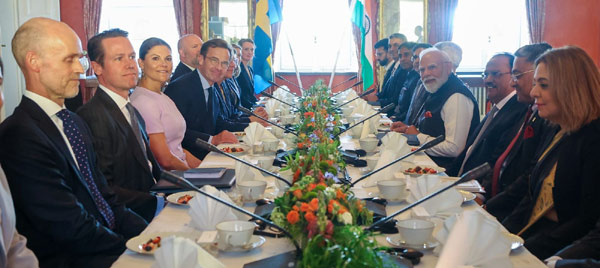
– This historic agreement was signed in Gothenburg, Sweden, on May 17, 2026, in the presence of Indian PM Narendra Modi and Swedish PM Ulf Kristersson.
– India and Sweden agreed to elevate their relations to the level of a strategic partnership.
– European Union President Ursula von der Leyen was also present during the agreement.
India-Sweden Joint Action Plan 2026–2030
– Main Objective: To double bilateral trade over the next five years and increase strategic cooperation in next-generation technologies.
– Current Status (Base Year – 2025): Bilateral trade between the two countries stood at approximately $7.75 billion.
– Target: Increase trade to $15.5 billion within five years.
1) Security & Defence
– Strategic Dialogue: Direct contact between India’s National Security Council Secretariat (NSCS) and Sweden’s NSA office.
– Defence Investment: Promotion of Swedish investment in defence manufacturing and innovation in India’s defence corridors.
– Cyber Security: Regular cyber policy dialogue and joint efforts against terror financing.
2) Economy & Trade
– New Slogan: Combining “Make in India” and “Made with Sweden” initiatives to boost co-production.
– Summit 2027: A business summit will be held in India under the theme “Stronger Together – towards 2047.”
– Connectivity: Direct air services between the two countries will resume.
3) Emerging Technologies
– ISJSTC Centre: Establishment of a virtual “India-Sweden Joint Science and Technology Centre” focusing on 6G, quantum computing, and space technology.
– SITAC Corridor: Launch of the “Sweden-India AI Corridor” for Artificial Intelligence partnership between the India AI Mission and Business Sweden.
4) Planet & People
– Green Steel (LeadIT): Cooperation to make steel and cement industries pollution-free under the Leadership Group for Industry Transition initiative.
– Critical Minerals: Use of Swedish mining technology for safe extraction from low-grade and complex mineral reserves.
– Tagore-Sweden Lecture Series: Cultural exchange initiative in 2026 marking 100 years of Rabindranath Tagore’s visit to Sweden.
Note:
– SITAC is the AI corridor between India and Sweden.
– LeadIT is a joint India-Sweden global initiative related to reducing carbon emissions in heavy industries such as steel and cement.
Sweden
– Capital: Stockholm
– Currency: Swedish Krona
– Neighbouring Countries: Norway to the west and north, Finland to the east, and Denmark across the sea to the south
– Population: Approximately 10.7 million
– System of Government: Constitutional monarchy and parliamentary democracy
– King: King Carl XVI Gustaf
– PM: Ulf Kristersson
– NATO Membership: Became NATO’s 32nd member on March 7, 2024
————–
7. In which Indian state is the Jharia coalfield located—an area that has been in the news due to its decades-old underground fires and the greenhouse gases emitted by them?
a. Chhattisgarh
b. West Bengal
c. Jharkhand
d. Odisha
Answer: c. Jharkhand (Jharia coalfield is located in Dhanbad district of Jharkhand and is one of India’s largest coal reserves.)
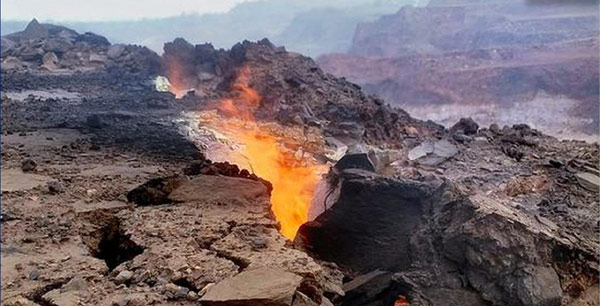
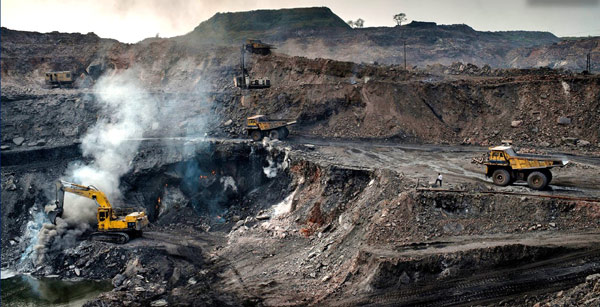
– A shocking revelation has emerged regarding the underground fires burning for decades beneath the Jharia coalfields of Jharkhand.
– According to a new study in May 2026, these fires may be much hotter than previously estimated, and the greenhouse gas emissions are also far greater than earlier figures suggested.
– The findings came from a joint research study by scientists from the UK and India, including CSIR-Central Institute of Mining and Fuel Research (CIMFR).
– Based on computer modelling and simulations, scientists estimate that temperatures inside some isolated large pits may reach up to 4,000°C, far beyond the normal estimates for coal fires.
– The study was published in the prestigious journal Communications Earth & Environment.
100-Metre-Deep Underground “Chimneys”
– Researchers found that when underground fires burn coal seams into ash, the overlying rocks collapse. This creates large cavities and cracks underground.
– These collapsed structures can extend vertically to depths of more than 100 metres.
– They act like natural chimneys, releasing extremely hot gases directly into the atmosphere.
– The study mainly focused on the Ena, Bastacolla, and Tisera collieries in Jharia.
Rocks Melted Due to Extreme Heat; Discovery of “Birianiite”
– Between 2018 and 2023, scientists discovered pits up to 10 metres wide. They found samples of paralava—debris formed by melting and re-solidification of rocks.
– A special glass-like shiny stone was discovered in Ena and Tisera collieries. Due to its unusual geological composition and resemblance to the popular rice dish, scientists humorously named it “birianiite.”
Environmental and Climate Impact
– Massive Carbon Footprint: According to the study, the global warming potential (GWP) of the Jharia fires may reach 748.72 metric tons of CO₂-equivalent per year. Comparatively, this is nearly double the total territorial emissions of the entire United Kingdom in 2023.
– Fugitive Emissions: Unlike industrial emissions, these uncontrolled emissions from coal mines are rarely included in global or national greenhouse gas inventories, creating a major data gap in climate calculations.
Reasons Behind Coal Mine Fires
– Spontaneous Combustion: When coal is exposed to oxygen due to opencast or illegal mining, natural oxidation generates heat. If the heat cannot escape, the coal begins to burn spontaneously.
– Unscientific Mining Practices: Unsafe and unplanned mining methods in the past left mine openings exposed, continuously supplying oxygen to the fires.
Challenges and Solutions
– Challenges: Uneven and irregular spread of the fire makes tracking difficult. Rehabilitation and displacement of local populations under the Jharia Rehabilitation Plan also pose socio-economic challenges.
– Technological Interventions: Use of nitrogen foam injection, slurry flushing, and complete surface sealing to extinguish the fires.
– Policy Reforms: Fugitive emissions should also be included in Net-Zero 2070 strategies and environmental audits at national and global levels.
————–
8. When is Anti-terrorism Day observed?
a. 21 May
b. 22 May
c. 23 May
d. 24 May
Answer: a. 21 May
– Anti-terrorism Day is observed on the death anniversary of former Prime Minister Rajiv Gandhi.
– He was assassinated on May 21, 1991, at Sriperumbudur near Madras (now Chennai).
– The purpose of observing Anti-terrorism Day is to keep people away from terrorism and violence.
————–
9. BJP leader B.C. Khanduri passed away on May 19, 2026. He was the former Chief Minister of which state?
a. Himachal Pradesh
b. Uttarakhand
c. Uttar Pradesh
d. Bihar
Answer: b. Uttarakhand
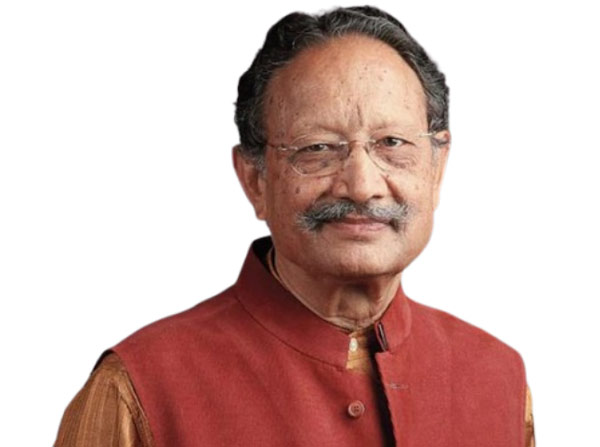
– 91-year-old B.C. Khanduri passed away due to age-related illnesses.
– Bhuvan Chandra Khanduri served as a Major General in the Indian Army.
– He served in the Army from 1954 to 1990–91.
– After retirement in 1991, he joined the BJP.
– He was first elected as MP from Garhwal.
– He served twice as the Chief Minister of Uttarakhand.
– First term: 2007–2009
– Second term: 2011–2012
– He was the fourth Chief Minister of Uttarakhand.
– He became Chief Minister in 2007 without contesting an election after the Dhumakot Assembly seat became vacant.
– He was born in Dehradun in 1934.
– He entered politics in 1990.
– He served as Union Minister for Road Transport and Highways in Atal Bihari Vajpayee’s government.
– He was associated with major highway expansion projects including the Golden Quadrilateral Project.
– His daughter, Ritu Khanduri Bhushan, is a senior BJP leader and currently the Speaker of the Uttarakhand Legislative Assembly.
– Political leaders including the Prime Minister, President, and Vice-President expressed condolences on his demise.
————–
10. Tushar Kumar, of Indian origin, was elected as the youngest mayor of which country?
a. Switzerland
b. France
c. Ireland
d. Britain
Answer: d. Britain

– The 23-year-old leader Tushar Kumar was elected Mayor of Elstree and Borehamwood in Britain.
– He became the youngest Indian-origin mayor in British history.
– No person of Indian origin had previously become a mayor at such a young age in Britain.
– Tushar Kumar studied Political Science at the prestigious King’s College London.
– He is associated with Britain’s major political party, the Labour Party.
– In 2023, he became a councillor in the Elstree and Borehamwood Town Council.
– This local council is located in eastern England.
Even at that time, he was among the youngest councillors.
– After joining the council, he first served as Deputy Mayor.
– He became Mayor in May 2026.
————–
11. When is International Tea Day celebrated?
a. 21 May
b. 23 May
c. 24 May
d. 25 May
Answer: a. 21 May
Theme for 2026 – “Sustaining Tea, Supporting Communities”
– The first International Tea Day celebration was held in 2005 in major tea-producing countries such as India, Sri Lanka, Nepal, and Kenya to focus on the condition of tea producers and the changing tea market.
– Taking cognizance of the issue, the United Nations officially declared May 21 as International Tea Day in 2019.
————–
12.
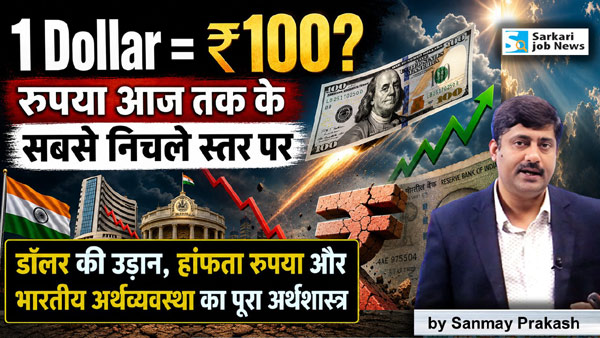
Topic: The Rise of the Dollar, the Struggling Rupee, and the Complete Economics of the Indian Economy
The Speed of the Dollar and the Helplessness of the Rupee
– Today, a piece of news from the Indian economic world and the global market has increased the concerns of both ordinary and influential people. It is being said that “the dollar is running while the rupee is gasping for breath, and our pockets are silently watching it all.”
– Across the country and in economic circles, there is growing concern that the dollar may soon cross the ₹100 mark if it continues to rise at this pace. This raises a crucial question directly connected to our daily lives—if the rupee keeps falling and this decline does not stop, what will happen to the country? What impact will it have on our economy?
Main Points:
– Global oil purchases are conducted in dollars. When the dollar becomes expensive, oil prices automatically rise sharply. Together, these factors are disturbing the financial balance of both the public and the government.
– Everyone knows that crude oil prices in the international market are already extremely high. India imports most of its oil requirements from abroad, and payments must be made in dollars. If the dollar becomes costlier, oil also becomes more expensive. But the deeper question is: Is the rise in oil prices alone responsible for the strengthening dollar? Is the weakness of the rupee caused only by tensions or war between Iran and the United States, or is there another hidden villain in this entire economic story?
– If we look at the figures from the last one and a half years, the dollar has become nearly ₹10 more expensive against the rupee. Economic experts have long argued that the government or the Reserve Bank was deliberately allowing the rupee to weaken in order to boost exports. But now the situation appears to be slipping out of control. The dollar seems unstoppable.
– The Reserve Bank of India (RBI) is continuously selling dollars from its reserves in the market to stabilize the rupee, but the results currently appear negligible. This raises an important question: Did the government delay taking necessary steps? In today’s discussion, we will try to understand all these complex economic issues in very simple language.
– Along with this detailed nationwide economic analysis, we will also discuss some other major developments. In Kerala, V.D. Satheesan has taken oath as Chief Minister, and we will examine the political significance of his swearing-in ceremony. We will also discuss the major statement made by Uttar Pradesh Chief Minister Yogi Adityanath regarding namaz. Finally, we will attempt to uncover the truth behind Twisha’s mysterious death in Bhopal. Stay with us throughout this discussion.
Why is the Rupee Falling? Trade Deficit and the Oil Factor
– Let us now come directly to the main issue and understand the real mathematics behind the historic fall of the rupee. As mentioned earlier, by the close of the market the rupee had weakened by another 54 paise, pushing the value of $1 to ₹96.25. The dollar now seems to be heading straight toward ₹100. But the question is not merely why the rupee is falling today.
– The more fundamental question is this: India is now the world’s sixth-largest economy, so why does our domestic currency come under such heavy pressure during every major global crisis? Why does the rupee weaken whenever an international crisis occurs?
– Economists believe there is no single reason behind this. Instead, a combination of factors—such as the global economic system, India’s excessive dependence on imports, the internal strength of the American economy, and international oil politics—together weaken the rupee and strengthen the dollar. Let us understand these factors one by one in detail.
Trade Deficit: The Imbalance Between Imports and Exports
– The most important factor determining the value of the rupee is imports and exports. Goods purchased from other countries are called imports, while goods sold abroad are called exports. The rule is simple: if exports exceed imports, the rupee strengthens because more dollars enter the country than leave it.
– But in India’s case, the opposite usually happens. We buy much more from abroad than we sell. This means India consistently operates at a trade loss, known in economics as a Trade Deficit.
Trade Figures for April 2026
– The West Asian crisis (Iran-Israel and Middle East Crisis) has severely impacted global trade. International supply chains have been badly disrupted.
– India’s merchandise imports were much higher than exports. In April alone, India imported goods worth $71.94 billion. As a result, the country recorded a trade deficit of nearly $28 billion in just one month.
Where Are the Country’s Dollar Reserves Going?
– We now need to examine where India’s valuable dollars are being spent so rapidly.
– Media reports and an extensive report by The Week reveal that compared to April 2025, India’s gold imports have risen by an astonishing 81%.
– India spent nearly ₹53,200 crore on gold purchases alone.
– This is why Prime Minister Narendra Modi appealed to citizens to avoid buying gold unless absolutely necessary, in the interest of the nation.
– Along with gold, silver imports have also surged.
– Silver imports increased by 157%, reaching $411 million, or around ₹3,905 crore.
– Now let us discuss the biggest villain—crude oil.
– Although petroleum imports have fallen by nearly 10% compared to last year due to disruptions in the Strait of Hormuz, international crude oil prices remain extremely high.
– As a result, India’s oil import bill still reached $18.6 billion (around ₹1.77 lakh crore).
India’s Dependence on Crude Oil
– India fulfills 85–90% of its petroleum needs through imports.
– Brent crude is currently trading around $119 per barrel, while WTI crude is around $120 per barrel.
– When oil prices remain this high, India’s trade deficit widens, dollars flow out of the country, and the rupee continues to weaken.
Other Reasons Behind Rising Imports
– Even if petroleum products and gems-jewellery are excluded, India’s imports of other goods still rose to $45 billion in April 2026, compared to $39 billion in April 2025.
– Major contributors include iron, steel, chemical materials, and vegetable oils.
Why Are Foreign Institutional Investors (FIIs) Leaving India?
– You may wonder that if India always had a trade deficit, why was the rupee not falling so rapidly before?
– The answer lies in capital inflows and foreign investment.
– After the economic reforms of 1991, global investors began to see India as a major attractive market.
– The losses caused by the trade deficit were compensated by foreign investment flowing into India.
– But today the situation is very different. Despite efforts to create a favorable investment climate, foreign institutional investors are not bringing new money into India. Instead, they are rapidly withdrawing the funds already invested in Indian markets.
– This trend has been continuing for several months.
Record Sell-Off by Foreign Investors
– In 2025, foreign investors withdrew nearly ₹1.6 lakh crore from the Indian stock market.
– Analysts called it the biggest annual sell-off in history.
– Then came 2026 with hopes of improvement, but after February 28, 2026, everything changed.
– Direct war-like tensions emerged between the United States and Iran.
– Investors across the world panicked and began moving money from emerging markets into safer assets known as “safe havens.”
– As a result, FIIs accelerated their selling in India.
A Shocking Figure
– Only four and a half months of 2026 have passed, and foreign investors have already withdrawn ₹1.92 lakh crore from Indian markets.
– This exceeds the total amount withdrawn during the whole of 2025.
– It represents the largest sell-off in history.
– This crisis is not limited to India alone. Several Asian economies, including South Korea and Taiwan, are also facing heavy outflows.
– South Korea has suffered the most, with investors pulling out $35.3 billion. India ranks second, while Taiwan ranks third.
What Is the Real Reason Behind This Sell-Off?
– According to a report by The Economic Times, the sell-off actually began in September 2024.
– At that time, the profits of Indian companies were not matching their extremely high stock valuations.
– In other words, stocks had become expensive while corporate earnings remained weak.
– This created fear among investors, and the situation worsened further due to global conflict.
– The ongoing war in West Asia has created enormous uncertainty. Nobody knows what might happen next.
– Investors therefore prefer to place their money in US Treasury bonds rather than take risks in emerging markets.
– However, if we look at the bigger picture, the dollar has strengthened by more than ₹20 over the last four years.
In just the last one and a half years, it has become ₹10 costlier.
– This means the current Iran-US conflict cannot be blamed entirely for the rupee’s weakness. The rupee had already been falling long before the conflict intensified.
– The Middle East crisis is therefore only a trigger, not the root cause.
– The real underlying weakness is India’s heavy trade deficit.
– India buys more goods from abroad than it sells internationally.
– Roughly speaking, if India spends $100 on imports, it earns only around $88 through exports and services.
– This creates a persistent $12 gap in the current account, known as the Current Account Deficit (CAD).
– Earlier, foreign direct investment (FDI) and foreign institutional investment (FII) helped cover this deficit.
– But now, as dollars are flowing out of the country, a shortage of dollars is emerging, making the dollar even more expensive.
RBI’s Intervention and the Challenges Ahead
– To stop the dollar from racing toward ₹100, the RBI has taken several strong measures.
– Before the global conflict began, India had foreign exchange reserves of around $728 billion.
– Due to RBI intervention in the currency market, these reserves have now fallen to nearly $690 billion.
– This represents a decline of about $38 billion (around ₹3.61 lakh crore).
– The most surprising fact is that out of this decline, nearly $28 billion was spent by the RBI in March alone to stabilize the rupee.
– This shows the massive scale of the RBI’s intervention.
RBI’s Official Position
– Despite spending huge amounts of dollars, the RBI has clarified that it is not trying to defend any specific level such as ₹95 or ₹96.
– Its main objective is only to control excessive volatility and prevent panic in the market.
– The positive aspect is that even the current reserve level of $690 billion is sufficient to cover around 11 months of imports.
– However, economists question how long the RBI can continue intervening at this pace.
– Some economists have even warned that the dollar could eventually rise to ₹110 or higher.
– This raises fears that the situation may be moving beyond the control of the government and RBI.
– It is true that the rupee has crossed an important psychological barrier and the possibility of touching ₹100 is real.
– However, many international brokerage houses believe that if crude oil prices cool down or India successfully secures a major trade deal with the United States that revives foreign investment, the dollar could fall back toward ₹90 or even ₹86.
– But this would require major structural reforms.
– The RBI can never completely abandon intervention.
– If the currency were entirely left to market forces and the dollar reached ₹110 or ₹120, the country could face severe economic chaos.
– A stronger dollar leads to imported inflation.
– Petrol and diesel prices would rise overnight, transportation costs would increase, and the prices of everything—from vegetables to daily-use items—would become more expensive.
– To prevent this inflationary spiral, the RBI supplies dollars in the market to control their price.
Did the Government Delay Taking Action?
– A large section of the market believes the government failed to take timely policy measures.
– Now that the situation has become critical, the burden is increasingly being shifted onto ordinary citizens.
– People are being asked not to buy gold, to reduce foreign travel, and to minimize fuel consumption in order to save dollars for the country.
– But the question remains: Will these appeals truly make a significant difference?
– This issue has two sides.
– First, India’s trade deficit is not a problem that can disappear overnight through any magical solution.
– It is a structural problem.
– Until India develops products, technologies, or industries that the entire world wants to buy, this issue will continue to reappear during every global crisis.
– Nearly one-third of India’s import bill is spent only on crude oil and gold.
– If citizens reduce gold consumption and fuel usage, billions of dollars could certainly be saved.
– However, there is also a dangerous downside.
– If people reduce spending and consumption too much, economic activity slows down.
– Factories produce less, and GDP growth can decline.
Conclusion and the Road Ahead
– The situation has become especially serious because crude oil prices have surged due to war.
– Before the conflict, oil traded around $70–80 per barrel. Today, prices have crossed $100 per barrel.
– India currently has enough foreign exchange reserves to cover 9–10 months of imports, so there is no immediate need for panic.
– However, the real challenge will emerge if the conflict continues for another year.
– If crude oil prices remain above $100 per barrel for an extended period, India could face a major economic crisis.
– This is why both the government and the RBI are acting cautiously and urging citizens to save resources.
– In the coming days, it will be extremely important to observe where the rupee’s decline eventually stops, and whether the Indian economy can find a way out of this global economic trap.
PDF Download: Click here