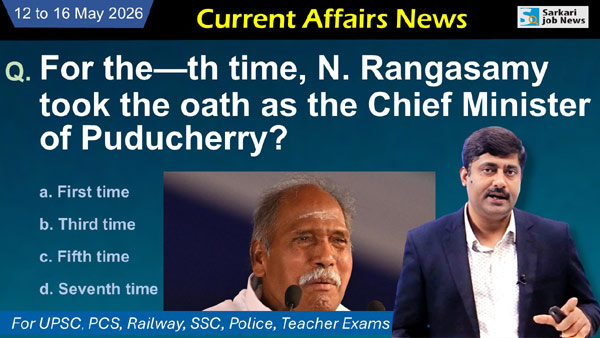
This is the current affairs 12 to 16 May 2026. Here are questions and answers of daily current affairs for better preparation of competitive exams for government jobs.
1. Due to fears of espionage, during a visit to which country did Trump and his delegation discard all gifts, pins, and small mementos into the trash upon their departure?
a. Japan
b. China
c. Taiwan
d. Vietnam
Answer: b. China
– What happened at Beijing International Airport before the U.S. President boarded the aircraft “Air Force One” drew the attention of media outlets across the world.
– On 15 May 2026, when Donald Trump and his high-level delegation were returning after concluding their two-day visit to China, a large trash bin was placed near the stairs of the aircraft at Beijing Airport.
– Before boarding the plane, American security officials, staff members, and accompanying journalists were given strict instructions to throw all Chinese items they had received into that bin.
– Emily Goodin, the White House correspondent for the New York Post, shared this directive on social media and wrote: “Nothing from China allowed on the plane.”
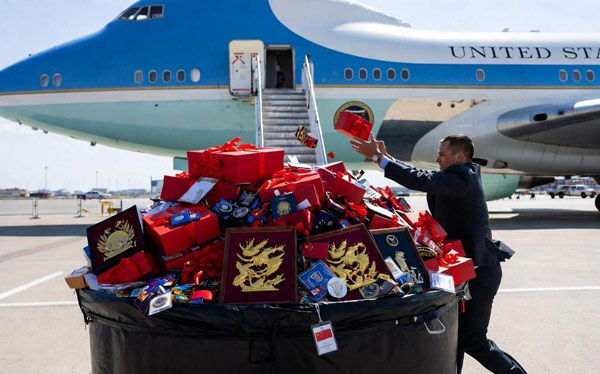
What kinds of items were discarded?
– Chinese burner phones and gadgets: Under security protocols, the American team had left their personal phones in the United States and were provided temporary “clean burner phones” for use in China. Before boarding the aircraft, all these phones and electronic accessories were destroyed/disposed of.
– Official badges and credentials: All visitor badges, identity cards, and passes issued to media personnel and staff.
– Lapel pins and souvenirs: Pins, small mementos, and gift bags given by the Chinese government or Chinese officials as part of diplomatic courtesy.
– Exception: Amid all these strict security measures, President Trump carried with him “Chinese Rose Seeds” personally gifted by Chinese President Xi Jinping, which he reportedly intends to plant in the newly renovated Rose Garden at the White House.
Rule regarding burner phones
– Whenever officials from Western countries (such as the United States, the United Kingdom, and Australia) travel to China or Russia, they leave their permanent phones at home.
– They are specially provided with “Disposable Burner Phones,” which are destroyed once the trip ends, so that no “Trojan Horse” or malware can be inserted into them through Chinese networks.
What was the main reason behind this?
– Fear of espionage and surveillance: American intelligence agencies such as the Secret Service and NSA believe that China is highly advanced in technology and cyber-surveillance. Any seemingly ordinary souvenir, pen, badge, or electronic device provided by China could potentially contain a microchip, listening device (bug), tracking device, or malware.
– Symbol of deep mistrust: Diplomatically, both leaders appeared smiling before cameras, but such strict measures on the ground indicate the deep mistrust between the United States and China regarding security matters.
This is not the first such incident
– Behind diplomacy among major powers such as Russia and China, there has always been a long history of mistrust.
– The 2018 Helsinki Summit (The Soccer Ball Incident): During the meeting between Donald Trump and Russian President Vladimir Putin in Helsinki, Finland, Putin officially gifted Trump a football (soccer ball). American intelligence agencies such as the Secret Service and CIA immediately suspected that the football might contain a spying chip or transmitter. Before it was taken to the White House, the ball underwent X-ray and technical scanning. (Later, it was found to contain only a standard Adidas NFC chip, but it was thoroughly inspected under security protocols.)
Zero-Trust Architecture
– In counter-intelligence, the principle is that no object is considered safe until it undergoes 100% technical inspection, even if it has been gifted by a head of state.
Invisible Espionage (Hardware-level Exploits)
– With modern technology, a microchip can be installed in something as small as a pen, lapel pin, or memento, enabling the recording of sensitive audio from places such as Air Force One and transmitting it via satellite to Beijing or Moscow.
Signal Intelligence (SIGINT)
– Badges and passes distributed during diplomatic meetings may contain RFID or tracking devices, allowing an opposing country to monitor which room American officials are in or whom they are meeting with.
————–
2. During the 2026 U.S.-China Beijing Summit, what new approach did Trump and Jinping adopt to improve bilateral relations?
a. Peace & Progress
b. Constructive Strategic Stability
c. One World One Vision
d. Global Trade Alliance
Answer: b. Constructive Strategic Stability
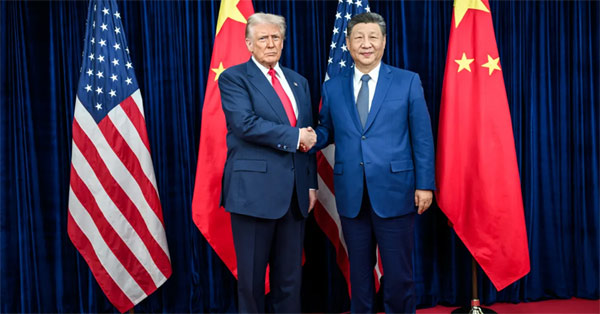
– Between 13 and 15 May 2026, Donald Trump paid a highly high-stakes official State Visit to China during his second presidential term.
– The entire world was closely watching this visit.
– During the visit, Chinese President Xi Jinping and Donald Trump agreed upon a new vision for managing bilateral relations, named “Constructive Strategic Stability.”
– Its meaning is to make cooperation the primary foundation, keep differences within manageable limits, and strengthen direct military and diplomatic communication channels between the two superpowers.
Iran War and West Asia Crisis
– Halt on military supplies: The meeting took place against the backdrop of the ongoing Iran war. According to Trump, Xi Jinping agreed that China would not supply any military equipment or weapons to Iran.
– Strait of Hormuz: Both countries agreed that the Strait of Hormuz must remain open for the free flow of energy supplies. China demanded the demilitarization of the region, as nearly half of China’s crude oil imports pass through this route.
– Signal of sanctions relief: Trump indicated that if the situation improves, he may consider removing American sanctions imposed on Chinese companies purchasing Iranian oil.
Trade and Economy
– Aircraft and agriculture deal: Trump announced that China had committed to purchasing nearly 200 Boeing aircraft, with the possibility of increasing the number to 750. China also agreed to purchase agricultural products worth billions of dollars from the United States.
– Board of Trade: Both sides discussed establishing a joint “Board of Trade” to monitor investment and trade commitments in non-sensitive sectors.
Artificial Intelligence (AI) and technology security
– For the first time, both countries agreed that Artificial Intelligence (AI) models and advanced technologies must never fall into the hands of non-state actors or terrorist groups under any circumstances. They discussed establishing a strict protocol for this purpose.
Taiwan issue
– Xi Jinping gave a clear warning to Trump that any misunderstanding regarding Taiwan could lead to a major confrontation.
– China stated that it would not accept any attempt toward Taiwan’s independence. Meanwhile, the American delegation, including Secretary of State Marco Rubio, clarified that the U.S. policy toward Taiwan remains “unchanged.”
Key members of the delegation
– President Trump was accompanied by U.S. Secretary of State Marco Rubio (who had earlier been sanctioned by China but was granted special permission for this visit), Treasury Secretary Scott Bessent, and Nvidia CEO Jensen Huang.
Cultural diplomacy
– After the talks, both leaders visited Beijing’s historic Temple of Heaven and Zhongnanhai Garden. (Trump became the second U.S. President after Gerald Ford in 1975 to visit the Temple of Heaven.)
—–
Q. With reference to the 2026 U.S.-China Beijing Summit, consider the following statements:
1) The leaders of both countries adopted a new approach called “Constructive Strategic Stability” for managing bilateral relations.
2) In the context of the Iran crisis, China agreed to halt the supply of military equipment to Iran.
3) China committed to purchasing American Boeing aircraft and agricultural products to help balance the trade deficit.
Which of the above statements is/are correct?
a. Only 1 and 2
b. Only 2 and 3
c. Only 1 and 3
d. 1, 2 and 3
Answer: d. 1, 2 and 3
————–
3. For the—th time, N. Rangasamy took the oath as the Chief Minister of Puducherry in May 2026.
a. First time
b. Third time
c. Fifth time
d. Seventh time
Answer: c. Fifth time
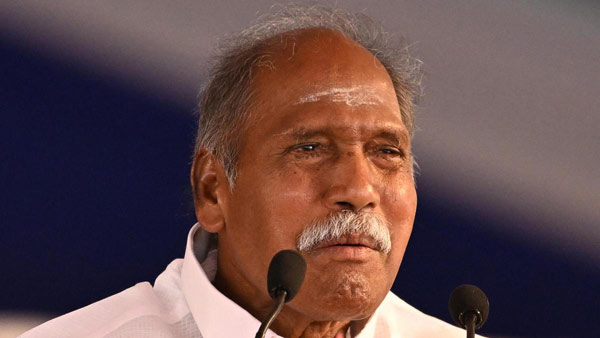
– AINRC founder N. Rangasamy took oath as the Chief Minister of Puducherry for the fifth time on 13 May 2026.
– An NDA alliance government has been formed there.
– Lieutenant Governor K. Kailashnathan administered the oath of office and secrecy to the Chief Minister and his colleagues.
About Puducherry
– Puducherry, formerly known as Pondicherry, is a Union Territory of India.
– Puducherry remained under French rule for nearly 280 years. It became part of India in 1954. Even today, traces of French culture are clearly visible in its architecture, street names, and cuisine.
– The most unique aspect of Puducherry is that it is not concentrated in one place but consists of four geographically separated districts.
– Puducherry: The main city, surrounded by the state of Tamil Nadu.
– Karaikal: Also located on the eastern coast of Tamil Nadu.
– Yanam: Situated near Kakinada in Andhra Pradesh.
– Mahe: Located near Kerala on the coast of the Arabian Sea.
————-
4. Who became the new Chief Minister of Tamil Nadu, who is also a famous film actor?
a. Rajinikanth
b. C. Joseph Vijay
c. Kamal Haasan
d. Suriya
Answer: b. C. Joseph Vijay
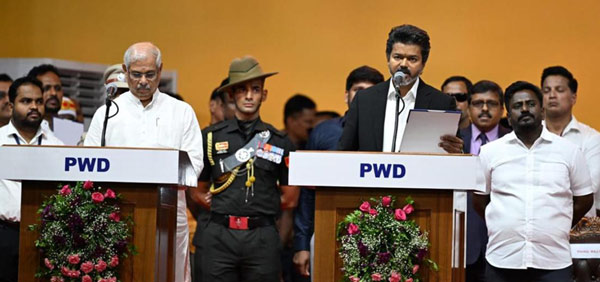
– Tamilaga Vettri Kazhagam (TVK) president C. Joseph Vijay took oath as the Chief Minister of Tamil Nadu on 10 May 2026.
– Governor Rajendra Vishwanath Arlekar administered the oath of office and secrecy to him.
– This is the first time in the last five decades that power in the state is neither with the DMK nor the AIADMK.
Election results at a glance:
– Party: Tamilaga Vettri Kazhagam (TVK)
– Total seats: TVK won 108 out of 234 seats.
– Support: Vijay received support from Congress, CPI, CPI(M), VCK, and IUML to form the government.
Vijay’s two-year-old party
– Joseph Vijay launched his party Tamilaga Vettri Kazhagam (TVK) in February 2024 with the main objective of bringing reforms against corruption and caste-religion-based politics.
About Vijay
– Full name: Joseph Vijay Chandrasekhar.
– Popular name: His fans affectionately call him “Thalapathy,” which in Tamil means “Commander” or “Leader.”
– Career: Before entering politics, he was one of the biggest superstars of Tamil cinema and acted in more than 65 films.
– Ideology: Vijay described his political ideology as a blend of “Secular Social Justice” and “Tamil Nationalism.” He considers great reformers Periyar, Dr. B.R. Ambedkar, and Kamaraj as his ideals.
– Joseph Vijay becoming Chief Minister reminds people of the “Cinema to C.M.” journey previously seen in the cases of MGR and Jayalalithaa.
—————
5. Who is the first non-Congress leader in the history of Assam to become Chief Minister for two consecutive terms?
a. Sarbananda Sonowal
b. Prafulla Kumar Mahanta
c. Himanta Biswa Sarma
d. Tarun Gogoi
Answer: c. Himanta Biswa Sarma
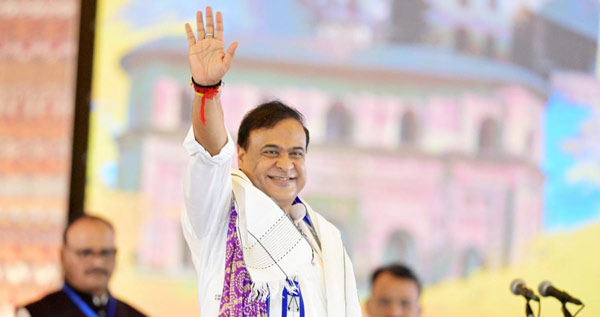
– Himanta Biswa Sarma took oath as the Chief Minister of Assam for the second consecutive time on 12 May 2026.
– He is the first non-Congress leader in the history of Assam to hold the office of Chief Minister for two consecutive terms.
– Prime Minister Narendra Modi, Home Minister Amit Shah, and Chief Ministers from 22 states, along with U.S. Ambassador Sergio Gore, attended the ceremony.
Election Results 2026 (Assam Legislative Assembly):
– Total seats: 126
– NDA victory: 102 seats (BJP – 82, AGP – 10, BPF – 10)
Facts related to Assam politics
– Longest tenure: Congress leader Tarun Gogoi remains the only Chief Minister to complete three consecutive full terms (2001–2016).
– Historic change: Prafulla Kumar Mahanta (AGP) also served twice as Chief Minister, but there was a gap of five years between his two terms. Himanta Biswa Sarma created a record by assuming office for a second consecutive term.
– NDA: This is the third consecutive term of the NDA government in Assam (the first NDA government was formed in 2016 under the leadership of Sarbananda Sonowal).
About Assam
– Assam is also known as the “Gateway to North-East.”
– Brahmaputra River: The Brahmaputra is the lifeline of Assam and one of the world’s major rivers.
– Majuli: Located in the middle of the Brahmaputra River, it is the world’s largest river island and also India’s first island district.
– Borders: Assam shares its borders with seven Indian states (Arunachal Pradesh, Nagaland, Manipur, Mizoram, Tripura, Meghalaya, and West Bengal) and two countries (Bhutan and Bangladesh).
Wildlife and National Parks
– Kaziranga National Park: Famous for the one-horned rhinoceros and recognized as a UNESCO World Heritage Site.
– Manas National Park: Also a Tiger Reserve and Biosphere Reserve.
– Dibru-Saikhowa, Nameri, and Orang are other major national parks of the state.
Economy and Resources
– Tea: Assam is India’s largest tea-producing state. “Assam Tea” is world-famous for its strong flavor.
– Petroleum: Oil was first discovered in India at Digboi in Assam. It was also the site of Asia’s first refinery (1901). It is said that British engineers discovered the reserve while tracking oil marks found on elephants’ feet.
– Silk: Assam is famous for its “Muga Silk,” which is found only there.
—————
6. Who became the Chief Minister of the BJP’s first government in West Bengal?
a. Suvendu Adhikari
b. Dilip Ghosh
c. Agnimitra Paul
d. Khudiram Tudu
Answer: a. Suvendu Adhikari
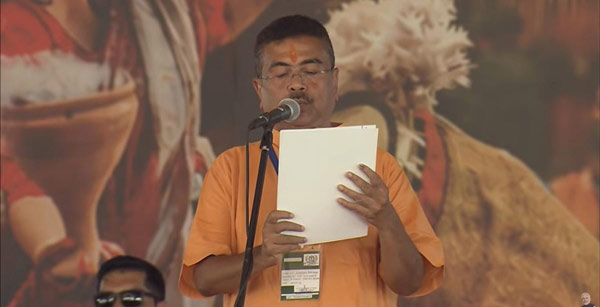
– BJP leader Suvendu Adhikari took oath as the Chief Minister of West Bengal on 9 May 2026.
– Governor R. N. Ravi administered the oath of office and secrecy to him.
– Suvendu Adhikari became the 9th Chief Minister of West Bengal. This is the first time that the BJP has come to power in the state.
– Prime Minister Narendra Modi, Home Minister Amit Shah, Defence Minister Rajnath Singh, and Chief Ministers of nearly 20 states attended the swearing-in ceremony.
Election statistics (18th Legislative Assembly):
– BJP victory: 207 out of 293 seats.
– Trinamool Congress (TMC): Reduced to 80 seats.
– Note: Before this, Mamata Banerjee was the Chief Minister of West Bengal.
About Suvendu Adhikari
– He belongs to a prominent political family. His father, Sisir Adhikari, was a former Union Minister and influential leader. Suvendu is currently unmarried.
– He started his political career in 1995 as a councillor from the Congress Party.
– In 1998, he joined the Trinamool Congress (TMC). He was one of the main strategists of the 2007 Nandigram movement, which played a major role in bringing Mamata Banerjee to power.
– In December 2020, he joined the BJP. In the 2021 elections, he defeated Mamata Banerjee from Nandigram.
– In the 2026 elections, he contested from both Nandigram and Bhabanipur (Mamata Banerjee’s stronghold) and registered impressive victories in both constituencies.
—————-
7. To what percentage did the Central Government increase the import duty (including AIDC) on gold in May 2026, raising it from 6%?
a. 8
b. 10
c. 12
d. 15
Answer: d. 15
– On 12 May 2026, the Central Government increased the import duty on gold and silver from 6% to 15%.
– However, under the new effective rules, the total effective tax on gold and silver imports increased directly from 9.2% to 18.4%.
Total tax on gold and silver
Type of Tax : Earlier : Now
– Basic Customs Duty (BCD): 5% : 10%
– Agriculture Infrastructure and Development Cess (AIDC): 1% : 5%
– Integrated GST: 3% : 3% (unchanged)
Total effective tax: ~9.2% : ~18.4%
Why did the government take this step?
– People in India purchase large quantities of gold.
– India is the world’s second-largest consumer of gold.
– To meet the demand for gold, India has to import it from abroad.
– This requires spending dollars.
– When excessive money flows out of the country, pressure increases on the economy.
– To reduce these imports, the government tightened tax regulations.
What will be the impact on the economy?
– This decision may reduce the country’s trade deficit and provide some support to the Indian rupee.
– Prime Minister Modi appealed to citizens for two consecutive days (10 and 11 May) not to purchase gold for one year.
Concerns raised by industry: fear of smuggling and unemployment
– The Gem and Jewellery Export Promotion Council (GJEPC) and economic experts described the decision as “retrograde.”
– Increase in smuggling: Experts believe that the demand for gold in India is cultural in nature. If prices rise through legal channels, there is a danger that supply through the “grey market” or smuggling may increase.
– Impact on MSMEs: Around 80% of the industry consists of small and medium enterprises (MSMEs). Increased duties may affect their liquidity and create a threat to employment.
– Decline in exports: Higher import duties may reduce the global competitiveness of Indian jewellery, thereby reducing exports.
What does the data say? (Financial Year 2025–26)
– Gold: India imported gold worth $71.9 billion (24% higher than the previous year). However, the quantity declined by 5%, meaning the import bill rose due to higher prices.
– Silver: Silver imports recorded a massive increase of 150%, reaching $12 billion.
– Jewellery: Imports of finished jewellery also rose by 146% to $6.5 billion.
—————
8. When is the International Plant Health Day observed?
a. 11 May
b. 12 May
c. 13 May
d. 14 May
Answer: b. 12 May
Theme 2026
– Plant Biosecurity for Food Security and Nutrition
– The United Nations General Assembly adopted this observance in 2020.
– The day is organized by the Food and Agriculture Organization (FAO) of the United Nations.
————–
9. When is International Argania Day celebrated?
a. 10 May
b. 11 May
c. 12 May
d. 13 May
Answer: a. 10 May
– The United Nations General Assembly (UNGA) declared this day in 2021.
– The day is observed to spread awareness about the environmental importance of the Argan tree.
About the Argan Tree
– The Argan tree (Argania spinosa) is a species native to the sub-Saharan region of Morocco.
– Morocco is a North African country bordering the Atlantic Ocean and the Mediterranean Sea.
– The tree grows in arid and semi-arid regions.
– One of the rarest oils, Argan oil, is produced from the seeds of this tree.
————–
10. Which medal did the Indian women’s recurve team win at the Archery World Cup Stage 2 (2026) held in Shanghai?
a. Bronze Medal
b. Silver Medal
c. Gold Medal
d. No medal
Answer: c. Gold Medal
– Competition name: Archery World Cup 2026 – Stage 2
– Venue: Shanghai, China
– Medal won: Gold Medal – Women’s Recurve Team Event
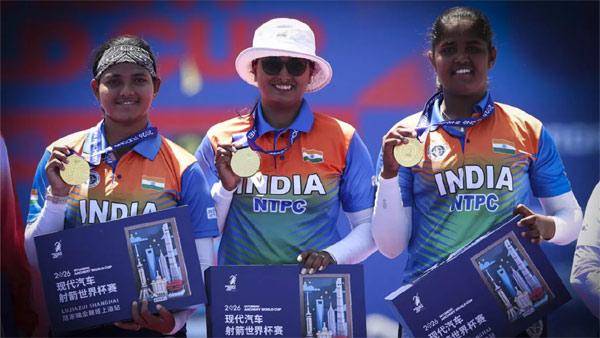
Winning Indian players
– Deepika Kumari
– Ankita Bhakat
– Kumkum Mohod
– Runner-up defeated: China (the host team) was defeated 5–4 in the final.
– Team defeated in the semifinal: South Korea.
– Special record: This was the first gold medal for the Indian women’s team at the Shanghai World Cup since 2021. With this victory, Deepika Kumari’s total World Cup medal tally reached 39.
—————
11. In which national park has India’s first satellite-tagged “Ganges Soft-shell Turtle” been released?
a. Jim Corbett National Park
b. Kaziranga National Park
c. Sundarbans National Park
d. Keibul Lamjao National Park
Answer: b. Kaziranga National Park, Assam
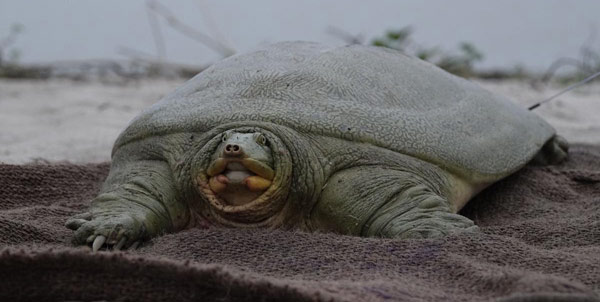
– India’s first satellite-tagged “Ganges Soft-shell Turtle” has been released in Kaziranga National Park and Tiger Reserve, Assam.
– The turtle was released on the occasion of “Endangered Species Day” (15 May).
– Scientific name: Nilssonia gangetica
– Identification: It has distinct arrowhead-shaped markings on the upper part of its head.
– Ecological importance: It is a major aquatic predator that helps keep the river ecosystem clean by feeding on dead and decaying organisms.
Conservation Status
– IUCN Red List: Endangered
– Wildlife Protection Act, 1972: Schedule-I (highest level of protection)
– Collaborating institutions: Wildlife Institute of India (WII), Assam Forest Department, and Kaziranga Park Authority.
– Funding agency: National Geographic Society.
Why is it called “Ganges” Soft-shell Turtle?
– Although this turtle has also been found in Kaziranga, Assam, the word “Ganges” in its name has a logical scientific and geographical basis.
– It is called the “Ganges Soft-shell Turtle” because the primary and largest natural habitat of this species is the Ganga-Hooghly river system.
– Despite having “Ganges” in its name, the species is not limited only to the Ganga River. It is also found in other major river systems of the Indian subcontinent, including the Indus, Mahanadi, and Brahmaputra river systems. The Brahmaputra basin in Assam is another highly suitable and important natural habitat for this turtle.
—–
Q. With reference to the Ganges Soft-shell Turtle (Nilssonia gangetica), consider the following statements:
1) It is protected under Schedule-I of the Wildlife Protection Act, 1972.
2) It is listed as “Endangered” in the IUCN Red List.
Which of the above statements is/are correct?
a. Only 1
b. Only 2
c. Both 1 and 2
d. Neither 1 nor 2
Answer: c. Both 1 and 2
—————
12. In which state did approximately 111 people lose their lives in May 2026 due to unseasonal storms, heavy rainfall, and lightning?
a. Bihar
b. West Bengal
c. Madhya Pradesh
d. Uttar Pradesh
Answer: d. Uttar Pradesh
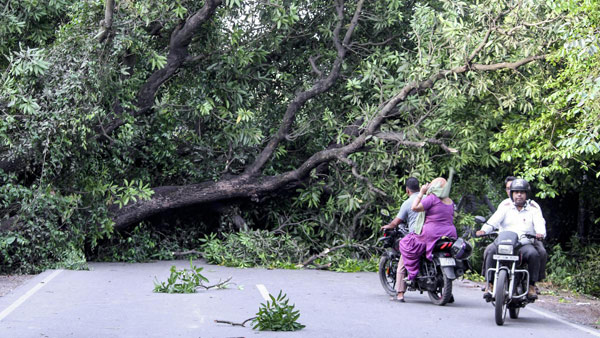
– During mid-May 2026, several districts of Uttar Pradesh were severely affected by unseasonal storms, heavy rainfall, and lightning.
– In this natural disaster, 111 people lost their lives and 72 others were injured.
– A total of 26 districts of Uttar Pradesh were primarily affected by the storm.
– The worst-affected districts included Barabanki, Bahraich, Kanpur Dehat, Basti, Sambhal, Hardoi, and Unnao, where at least four deaths each were reported.
– During the severe storm, a video of a man being thrown into the air went viral on social media. The incident took place on 13 May in Bareilly district. The man had taken shelter under a tin roof amid heavy rain and strong winds, but the storm uprooted the roof and flung him several feet into the air along with it. He fell to the ground and suffered minor injuries.
—————
13. In April 2026, the retail inflation rate in India reached a 13-month high; what was the figure?
a. 1.25%
b. 1.33%
c. 3.4%
d. 3.5%
Answer: d. 3.5%
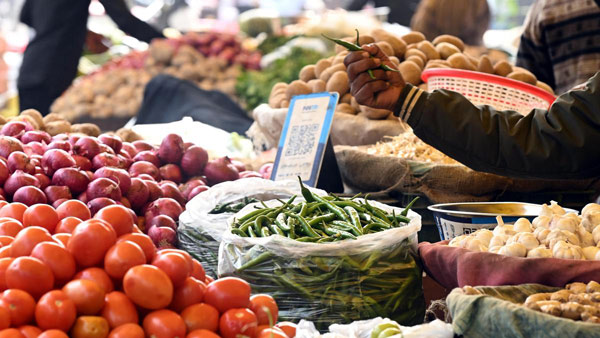
– In April 2026, retail inflation increased to a 13-month high of 3.5%.
– The rise in prices was mainly due to increasing food inflation and higher restaurant prices, as restaurants passed on the burden of rising fuel prices to consumers.
Which organization releases the retail inflation report?
– NSO (National Statistical Office)
– It functions under the Ministry of Statistics and Programme Implementation.
How is the retail inflation rate determined?
– It is determined through the Consumer Price Index (CPI).
– It includes the inflation of food items, fruits, clothing, footwear, housing, fuel, electricity, and other goods and services.
– NSO collects real-time price data from 1,407 selected urban markets (including online markets) and 1,465 villages across all states and Union Territories.
– As consumers, the changes in prices we pay in the retail market are reflected through the Consumer Price Index (CPI). It measures the average prices paid for goods and services.
Inflation range fixed by the RBI
– The inflation target fixed by the RBI is 4% based on CPI, with a permissible variation of 2% on either side.
– Thus, inflation below 2% or above 6% is considered harmful for the country’s economic growth.
————-
14. What was the wholesale inflation rate in April 2026, which was the highest in the last three-and-a-half years?
a. 8.3%
b. 1.81%
c. 2.13%
d. 3.88%
Answer: a. 8.3%
– In April 2026, wholesale inflation in India rose to 8.3%, the highest level in the last three-and-a-half years.
– This occurred mainly due to the sharp rise in crude oil and natural gas prices, marking the first visible impact of the West Asia crisis on prices in India.
– Earlier, in March 2026, the wholesale inflation rate stood at 3.9%.
Reasons for the increase
– Rise in crude oil prices, with the possibility of further inflation ahead.
– Non-food articles became more expensive.
– Increase in food prices.
– This may eventually impact CPI (retail inflation) as well.
Which organization released the wholesale inflation report?
– Department for Promotion of Industry and Internal Trade (DPIIT)
– It functions under the Ministry of Commerce and Industry.
(Note: Retail inflation data is released by the NSO.)
What is wholesale inflation?
– Wholesale inflation is calculated on the basis of the Wholesale Price Index (WPI).
– WPI refers to the prices charged by one trader to another in the wholesale market.
– These prices are related to wholesale-level business transactions.
(Note: Retail inflation is determined through the Consumer Price Index.)
—————
15. Where was the BRICS Foreign Ministers’ Meeting held in May 2026?
a. Pushkar
b. Beijing
c. Mumbai
d. New Delhi
Answer: d. New Delhi (held at Bharat Mandapam)
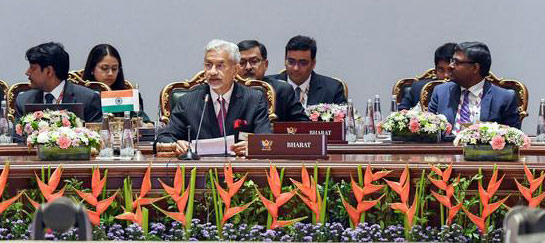
– The BRICS Foreign Ministers’ Meeting was held on 14–15 May 2026 at Bharat Mandapam in New Delhi under India’s hosting.
– The meeting was chaired by India’s External Affairs Minister Dr. S. Jaishankar.
– It was a major ministerial event under India’s BRICS Presidency for the year 2026.
– Theme: “Building for Resilience, Innovation, Cooperation and Sustainability.”
Major decisions and discussions during the meeting
– Global governance and UN reforms: India advocated urgent reforms in global financial systems and the United Nations Security Council (UNSC), including text-based negotiations. Dr. Jaishankar stated, “Cooperation is essential, dialogue is necessary, and reforms are already long overdue.”
– Voice of the Global South: The meeting emphasized concerns of developing countries, food and energy security, and promotion of Digital Public Infrastructure (DPI).
– Consensus on Palestine issue: All member countries agreed on the creation of an independent and sovereign Palestinian state based on the 1967 borders, with East Jerusalem as its capital, and supported granting it full UN membership.
Special session on “BRICS@20”
– On the second day, a special session named “BRICS@20” was organized to discuss the 20-year journey of the organization and its future direction, including strengthening the New Development Bank.
Diplomatic differences
– No Joint Statement issued: Normally, such major meetings conclude with a common joint statement agreed upon by all countries. However, this time, deep differences emerged among members regarding the West Asia conflict (Gaza war) and Red Sea security issues.
– Iran vs UAE clash: Sharp disagreements arose between Iran and the UAE over issues related to the control of the Gaza Strip and Iran’s claims over the Strait of Hormuz.
– Result: Since complete consensus could not be achieved, instead of a joint statement, only a “Chair’s Statement and Outcome Document” was issued, with one member country’s reservations mentioned in a footnote.
About BRICS
– BRICS is a group of major emerging economies aimed at bringing balance to the global economic order and strengthening the voice of developing countries.
– Beginning: 2006 (Foreign Ministers’ Meeting)
– Formal establishment: 2009 (First Summit)
– Initially called BRIC
– Became BRICS after South Africa joined in 2010.
Member countries (as of 2026)
– Brazil
– Russia
– India
– China
– South Africa
– Egypt
– Ethiopia
– Iran
– Saudi Arabia
– UAE
– Indonesia
Note: Saudi Arabia was offered membership in 2024 but has not yet formally joined.
—–
Q. With reference to the BRICS Foreign Ministers’ Meeting hosted by India in May 2026, consider the following statements:
1) The meeting was chaired by India’s External Affairs Minister Dr. S. Jaishankar.
2) The meeting was organized under the theme “Building for Resilience, Innovation, Cooperation and Sustainability.”
3) A special session called “BRICS@20” was held on the second day of the meeting.
Which of the above statements is/are correct?
a. Only 1 and 2
b. Only 2 and 3
c. Only 1 and 3
d. 1, 2 and 3
Answer: d. 1, 2 and 3
Explanation: All three statements are correct. This was the first major event under India’s BRICS Presidency for 2026, held at Bharat Mandapam in New Delhi. The meeting was based on the theme of resilience, innovation, cooperation, and sustainability, and a special “BRICS@20” session was also organized to mark 20 years of the organization.
—————
16. Following the BRICS Foreign Ministers’ Meeting, the Iranian Foreign Minister described the Chabahar Port as a “golden gateway” and expressed hope that India would continue its development. On the shores of which sea is it situated?
a. Arabian Sea
b. Red Sea
c. Persian Gulf
d. Gulf of Oman
Answer: d. Gulf of Oman
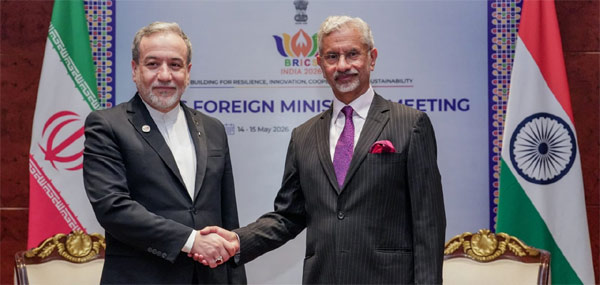
– After the BRICS Foreign Ministers’ Meeting in New Delhi in May 2026, Iranian Foreign Minister Abbas Araghchi held bilateral discussions with India on Chabahar Port, energy supply, and regional security.
– The Iranian Foreign Minister described Chabahar Port as a “Golden Gateway” for India and a symbol of cooperation between the two countries.
– Iran expressed its willingness to resume supplying crude oil and energy resources to India, which had been halted due to American sanctions.
– Araghchi clarified that the Strait of Hormuz is a territorial waterway shared by Iran and Oman. As of 15 May, 11 Indian ships had safely crossed the strait, while 13 were still stranded there.
Strategic importance of Chabahar Port
– Chabahar Port is situated on the Gulf of Oman.
– It provides India direct access to Afghanistan, Central Asia, and Europe through the International North-South Transport Corridor (INSTC), bypassing Pakistan.
Geographical location of the Strait of Hormuz
– It is the world’s most important oil transit chokepoint connecting the Persian Gulf and the Gulf of Oman. A major share of global oil supply passes through this route.
————–
17. When is National Technology Day celebrated?
a. 9 May
b. 10 May
c. 11 May
d. 12 May
Answer: c. 11 May
Theme 2026
– Responsible Innovation for Inclusive Growth
– On this day, India successfully conducted nuclear tests (Operation Shakti) in Pokhran on 11 May 1998.
– The purpose of the day is to commemorate the scientific and technological achievements of Indian scientists and engineers. The day was named by former Prime Minister Atal Bihari Vajpayee.
– It was the second nuclear test conducted after Pokhran-I, known as Operation Smiling Buddha, in May 1974.
—————
18. When is International Nurses Day celebrated?
a. 11 May
b. 12 May
c. 13 May
d. 14 May
Answer: b. 12 May
Theme 2026 – “Our Nurses. Our Future. Empowered Nurses Save Lives.”
– This day marks the birth anniversary of Florence Nightingale, the founder of modern nursing.
– She was also known as the “Lady with the Lamp.”
– She was born on 12 May 1820.
PDF Download: Click here