This is the current affairs 8 to 12 July 2026. Here are questions and answers of daily current affairs for better preparation of competitive exams for government jobs.
1. What is the mascot of the 22nd Commonwealth Table Tennis Championships?
a. Banyan Tree
b. Manjusha
c. Lotus
d. Mayur (Peacock)
Answer: d. Mayur (Peacock)
– Delhi Chief Minister Rekha Gupta unveiled the official mascot ‘Mayur’ of the 22nd Commonwealth Table Tennis Championships on 14 July 2026.
– The mascot ‘Mayur’ is inspired by India’s national bird, the Peacock.
– It symbolizes energy, enthusiasm, hospitality, and positivity.
– The feathers of ‘Mayur’ depict the national flags of all the Commonwealth countries participating in the championship, conveying the message of global unity and sportsmanship.
– Event Schedule: From 27 July to 2 August at the Tyagaraj Stadium, New Delhi.

Commonwealth Table Tennis Championships
– The Commonwealth Table Tennis Championships is an international table tennis tournament for Commonwealth nations.
– Top players from more than 25 Commonwealth countries, including England, Australia, Canada, New Zealand, South Africa, Malaysia, Singapore, Scotland, Wales, Nigeria, and Kenya, will participate.
– The event is being organized in Delhi through the joint cooperation of the Delhi Government and the Table Tennis Federation of India.
—————
2. Under the India–New Zealand Strategic Partnership Roadmap 2030, what bilateral trade target has been set by the two countries?
a. NZ$3.5 billion (₹17,500 crore)
b. NZ$7 billion (₹35,000 crore)
c. NZ$14 billion (₹70,000 crore)
d. NZ$10.5 billion (₹52,500 crore)
Answer: b. NZ$7 billion (₹35,000 crore)
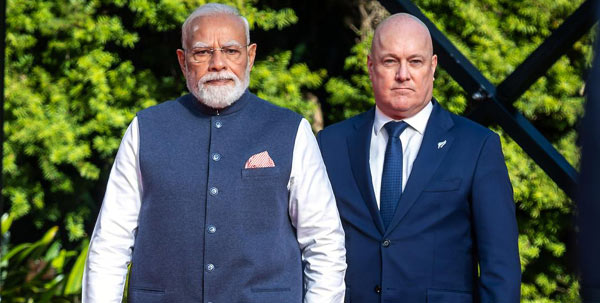
– During PM Narendra Modi’s visit to New Zealand in July 2026, both countries announced the elevation of their relationship to a ‘Strategic Partnership’ and unveiled the ‘Roadmap 2030’.
– Prime Minister Christopher Luxon was present at Auckland Airport to welcome Prime Minister Modi.
India–New Zealand Strategic Partnership Roadmap 2030
– This roadmap strengthens India’s ‘Act East’ Policy and its strategic presence in the Indo-Pacific region, providing both countries with a strong platform to address shared economic and security challenges.
– It is a non-binding framework divided into six major pillars:
1) Political and Diplomatic Engagement
– To organize regular dialogues and institutional visits at the level of Prime Ministers, Foreign Ministers, and Secretaries to guide bilateral relations.
– To promote exchanges of parliamentary delegations between the two countries.
2) Defence and Security Cooperation
– Naval Cooperation: Conduct bilateral naval exercises under the Indo-Pacific Oceans Initiative (IPOI) for maritime security, hydrography, and logistics support.
– Security Mechanism: Establish a Joint Working Group (JWG) to combat terrorism and launch a ‘Cyber Dialogue’ for cyber security priorities.
– Law Enforcement and Disaster Management: Formalize cooperation between India’s NIA and the New Zealand Police to curb drug trafficking. Also strengthen disaster-resilient infrastructure through the Coalition for Disaster Resilient Infrastructure (CDRI).
3) Trade and Economic Cooperation
– Bilateral Trade: An ambitious target has been set to double bilateral trade in goods and services to NZ$7 billion (₹35,000 crore) by the year 2030.
– FTA: Work towards the early implementation of the Free Trade Agreement.
– Customs and Primary Industries: Implement the AEO-MRA to facilitate trade. Promote joint research in horticulture, forestry, and the dairy sector.
– Tourism: Encourage direct flights to improve air connectivity.
4) People-to-People Contact, Culture, and Sports
– Increase the participation of the Indian diaspora, implement the Sports Cooperation Action Plan, and promote exchanges in mutual cultures and traditional medicine.
5) Education, Science & Technology, and Disaster Management
– Education: Promote partnerships between educational institutions of both countries.
– Climate and Energy: Cooperate on sustainable energy and low-carbon emissions through the International Solar Alliance (ISA) and the Global Biofuels Alliance (GBA).
– Technological Innovation: Research partnerships in agriculture, digital transformation, and emerging technologies.
– Disaster Management: Agreement between NDMA (India) and NEMA (New Zealand) for capacity building.
6) Regional and Multilateral Cooperation
– Indo-Pacific: Support a rules-based Indo-Pacific through ASEAN forums and advocate the peaceful resolution of maritime disputes under UNCLOS.
– UN Reform: New Zealand supports India’s claim for permanent membership in the United Nations Security Council (UNSC).
About New Zealand
– Capital: Wellington
– Prime Minister: Christopher Luxon
– Currency: New Zealand Dollar
– New Zealand is located in the South-Western Pacific Ocean.
– It is an island country.
– It consists of two main landmasses: the North Island (Te Ika-a-Māui) and the South Island (Te Waipounamu), along with more than 700 smaller islands.
– The Māori are the indigenous Polynesian people of New Zealand. They settled there around the 13th century, and their culture and language (Te Reo) are among the country’s primary identities. The Māori are world-famous for their traditional welcome (Pōwhiri) and the energetic war dance known as the ‘Haka’.
—– Questions for the Prelims Exam —–
Q. With reference to the India–New Zealand Roadmap 2030, consider the following statements:
1) In July 2026, relations between the two countries were formally upgraded to a ‘Strategic Partnership’.
2) The roadmap is a legally binding framework divided into six major pillars.
3) The objective of this partnership is to strengthen India’s ‘Act East’ Policy and its strategic presence in the Indo-Pacific region.
How many of the above statements are correct?
(a) Only one
(b) Only two
(c) All three
(d) None
Answer: (b) Only two (Statements 1 and 3 are correct)
Explanation:
– Statements 1 and 3 are correct.
– Statement 2 is incorrect because the roadmap is a non-binding framework, not a legally binding one.
—————
Q. With reference to the economic and trade objectives of the India–New Zealand ‘Roadmap 2030’, consider the following statements:
1) Both countries have set an ambitious target to double bilateral trade in goods and services to NZ$7 billion by 2030.
2) Under this agreement, both countries have decided to promote joint research in horticulture, forestry, and dairy sectors.
Which of the above statements is/are correct?
(a) 1 only
(b) 2 only
(c) Both 1 and 2
(d) Neither 1 nor 2
Answer: (c) Both 1 and 2
Explanation:
– Both statements are correct. The target is to increase trade to NZ$7 billion (approximately ₹35,000 crore) by 2030, and cooperation has also been announced in primary industries such as dairy and horticulture.
————-
Q. With reference to the geography and demography of New Zealand, consider the following statements:
1) New Zealand is an island country located in the South-Eastern Pacific Ocean and is mainly divided into two large islands (North Island and South Island).
2) The Māori are the indigenous Polynesian inhabitants who settled there around the 13th century.
3) ‘Haka’ is a traditional energetic war dance of Māori culture that is famous worldwide.
How many of the above statements are correct?
(a) Only one
(b) Only two
(c) All three
(d) None
Answer: (b) Only two (Statements 2 and 3 are correct)
Explanation:
– Statements 2 and 3 are correct.
– Statement 1 is incorrect because New Zealand is located in the South-Western Pacific Ocean, not the South-Eastern Pacific Ocean.
—————
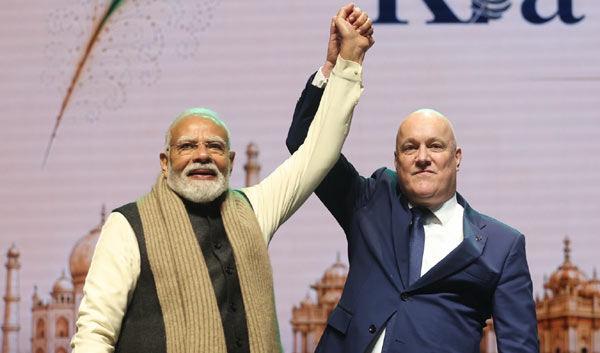
3. How many agreements were signed between India and New Zealand during PM Modi’s visit to New Zealand?
a. 5
b. 7
c. 10
d. 15
Answer: c. 10
Agreements (MoUs) between India and New Zealand
Defense and Strategic Cooperation
1) Arrangement on Maritime Cooperation:
Between the Ministry of Defence of India and the New Zealand Defence Force. It aims to promote dialogue, information sharing, and joint activities in the Indo-Pacific region.
2) Logistics Support Agreement:
Between the Indian Navy and the New Zealand Defence Force. Under this agreement, both forces will be able to use each other’s logistics support (such as fuel, rations, and repair assistance) during approved operations and exercises.
3) Hydrography and Nautical Cooperation (Hydrography & Nautical Cartography):
A practical implementation arrangement for the joint production of navigational charts and sharing of hydrographic data.
Security and Disaster Management
4) Counter-Terrorism Joint Working Group (JWG):
Establishment of a dedicated Joint Working Group to combat terrorism, share intelligence inputs, and coordinate on global platforms.
5) Disaster Risk Management (Between NDMA and NEMA):
An agreement between India’s National Disaster Management Authority (NDMA) and New Zealand’s National Emergency Management Agency (NEMA).
Main focus:
– Earthquake resilience
– Tsunami preparedness
– Reduction of coastal hazards
Economic and Resource Cooperation
6) Animal Husbandry and Dairying:
Between India’s Ministry of Fisheries, Animal Husbandry and Dairying and New Zealand’s Ministry for Primary Industries.
India will benefit from New Zealand’s advanced dairy technologies.
7) Cooperation in Tourism:
To increase tourism flows in order to strengthen economic relations and people-to-people ties between the two countries.
Culture, Heritage and Sports
8) Development of the Lothal National Maritime Heritage Complex (NMHC):
Cooperation between the National Maritime Heritage Complex (NMHC), being developed at Lothal in Gujarat, and the New Zealand Maritime Museum.
9) Joint Action Plan on Sports:
Focus on high-performance sports, sports science, sports medicine, and athlete development.
10) Cultural Cooperation Arrangement:
Agreement between the Ministries of Culture of both countries to promote art, heritage, and cultural exchanges.
—– Questions for the Prelims Exam —–
Q. With reference to the recent agreements (MoUs) signed between India and New Zealand, consider the following statements:
1) Under the Logistics Support Agreement signed between the two countries, the Indian Navy and the New Zealand Defence Force will be able to use each other’s fuel, rations, and repair assistance during approved operations and exercises.
2) Under the Disaster Risk Management agreement, the MoU between India’s NDMA and New Zealand’s NEMA mainly focuses on earthquake resilience, tsunami preparedness, and reducing coastal hazards.
3) An agreement has been reached for cooperation between the New Zealand Maritime Museum and the National Maritime Heritage Complex (NMHC) being developed in Tamil Nadu for the preservation of cultural and historical heritage.
How many of the above statements are correct?
(a) Only one
(b) Only two
(c) All three
(d) None
Answer: (b) Only two (Statements 1 and 2 are correct)
Explanation:
– Statement 1 is correct: The Logistics Support Agreement has been signed between the Indian Navy and the New Zealand Defence Force, under which both sides can share logistics facilities such as fuel, rations, and repair assistance.
– Statement 2 is correct: The agreement between NDMA (India) and NEMA (New Zealand) primarily focuses on earthquake resilience, tsunami preparedness, and reducing coastal hazards.
– Statement 3 is incorrect: The National Maritime Heritage Complex (NMHC) is being developed at Lothal in Gujarat, not in Tamil Nadu.
—————
4. Key Announcements and Strategic Decisions During PM Modi’s Visit to New Zealand
1) Strategic Partnership and Roadmap 2030
– Upgrade to Strategic Partnership:
Both countries have elevated their bilateral relationship to the level of a “Strategic Partnership.”
– Roadmap 2030:
A time-bound framework has been prepared for systematic cooperation among ministries over the next four years in the areas of trade, defence, agri-technology, and multilateral issues.
2) Economic and Trade Target
– Doubling of Bilateral Trade:
Both countries have set an ambitious target of doubling bilateral trade to NZ$7 billion (approximately ₹35,000 crore) by 2030. This will accelerate the ongoing Free Trade Agreement (FTA) negotiations.
3) Indo-Pacific and Global Alignments
– Maritime Security Dialogue:
Launch of a regular, high-level dialogue mechanism on maritime security.
– New Zealand’s Participation in IPOI: Under India’s Indo-Pacific Oceans Initiative (IPOI), New Zealand has chosen the “Maritime Security Pillar” out of the initiative’s seven pillars. Its primary focus is to prevent Illegal, Unreported, and Unregulated (IUU) fishing activities.
– Global Biofuels Alliance (GBA):
New Zealand has officially joined the India-led Global Biofuels Alliance, which is significant for the global clean energy transition.
4) Agri-tech and Academic Announcements
– Kiwifruit Action Plan:
Under this initiative, two Centres of Excellence will be established in Nagaland and Uttarakhand to enhance kiwi production and agricultural innovation in India.
– Antarctic Research: A Memorandum of Understanding (MoU) has been signed between India’s National Centre for Polar and Ocean Research (NCPOR), Goa, and the University of Canterbury, New Zealand, for joint research in polar science.
– Food Technology Cooperation: Academic and research collaboration between India’s NIFTEM (Kundli) and Massey University, New Zealand.
Exchange of Gifts: A Display of Soft Power
– Prime Minister Modi presented several historical and artistic gifts representing India’s rich heritage to the leadership of New Zealand:
– Bastar Dhokra Metal Craft
– Traditional Hill Cap (Uttarakhand)
– A hockey stick signed by the Indian Women’s Hockey Team
—————
5. In which country is ‘Pōwhiri’—a sacred ritual of Māori culture—performed, which was organized for PM Modi in July 2026?
a. Australia
b. Japan
c. New Zealand
d. Laos
Answer: c. New Zealand
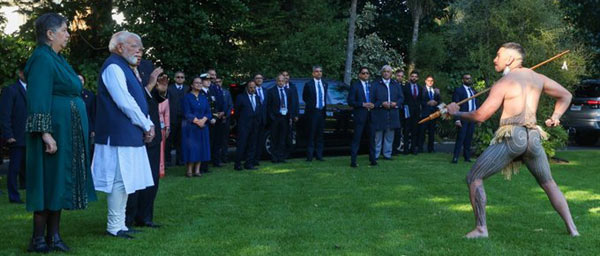
Traditional Welcome in New Zealand
– PM Narendra Modi paid an official visit to New Zealand in July 2026.
– Upon his arrival in Auckland, Prime Minister Modi was accorded New Zealand’s most prestigious and traditional indigenous welcome, known as ‘Pōwhiri’, at Government House.
– Pōwhiri is a highly sacred ritual of Māori culture that is performed only for very distinguished state guests. It symbolizes peace, respect, and the deep cultural harmony between the two countries.
—– Questions for the Prelims Exam —–
Q. With reference to the recent cooperation and agreements between India and New Zealand, consider the following statements:
1) Under India’s Indo-Pacific Oceans Initiative (IPOI), New Zealand has chosen the ‘Maritime Security Pillar’, whose primary focus is to prevent Illegal, Unreported and Unregulated (IUU) fishing activities.
2) Under the ‘Kiwifruit Action Plan’, launched to promote bilateral agricultural innovation, two Centres of Excellence will be established in Himachal Pradesh and Arunachal Pradesh.
3) A Memorandum of Understanding (MoU) has been signed between India’s National Centre for Polar and Ocean Research (NCPOR), Goa, and the University of Canterbury, New Zealand, for joint research in Polar Science.
How many of the above statements are correct?
(a) Only one
(b) Only two
(c) All three
(d) None
Answer: (b) Only two (Statements 1 and 3 are correct)
Explanation:
– Statement 1 is correct: New Zealand has officially joined the ‘Maritime Security Pillar’ of India’s IPOI, with the primary objective of curbing Illegal, Unreported and Unregulated (IUU) fishing in the region.
– Statement 2 is incorrect: Under the Kiwifruit Action Plan, the Centres of Excellence are being established in Nagaland and Uttarakhand, not in Himachal Pradesh and Arunachal Pradesh. UPSC often frames questions by changing the names of important states.
– Statement 3 is correct: A partnership has been announced between NCPOR (Goa) and the University of Canterbury, New Zealand, to enhance cooperation in Polar Science and Antarctic research.
————–
6. Unjha Cumin from which state received the GI Tag?
a. Bihar
b. Gujarat
c. Uttar Pradesh
d. Rajasthan
Answer: b. Gujarat
– This cumin is cultivated in the Unjha region of Mehsana district, Gujarat.
– Gujarat is the leading state in India’s spice industry.
– Gujarat is the largest producer of cumin in India.
————–
7. Unjha Fennel from which state received the GI Tag?
a. Uttarakhand
b. Bihar
c. Gujarat
d. Rajasthan
Answer: c. Gujarat
– Unjha is a town and municipality in Mehsana district of Gujarat.
– Gujarat is among the top producers of fennel in India.
– Fennel is produced in Mehsana, Patan, Banaskantha, and Gandhinagar districts of Gujarat.
Six GI Products of Gujarat
– Gir Kesar Mango
– Bhalia Wheat
– Kachchhi Kharek
– Amalsad Chikoo
– Unjha Cumin
– Unjha Fennel
————–
8. In which state was the first GI Tag Gallery opened?
a. Uttarakhand
b. Uttar Pradesh
c. Bihar
d. Himachal Pradesh
Answer: a. Uttarakhand
– On 13 July 2026, Uttarakhand inaugurated its first GI Product Gallery at the Uttarakhand Forest Training Academy in Haldwani.
– More than 30 GI-tagged products of the state have been displayed in this gallery.
– The gallery includes Bedu, Ramnagar Litchi, Ramgarh Peach, Tejpat, Munsiyari White Rajma, Kumaon Chyura Oil, and Almora Lakhori Chilli.
– It also displays Aipan Art, Chamoli Wooden Ramman Masks, and Uttarakhand Tamta Copper Utensils, representing the state’s traditional handicrafts.
– The objective of the gallery is to familiarize visitors, students, researchers, and trainees with GI-tagged products.
—– Questions for the Prelims Exam —–
Q. With reference to Geographical Indications (GI Tags) in India, consider the following statements:
1) Both cumin and fennel produced in the Unjha region of Mehsana district, Gujarat, have been granted Geographical Indication (GI) Tags.
2) In July 2026, Uttarakhand inaugurated its first GI Product Gallery in Haldwani, displaying more than 30 GI-tagged products of the state, including Bedu, Ramnagar Litchi, Aipan Art, and Tamta Copper Utensils.
3) Bhalia Wheat and Kachchhi Kharek are also among the notified GI products of Gujarat.
Which of the above statements is/are correct?
(a) Only 1 and 2
(b) Only 2 and 3
(c) Only 1 and 3
(d) 1, 2 and 3
Answer: (d) 1, 2 and 3
Explanation:
– Statement 1 is correct: Unjha (Gujarat) is famous for its spice industry, and both its cumin and fennel have received GI Tags. Gujarat is India’s largest producer of cumin.
– Statement 2 is correct: On 13 July 2026, Uttarakhand opened its first GI Gallery at the Forest Training Academy in Haldwani to introduce visitors and researchers to the state’s traditional agricultural and handicraft products such as Aipan Art and Tamta products.
– Statement 3 is correct: Gir Kesar Mango, Bhalia Wheat, Kachchhi Kharek, and Amalsad Chikoo are also among Gujarat’s major GI-tagged products.
—————
9. What new name has the Central Government given to the Central Vista?
a. ‘Desh Seva Path’
b. ‘Rajpath’
c. ‘Teerth Kshetra’
d. ‘Kartavya Bhavan Area’
Answer: d. ‘Kartavya Bhavan Area’
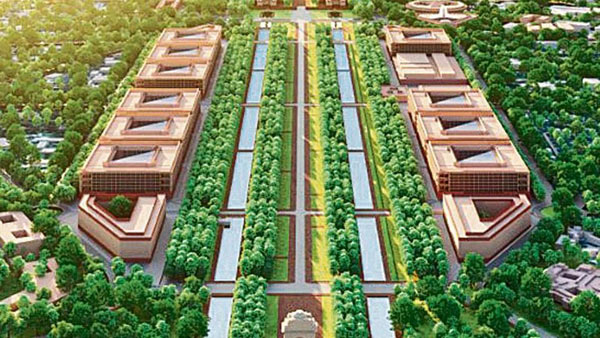
– During the CPWD (Central Public Works Department) Foundation Day celebration on 12 July 2026, Union Minister Manohar Lal announced that the redevelopment site, previously known as Central Vista, will now be known as the Kartavya Bhavan Area.
– He stated that the term “Central Vista” should no longer be used in official documents.
– The new name reflects the idea of “Kartavya” (Duty), emphasizing the responsibility of public institutions and civil services towards citizens.
– The area includes the new government buildings, Kartavya Path (formerly Rajpath), and all future structures to be built there.
Names Changed Earlier
– In 2022, the Government renamed Rajpath as Kartavya Path.
– The newly constructed government office complex has been named Kartavya Bhavan.
– In addition, the new complex housing the Prime Minister’s Office, Cabinet Secretariat, and the Office of the National Security Advisor has been named Seva Teerth.
————–
10. Ten European countries, including Ukraine, formed a missile defence alliance. In which country was this decision taken?
a. France
b. Germany
c. Italy
d. Spain
Answer: a. France
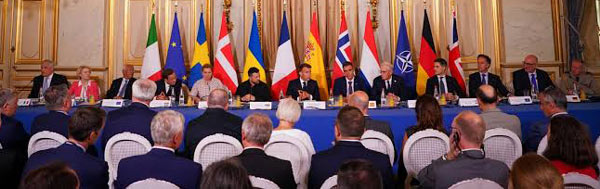
– This decision was taken during a meeting held in Paris, the capital of France, on 13 July 2026.
– The objective of this alliance is to develop a common ballistic missile defence system for the whole of Europe.
– The joint statement said that Russia’s ballistic missiles are becoming a major threat to Europe’s security.
– Therefore, an integrated missile defence system will be developed for the entire continent.
– The alliance will also make use of Ukraine’s experience gained during its four-year war against Russia.
– The alliance has made it clear that other European countries may also join in the future.
Member Countries of the Alliance
1. Ukraine
2. France
3. Germany
4. United Kingdom
5. Italy
6. Netherlands
7. Denmark
8. Norway
9. Spain
10. Sweden
—– Questions for the Prelims Exam —–
Q. With reference to the “Missile Defence Alliance” formed by European countries, consider the following statements:
1) In July 2026, ten European countries, including Ukraine, decided to establish this missile defence alliance during a meeting held in Paris, France.
2) The primary objective of this alliance is to develop an integrated ballistic missile defence system for the whole of Europe.
3) Poland and Finland are also among the ten founding members of this alliance.
Which of the above statements is/are correct?
(a) Only 1 and 2
(b) Only 2 and 3
(c) Only 1 and 3
(d) 1, 2 and 3
Answer: (a) Only 1 and 2
Explanation:
– Statement 1 is correct: On 13 July 2026, Ukraine and nine other European countries announced the formation of this alliance during a meeting held in Paris, France.
– Statement 2 is correct: The primary objective of the alliance is to develop a common and integrated air and ballistic missile defence system for Europe to counter the growing threat from Russia, while also benefiting from Ukraine’s wartime experience.
– Statement 3 is incorrect: Poland and Finland are not among the ten founding members. The ten members are Ukraine, France, Germany, the United Kingdom, Italy, the Netherlands, Denmark, Norway, Spain, and Sweden.
————–
11. With which Arab country did the Ladakh administration sign a Memorandum of Understanding (MoU) a few months before commencing the export of premium apricots?
a. Kazakhstan
b. Kuwait
c. United Arab Emirates (UAE)
d. Saudi Arabia
Answer: c. United Arab Emirates (UAE)
– On 14 July 2026, Lieutenant Governor of Ladakh Vinay Kumar Saxena flagged off the first consignment of 5 metric tonnes of fresh apricots from New Delhi.
– Ladakh has long accounted for nearly 60% of India’s apricot production, but it is now gaining global recognition.
– This initiative will establish Ladakh as a global horticulture hub.
– During this season, the target is to export more than 1,000 metric tonnes of fresh apricots through Lulu Retail, for which the Ladakh administration has signed an MoU.
– For the first time, farmers will not have to worry about harvesting, sorting, and packaging their produce.
– In 2021, the first commercial shipment of apricots from Ladakh was exported to Dubai, but this year’s export is on a much larger scale.
About Ladakh Apricots
– Apricots are locally known as “Chuli.”
– They are known for their sweetness, low acidity, and medicinal properties.
– They are organic in nature and are rich in vitamins and antioxidants.
—————
12. In which North-Eastern state were two new solitary bee species, Elaphropoda triangulata and Habropoda adi, discovered?
a. Sikkim
b. Meghalaya
c. Assam
d. Arunachal Pradesh
Answer: d. Arunachal Pradesh
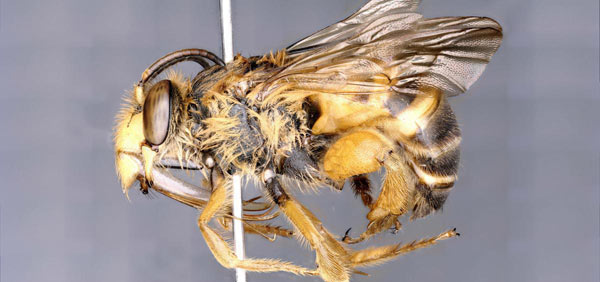
– On 11 July 2026, two new solitary (single-living) bee species, Elaphropoda triangulata and Habropoda adi, were identified.
– The discovery was made by researchers from the Ashoka Trust for Research in Ecology and the Environment (ATREE), Bengaluru, during the Siang Expedition.
– The researchers are Femy Ezhuthupallikal Beni and Priyadarshanan Dharma Rajan.
– The findings were published in the European Journal of Taxonomy.
– These species belong to the genera Elaphropoda and Habropoda.
– Elaphropoda triangulata was named because of the triangular marking on its abdomen.
– Habropoda adi was named after the Adi tribal community of Arunachal Pradesh, which resides in the region where these bees were collected.
– Solitary bees are bees that do not form large colonies consisting of queens, workers, and drones.
– According to the researchers, these species belong to the bee subfamily Anthophorinae, which mainly consists of ground-nesting solitary bees.
————–
13. The Ladakh administration announced the establishment of its own Autonomous Hill Development Council (AHDC) in how many districts, increased from the previous two districts?
a. 2
b. 4
c. 6
d. 7
Answer: d. 7
– Ladakh Chief Secretary Ashish Kundra announced this on 13 July 2026.
– All seven districts of the Union Territory of Ladakh will receive the benefits of the Ladakh Autonomous Hill Development Council Act.
– Earlier, this facility was limited only to the two districts of Kargil and Leh.
– Now, its scope has been expanded to all seven districts.
– Five additional districts were created in Ladakh in 2025:
– Sham
– Nubra
– Changthang
– Zanskar
– Drass
– Section 3(1) of the Ladakh Autonomous Hill Development Council Act already provides for one council in every district, and only minor amendments to the law will be required.
What are the powers of the LAHDC?
– The Ladakh Autonomous Hill Development Council Act, 1995, was enacted for the development of Ladakh.
– Elections under this Act were held in August 1995, and the first meeting of the Council was held in Leh on 3 September 1995.
Benefits
– Local people will have the authority to formulate policies, implement schemes, and take decisions according to their own priorities.
– Development of difficult roads and provision of basic facilities such as water and electricity to the people.
– Creation of employment and self-employment opportunities according to local needs.
– Making mountainous regions safer and more convenient so that people can overcome geographical hardships.
– Participation of local people will be essential for the development of the region.
Article 371
– Article 371 is a special provision of the Constitution of India that grants certain states special autonomy (Special Status) and administrative safeguards to protect their unique social, cultural, and economic conditions.
– The primary objective of these provisions is to promote the development of backward regions, protect the culture of tribal communities from external interference, and safeguard the land and employment rights of local people.
Lieutenant Governor of Ladakh: Vinay Kumar Saxena
—– Questions for the Prelims Exam —–
Q. With reference to the Ladakh Autonomous Hill Development Council (LAHDC), consider the following statements:
1) In July 2026, the Ladakh administration announced the establishment of Autonomous Hill Development Councils in the five newly created districts (Sham, Nubra, Changthang, Zanskar, and Drass), in addition to Leh and Kargil.
2) Section 3(1) of the Ladakh Autonomous Hill Development Council Act, 1995, already provides for the constitution of one Council in every district of the Union Territory.
3) The primary objective of these Councils is to empower local people to formulate policies, implement schemes, and take decisions according to their own priorities.
Which of the above statements is/are correct?
(a) Only 1 and 2
(b) Only 2 and 3
(c) Only 1 and 3
(d) 1, 2 and 3
Answer: (d) 1, 2 and 3
Explanation:
– Statement 1 is correct: Earlier, the Autonomous Hill Development Council existed only in Leh and Kargil. After five new districts (Sham, Nubra, Changthang, Zanskar, and Drass) were created in 2025, the administration announced in July 2026 that Councils would be established in all seven districts.
– Statement 2 is correct: Section 3(1) of the Ladakh Autonomous Hill Development Council Act already contains a provision for one Council in every district. Therefore, only minor amendments are required to implement it across all districts.
– Statement 3 is correct: These Councils promote decentralized governance by enabling local people to participate directly in policy-making, employment generation, infrastructure development, and decision-making according to local priorities.
————–
14. When is World Youth Skills Day celebrated?
a. 13 July
b. 14 July
c. 15 July
d. 16 July
Answer: c. 15 July
Theme for 2026
– Skills for a Shared Future
– It is a day declared by the United Nations General Assembly.
– World Youth Skills Day was observed globally for the first time on 15 July 2015.
– The theme for the year 2022 was “Transforming Youth Skills for the Future.”
————–
15. When is World Plastic Surgery Day celebrated?
a. 15 July
b. 16 July
c. 17 July
d. 18 July
Answer: a. 15 July
– The Association of Plastic Surgeons of India (APSI) announced the observance of this day.
– It is celebrated to raise awareness about the importance of plastic surgery.
– It was observed for the first time on 15 July 2021.
—————
16. What kind of trade agreement between India and the United Kingdom came into effect on 15 July 2026?
a. CETA
b. CECA
c. PTA
d. CEPA
Answer: a. CETA (Comprehensive Economic and Trade Agreement)
What is a Trade Agreement?
– A trade agreement is an agreement between two or more countries that enables them to trade goods and services more easily by reducing or eliminating taxes (duties) on such trade.
– It benefits companies in both countries because their products become cheaper, resulting in higher consumer demand.
– Trade agreements are generally referred to as FTAs (Free Trade Agreements). However, an FTA implies complete elimination of tariffs (import duties). Since countries have different priorities, they often agree to reduce tariffs only in selected sectors. Therefore, different types of trade agreements exist. India has a complete bilateral FTA only with Sri Lanka.
India–UK Trade Agreement: CETA
– India and the United Kingdom signed the CETA (Comprehensive Economic and Trade Agreement) on 24 July 2025.
– Union Minister of Commerce and Industry Piyush Goyal and the UK Secretary of State for Business and Trade Jonathan Reynolds signed the agreement on 24 July 2025.
– The agreement was signed in London in the presence of Prime Minister Narendra Modi and UK Prime Minister Keir Starmer.
– One year after the signing, the agreement came into force on 15 July 2026.
Britain’s Biggest Trade Agreement After Brexit
– Since leaving the European Union (Brexit), this is Britain’s biggest trade agreement.
– The agreement is expected to increase bilateral trade by US$34 billion.
– According to estimates by the Government of India, bilateral trade is expected to reach approximately US$100 billion by 2030.
Why is this agreement important for both countries?
– The United Kingdom is India’s 16th largest trading partner, while India is the UK’s 11th largest trading partner.
– Bilateral trade between the two countries is approximately US$60 billion, and India enjoys a positive trade balance.
– According to estimates by the Government of India, bilateral trade is expected to reach nearly US$100 billion by 2030.
– According to the British Government, the new trade agreement will further increase bilateral trade by US$34 billion.
– The agreement comes at a time when global trade is facing uncertainty due to the tariff policies of US President Donald Trump.
India–UK Bilateral Trade
– India’s exports to the UK: ₹2.75 lakh crore
– UK’s exports to India: ₹1.85 lakh crore
– UK’s trade deficit: ₹90,700 crore
– UK’s share in India’s total trade: 2%
India’s Major Exports to the UK
– Chemicals
– Ready-made garments
– Auto parts
– Toys
– Marine products
– Gems and jewellery
UK’s Major Exports to India
– Whisky
– Gin
– Medical devices
– Cosmetics
– Mutton
– Salmon
– Biscuits
Benefits for India
– Tariff relief will be available on 99% of India’s exports to the UK.
– India has secured market access for major employment-generating sectors such as textiles, footwear, gems & jewellery, and marine products. The UK will eliminate tariffs of up to 20% on these products.
– Around 99.7% of tariff lines in India’s food sector have become duty-free. Earlier, duties on most food items were as high as 70%.
– Market access has significantly improved for export-oriented sectors such as marine and animal products, including seafood, dairy products, and meat products, where tariffs have been reduced from 20% to zero.
– This means that goods exported from India to the UK will either face much lower taxes or no taxes at all.
– Tariffs on automobile exports have also been reduced from 100% to 10%.
– Under the Double Contribution Agreement, Indian workers temporarily residing in the UK and their employers have obtained exemption from social security contributions for three years.
– Indian industry is optimistic about CETA and expects a sharp increase in exports. Textiles are among India’s major exports to the UK.
– Kirit Bhansali, Chairman of the Gem & Jewellery Export Promotion Council (GJEPC), estimated in a social media post that exports from this sector alone could increase by US$2.5 billion over the next two years, doubling bilateral trade to US$7 billion.
Benefits for the United Kingdom
– British companies will also benefit from this agreement, as they will find it easier to sell whisky, cars, and other products in India.
– India will reduce tariffs on these products from 15% to 3%. The agreement is expected to increase bilateral trade by around ₹3 lakh crore annually.
– For the first time, India has agreed to reduce duties on UK-manufactured alcoholic beverages, including whisky, brandy, rum, vodka, liqueur, mead, cider, and tequila. These products currently attract a basic customs duty of 150%, which will be substantially reduced—from 110% in the first year to 75% by the tenth year.
What will be the Economic Benefits?
– The agreement will boost Indian exports and create new jobs.
– In FY 2023–24, India exported merchandise worth US$12.9 billion (approximately ₹1.12 lakh crore) to the UK.
– The agreement will help India achieve its target of US$1 trillion in exports by 2030.
– It will also improve access to developed markets.
Are there any Concerns?
– Concerns mainly exist in two sectors: agriculture and MSMEs.
– Vijoo Krishnan, General Secretary of the All India Kisan Sabha, points to the previous FTA with Sri Lanka, which led to a significant decline in the prices of products such as spices and tea produced by Indian farmers. He also cites the long-term impact of the ASEAN FTA on rubber prices, which were ₹230 per kg in 2011 but had declined to ₹170 per kg by 2025.
– According to him, FTAs have created an “unequal” framework for Indian farmers and MSMEs. He stated, “Indian farmers own small landholdings, with many cultivating less than five acres. This is not the case in developed countries.”
—–
Types of Trade Agreements
– FTA (Free Trade Agreement): No customs duty is imposed on all categories of goods and services. Example: Sri Lanka.
– CETA (Comprehensive Economic and Trade Agreement): A new-generation comprehensive trade agreement covering goods, services, and investment cooperation. Example: United Kingdom.
– CECA (Comprehensive Economic Cooperation Agreement): Includes economic as well as investment cooperation. Examples: Australia and Singapore (separate agreements).
– CECPA (Comprehensive Economic Cooperation and Partnership Agreement): The term “Partnership” reflects deeper bilateral cooperation. Example: India–Mauritius.
– CEPA (Comprehensive Economic Partnership Agreement): Example: Agreements between India and South Korea, and India and Japan.
– PTA (Preferential Trade Agreement): Tariffs are reduced or removed only on selected goods. Example: India–Thailand Agreement.
– RTA (Regional Trade Agreement): A trade agreement among several countries within a region.
– TEPA (Trade and Economic Partnership Agreement): An expanded agreement covering goods, services, and investment.
India’s Trade Agreements: Year-wise List (up to 2025)
– Year – Country/Organization – Type of Agreement – Key Features
– 2025 – United Kingdom (UK) – CETA – Effective from 15 July 2026; covers goods, services, investment, trade, and intellectual property.
– 2022 – Australia – ECTA → CECA (2023) – 96% of Indian products become tariff-free; opportunities for students, services, investment, and intellectual property.
– 2022 – UAE – CEPA – Target of US$100 billion bilateral trade in 10 years.
– 2021 – Mauritius – CECPA – Cooperation in goods, services, and investment; India’s first trade agreement with an African country.
– 2014 – Bangladesh – PTA – Tariff concessions on selected goods.
– 2011 – Malaysia – CECA – Covers goods, services, and investment.
– 2011 – Nepal – Revised Trade Treaty – Enhanced border trade and bilateral cooperation.
– 2010 – Japan – CEPA – Duty concessions on 90% of products along with services and investment.
– 2009 – South Korea – CEPA – Deep economic cooperation.
– 2006 – Bhutan – PTA – Supports traditional and border trade.
– 2005 – Singapore – CECA – Special agreement on services and investment.
– 2003 – Thailand – Early Harvest Scheme – Initial tariff concessions on 82 products.
– 1998 – Sri Lanka – FTA – India’s first bilateral Free Trade Agreement.
Regional / Multilateral Trade Agreements Involving India
Year – Regional Organization / Group – Agreement – Key Feature / Status
– 2026 – European Union (FTA) – Signed in January 2026; to come into effect one year later.
– 2024–25 – EFTA (Switzerland, Norway, Iceland, Liechtenstein) – India–EFTA TEPA – Signed on 10 March 2024; effective from 1 October 2025; US$100 billion (₹8 lakh crore+) investment and 1 million jobs.
– 2010–15 – ASEAN (10 members) – ASEAN–India FTA (Goods + Services) – Goods Agreement effective from 1 January 2010; Services & Investment Agreement from 2015; 90% tariff reduction.
– 2004–09 – Mercosur (Brazil, Argentina, Uruguay, and Paraguay) – India–Mercosur PTA – Framework signed in 2004; effective from 2009.
– 2006 – SAARC (8 members) – SAFTA (South Asian Free Trade Area) – Effective from 1 January 2006; objective was to eliminate tariffs by 2012.
United Kingdom
– Capital: London
– Currency: Pound Sterling
– Monarch: King Charles III
– Neighbouring Country: Ireland
—– Question for the Prelims Exam —–
Q. With reference to the various trade agreements signed by India and their economic implications, consider the following statements:
1) Under the ‘Comprehensive Economic and Trade Agreement’ (CETA) concluded between India and the UK, both countries have mutually agreed to reduce import duties to zero on 100% of their tariff lines.
2) Through the India–UK CETA, India has secured a reduction in tariffs on automobile exports and has also ensured market access in labor-intensive sectors such as textiles and gems & jewellery to maintain the bilateral trade balance in its favor.
Which of the following is correct regarding the above statements?
(a) Statement 1 only is correct.
(b) Statement 2 only is correct.
(c) Both Statement 1 and Statement 2 are correct.
(d) Both Statement 1 and Statement 2 are incorrect.
Answer: (b) Statement 2 only is correct.
Explanation:
– Statement 1 is incorrect: Under the CETA, import duties have not been reduced to zero on all (100%) tariff lines. For example, India has provided a phased reduction in tariffs on British alcohol/whisky from 150% to 110% in the first year and further to 75% by the 10th year, rather than eliminating them completely. On the other hand, India has obtained tariff concessions on 99.7% of tariff lines in the food sector and 99% of tariff lines for general exports.
– Statement 2 is correct: Under this agreement, the tariff on automobile exports has been reduced from 100% to 10%. In addition, India has a positive trade balance with the UK, and to maintain this advantage, it has secured improved market access in major employment-generating sectors such as textiles, gems & jewellery, and marine products.
PDF Download: Click here