
This is the current affairs 8 to 12 July 2026. Here are questions and answers of daily current affairs for better preparation of competitive exams for government jobs.
1. Which neighboring country successfully conducted a recovery test of its reusable rocket booster and, for the first time in the world, used ‘net’ and ‘landing hook’ technology on a sea-based platform?
a. Pakistan
b. Bangladesh
c. China
d. Myanmar
Answer: c. China
– China’s space agency, CNSA (China National Space Administration), conducted this test on July 10, 2026 (Friday).
– The rocket was launched from the Commercial Space Launch Site located in Hainan, the island province in southern China.
– After separating from the upper stage, the rocket booster landed on an offshore platform (Offshore Platform / Sea Vessel) floating in the sea, which was deployed some distance away from the coast of Hainan.
– Within just 6 minutes of launch, the massive booster reached the edge of space, made a U-turn, and accurately landed into a giant net deployed over the sea.

Why is this test considered so shocking?
– Until now, the world has seen Elon Musk’s company SpaceX, whose Falcon 9 rockets land vertically on land or ocean drone ships using massive hydraulic landing legs.
– China completely changed this conventional method. The Long March 10B rocket had no hydraulic landing legs!
– Instead, it suspended itself in mid-air using a giant 25,000-ton floating platform equipped with a “Kangaroo Net” (Arresting Net) and “Landing Hooks” extending from the rocket body. This is the first time in the history of space exploration that such an experiment has been carried out in the middle of the sea.
Structure and Design of the Net
– Shape: It was a massive “X” or plus (+) shaped net. Its span was extremely large so that even if the rocket tilted slightly to the left or right due to wind, it would still remain within the capture area of the net.
– Material: It was woven using extremely strong and lightweight synthetic polymer fibers (such as Kevlar or carbon-fiber composites). These fibers can withstand extremely high tension as well as intense heat generated by the rocket engines.
– Buffering System (Shock Absorbers): Instead of attaching the four corners of the net directly to the sea platform, they were connected through massive hydraulic shock absorbers and spring systems. Their purpose was to absorb the heavy impact generated when the rocket was captured.
– Capture Mechanism: As the rocket descended vertically, it shut down its engines and its lower section entered the openings of the net. As it moved downward, the landing hooks locked onto the ropes of the net in a “one-way lock” mechanism.
————–
2. Which countries did Prime Minister Narendra Modi visit during his six-day tour in July 2026?
a. Indonesia
b. Australia
c. New Zealand
d. All of the above
Answer: d. All of the above (Indonesia, Australia, and New Zealand)
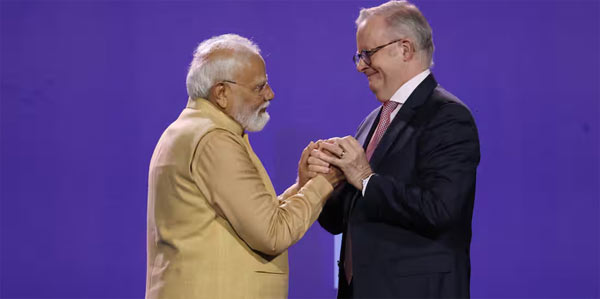
– Narendra Modi paid official visits to these three countries from July 6 to July 11, 2026.
– From July 6 to July 8, he visited Indonesia, where he held bilateral talks with President Prabowo Subianto.
– From July 8 to July 10, he was in Australia.
– From July 10 to July 11, he visited New Zealand.
– This was the first visit by an Indian Prime Minister to New Zealand in 40 years. Before this, Rajiv Gandhi had visited New Zealand in 1986.
————–
3. Who has been appointed as the Director General (DG) of the Bureau of Police Research and Development (BPRD)?
a. Gaurav Yadav
b. Alok Kumar Mittal
c. Sanjeev Kumar Jain
d. Y. Puran Kumar
Answer: b. Alok Kumar Mittal
– The Appointments Committee of the Cabinet (ACC) issued the appointment order on July 6, 2026.
– Alok Kumar Mittal is a 1993-batch IPS officer of the Haryana cadre.
– His tenure will continue until June 30, 2029 (the date of his retirement) or until further orders, whichever is earlier.
– He succeeded Rajiv Kumar Sharma.
– Alok Kumar Mittal has previously served as Director General (DG) of Prisons and Resident Commissioner in Haryana.
BPRD
– Full Name: Bureau of Police Research and Development
– It is a major central agency functioning under the Ministry of Home Affairs, Government of India.
– Established: August 28, 1970
– It is responsible for research, training, and policy issues related to policing across the country.
– Major Functions: Police modernization, criminology and research, training, and prison reforms.
————–
4. Who has been appointed as the Director of the National Crime Records Bureau (NCRB)?
a. Kshitij Bhardwaj
b. Alok Ranjan
c. Amit Garg
d. Sujit Ray
Answer: c. Amit Garg
– Amit Garg is a 1993-batch IPS officer of the Andhra Pradesh cadre.
– He has succeeded Alok Ranjan.
– He was appointed to the post on July 6, 2026.
– He will remain in office until October 31, 2027, i.e., until his retirement date or until further orders, whichever is earlier.
NCRB
– Full Name: National Crime Records Bureau (NCRB)
– Established: March 11, 1986
– Headquarters: New Delhi
– Major Functions: Collection of crime data, operation of the Crime and Criminal Tracking Network & Systems (CCTNS), and maintenance of fingerprint records.
– It is also responsible for the Central Finger Print Bureau (CFPB), which maintains the national and international fingerprint database of criminals.
—————

—————
5. Who has been appointed as the Director of the Sardar Vallabhbhai Patel National Police Academy (SVPNPA)?
a. Aryan Tiwari
b. Nikhil Bhardwaj
c. Adi Sharma
d. Sujit Pandey
Answer: d. Sujit Pandey
– Sujit Pandey is a 1994-batch IPS officer of the Uttar Pradesh cadre.
– He will remain in this position until July 31, 2028, or until further orders, whichever is earlier.
– It is India’s premier civil services training institution that trains Indian Police Service (IPS) officers selected through the UPSC Civil Services Examination before they are posted to their respective state cadres.
– Location: The academy is located near Shivarampally in Hyderabad, Telangana.
– Establishment: It was established on September 15, 1948, in Mount Abu, Rajasthan, as the “Central Police Training College.” In 1975, it was permanently shifted to Hyderabad.
————–
6. Which state government banned the sale of the energy drink “Sting” within a 500-meter radius of schools?
a. Maharashtra
b. Bihar
c. Uttar Pradesh
d. Punjab
Answer: a. Maharashtra
– On July 3, 2026, the Maharashtra State Government imposed this ban within a 500-meter radius of schools across the state.
– Awareness is being created regarding the high caffeine content in this drink.
– Schools have also been instructed to organize awareness programs about the health risks associated with energy drinks, which often contain high levels of caffeine and sugar.
Notice for Misbranding and Misleading Claims
– FSSAI had issued notices to six energy drink brands for misbranding and misleading claims.
————–
7. Between India and which country was the International Center for Civilizational Studies “Manas and Mahabharata” inaugurated in Bishkek?
a. Kazakhstan
b. Kyrgyzstan
c. Uzbekistan
d. United Arab Emirates (UAE)
Answer: b. Kyrgyzstan
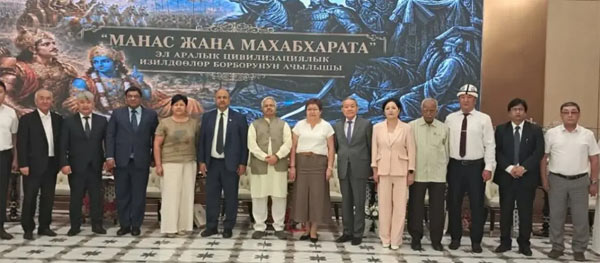
– India and Kyrgyzstan jointly inaugurated the International Center for Civilizational Studies “Manas and Mahabharata” to promote cultural dialogue, research, and academic cooperation.
– The center was inaugurated in Bishkek, the capital of Kyrgyzstan.
– It is a joint initiative between the Centre for Studies of International Relations (CSIR), New Delhi, and the Manas National Academy of Kyrgyzstan.
– Its objective is to promote comparative studies of the ancient civilizations, history, and cultural heritage of both countries through India’s great epic Mahabharata and Kyrgyzstan’s national epic Manas.
Kyrgyzstan
– Capital: Bishkek
– Currency: Kyrgyzstani Som
– President: Sadyr Japarov
– Neighboring Countries: Kazakhstan, China, Tajikistan, and Uzbekistan
————–
8. According to the Economist Intelligence Unit Global Liveability Index 2026, which is the world’s most liveable city?
a. Copenhagen (Denmark)
b. Vienna (Austria)
c. Mumbai (India)
d. Melbourne (Australia)
Answer: a. Copenhagen (Denmark)
– The index, released in July 2026, assessed 173 cities.
– The cities were ranked based on their liveability.
– The Global Liveability Index is an annual report published by the Economist Intelligence Unit (EIU).
– In the 2026 edition, 173 cities were evaluated based on 30 indicators.
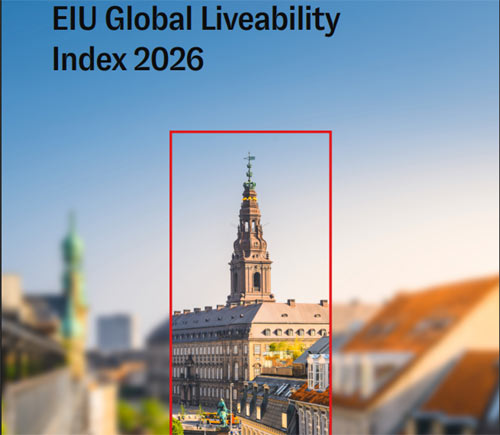
These indicators are grouped into five major categories:
– Stability
– Healthcare
– Culture and Environment
– Education
– Infrastructure
Copenhagen
– Copenhagen, the capital of Denmark, has been ranked the world’s most liveable city.
– Copenhagen has been declared the world’s most liveable city for the second consecutive year.
– Vienna and Melbourne secured the second and third positions, respectively.
– No Indian city could make it into the Top 100.
Western Europe Remains the Strongest Region
– The report states that Western Europe continues to be the strongest region in terms of liveability.
– However, its average score has remained stable, whereas Asia has shown improvement.
– Ten Chinese cities improved their rankings compared to 2025.
Top 10 Most Liveable Cities
1) Copenhagen (Denmark)
2) Vienna (Austria)
3) Melbourne (Australia)
4) Sydney (Australia)
5) Zurich (Switzerland)
6) Geneva (Switzerland)
7) Osaka (Japan)
8) Adelaide (Australia)
9) Vancouver (Canada)
10) Tokyo (Japan)
Bottom 10 Cities
– Tehran (Iran)
– Harare (Zimbabwe)
– Kyiv (Ukraine)
– Port Moresby (Papua New Guinea)
– Lagos (Nigeria)
– Algiers (Algeria)
– Karachi (Pakistan)
– Dhaka (Bangladesh)
– Tripoli (Libya)
– Damascus (Syria)
————–
9. According to the Economist Intelligence Unit Global Liveability Index 2026, which is India’s most liveable city?
a. Mumbai
b. New Delhi
c. Bengaluru
d. Chennai
Answer: b. New Delhi
Economist Intelligence Unit Global Liveability Index 2026
– New Delhi ranked highest among Indian cities in the index.
– New Delhi scored 66.7 points in the Education category, which was its strongest area.
– The city received 58.9 points in Infrastructure.
– It scored 41.7 points in Healthcare and 35.4 points in the Culture and Environment category.
– Based on its combined performance across these categories, New Delhi secured the 120th position globally with an overall score of 48.1.
Performance of Mumbai, Chennai, and Bengaluru
– Mumbai ranked 121st, Chennai 123rd, and Bengaluru 127th.
– Indian cities performed relatively well in education and economic opportunities.
– However, due to air pollution, traffic congestion, housing-related challenges, and increasing pressure on civic infrastructure, their global rankings remained comparatively low.
————–
10. According to the Happy City Index 2026 released by Time Out, which is India’s happiest city?
a. Jaipur
b. Bengaluru
c. Lucknow
d. Ahmedabad
Answer: a. Jaipur (Ranked 6th in the world)
– The ranking was released by the London-based international magazine Time Out on June 19, 2026.
– The survey considered each city’s culture, parks, green spaces, friendly neighborhoods, and lively streets.
– Along with rating factors such as local food, art, and nightlife, residents were also asked how strong their sense of community was.
– They were also asked how easy it was to find love and whether living in that city truly made them happy.
– Jaipur, the capital of Rajasthan, is India’s happiest city.
– Jaipur is also known as the Pink City.
– Jaipur is the only Indian city to feature in the global Top 10 rankings, securing the 6th position.
– Jaipur has been appreciated for its quality of life, rich heritage, good governance, and developing urban infrastructure.
– It ranks sixth in the global rankings.
————–
11. According to the Happy City Index 2026 released by Time Out, which is the happiest city in the world?
a. New York
b. Bath
c. Tokyo
d. Dubai
Answer: b. Bath
– Bath, the city in England famous for its Roman-era baths, ranked first.
– The city performed exceptionally well across several parameters, including governance, economic opportunities, healthcare, environmental sustainability, transportation, and quality of life.
– More than 93% of the survey participants said that the city makes them happy.
Top 10 Happiest Cities in the World
1. Bath (UK)
2. Panama City (Panama)
3. Guadalajara (Mexico)
4. Medellín (Colombia)
5. Kraków (Poland)
6. Jaipur (India)
7. Chicago (USA)
8. Cape Town (South Africa)
9. Shanghai (China)
10. Gothenburg (Sweden)
—————
12. Which state launched the cashless medical scheme “Guru Dakshina”?
a. Madhya Pradesh
b. Bihar
c. Uttar Pradesh
d. Punjab
Answer: c. Uttar Pradesh
– The Uttar Pradesh Government has launched the Chief Minister Teacher Cashless Medical Scheme, popularly known as “Guru Dakshina.”
– This Chief Minister Teacher Cashless Medical Scheme is a state-funded health insurance initiative that provides cashless hospitalization benefits to teachers and education employees in Uttar Pradesh.
– Under this initiative, the government will spend approximately ₹447 crore annually to pay the insurance premium.
– This will ensure that teachers can receive quality healthcare without worrying about treatment expenses.
————–
13. Who became the 12th Indian cricketer to be inducted into the ICC Hall of Fame?
a. Irfan Pathan
b. Ajit Agarkar
c. Rohit Sharma
d. Sourav Ganguly
Answer: d. Sourav Ganguly
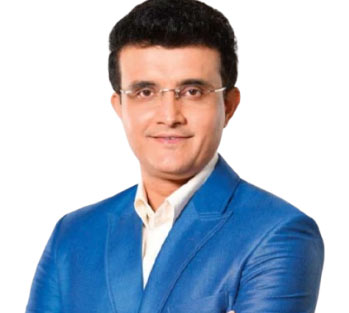 – Former Indian captain Sourav Ganguly was inducted into the ICC Hall of Fame on July 9, 2026, on the occasion of his 54th birthday.
– On the same day, the first look of his biopic “Dada – The Sourav Ganguly Story” was also released.
– The first-look poster featured actor Rajkummar Rao waving his jersey from the Lord’s balcony after India’s victory in the 2002 NatWest Trophy.
– However, the official announcement of Ganguly’s induction will be made during the ICC Annual Conference in Edinburgh, Scotland, on July 11.
Took Over Captaincy in 2000
– Ganguly became the captain of the Indian cricket team in the year 2000.
– Under his captaincy, India won the 2002 ICC Champions Trophy.
– India reached the final of the 2003 ODI World Cup.
– India drew a Test series in England.
– India won a historic Test series in Pakistan in 2004.
– India also ended Australia’s streak of 16 consecutive Test victories.
Scored More Than 11,000 Runs in ODIs
– Ganguly scored 7,212 runs in 113 Test matches for India, including 16 centuries.
– In 311 One-Day Internationals (ODIs), he scored 11,363 runs, including 22 centuries.
– He also took 132 wickets in international cricket.
– He served as the President of the Board of Control for Cricket in India (BCCI) from 2019 to 2022.
– He was the President of the Cricket Association of Bengal (CAB) from 2015 to 2019.
– He was re-elected to the position in September 2025.
Indian Cricketers Inducted into the ICC Hall of Fame
– Bishan Singh Bedi (2009)
– Kapil Dev (2010)
– Sunil Gavaskar (2009)
– Anil Kumble (2015)
– Rahul Dravid (2018)
– Sachin Tendulkar (2019)
– Vinoo Mankad (2021)
– Virender Sehwag (2023)
– Diana Edulji (2023)
– Neetu David (2024)
– Mahendra Singh Dhoni (2025)
– Sourav Ganguly (2026)
ICC Hall of Fame
– The ICC Cricket Hall of Fame was established by the International Cricket Council (ICC) in 2009.
– Its primary objective is to honor legendary cricketers and recognize their historic achievements.
————–
14. Which team won the 2026 Women’s T20 World Cup title?
a. Australia
b. England
c. India
d. West Indies
Answer: a. Australia
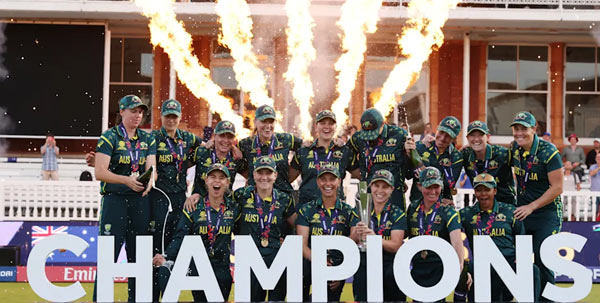
– Australia defeated host England by seven runs in the final played on July 5, 2026.
– Australia won the ICC Women’s T20 World Cup title for the seventh time.
– The final was played at Lord’s Cricket Ground in London.
– Australia successfully chased the target of 151 runs in just 17.1 overs, losing three wickets.
– Earlier, Australia had also defeated England in the finals of 2012, 2014, and 2018.
– The Australian team was captained by Sophie Molineux.
– England was captained by Nat Sciver-Brunt.
– The winning team received prize money of ₹19.5 crore.
– Runner-up England received ₹9.7 crore.
– Every participating team in the tournament received ₹2.06 crore.
– The tournament was held from June 12 to July 5, 2026, in England and Wales.
Teams That Have Won the Title
– Australia (2010, 2012, 2014, 2018, 2020, 2023, 2026)
– England (2009)
– West Indies (2016)
– New Zealand (2024)
————–
15. Who became India’s 98th Grandmaster?
a. Arjun Erigaisi
b. S. Ashwath
c. D. Gukesh
d. R. Praggnanandhaa
Answer: b. S. Ashwath

– Seventeen-year-old S. Ashwath is a young chess player from Tamil Nadu.
– On July 8, 2026, he achieved his third and final Grandmaster norm at the Pune International Grandmaster Round-Robin Chess Tournament.
– In the final round, playing with the black pieces, he defeated American FM Kannan Vaidyanathan.
– Ashwath had earned his first GM norm at the Grenke Open in 2025 and his second norm in Budapest.
– With this achievement, the total number of Grandmasters in India increased to 98, including 40 Grandmasters from the state of Tamil Nadu.
– The Grandmaster title is awarded by the International Chess Federation (FIDE).
– To earn this title, a player must achieve three Grandmaster norms.
– The player must also cross the FIDE rating of 2500.
————–
16. Which state became the country’s sixth fully literate state under the Ullas Project?
a. Punjab
b. Assam
c. Uttarakhand
d. Uttar Pradesh
Answer: c. Uttarakhand
– Uttarakhand has become a fully literate state under the National Education Policy (NEP 2020) and the ULLAS (Understanding Lifelong Learning for All in Society) New India Literacy Programme.
– On June 18, 2026, the Cabinet approved this proposal.
– On July 8, 2026, Lok Bhavan also approved the declaration of Uttarakhand as a fully literate state.
– Uttarakhand achieved a literacy rate of 98.7%, surpassing the adult literacy benchmark.
– Children up to six years of age are not included in literacy calculations.
– The state’s population above the age of seven has been estimated at 12.346 million.
– Only 131,986 people were found to be illiterate.
– The literacy rate in the state has been estimated at 98.7%, while the illiteracy rate stands at 1.3%.
States Declared Fully Literate Under the ULLAS Project
– Mizoram
– Goa
– Tripura
– Himachal Pradesh
– Sikkim
– Uttarakhand
What is the ULLAS Initiative?
– Launch and Objective: This initiative was launched by the Ministry of Education under the National Education Policy (NEP 2020). Its objective is to provide basic education, literacy, and employable skills to people aged 15 years and above.
– Timeline in Sikkim: The programme was launched in Sikkim on November 14, 2022, and implemented across all six districts and Gram Panchayats.
—————
17. Padma Shri awardee Girish Bharadwaj passed away on July 7, 2026. By what name was he popularly known?
a. Bridge Man of India
b. Missile Man of India
c. Railway Man of India
d. Space Man of India
Answer: a. Bridge Man of India
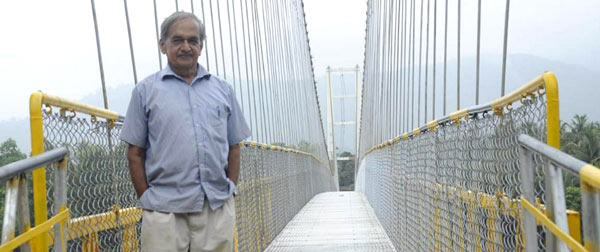
– Seventy-six-year-old Girish Bharadwaj was also popularly known as “Setu Bandhu” or the “Bridge Man of India.”
– He passed away due to a heart ailment at a private hospital in Sullia, Dakshina Kannada district, Karnataka.
– During his lifetime, he connected hundreds of villages that used to get cut off from the rest of the world due to heavy rains or overflowing rivers.
– He built more than 140 low-cost, environment-friendly suspension (hanging) bridges in remote areas of Karnataka, Kerala, Telangana, and Odisha.
– He constructed his first bridge in 1989 across the Payaswini River at Arambur in Dakshina Kannada.
– The Government of India honored him with the Padma Shri in 2017.
– He obtained a Bachelor’s degree in Mechanical Engineering from PES College of Engineering, Mandya (Karnataka).
————–
18. Which town did the Uttar Pradesh Cabinet approve to be renamed as Parashurampuri?
a. Mirganj
b. Jalalabad
c. Faridpur
d. Jattari
Answer: b. Jalalabad
– In the Cabinet meeting held on July 6, 2026, under the chairmanship of Chief Minister Yogi Adityanath, the proposal to rename Jalalabad town in Shahjahanpur district as Parashurampuri was approved.
– The place is believed to be the birthplace of Lord Parashurama.
– An ancient temple dedicated to Lord Parashurama is also located here.
– Ancient scriptures describe this town as the birthplace of Lord Parashurama.
– For this reason, the government officially declared it as the birthplace of Lord Parashurama in 2022.
– Various explanations are given regarding why the town came to be known as Jalalabad.
– According to many people, it was named in honor of the Mughal Emperor Jalaluddin Akbar.
– The Shahjahanpur Municipal Council passed resolutions in March 2018 and September 2023 supporting the proposal.
– The then District Magistrate of Shahjahanpur forwarded the proposal to the state government with his recommendation.
– The Central Government approved the proposal submitted by the state government on August 20, 2025.
————–
19. When is World Zoonoses Day observed?
a. July 8
b. July 7
c. July 6
d. July 5
Answer: c. July 6
Zoonotic diseases are infectious diseases that spread from animals to humans, such as:
– Rabies
– Anthrax
– Brucellosis
– Avian Influenza (Bird Flu)
– Swine Flu
– Coronavirus (COVID-19) (believed to have a possible zoonotic origin)
History of World Zoonoses Day
– On July 6, 1885, Louis Pasteur successfully administered the first rabies vaccine to a boy.
– World Zoonoses Day is observed to commemorate this historic achievement.
Preventive Measures
– Maintain a safe distance from domestic and wild animals.
– Ensure regular vaccination of animals.
– Consume properly cooked meat and milk.
– Maintain hygiene in animal husbandry.
– Get timely vaccination against diseases such as rabies.
————–
20. When is National Fish Farmers’ Day celebrated?
a. July 7
b. July 8
c. July 9
d. July 10
Answer: d. July 10
– This day is observed every year by the Department of Fisheries, Animal Husbandry and Dairying with the support of the National Fisheries Development Board (NFDB).
– The day commemorates the contributions of Dr. K. H. Alikunhi and Dr. H. L. Chaudhuri, who developed the induced breeding technique for Indian major carps on July 10, 1957.
————–
21. When is World Population Day observed?
a. July 11
b. July 12
c. August 13
d. August 11
Answer: a. July 11
Theme for 2026 – “Realizing the hopes and aspirations of young people – today and for the future.”
World Population Day
– In 1987, when the global population reached five billion, July 11 was observed as “Five Billion Day.”
– In 1989, the United Nations Development Programme (UNDP) officially established World Population Day.
– Objective: To raise global awareness about issues related to population growth, family planning, gender equality, poverty, maternal and child health, and sustainable development.
– Since 2023, India has become the world’s most populous country.
—————
22. To which country did the Ministry of External Affairs (MEA) appoint Sanjeev Jain as India’s next Ambassador?
a. China
b. North Korea
c. South Korea
d. Russia
Answer: b. North Korea
– Sanjeev Jain was appointed on July 6, 2026.
– He is a 2008-batch officer of the Indian Foreign Service (IFS).
India–South Korea Relations Were Established in 1973
– Diplomatic relations between India and North Korea were established on December 10, 1973.
– Consular relations between the two countries began in 1962.
– In 2010, the two countries elevated their relationship to a “Strategic Partnership.”
– During Prime Minister Narendra Modi’s visit to Seoul in 2015, it was further upgraded to a “Special Strategic Partnership.”
– In 2023, the two countries also celebrated the 50th anniversary of their diplomatic relations.
————–
23. When is Global Forgiveness Day observed?
a. July 5
b. July 6
c. July 7
d. July 8
Answer: c. July 7
– Global Forgiveness Day gives people an opportunity to heal and restore their relationships.
– Forgiveness is essential, especially for our mental health and inner peace.
————–
24. S. Janaki passed away on July 11, 2026. What was she famous for?
a. Playback singer and music composer
b. Sportsperson and bureaucrat
c. Doctor
d. Sociologist
Answer: a. Playback singer and music composer
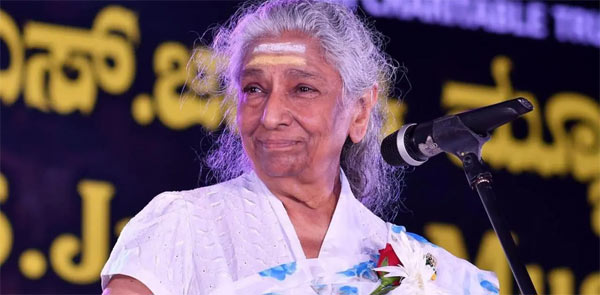
– Legendary playback singer S. Janaki passed away on July 11, 2026, at the age of 88.
– She died in Mysuru, Karnataka, at the age of 88.
– She was globally renowned as the “Nightingale of South India.”
– She was affectionately known as “Janaki Amma.”
– During her career, S. Janaki recorded more than 48,000 songs, most of them in Hindi, Kannada, Tamil, Telugu, and Malayalam.
– She was well known for Hindi songs such as “Bol Baby Bol” (Meri Jung), “Prabhu More Avagun” (Sur Sangam), “O Maria” (Saagar), and “Gopala-Gopala” (Humse Hai Muqabala).
– She received the prestigious National Film Award four times during her career.
She Declined the Padma Bhushan
– In 2013, the Government of India announced the Padma Bhushan award for S. Janaki, but she declined to accept it.
– At that time, she candidly stated that considering her immense and historic contribution to Indian music, she deserved the country’s highest civilian honour, the Bharat Ratna.
– She also said that she should have received such recognition much earlier in her career and that accepting the Padma Bhushan at that stage of her life no longer held any significance.
PDF Download: Click here