This is the current affairs 17 & 18 May 2026. Here are questions and answers of daily current affairs for better preparation of competitive exams for government jobs.
1. Where will 30 million barrels of oil be stored under the ‘Strategic Petroleum Reserve’ agreement between India and the UAE?
a. Fujairah, UAE
b. Mangaluru (Karnataka), Visakhapatnam (Andhra Pradesh)
c. Chandikhol, Odisha
d. All of the above
Answer: d. All of the above (Fujairah {UAE}, Mangaluru {Karnataka}, Visakhapatnam {Andhra Pradesh}, Chandikhol {Odisha})
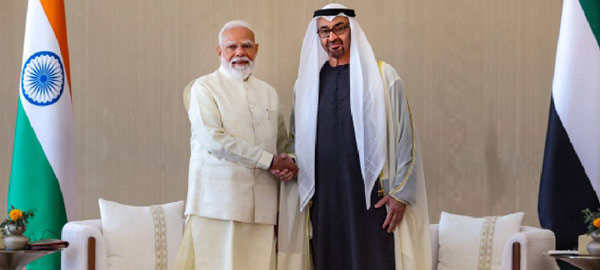
– During Prime Minister Narendra Modi’s visit to the UAE in May 2026, an agreement regarding the Strategic Petroleum Reserve (SPR) was signed.
– It is being considered a game-changer for India’s energy security.
What is the agreement?
– This agreement has been signed between India’s ISPRL (Indian Strategic Petroleum Reserves Limited) and the UAE’s national oil company ADNOC (Abu Dhabi National Oil Company).
– Under this agreement, the UAE will store 30 million barrels (approximately 3 crore barrels or 4 million tonnes) of crude oil in India’s strategic oil reserves.
– The most important aspect of this agreement is that the oil will remain at both locations (India and the UAE), providing India with a double layer of security.
Massive increase in capacity
– At present, India has an emergency storage capacity of only 5.33 million tonnes (approximately 38 million barrels).
– With this new agreement with the UAE, India’s oil reserve capacity will increase by nearly 70%.
Where will the storage take place?
– Apart from the existing reserves at Mangaluru, Karnataka (where the UAE already stores some oil) and Visakhapatnam, Andhra Pradesh, the UAE will also participate in the new reserve project being developed at Chandikhol in Odisha.
– A strategic aspect of this partnership is that part of the oil may also be stored in or linked to the Fujairah commercial storage facility in the UAE.
What strategic benefits will India get from this agreement?
– Filling reserves without spending money (Cost-Effective Security)
– Purchasing and storing such a large quantity of crude oil in reserves would have cost the Indian government billions of rupees.
– Under this agreement, the oil will belong to the UAE and the storage cost will also be borne by the UAE, but during a crisis, India will receive priority access to this oil.
– This will reduce India’s fiscal burden.
Relief from future crises in the Strait of Hormuz
– Most of India’s oil imports from Gulf countries pass through the Strait of Hormuz, which has become an extremely sensitive chokepoint due to ongoing Iran–West Asia tensions.
– Under this agreement, India will also be able to store oil at the UAE’s Fujairah terminal.
– Fujairah is located outside the Strait of Hormuz, ensuring safe oil access even during wartime conditions.
– Benefit: Even if the Strait of Hormuz (a narrow maritime route) gets blocked due to tensions involving Iran and West Asia, the oil stored in Fujairah can still reach India directly by sea without interruption.
Agreements between the two countries
1) UAE’s national oil company ADNOC will expand its participation in India’s strategic petroleum reserves by storing 30 million barrels of crude oil.
2) Both countries have signed an agreement to establish a “ship repair cluster” at Vadinar, Gujarat.
3) An agreement has been reached to establish an 8-exaflop supercomputing facility in India to accelerate the IndiaAI Mission.
4) LPG Supply: Long-term LPG offtake supply agreements have been signed.
METRI Virtual Trade Corridor
– The METRI virtual trade corridor between the ports of India and the UAE has been operationalized, which will improve efficiency in maritime trade and strengthen supply chain resilience.
– It is a virtual (digital) trade corridor connecting the ports of India and the United Arab Emirates (UAE). Its primary objective is to make maritime commerce between the two countries more digital, transparent, and faster.
– The first and most important maritime component of the India-Middle East-Europe Economic Corridor (IMEC), announced at the G20 Summit, lies between India and the UAE.
What is a Strategic Petroleum Reserve (SPR)?
– These are massive underground rock caverns built within a country where crude oil is safely stored for emergency situations.
– Objective: If in the future, due to war, a pandemic, or any international crisis, oil supplies from Gulf countries suddenly stop, the country should not face a shortage of petrol and diesel, and the economy should continue functioning. At present, India has approximately 9 to 10 days of oil backup in these reserves during emergencies.
Phase-I: Fully Operational
1) Visakhapatnam (Andhra Pradesh): 1.33 MMT capacity
2) Mangaluru (Karnataka): 1.50 MMT capacity
3) Padur (Karnataka): 2.50 MMT capacity
Phase-II: Proposed and Under Construction (under PPP model)
1) Chandikhol (Odisha): 4.0 MMT capacity
2) Padur (Karnataka – Expansion): 2.5 MMT capacity
—————-
2. Name the CBI Director whose tenure the Central Government extended for a second time, by one year.
a. Vinod Verma
b. Praveen Sood
c. Ajay Khanna
d. Rahul Verma
Answer: b. Praveen Sood
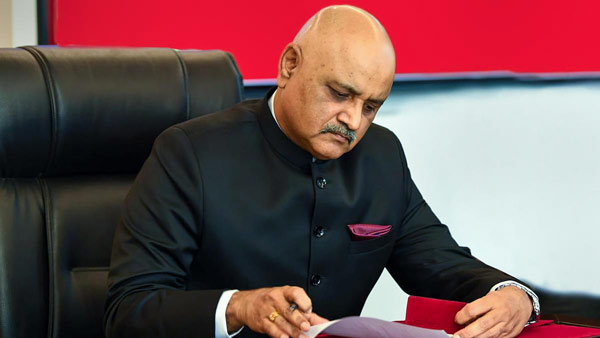
– Praveen Sood’s tenure was scheduled to end on 24 May.
– Before that, the Central Government extended his tenure by one more year.
– The 1986-batch Indian Police Service (IPS) officer had already been granted a one-year extension in May 2025 after completing his initial two-year tenure as CBI Director.
Decision taken after controversy during the selection meeting
– This decision was taken after controversy arose during the selection meeting for the new CBI Director.
– A meeting regarding the selection of the new CBI Director was held at the Prime Minister’s residence. It was attended by Leader of Opposition Rahul Gandhi and Chief Justice of India (CJI) Suryakant.
– After the meeting, Rahul Gandhi expressed disagreement with the selection process. He shared a letter on social media alleging that details of the 69 shortlisted candidates had not been provided.
– Rahul Gandhi stated that the CBI Director selection process had become merely a formality. He said that although he could not step away from his constitutional duty by refusing to participate, he strongly expressed his disagreement with this biased process.
What Rahul Gandhi said to the government in his dissent letter
– Your government has repeatedly misused the CBI. It is India’s premier investigative agency, but you have used it to target political opponents, journalists, and critics.
– The Leader of Opposition is included in the selection committee precisely to prevent such capture of institutions. Unfortunately, you did not provide me with any meaningful role in ensuring the fairness of the selection process.
– The self-assessment reports and 360-degree reports of the shortlisted candidates were not provided. I was clearly denied access to these reports.
– Deliberately refusing to provide information without any legal basis makes a mockery of the selection process. This clearly indicates that only your pre-decided candidate is meant to be selected.
– In the previous two meetings (5 May 2025 and 21 October 2025), letters had been written to the Prime Minister suggesting measures for a fair and transparent process. No response has been received to those letters till date.
—————-
3. When is International Day of Families celebrated?
a. 13 May
b. 14 May
c. 15 May
d. 16 May
Answer: c. 15 May
Theme for 2026: Families, Inequalities and Child Wellbeing
– This day has been declared by the United Nations.
—————–
4. What is ‘Nagatitan chaiyaphumensis’, which has been in the news?
a. A newly discovered endangered species of turtle found in Thailand
b. The largest fossil dinosaur ever discovered in Southeast Asia
c. A poisonous snake species discovered in the forests of Cambodia
d. A radar launched by ISRO for monitoring space debris
Answer: b. The largest fossil dinosaur ever discovered in Southeast Asia.
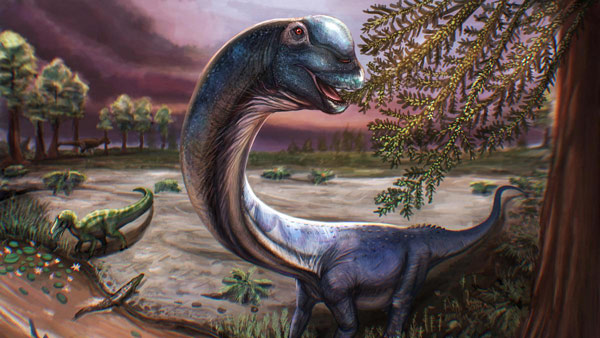
– In May 2026, scientists discovered fossils of the largest dinosaur ever found in Southeast Asia in Thailand.
– Dinosaur name: Nagatitan chaiyaphumensis
– Lineage/Species: It belonged to the Sauropod lineage, known for long necks, long tails, small heads, and four pillar-like legs.
– Discovery location: Chaiyaphum Province in northeastern Thailand.
– Time period: It lived approximately 113 million years ago during the Cretaceous Period.
– It was a herbivorous animal that mainly swallowed the leaves of conifers and seed ferns without chewing them.
– This research was published on 14 May 2026 in the renowned science journal Scientific Reports. The lead author is Thitiut Sethapanichsakul (UCL).
Physical characteristics
– Approximately 90 feet (27 meters) in length and weighed around 25 to 28 tonnes.
– Its humerus (upper forelimb bone) was found to be 5.8 feet (1.78 meters) long.
—————-
5. When is International Day of Light celebrated?
a. 13 May
b. 14 May
c. 15 May
d. 16 May
Answer: d. 16 May
Theme for 2026: Light for a Sustainable Future
Why is this day celebrated?
– This day commemorates the anniversary of the first successful operation of a laser by physicist and engineer Theodore Maiman in 1960.
—————-
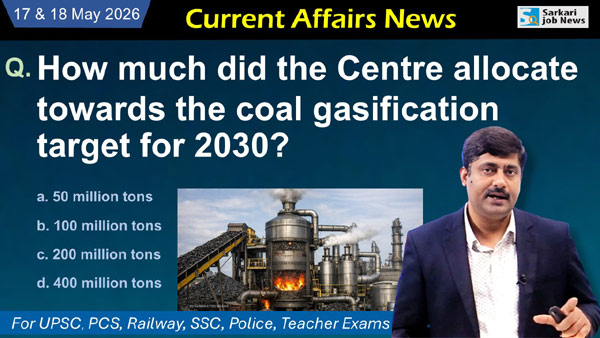
6. The Central Government has approved a financial package of ₹37,500 crore to accelerate coal gasification; under this initiative, what is the targeted volume of gasification set for the year 2030?
a. 50 million tonnes
b. 100 million tonnes
c. 200 million tonnes
d. 400 million tonnes
Answer: b. 100 million tonnes
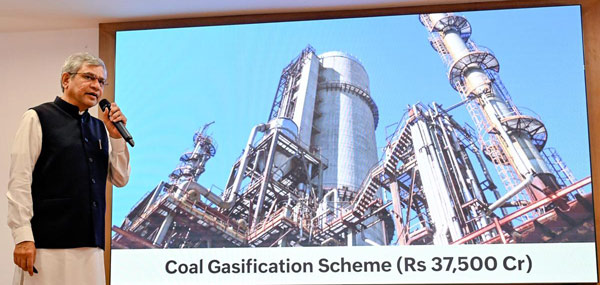
– In May 2026, the Union Cabinet approved a financial package of ₹37,500 crore to promote sustainable alternate mining methods and accelerate coal gasification.
– This move will strengthen the National Coal Gasification Mission, which was formulated by the Ministry of Coal in 2020.
– Target: Through this scheme, the gasification of around 75 million tonnes (MT) of coal and lignite is targeted, which will help achieve the national target of 100 million tonnes by 2030.
What is coal gasification?
– Normally, coal is directly burned to generate electricity, which causes heavy pollution.
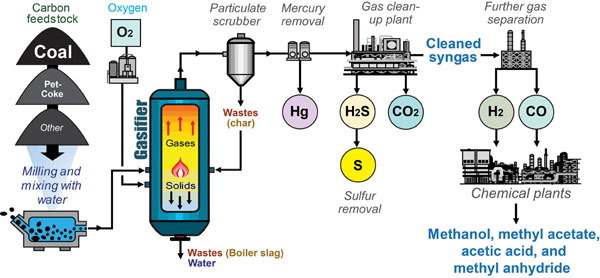
– However, under this initiative, coal will not be burned directly. Instead, modern technology will convert coal into gas, known as “syngas” (Synthetic Gas), which is considered a cleaner fuel.
– It is a process in which coal is reacted at high pressure and temperature with a controlled quantity of air, oxygen, steam, or carbon dioxide instead of being completely burned.
– This produces syngas, which mainly consists of carbon monoxide, hydrogen, carbon dioxide, natural gas, and water vapor.
What will be its benefits?
– Using this gas (syngas), India will manufacture products domestically that are currently imported at very high prices.
– For example:
– Urea and fertilizers required for agriculture.
– Methanol and ammonia used in factories and industries.
Major advantage
– At present, India imports goods worth around ₹2.77 lakh crore annually, including fertilizers and chemicals.
– Due to tensions in West Asia (Middle East), these products could become even more expensive. This scheme will help India become self-reliant and save foreign exchange.
History of gasification in India
– This technology existed in India since the 1970s–80s, but around 2002 it nearly came to a halt due to technical difficulties and high costs. Now, during 2024–2026, the government is reviving it with modern technology and heavy financial support (subsidies).
– The earlier failure was due to poor-quality Indian coal and cheap imports.
– Why it is being revived now: New technologies such as Fluidized Bed Gasification can efficiently convert India’s high-ash coal into gas. Additionally, geopolitical tensions in West Asia and global instability have made import dependence unsafe.
Main features of the scheme and financial incentive structure
– Under the scheme, 20% of the cost of plant and machinery will be provided as financial incentive.
– Maximum incentive for a single project: ₹5,000 crore.
For a single product-centered project (excluding SNG and urea): Maximum ₹9,000 crore.
– Maximum limit for a single entity across all categories combined: ₹12,000 crore.
– Policy stability: To ensure long-term investment security, the government has increased the coal linkage period to 30 years.
Downstream products and import dependence
– Urea: India imports approximately 20% of its requirement.
– Methanol: Around 80–90% of India’s requirement is fulfilled through imports.
– Ammonia: India is completely (100%) dependent on imports.
– Other products: Synthetic Natural Gas (SNG), fertilizers, and ammonium nitrate.
Economic and strategic importance
1) Reduction in import bill (Reduction in fiscal deficit): In FY 2025, India’s import bill for substitutable products such as LNG, urea, ammonia, coking coal, and methanol was approximately ₹2.77 lakh crore. This scheme will save foreign exchange.
2) Protection from geopolitical risks: Ongoing geopolitical tensions in West Asia have exposed the vulnerability of India’s energy supply chain. This initiative will increase self-reliance in energy security.
3) Environmental benefits: Compared to traditional coal burning, surface coal gasification is considered a cleaner and more sustainable option that helps control carbon emissions.
4) Expansion of previous efforts: This scheme extends the ₹8,500 crore incentive scheme approved in January 2024, under which 8 projects worth ₹6,233 crore are currently being implemented.
—————–
7. When is World Migratory Bird Day celebrated?
a. Second Saturday of May
b. Second Saturday of October
c. Second Saturday of June
d. a and b
Answer: d. a and b (Second Saturday of May and October) {In 2026: 9 May and 10 October}
Theme for 2026: Every Bird Counts – Your Observations Matter!
– Artificial light is increasing globally by at least 2% every year and is adversely affecting many bird species.
– Light pollution is a major threat to migratory birds because it causes disorientation during night flights, leading to collisions with buildings.
– It disrupts their biological clock and interferes with their ability to undertake long-distance migration.
– Total flyways in the world: 9. (Flyway means the migration route of birds. India falls under the Central Asian Flyway.)
—————-
8. In which country did the World Health Organization (WHO) declare the Ebola virus outbreak a ‘Global Health Emergency’ (PHEIC) in May 2026?
a. Democratic Republic of the Congo
b. Uganda
c. Spain
d. a and b
Answer: d. a and b (Democratic Republic of the Congo and Uganda)

– On 17 May 2026, the World Health Organization (WHO) declared the Ebola virus outbreak spreading in the Democratic Republic of the Congo (DRC) and neighboring Uganda as a “Global Health Emergency” (PHEIC).
– This decision was taken after the spread of the virus was confirmed in major urban centers, including Kinshasa (capital of the DRC) and Kampala (capital of Uganda).
– Not a Pandemic: WHO clarified that although the situation is serious, it does not meet the criteria of a pandemic like COVID-19. Therefore, no restrictions on international travel or trade have been recommended.
– Bundibugyo Strain: The current outbreak has been caused by the extremely rare Bundibugyo virus (BVD) strain of Ebola. This is only the third time in history that this strain has been detected.
– No approved vaccines or treatment: Globally approved vaccines exist for the Zaire strain of Ebola (such as Merck and J&J vaccines), but there are currently no approved vaccines or specific therapeutics for the Bundibugyo strain.
– High fatality rate: The disease has a mortality rate ranging from 30% to 90%. More than 300 suspected cases and over 88 deaths have already been reported, including healthcare workers.
What is Ebola Virus Disease (EVD)?
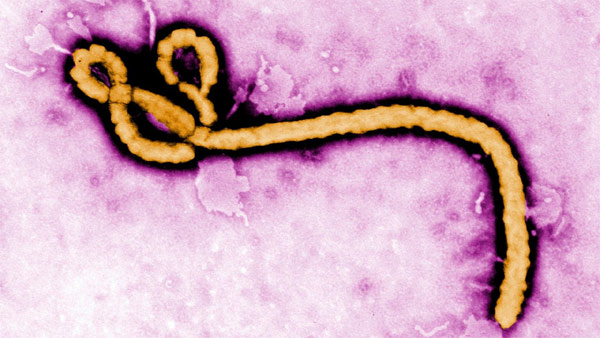
– Nature: It is a highly infectious and deadly viral hemorrhagic fever.
– Origin: The Ebola virus was first identified in 1976 near the Ebola River in Congo (then Zaire), from which it derives its name.
– Natural host: Fruit bats are considered the natural hosts of the Ebola virus.
– Transmission: It spreads to humans through direct contact with infected animals such as bats, chimpanzees, and gorillas. Human-to-human transmission occurs through direct contact with bodily fluids such as blood, vomit, saliva, sweat, or semen. It is not airborne.
– Symptoms: Sudden fever, weakness, muscle pain, headache, sore throat, followed by vomiting, diarrhea, rash, and internal and external bleeding.
—————–
9. When is World Telecommunication Day celebrated?
a. 15 May
b. 16 May
c. 17 May
d. 18 May
Answer: c. 17 May
Theme for 2026 – Digital lifelines: Strengthening resilience in a connected world
– This day is observed in memory of the establishment of the International Telecommunication Union (ITU) on 17 May 1865.
Telephone and internet in India
– Telephone connections (till October 2024): 118.87 crore
– Internet connections (till June 2024): 96.96 crore
—————-
10. Which country conferred the ‘Royal Order of the Polar Star, Degree Commander Grand Cross’ honor upon PM Modi?
a. France
b. Japan
c. Sweden
d. Spain
Answer: c. Sweden
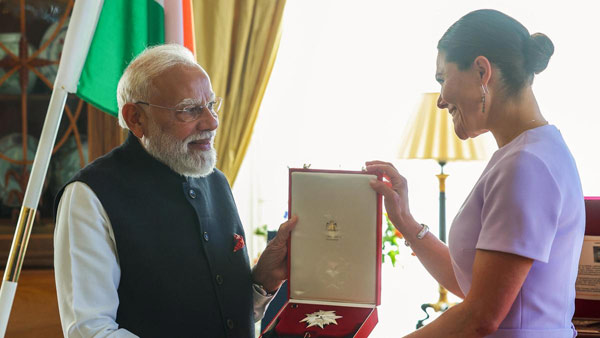
– During his visit to Sweden on 17 May 2026, Indian Prime Minister Narendra Modi was conferred Sweden’s highest civilian honor, the “Royal Order of the Polar Star, Degree Commander Grand Cross.”
– This is the 31st international honor received by Prime Minister Modi.
– The award was presented by Sweden’s Crown Princess Victoria.
About the ‘Royal Order of the Polar Star’ award
– Established: The honor was instituted in 1748.
– Purpose: The award is given for personal efforts rendered for Sweden or Swedish interests, especially for outstanding contributions in public activities and the successful discharge of duties.
PDF Download: Click here