
This is the current affairs of 17 & 18 February 2026. Here are questions and answers of daily current affairs for better preparation of competitive exams for government jobs.
1. Who became the new Prime Minister of Bangladesh?
a. Sheikh Mujibur
b. Tarique Rahman
c. Shafiqul Rahman
d. Azim Akhtar
Answer: b. Tarique Rahman (Chief of the Bangladesh Nationalist Party {BNP})
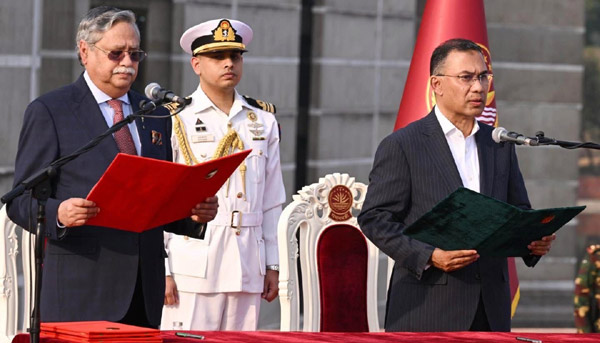
– Tarique Rahman took oath as the new Prime Minister of Bangladesh on 17 February 2025.
– He is 60 years old. He is the son of former Prime Minister Khaleda Zia and former President Ziaur Rahman.
– He is the first male Prime Minister of Bangladesh in the last 35 years.
– Along with him, the newly elected Members of Parliament also took oath.
– The BNP-led alliance won more than 200 seats in the 300-member National Parliament, securing a two-thirds majority. (Note: In Bangla, “Jatiya” means “National”.)
Hindu and Buddhist MPs became ministers
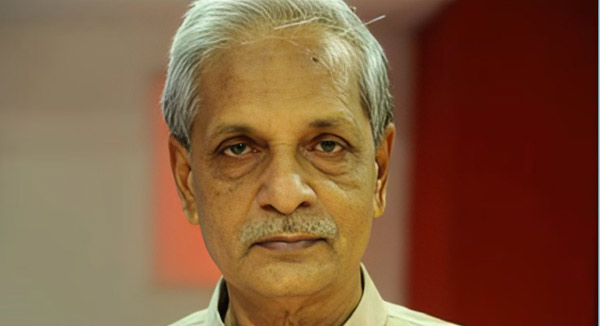
– Nitai Roy Chowdhury, associated with Hinduism, was made a Cabinet Minister.
– Advocate Dipen Diwan, associated with Buddhism, was also made a minister.
About Tarique Rahman
Exile and Controversy
– After the 2007 political crisis, he lived abroad (mainly in London).
– He faced allegations of corruption and involvement in the 2004 Dhaka grenade attack; he described them as political vendetta.
– Despite long absence, he remained active as the “Acting Chairman” of the party.
Return and Leadership in 2025–26
– He returned from London on 25 December 2025.
– With BNP’s victory in the 2026 general election, he returned to the center of national politics.
– BNP’s return to power after 20 years established him as the likely Prime Minister.
– He finally received the political start that he had missed in 2006 due to political uncertainty, which prevented him from contesting his first parliamentary election.
Political Background
– This election was the first major national election after the 2024 mass movement and the removal of former Prime Minister Sheikh Hasina from power.
– Hasina’s party, Awami League, could not participate in the election, completely changing political equations.
– Tarique Rahman made a strong comeback through this election after a long stay abroad.
Meeting with Leader of Opposition
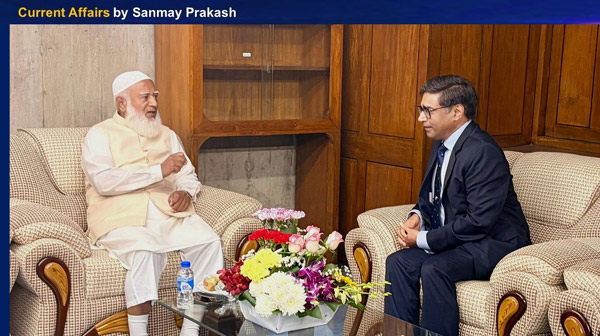
– Dr. Shafiqul Rahman, President of Bangladesh Jamaat-e-Islami, has been appointed as the Leader of the Opposition.
– In the 13th National Parliamentary Elections, Bangladesh Jamaat-e-Islami secured second place behind BNP.
– Indian Foreign Secretary Vikram Misri met Dr. Shafiqul Rahman.
————–
2. Who represented India at the swearing-in ceremony of Bangladesh’s new PM Tarique Rahman?
a. President
b. Prime Minister
c. Speaker of Lok Sabha
d. Home Minister
Answer: c. Speaker of Lok Sabha (Om Birla)
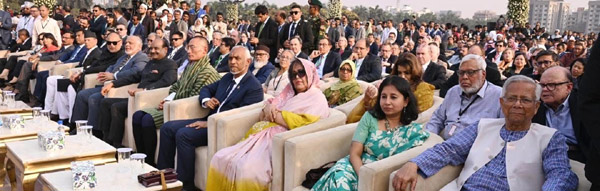
– Lok Sabha Speaker Om Birla attended the ceremony on behalf of India.
– According to India’s Ministry of External Affairs, his presence reflected the friendship and mutual respect for democracy between the two nations.
– Prime Minister Narendra Modi was invited but could not attend due to pre-scheduled programs in Mumbai.
– Om Birla tweeted that he handed over a personal letter from the Prime Minister to PM Rahman, conveying best wishes and inviting him to visit India soon.
– During the interim government of Yunus, relations between the two countries had weakened, and now there is a need to rebuild them.
– Birla also tweeted that India is ready to support Bangladesh in its efforts to build a democratic, progressive, and inclusive nation.
————–
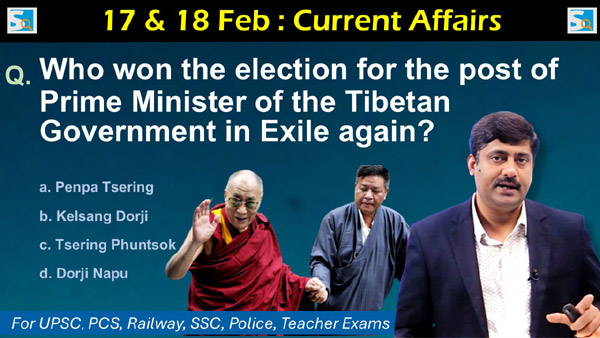
3. Who won the election for the post of Prime Minister of the Tibetan Government in Exile again?
a. Penpa Tsering
b. Kelsang Dorji
c. Tsering Phuntsok
d. Dorji Napo
Answer: a. Penpa Tsering
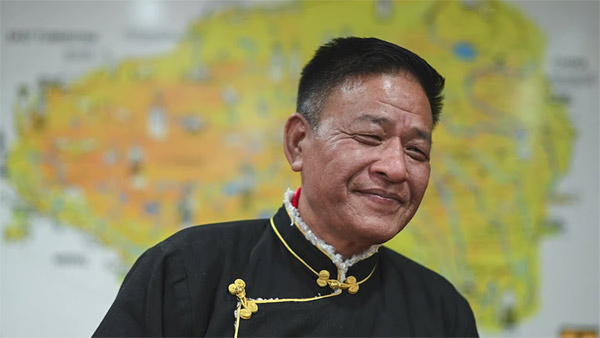
– The Election Commission of the Central Tibetan Administration (CTA) announced the results on 14 February 2026 in Dharamshala, Himachal Pradesh, India.
– The incumbent Sikyong Penpa Tsering retained his position.
– He secured 61.025% of the total votes and was declared elected to form the 17th Kashag (Cabinet).
– There were 103 candidates in the election, with the main contest between Tsering and Aukatsang.
– A total of 51,140 Tibetan voters worldwide exercised their franchise.
30 candidates selected from three traditional provinces
– The preliminary list of candidates for Parliament has also been released.
– 30 candidates each were selected from Tibet’s three traditional provinces.
– Additionally, 6 candidates each were selected from Buddhist and Bon traditions and from the US, Europe, and Africa.
– 3 candidates were selected from the Australia and New Zealand region.
Why was the Tibetan election held in India?
– Tibetan elections are held in India because the Tibetan leadership has been living in exile in India since 1959.
– In 1959, the Dalai Lama fled to India after an uprising against China.
– The Government of India granted asylum to him and thousands of Tibetan refugees.
– Since then, the Tibetan Government-in-Exile has been headquartered in Dharamshala, Himachal Pradesh.
– This administration is called the Central Tibetan Administration (CTA).
– Therefore, the election was held for the Tibetan government-in-exile, not within Tibet itself.
Ground Reality of Tibet’s Administrative Status
– Tibet is currently under China’s control.
– China officially calls it the Tibet Autonomous Region (TAR).
– It is an autonomous region of the People’s Republic of China.
– Administration, security, military, and policymaking are under the control of the Chinese Communist Party.
– Thus, de facto control over Tibet lies with China.
Government-in-Exile
– The CTA considers itself the democratic representative of the Tibetan people.
– Its head is called the “Sikyong” — currently Penpa Tsering.
– It has no administrative control over Tibetan territory.
– It primarily works for refugee welfare, cultural and language preservation, and raising the Tibet issue internationally.
– It represents symbolic and political leadership, not territorial governance.
Is it a parallel government against China?
– China does not recognize the CTA as a legitimate government.
– Beijing’s stance is that Tibet is an internal matter of China, the Dalai Lama is a separatist, and the exile elections have no relevance to China’s sovereignty.
India’s Role
– India provides asylum to the Dalai Lama and Tibetan refugees on humanitarian grounds.
– Officially, India recognizes Tibet as part of China.
– It does not grant diplomatic recognition to the CTA as a government.
– This remains a sensitive aspect of India-China relations.
————–
4. What is India’s rank in the Henley Passport Index (February 2026)?
a. 80
b. 75
c. 70
d. 84
Answer: b. 75 (Earlier in January 2026, India was ranked 80th.)
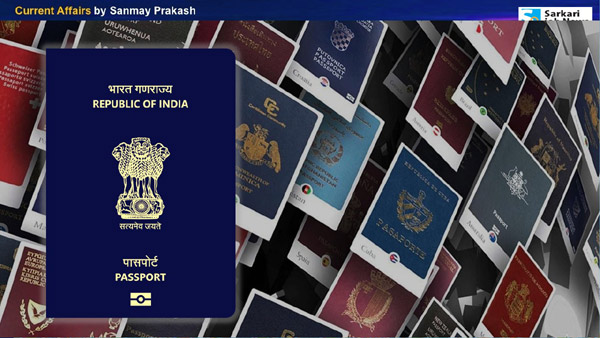
– India’s passport ranking has improved.
– In January, it was ranked 80th.
– Recently, it improved by 5 positions.
– In 2025, it was ranked 85th.
– Indian passport holders now have visa-free or visa-on-arrival access to 56 countries.
– The Henley Passport Index is released multiple times a year.
– In 2006, India was ranked 71st, its best position so far.
India’s Position in Recent Rankings
– January 2026: Rank 80
– October 2025: Rank 85
– July 2025: Rank 77
– January 2025: Rank 85
– Ranking of Neighboring Countries
– Afghanistan: 101
– Pakistan: 97
– Nepal: 95
– Bangladesh: 93
– Sri Lanka: 91
– Myanmar: 88
– China: 56
– Bhutan: 83
Meaning of a Strong Passport
– Citizens can travel to more countries without obtaining a visa in advance.
– They get visa-free, visa-on-arrival, or e-visa facilities.
– Less paperwork and waiting time for visas.
– Easier travel for tourism, education, or business.
– Reflects international trust in that country’s citizens.
Passport
– A passport is a government-issued document that certifies the identity and nationality of its holder for international travel.
Henley Passport Index
– Issued by Henley & Partners.
– Based on data from the International Air Transport Association (IATA).
————–
5. According to the Henley Passport Index 2026 (released in February), which country ranked first in the list of the most powerful passports in the world?
a. Italy
b. France
c. Singapore
d. United States
Answer: c. Singapore
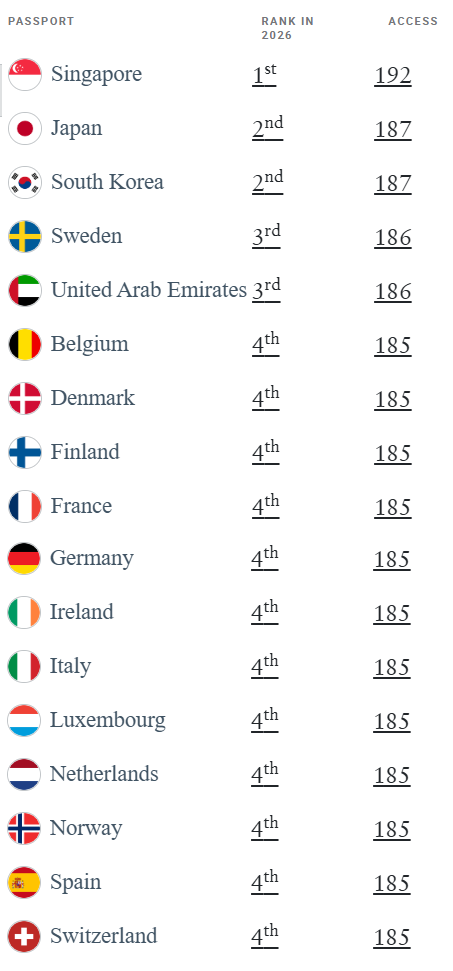
– Singapore ranked first in 2026.
– It also topped the rankings in 2024 and 2025.
– Singapore passport holders have visa-free access to 192 out of 227 destinations.
– Japan and South Korea are second (187 destinations).
– Sweden and UAE are third (186 destinations).
– The United States ranks 10th (179 destinations).
————–
6. Who won the FIDE Freestyle World Championship title?
a. Magnus Carlsen
b. Nodirbek Abdusattorov
c. Fabiano Caruana
d. Hans Niemann
Answer: a. Magnus Carlsen
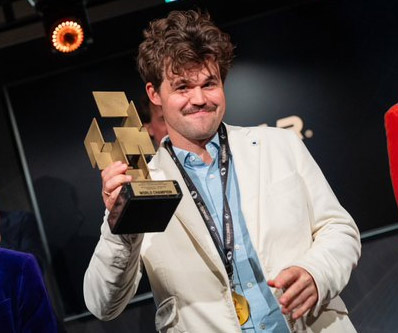
– Norway’s chess player Magnus Carlsen won the title on 15 February 2026 in Germany.
– He defeated American Grandmaster Fabiano Caruana to become the first official FIDE Freestyle Chess World Champion.
————–
7. David J. Farber died on February 7, 2026. What is he known as regarding the Internet?
a. Father of the Internet
b. Grandfather of the Internet
c. Son of the Internet
d. None of the above
Answer: b. Grandfather of the Internet
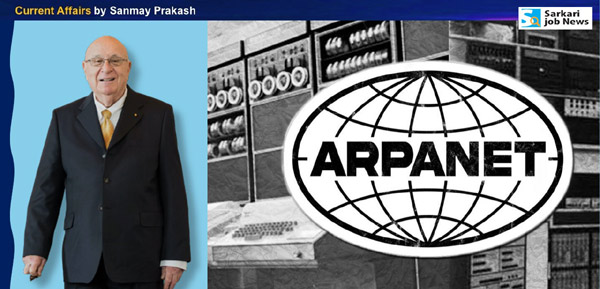
– 91-year-old David J. Farber lived in Japan.
– He helped lay the foundation of ARPANET (the precursor to the modern Internet).
– He mentored students who developed Internet Protocol (IP) and contributed to computer networking foundations.
– He served as a professor at the University of Pennsylvania and Carnegie Mellon University.
– Since 2018, he had been teaching at Keio University, Japan.
About ARPANET
– It was the first packet-switching computer network and laid the foundation for the Internet.
– Developed in the late 1960s by ARPA (later DARPA) of the US Department of Defense.
– Used packet-switching technology.
– Adopted TCP/IP protocol in 1983, forming the technical basis of the modern Internet.
– Officially shut down in 1990.
Father of the Internet – Vint Cerf
– Vint Cerf is called the Father of the Internet because he co-developed TCP/IP with Bob Kahn in the 1970s.
– Their work enabled different networks to connect into a global “network of networks.”
————–
8. Who became the first bowler to reach the 700-wicket mark in T20 cricket?
a. Matthew Kuhnemann
b. Jasprit Bumrah
c. Rashid Khan
d. Travis Head
Answer: c. Rashid Khan
– Rashid Khan is the captain of Afghanistan.
– He achieved this milestone on 15 February 2026 in Delhi against UAE in a T20 World Cup match.
– He took his 700th wicket by dismissing Mohammad Arfan hit-wicket in the 16th over.
—————
9. When is World Radio Day celebrated?
a. 11 February
b. 12 February
c. 13 February
d. 14 February
Answer: c. 13 February
Theme 2026:
– Radio and Artificial Intelligence: AI is a tool, not a voice
– On this day in 1945, the United Nations Radio broadcast for the first time.
– It aims to promote radio and encourage its use.
– Declared by UNESCO in 2011.
– Adopted as an International Day by the UN General Assembly in 2012.
————–
10. In which areas did the ADB and the Bihar government discuss cooperation proposals worth over one billion dollars?
a. Comprehensive Buddhist Circuit Development, Water Resources and Agricultural Transformation Project
b. Comprehensive Skill Development Project
c. Urban Infrastructure and Resilience Project, Energy and Health & Education
d. All of the above
Answer: d. All of the above
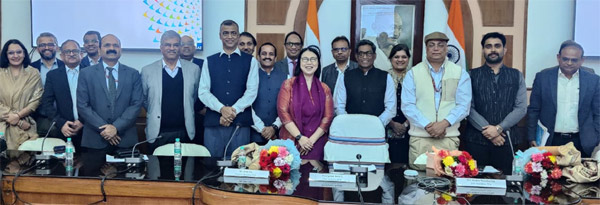
– In February 2026, discussions were held under the chairmanship of Bihar Chief Secretary Pratyay Amrit.
– The ADB will assist Bihar with proposals worth over one billion dollars.
– Support will cover six sectors including water resources, agriculture, energy, urban infrastructure, skill development, Buddhist Circuit, health, and education.
—————
11. When is Indian National Women’s Day celebrated?
a. 11 February
b. 12 February
c. 13 February
d. 14 February
Answer: c. 13 February
– It is celebrated on the birth anniversary of Sarojini Naidu (13 February 1879).
Nicknames of Sarojini Naidu:
– Nightingale of India
– Bharat Kokila
– She played an important role in India’s freedom struggle.
– She became President of the Indian National Congress in 1925.
– She was the first Indian woman to become Congress President.
– She led the Civil Disobedience Movement and the Quit India Movement.
Note: International Women’s Day is celebrated every year on 8 March.
PDF Download: Click here