This is the current affairs of 14 to 16 February 2026. Here are questions and answers of daily current affairs for better preparation of competitive exams for government jobs.
1. AI Impact Summit 2026 was held in which city?
a. Paris
b. London
c. New York
d. New Delhi
Answer: d. New Delhi
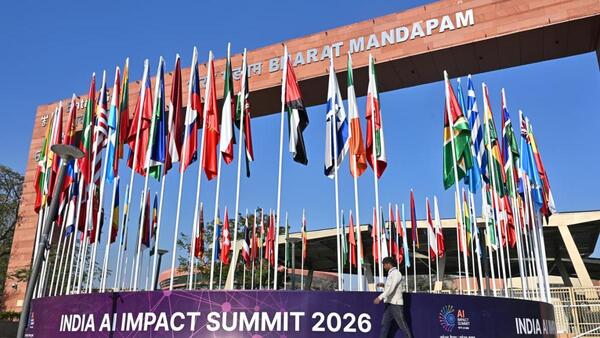
– AI Impact Summit 2026
– Venue: Bharat Mandapam, New Delhi
– Dates: 16 to 20 February 2026
– Inaugurated by: PM Narendra Modi
– Theme: Sarvajan Hitaya, Sarvajan Sukhaya
– Which edition: Fourth edition (held in the UK in 2023, Seoul {South Korea} in 2024, Paris in 2025, and New Delhi in 2026)
– It is the first global AI summit to be held in the Global South.
– Speakers: More than 3,000 speakers across 500 sessions, over 300 exhibitions and live demonstrations of AI technologies and startups, and more than 2.5 lakh visitors
– Pavilions: India and 13 other countries
Three main objectives of AI Impact Summit 2026

– Empower people and promote innovation by leveraging AI
– Establish India as an AI service provider for the world
– Democratize access to compute, datasets, and algorithms
Participation of Heads of State from the following countries
– President of France Emmanuel Macron
– President of Brazil Luiz Inácio Lula da Silva
– President of Spain Pedro Sánchez Pérez-Castejón
President of Switzerland Guy Parmelin
– Prime Minister of the Netherlands Dick Schoof
– Crown Prince of Abu Dhabi (UAE) Sheikh Khaled bin Mohamed bin Zayed Al Nahyan
– Prime Minister of Mauritius Dr. Navinchandra Ramgoolam
– President of Sri Lanka Anura Kumara Dissanayaka
– Vice President of Seychelles Sebastien Pillay
– Prime Minister of Bhutan Tshering Tobgay
– Leaders from Bolivia, Croatia, Estonia, Finland, Greece, Guyana, Kazakhstan, Liechtenstein, Serbia, and Slovakia
– Ministerial delegations from more than 45 countries
– UN Secretary-General António Guterres
– Sundar Pichai of Google, Sam Altman (CEO of OpenAI), Dario Amodei (CEO of Anthropic), and Brad Smith (President of Microsoft)
During the inauguration, PM
– On 16 February 2026, Prime Minister Narendra Modi said that India is at the forefront of the AI transformation and its progress in AI reflects both ambition and responsibility.
– Prime Minister Modi stated that today AI is bringing change in many sectors including healthcare, education, agriculture, governance, and enterprise.
– Delivering a strong global message, the Prime Minister said, “We invite the entire world’s data to be stored in India!”
———————
2. What is the theme of AI Impact Summit 2026?
a. AI Hitaya, Vishva Sukhaya
b. Sarvajan Hitaya, Sarvajan Sukhaya
c. AI Help Us
d. Sabka Saath, Sabka Vishwas
Answer: b. Sarvajan Hitaya, Sarvajan Sukhaya
– At the event, PM Modi said that the theme of the summit, “Sarvajan Hitaya, Sarvajan Sukhaya,” reflects our shared commitment to using artificial intelligence for human-centered progress.
——————
3. What is the new base year of Consumer Price Index (CPI)?
a. 2021
b. 2022
c. 2023
d. 2024
Answer: d. 2024
– The Ministry of Statistics and Programme Implementation (MoSPI) has set 2024 as the new base year for the Consumer Price Index (CPI).
– Earlier, the base year was 2012.
– The first CPI data based on the new base year was released on 14 February 2026. According to it, retail inflation in January was 2.75%.
What is CPI?
– CPI inflation, which measures the change in consumer prices of hundreds of goods and services in a given month compared to the same month of the previous year, is the most important economic indicator in the country.
– It directly affects the level of interest rates set by the Reserve Bank of India (RBI).
– The RBI has a legal mandate to maintain the CPI inflation rate at a target of 4% within a tolerance band of 2–6% in the medium term.
– Therefore, if inflation is consistently seen above 4%, the RBI increases its policy repo rate to weaken cash demand and bring inflation down.
Why was the change made?
– Chief Economic Adviser V. Anantha Nageswaran said that inflation indicators will now “more accurately reflect” the current economic conditions.
– 358 goods and services in the new CPI
– The new CPI includes 358 goods and services, up from 299 in the previous basket.
– New items such as AirPods have been added to the CPI, while obsolete items such as audio cassettes have been removed.
– The weight of food items has decreased from 45.86% to 36.75%.
– For the first time, rural house rent has also been included.
– The weight of food items in the CPI is higher compared to the Wholesale Price Index (WPI).
Weightage in CPI
– Food and beverages: 36.75
– Pan, tobacco and intoxicants: 2.99
– Clothing and footwear: 6.38
– Housing, water, electricity, gas and other fuels: 17.67
– Furniture, household goods and routine household maintenance: 4.47
– Health: 6.10
– Transport: 8.80
– Information and communication: 3.61
– Recreation, sports and culture: 1.52
– Educational services: 3.33
– Restaurants and accommodation services: 3.35
– Personal care, social protection and miscellaneous goods and services: 5.04
——————–
4. What was the retail inflation rate in India in January 2026?
a. 1.25%
b. 1.33%
c. 0.71%
d. 2.75%
Answer: d. 2.75% (First index based on the new CPI base year 2024)
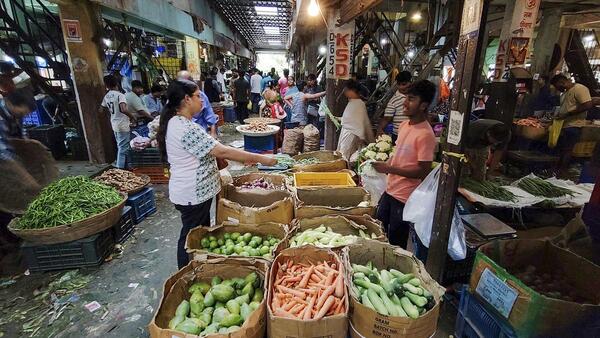
– The new base year of the Consumer Price Index (CPI) has been set as 2024.
– The first CPI data based on the new base year was released on 14 February 2026.
– According to it, retail inflation in January was 2.75%.
– Earlier, in December 2025, the retail inflation rate was 1.33%, based on the 2012 base year.
Who releases the retail inflation report?
– NSO (National Statistical Office)
– It functions under the Ministry of Statistics and Programme Implementation.
How is retail inflation determined?
– It is determined by the Consumer Price Index (CPI).
– It calculates inflation in food items, fruits, clothing, footwear, housing, fuel, electricity and other items.
– As consumers, we buy goods from the retail market. The Consumer Price Index (CPI) reflects the changes in the prices related to these purchases. It measures the average price we pay for goods and services.
How does inflation affect us?
– Inflation is directly related to purchasing power. For example, if the inflation rate is 6%, then the effective value of ₹100 earned will be only ₹94.
– Therefore, investments should be made keeping inflation in mind; otherwise, the value of your money will decrease.
How does RBI control inflation?
– To control inflation, the flow of money (liquidity) in the market is reduced.
– For this, the Reserve Bank of India (RBI) increases or decreases the repo rate.
– When inflation rises, the RBI increases the repo rate, and when inflation becomes very low, it reduces the repo rate.
– In recent times, inflation has been reported to be under control, which is why in August the RBI did not change the repo rate for the ninth consecutive time.
Inflation range set by RBI
– The inflation target set by the RBI is 4% based on the Consumer Price Index (CPI), with a margin of 2% on either side.
– Thus, inflation below 2% or above 6% is not considered good for the country’s economic growth.
———————–
5. What was the wholesale inflation rate in January 2026?
a. 0.83%
b. 1.81%
c. (-) 1.21%
d. (-) 2.21%
Answer: b. 1.81%
Who released the wholesale inflation report?
– Department for Promotion of Industry and Internal Trade (DPIIT)
– It functions under the Ministry of Commerce and Industry.
(Note – Retail inflation is released by the NSO.)
What is wholesale inflation?
– This inflation rate is prepared on the basis of the Wholesale Price Index (WPI).
– The Wholesale Price Index (WPI) refers to the prices that one trader charges another in the wholesale market.
– These prices are related to business conducted in bulk.
(Note – Retail inflation is determined by the Consumer Price Index.)
———————
6. Who became the smallest country by population to qualify for the FIFA World Cup (2026)?
a. Panama
b. Haiti
c. Curaçao
d. Canada
Answer: c. Curaçao
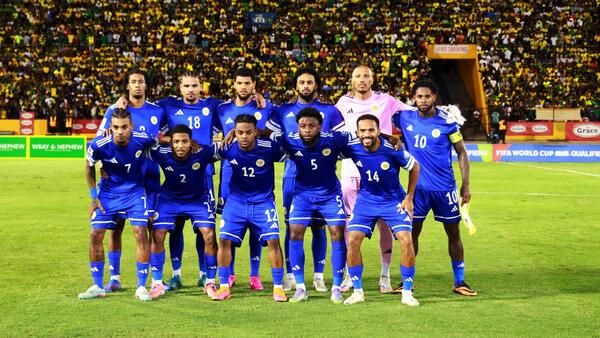
– The island nation of Curaçao has become the smallest country by population ever to qualify for the 2026 FIFA World Cup.
– Curaçao – The entire population of this island could fit into Narendra Modi Stadium and Eden Gardens, and still about 20,000 seats would remain empty.
What is the population?
– According to the Central Bureau of Statistics of Curaçao, as of January 2026, the country’s population was 156,115.
– Earlier, Iceland, with a population of just over 350,000, was the smallest country to reach the World Cup when it qualified for the tournament held in Russia in 2018.
About Curaçao
– It is a constituent island country within the Kingdom of the Netherlands.
– It is located in the southern Caribbean Sea, about 65 km from Venezuela.
– Monarch: Willem-Alexander
– Prime Minister: Gilmar Pisas
– Population: 156,115
– Currency: Caribbean guilder
——————
7. India allowed wheat exports in the year 2026; earlier it was banned in which year?
a. 2022
b. 2023
c. 2024
d. 2025
Answer: a. 2022
– In February 2026, the central government allowed the export of 25 lakh metric tonnes (LMT) of wheat along with 5 lakh metric tonnes of wheat products (such as flour, semolina, etc.).
– Earlier, the government had imposed a ban on the shipment of this grain in May 2022.
– Why was export reopened: To stabilize domestic markets and ensure remunerative returns to producers.
– The central government decided to allow exports considering low prices and better availability of wheat in the domestic market.
—————
8. What is the name of the new complex of the Prime Minister’s Office (PMO), Cabinet Secretariat and National Security Council Secretariat?
a. Kartavya Bhavan
b. Seva Teerth
c. Jan Teerth
d. PMO
Answer: b. Seva Teerth
– The Prime Minister’s Office (PMO), Cabinet Secretariat and National Security Council Secretariat have been shifted to ‘Seva Teerth’ located in the Central Vista complex.
– Earlier, these offices were located in the South Block building at Raisina Hill.
– The Prime Minister said that the buildings located in North and South Block “were built as symbols of the British Empire and were meant to keep India in chains of slavery for centuries.”
Three main buildings and offices in Seva Teerth
– Seva Teerth-1: Prime Minister’s Office
– Seva Teerth-2: Cabinet Secretariat
– Seva Teerth-3: NSA and National Security Council Secretariat and Cabinet Secretariat
——————–
9. When is the International Day of Women and Girls in Science observed?
a. 8 February
b. 9 February
c. 10 February
d. 11 February
Answer: d. 11 February
– This day was declared by the United Nations General Assembly in 2015.
– It was first observed in 2016.
– Its objective is to recognize the contributions of women and girls in the field of science and technology.
– It also aims to inspire women and girls to pursue this field.
——————
10. When is World Unani Day celebrated?
a. 10 February
b. 11 February
c. 12 February
d. 13 February
Answer: b. 11 February
Theme for 2026
– Innovation and Evidence in Unani Practice
– This day is celebrated on 11 February on the birth anniversary of the renowned Unani scholar Mohammad Ajmal Khan (Hakim Ajmal Khan).
– The day has been declared by the Ministry of AYUSH (Ayurveda, Yoga and Naturopathy, Unani, Siddha and Homoeopathy), Government of India.
– The first World Unani Day was observed on 11 February 2017.
– The day focuses on promoting the Unani system of medicine in the mainstream.
————————
11. The Eurasian otter, believed to be extinct, was spotted in which Union Territory, which is said to be its ancestral habitat?
a. Ladakh
b. Puducherry
c. Chandigarh
d. Jammu and Kashmir
Answer: d. Jammu and Kashmir
– The quiet and graceful otter, which inhabits the Himalayas, is crossing the Line of Control (LOC) and returning to its ancestral habitats in the Kashmir Valley.
– Evidence has confirmed that the Kishanganga River acts as a natural corridor for this species.
– Repeated sightings near Tarabal indicate that the otters are freely swimming between Pakistan-occupied Kashmir (POK) and villages in northern Kashmir.
– They are also crossing the border in Keran and Teetwal.
– Success has also been reported in the Sindh Nallah.
Photographic evidence obtained
– The most significant confirmation of the revival of this species came from the Sindh Nallah in Ganderbal.
– For the first time in nearly 50 years, the Forest Department has obtained direct photographic evidence of the animal.
– Range Officer Faizan Anwar Mir captured a clear photograph of a juvenile otter at 10 a.m. in Gutlibagh — a rare direct encounter with this species, which is known for its nocturnal nature.
Path to ecological recovery
– Environmentalists argue that the otters are finding refuge in the clean and remote water bodies near the border, but their former strongholds, such as Wular Lake, are still severely affected by pollution and encroachment.
– A stable fish population will return to the wetlands.
—————
12. How many rivers did the Bihar government plan to revive?
a. 100
b. 200
c. 220
d. 260
Answer: d. 260
– Rivers that are disappearing in Bihar will be revived.
– An action plan will be prepared to restore 260 such rivers.
– Water Resources Minister Vijay Kumar Choudhary made this announcement in the Legislative Council on 13 February.
– The department is conducting a river census.
– Under a GIS survey conducted for this purpose, more than 600 rivers have been identified in the state.
– Of these, only 340 are currently known.
– The department is also preparing a plan to revive the remaining rivers.
– A policy has been formulated for rivers dying due to siltation.
– The Water Resources and Mining Departments are working together for silt management.
– If any person wants to take river silt for land filling, it will be provided free of cost, provided that excavation is done according to prescribed standards.
——————–
13. When is National Productivity Day celebrated?
a. 12 February
b. 13 February
c. 15 February
d. 18 February
Answer: a. 12 February
Theme for 2026:
– Clusters as Growth Engine: Maximizing Productivity in MSMEs
– National Productivity Day is observed to commemorate the establishment of the National Productivity Council (NPC).
– It was registered on 12 February 1958 under the Societies Registration Act, 1960.
– It is an autonomous body established to promote productivity culture in India.
– This day is very important in a developing country like India, where entrepreneurship and startups are growing.
– It also serves as a reminder for organizations and governments to adopt productivity-focused approaches for economic growth, building competitive industries, promoting innovation, and protecting intellectual property (IP) for long-term success.
——————–
14. When is National Productivity Week celebrated?
a. 14–20 February
b. 11–17 February
c. 12–18 February
d. 10–17 February
Answer: c. 12–18 February
– Every year, Productivity Week is celebrated from 12 to 18 February, and Productivity Day is observed on 12 February.
———————–
PDF Download: Click here