

This is the current affairs of 11 & 12 January 2026. Here are questions and answers of daily current affairs for better preparation of competitive exams for government jobs.
PDF Download: Click here
1. Which rocket was used for ISRO’s first unsuccessful mission of 2026, which resulted in the loss of 16 satellites in space?
a. GSLV-C21
b. LVM3-M6
c. PSLV-C62
d. SSLV-B31
Answer: c. PSLV-C62
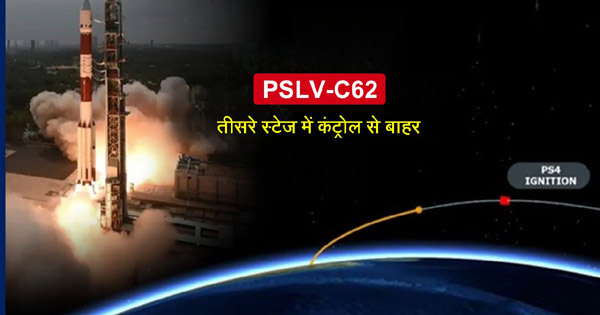
– ISRO’s first mission of 2026, PSLV-C62, failed.
– The rocket was launched on January 12 at 10:18 AM from the space center at Sriharikota, Andhra Pradesh, carrying 16 satellites.
– ISRO Chief Dr. V. Narayanan said that a malfunction occurred during the third stage of the launch, due to which the rocket deviated from its path.
– As a result, all 16 satellites were lost in space.
PSLV had also failed in 2025
– Earlier, on May 18, 2025, ISRO’s PSLV-C61 mission also failed in the third stage due to a technical fault.
– In this mission, the EOS-09 Earth Observation Satellite was to be placed in a 524 km Sun-Synchronous Polar Orbit, but it could not be established.
– Malfunction occurred in the 8th minute of the mission
– PSLV is a four-stage rocket, consisting of two solid stages and two liquid stages.
– Up to the end of the third stage, the rocket’s performance was as expected, but near the end of the third stage, a slight anomaly was observed in the vehicle’s velocity, causing it to deviate from the flight path.
– The fourth stage (PS4 stage) was to be re-ignited to redirect it back toward Earth.
– After that, a Spanish startup’s ‘KID’ (Kestrel Initial Technology Demonstrator) capsule was supposed to separate from it.
– The total duration of the PSLV-C62 mission was 1 hour 48 minutes 5 seconds, but the malfunction occurred in the 8th minute. Because of this:
– It is unclear whether the PS4 stage ignition occurred or was fully successful.
– The satellites (16 payloads including EOS-N1) could not be injected into orbit.
– Subsequent events such as the re-entry burn and KID separation (6485 s) could not take place.
PSLV is considered one of the world’s most reliable rockets
– PSLV is regarded as ISRO’s most reliable rocket. It has completed 63 flights, including major missions such as Chandrayaan-1, Mangalyaan (MOM), Aditya-L1, and Astrosat.
– ISRO’s PSLV was first launched on September 20, 1993.
– It is 44 meters tall.
– In 2013, ISRO set a record by launching 29 satellites simultaneously using this rocket.
– Later, 104 satellites were launched in a single mission using PSLV.
– Chandrayaan-1 (2008) and the Mars Mission (2013) were also launched using PSLV; both were successful missions.
About the 16 satellites
– Sixteen satellites, including EOS-N1 (Anvesha), were to be placed in a Sun-Synchronous Orbit (SSO) at an altitude of 512 km.
– These included: THEOS-2, an Earth observation satellite jointly manufactured by Thailand and SSTL (UK); CGUSAT by Dhruva Space (India); DSUSAT by Dhruva Space; MOI-1 by Dhruva Space and TakeMe2Space (India); Lachit by Dhruva Space; Thybolt-3 by Dhruva Space and Don Bosco University (India); Munnaal by Nepal University Antarikshya Pratishthan (Nepal) and the Ministry of External Affairs, Government of India; KID by Orbital Paradigm (Spain) and RIDE! (France); Edusat, Uisat, Galaxy Explorer, Orbital Temple, and Aldebaran-1 by AltoSpace (Brazil); SanskarSat by Laxman Gyanpeeth (India); Ayulasat by OrbitAid (India).
Special features of EOS-N1 (Anvesha)
– Anvesha was developed by DRDO.
– It is an advanced spy (intelligence) satellite equipped with high-end imaging capabilities.
– Despite being several hundred kilometers above Earth, it could capture images of enemies hidden in bushes, forests, or bunkers.
– It can detect more than 100 colors of light.
– It can identify the color of any object on Earth and transmit its signals.
– Border activities, infrastructure, forests, hidden soldiers, or even very small objects could be observed through it.
—————-
2. Name the German Chancellor who visited India in January 2026?
a. Angela Merkel
b. Friedrich Merz
c. Helmut Kohl
d. Konrad Adenauer
Answer: b. Friedrich Merz
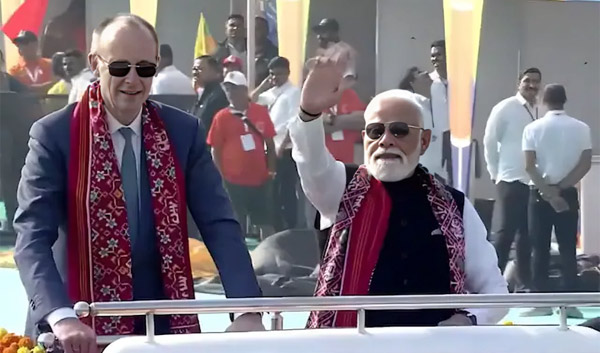
– German Chancellor Friedrich Merz visited India on a two-day visit on January 12, 2026.
– He arrived in Ahmedabad (Gujarat), where Prime Minister Narendra Modi welcomed him.
– Friedrich Merz visited the Sabarmati Ashram in Ahmedabad and paid tribute to Mahatma Gandhi.
– He also participated in the International Kite Festival 2026.
– Later, bilateral meetings were held at the Mahatma Mandir Convention Centre in Gandhinagar.
– Discussions included trade and investment cooperation, technology exchange, education, skill development, and mobility of workers.
– During this period, progress in the India–Germany Strategic Partnership, which recently completed 25 years, was also reviewed.
Germany
– Capital: Berlin
– Chancellor: Friedrich Merz
– President: Frank-Walter Steinmeier
– Currency: Euro
– Neighbouring countries: Poland, Czech Republic, Austria, Switzerland, France, Belgium, Luxembourg, the Netherlands, and Denmark
– Seas: North Sea and Baltic Sea
—————
3. Anantapur pomegranates of which state received a GI tag?
a. Punjab
b. Madhya Pradesh
c. Andhra Pradesh
d. Uttar Pradesh
Answer: c. Andhra Pradesh
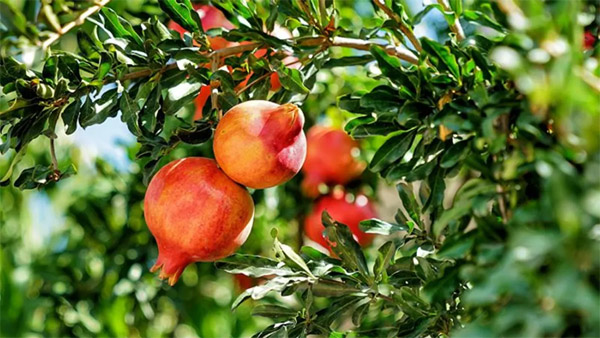
– The pomegranate variety found in the Anantapur region of Andhra Pradesh, known as ‘Anantapur Pomegranate’, has been granted a GI tag.
– This tag was awarded in January 2026.
GI Tag
– A Geographical Indication (GI) tag is a sign used on products that have a specific geographical origin and possess special qualities.
– A Geographical Indication (GI) tag is a sign used on products that have a specific geographical origin and possess special qualities.
– As a member of the World Trade Organization (WTO), India passed the Geographical Indications of Goods (Registration and Protection) Act, 1999, which came into force in the country on September 5, 2003.

4. Which state’s unique medicinal crop ‘Nagauri Ashwagandha’ has been granted a Geographical Indication (GI) tag?
a. Jharkhand
b. Bihar
c. Rajasthan
d. Gujarat
Answer: c. Rajasthan
– This GI tag was granted on January 8, 2026.
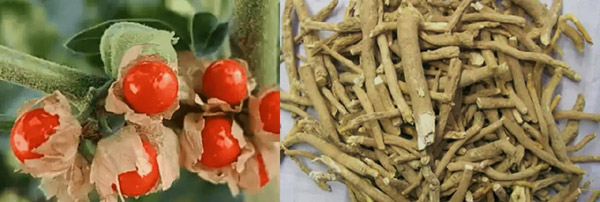
– ‘Nagauri Ashwagandha’ is a medicinal crop grown in the hot sands and dry climate of Marwar.
– Nagauri Ashwagandha is beneficial for immunity, energy boosting, as well as for the brain and heart.
– Rajasthan accounts for 10% of the country’s production.
– It is Rajasthan’s 22nd GI-tagged product and the second GI-tagged product in the agricultural sector after Sojat Mehndi.
– Ashwagandha is cultivated across about 5,000 hectares in the country, out of which 500 hectares are in Nagaur district alone.
Success through scientific research
– ICAR–Directorate of Medicinal and Aromatic Plants Research (DMAPR), Anand; the National Medicinal Plants Board, New Delhi; and the Rajasthan Agriculture Department played an important role in obtaining the GI tag.
– Parul Chaudhary, Director of Nagauri Welfare Society; Dr. Parmeshwarlal Saran, Principal Scientist at ICAR Anand (Gujarat); and the Agriculture Department provided technical support to make this mission successful.
Special features of Nagauri Ashwagandha
– Higher alkaloid content in roots
– Dark and bright red color of the fruit (berry)
– Quality different from other regions of the country
Rajasthan
– Capital: Jaipur
– Governor: Haribhau Kishanrao Bagade
– Chief Minister: Bhajanlal Sharma
—————-
5. Gajak and Rewri of which district of Uttar Pradesh have been granted a GI tag?
a. Ghazipur
b. Meerut
c. Jhansi
d. Prayagraj
Answer: b. Meerut
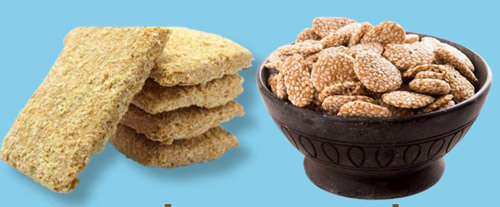
– Meerut’s Gajak and Rewri received the GI tag in January 2026.
– These sweets are said to be about 125 years old.
– More than 10,000 people in Meerut are directly dependent on this industry for their livelihood.
– Western Uttar Pradesh is known as a sugarcane belt, and sugarcane production here adds sweetness across the world.
– Jaggery is made from this sugarcane, and Gajak is made from jaggery.
– While jaggery is solid, Gajak is not completely solid.
– It is prepared by hand-beating the jaggery.
– It is then dried and shaped.
– However, many different shapes of Gajak are now being made in Meerut.
—————-
6. Which country is the world’s largest rice exporter, whose exports increased by 19.4% in 2025?
a. Thailand
b. Vietnam
c. Pakistan
d. India
Answer: d. India (Rice exports reached 21.55 million metric tonnes in 2025, the second-highest level ever)
– India, the world’s largest rice exporter, saw a sharp rise in rice exports in 2025.
– The main reason was that the central government removed all export restrictions imposed during 2022–23 in March 2025. These restrictions had earlier been imposed to control domestic inflation and food prices.
Sharp increase in rice exports
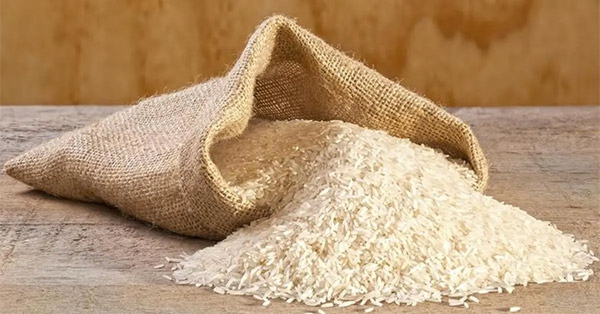
– India’s rice exports increased by 19.4% in 2025, reaching 21.55 million metric tonnes, the second-highest level ever.
– This is close to the highest level of 22.3 million tonnes in 2022. Exports in 2024 stood at 18.05 million tonnes.
– Increased supply of rice from India pushed rice prices in Asian countries to nearly the lowest level in a decade.
– India exports more rice than the combined exports of Thailand, Vietnam, and Pakistan.
Exports of basmati and non-basmati rice
– Non-basmati rice: Exports increased by 25% to 15.15 million tonnes. Major destinations include Bangladesh, Benin, Cameroon, Ivory Coast, and Djibouti.
– Basmati rice: Exports increased by 8% to a record 6.4 million tonnes. Major buyers include Iran, the United Arab Emirates, and the United Kingdom. This reflects strong demand for high-quality agricultural products.
India’s dominance in global rice trade
– India exports more rice than the combined exports of Thailand, Vietnam, and Pakistan.
– This further strengthens India’s position as a “food security provider” for developing countries.
Major producing states
– Uttar Pradesh, Telangana, West Bengal, Punjab, and Chhattisgarh
– India is the largest rice producer globally.
Record production
– Production reached a record 137.8 million tonnes in 2023–24, and even higher production is estimated for 2025–26.
– This success is attributed to a favorable monsoon, expansion of the sown area, technological advancements such as high-yielding dwarf varieties (e.g., IR-8, Jaya), and policy support. However, concerns remain about water-intensive farming in India.
—————-
7. When is National Youth Day celebrated?
a. 9 January
b. 10 January
c. 11 January
d. 12 January
Answer: d. 12 January
– This day is celebrated on the birth anniversary of Swami Vivekananda.
– He was born on January 12, 1863.
– National Youth Day was declared by the Government of India in 1984.
– It was first observed in 1985.
– The objective is to inspire youth with the ideals and thoughts of Swami Vivekananda.
– Every year, January 12–16 is celebrated as National Youth Week.
– International Youth Day: 12 August
—————-
8. Who did the Taliban regime in Afghanistan appoint as its first diplomat in India?
a. Farid Mamundzay
b. Rashid Khan
c. Masood Khalili
d. Noor Ahmad Noor
Answer: d. Noor Ahmad Noor
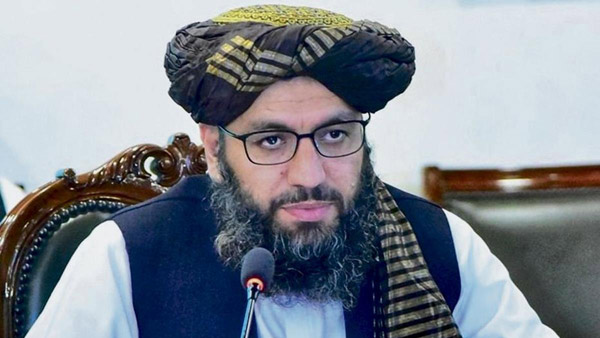
– Nearly five years after the Taliban took control of Afghanistan, the first diplomat appointed by the Taliban arrived in India in January 2026 to take charge at the Afghan Embassy in Delhi.
– The Taliban regime appointed Noor Ahmad Noor as a diplomat at the Afghan Embassy in New Delhi in January 2026.
– He assumed charge as Chargé d’Affaires at the embassy.
– Before Noor Ahmad, Farid Mamundzay was Afghanistan’s diplomat in India during Ashraf Ghani’s government. After the Taliban came to power in Afghanistan in 2021, his position weakened.
– For about four and a half years, since India did not grant embassy status to the Taliban mission, this appointment had been on hold.
– Noor Ahmad Noor previously served as Director General of the First Political Department in Afghanistan’s Ministry of Foreign Affairs.
– He was part of the delegation that visited India with Afghanistan’s Foreign Minister Muttaqi in October 2025.
Improvement in India–Taliban Afghanistan relations
– India, like most other countries, does not recognize the Taliban as the legitimate government of Afghanistan, as it forcibly overthrew the democratically elected republican government led by former President Ashraf Ghani in August 2021.
– However, India has improved its engagement with the Taliban after re-establishing a technical mission in Kabul in 2022.
– On October 21 last year, the Ministry of External Affairs (MEA) announced that it would grant this mission “embassy status,” joining several other countries, including China, Russia, Pakistan, and others in the Gulf region and Central Asia, that allow Taliban-appointed diplomats in their countries.
Afghanistan
– Capital: Kabul
– Supreme Leader: Hibatullah Akhundzada
– Prime Minister: Hasan Akhund
– Currency: Afghani
– Neighbouring countries: India, Pakistan, Iran, Turkmenistan, Uzbekistan, Tajikistan, China
—————–
9. Indian athlete Jinson Johnson has retired. In which three sporting events did he win medals?
a. International sports
b. Olympics
c. Asian Games
d. Commonwealth Games
Answer: c. Asian Games
{Gold in 1500 m in 2018, Silver in 800 m in 2018, and Bronze in 1500 m in 2023}
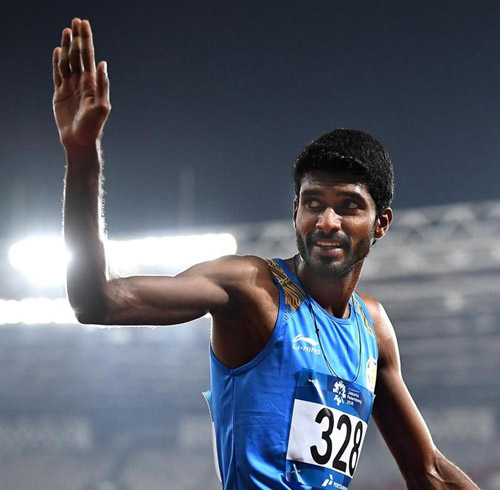
– The 34-year-old Kerala athlete Jinson Johnson is among Asia’s top middle-distance runners.
– He has won medals three times at the Asian Games — Gold (1500 m) in 2018, Silver (800 m) in 2018, and Bronze (1500 m) in 2023.
– In 2018, Jinson clocked 1:45.65 in the men’s 800 m, breaking the 42-year-old national record held by Sriram Singh. This record was later broken by Mohammad Afsal in 2025.
– The Kerala-born athlete set the current national record in the 1500 m (3:35.24) at the 2019 ISTAF Berlin Meet. He is still the only Indian to complete this event in under 3:36.
—————-
10. Name the US ambassador to India who assumed office in January 2026, three months after his appointment?
a. Roger Verma
b. S. Paul Kapoor
c. Sergio Gore
d. Rohan Bopanna
Answer: c. Sergio Gore
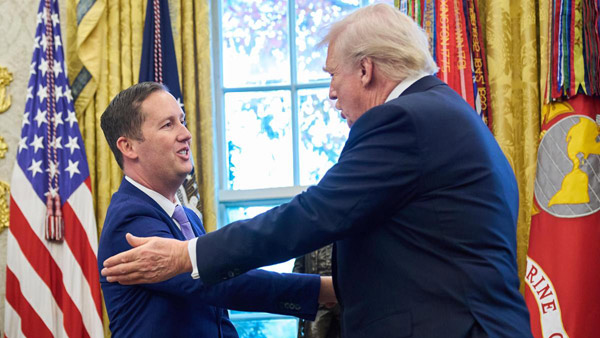
– The United States appointed Sergio Gore as its ambassador to India in October 2025.
– However, he assumed charge at the US Embassy in India on January 12, 2026, three months later. His arrival came amid strains in trade relations between the two countries.
– Shortly after his appointment, in October 2026, he visited India for six days, during which he met Prime Minister Narendra Modi and External Affairs Minister S. Jaishankar.
Additional responsibilities related to India
– The 38-year-old Gore has also been given the responsibility of Special Envoy for South and Central Asia, in addition to being the US Ambassador to India.
– Gore was born in Tashkent, the capital of Uzbekistan. When he was 12 years old, his parents migrated to the United States.
– His mother is said to be of Israeli origin.
Experts’ views
– According to the BBC, many experts believe that the manner of Gore’s appointment is also troubling for India.
– Gore has been given responsibility for South and Central Asia along with India, at a time when India wants to be seen completely separate from Pakistan in the eyes of the US, yet Gore has been assigned South Asia responsibilities along with India.
PDF Download: Click here