
This is the current affairs of 9 January 2026. Here are questions and answers of daily current affairs for better preparation of competitive exams for government jobs.
PDF Download: Click here
1. In which state did a fire break out at an ONGC gas well in January 2026, which took a week to bring under control?
a. Kerala
b. Karnataka
c. Telangana
d. Andhra Pradesh
Answer: d. Andhra Pradesh (The fire broke out on January 5, 2026, in Dr. B. R. Ambedkar Konaseema district)
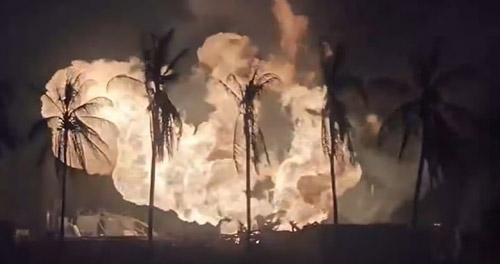
– On January 5, 2026, a fire broke out at a natural gas well in Dr. B. R. Ambedkar Konaseema district of Andhra Pradesh, spreading dense smoke.
– The fire occurred at the Mori-5 well.
– Maintenance work was underway at the well.
– Suddenly, a large quantity of gas leaked from the well. The gas caught fire and the flames went out of control.
– As a precaution, the administration ordered evacuation of nearby areas.
– Power supply was temporarily shut down.
– Use of LPG stoves was prohibited.
Where the incident occurred
– The incident took place at the Mori-5 well located in Mori village, which is being operated by ONGC’s production contractor, Deep Industries Limited.
– The company has been operating the Mori-5 well for about a year.
– G. Srihari, head of ONGC’s National Crisis Management Team, concluded that the natural gas leak at Mori-5 was a “geological surprise.”
– The gas leak was reported during work aimed at increasing the flow of natural gas.
– He stated that the well contains pure natural gas and no oil reserves. The blowout was entirely a geological surprise caused by reservoir parameters.
Andhra Pradesh
– Capital: Amaravati
– Governor: S. Abdul Nazeer
– Chief Minister: Nara Chandrababu Naidu
– Language: Telugu
– Neighboring states: Tamil Nadu, Karnataka, Telangana, and Odisha.
————–
2. Which Union Territory declared human rabies as a ‘notifiable disease’ in January 2026?
a. Delhi
b. Chandigarh
c. Puducherry
d. Ladakh
Answer: a. Delhi
– Rabies is a serious viral infection that attacks the brain and spinal cord and spreads through the saliva of infected animals, usually via bites or scratches.
– On January 4, 2026, the Delhi government declared human rabies a notifiable disease under the Epidemic Diseases Act, 1897.
– Delhi Health Minister Dr. Pankaj Kumar Singh said that rabies is a preventable disease, and not a single death from it would be tolerated.
– Under the new rules, all government and private hospitals, medical colleges, and doctors must immediately report every suspected, probable, and confirmed rabies case to the health department.
Special plan to eliminate the disease
– The Delhi government is finalizing a special plan (State Action Plan for Rabies Elimination – SAPRE) to completely eliminate rabies.
– The primary goal is to ensure that no human dies in Delhi due to dog-bite–related rabies.
Rabies notified in 20 states
– According to the official website of the National Rabies Control Programme under the Ministry of Health and Family Welfare, 20 states have so far declared human rabies a notifiable disease.
WHO estimates
– According to the WHO, rabies causes about 59,000 deaths worldwide each year, with 99% of cases due to dog bites.
– In India, approximately 18,000–20,000 rabies deaths occur annually, many of them among children under 15 years of age.
—————

3. In which West Asian (Middle East) country did widespread protests erupt due to a growing economic crisis, leading the government to impose a nationwide internet blackout?
a. Israel
b. Russia
c. Venezuela
d. Iran
Answer: d. Iran
– Protests that began in Iran in December 2025 intensified further in January 2026.
– This is the largest wave of unrest in three years, stemming from an economic crisis and political repression.
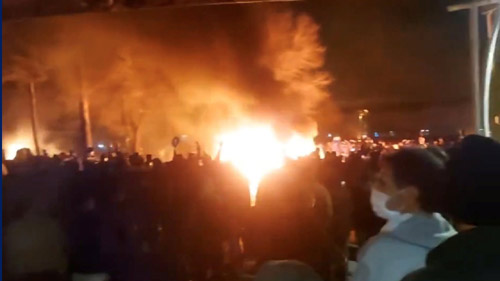
– Protesters are on the streets against currency devaluation, rising inflation, and restrictions on social freedoms.
Main causes
Economic factors (Primary triggers)
– Inflation peaked due to Western sanctions and government mismanagement, worsening further after the war with Israel in June 2025.
– Inflation remained above 40% (40–48%), increasing the burden on the public.
– Collapse of the rial: A record fall of the rial against the dollar made life extremely expensive. One dollar reached 9.94 Iranian rials, with a sharp rise after the protests.
– Interest rates and cost of living: Prices of food and basic necessities soared.
Political and social factors
– Economic anger soon turned into political dissent, with some protesters challenging the Islamic system of governance.
– Government blocks on internet and communication services brought national and international attention to the protests.
– On January 8, 2026, exiled Crown Prince Reza Pahlavi called for large protests, which spread to 348 locations across all 31 provinces.
– Reza Pahlavi is the son of Iran’s last Shah, Mohammad Reza Pahlavi, and lives in exile in the United States (Washington). He has been politically active against the Iranian regime for years.
– Although his influence appears limited, it indicates that public discontent is not merely economic but also challenges political leadership and governance structures.
– Protests are no longer limited to economic demands; questions are being raised about political change and religious leadership.
– By cutting internet and phone lines, the government attempted to curb protest communication.
Iranian government response
– President Masoud Pezeshkian appealed to security forces to exercise restraint and avoid violence.
– The Chief Justice blamed networks linked to foreign powers and warned against making any concessions.
– Army Chief Amir Hatami warned of threats from external forces such as the US and Israel.
International reactions
– United States: President Donald Trump threatened “strong action” if protesters were attacked and mentioned an “extraordinary eagerness” for regime change. Vice President J.D. Vance supported peaceful protesters and called for talks on the nuclear program. Senator Lindsey Graham called Supreme Leader Ayatollah Ali Khamenei a “religious Nazi.”
– Germany: The Foreign Minister condemned excessive use of force.
– Others: Iranian activist Masih Alinejad appealed for global support, while the US Treasury Secretary described Iran’s economy as “distressed.”
Iran
– Capital: Tehran
– Supreme Leader: Ali Khamenei
– President: Masoud Pezeshkian
– Currency: Iranian rial
– Neighbouring countries: Turkmenistan, Afghanistan, Pakistan, Iraq, Türkiye, Armenia, and Azerbaijan
– Seas: Caspian Sea, Persian Gulf, and Gulf of Oman
—————–
4. Who has taken over as the Chairman of the Council for Leather Exports (CLE)?
a. P. R. Akeel Ahmed
b. Ramesh Kumar Juneja
c. S. N. Basu
d. Ramesh Sippy
Answer: b. Ramesh Kumar Juneja
– Ramesh Kumar Juneja assumed the position at the 184th meeting of the CLE Committee of Administration held in Chennai on January 6, 2026.
– He is the founder of the JC Group.
– He adopted the model of becoming a nominated tanner of finished leather, giving Indian leather recognition in global value chains.
– Juneja has been associated with CLE for over 15 years.
– He has served as Regional Chairman of the Eastern Region since 2014.
– He became Vice Chairman of CLE in April 2024.
CLE
– The Council for Leather Exports is an export promotion council sponsored by the Ministry of Commerce and Industry.
– CLE plays an important role in promoting Indian leather, footwear, and leather products in global markets.
—————-
5. In which year did the United Nations (UN) declare the “International Year of Rangelands and Pastoralists”?
a. 2025
b. 2024
c. 2026
d. 2023
Answer: c. 2026
– The UN officially declared 2026 as the International Year of Rangelands and Pastoralists (IYRP 2026) through a resolution adopted by the UN General Assembly on March 15, 2022.
– Main objective: To highlight underappreciated grassland and savanna ecosystems.
– Scientific consensus: Grasslands and savannas act as carbon sinks.
– The UN aims to focus attention on some of the world’s most neglected yet critical ecosystems.
– In 2022, a group of international scientists urged UNFCCC member countries to expand climate targets beyond forests to include all biomes, especially grasslands and savannas.
– However, even after three years, forests continue to dominate UNFCCC climate negotiations, leaving other ecosystems largely neglected.
COP30 and forest-centric climate action
– The UNFCCC COP30 climate talks held in Belém, Brazil, highlighted this imbalance.
– Since most of the Amazon Basin lies in Brazil, forests dominated discussions.
– The launch of the Tropical Forest Forever Facility (TFFF), backed by billions of dollars in commitments, aimed to promote forest conservation.
– Nevertheless, COP30 concluded without a concrete climate roadmap, raising concerns that grasslands and rangelands remain outside mainstream climate strategies.
—————
6. Renowned ecologist Madhav Gadgil passed away on January 7, 2026. Which UN environmental award did he receive?
a. Tyler Prize
b. Goldman Environmental Prize
c. Indira Gandhi Environmental Award
d. Champions of the Earth Award
Answer: d. Champions of the Earth Award
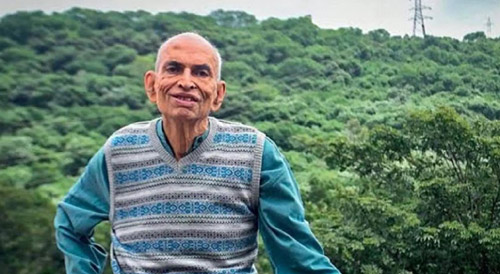
– Madhav Gadgil was born on May 24, 1942, in Pune.
– At the age of 82, he was known for his work on the ecological importance of the Western Ghats.
– During his 31-year academic career at the Indian Institute of Science, Bengaluru, he founded the Centre for Ecological Sciences.
– He conducted grassroots research in collaboration with tribal communities, farmers, pastoralists, and fisherfolk.
– In 2024, the UN honoured him with its annual Champions of the Earth Award for his significant work in the Western Ghats.
– From the Save Silent Valley movement in the 1970s–80s to protecting the forests of Bastar, he played a key role.
– He chaired the Western Ghats Ecology Expert Panel from 2009 to 2011.
– He studied under renowned biologist E. O. Wilson at Harvard University.
– His wife, Sulochana Gadgil, was a noted monsoon scientist and passed away in July 2025.
—————-
7. The Registrar General and Census Commissioner of India issued the notification for Census 2027 in January 2026. Which census is this since India’s independence?
a. 8th Census
b. 7th Census
c. 9th Census
d. 10th Census
Answer: a. 8th Census (16th Census overall, but 8th since independence)
– The upcoming census is “Census 2027,” which will be India’s 16th national census overall.
– However, it will be the 8th census conducted after India’s independence in 1947.
– Census: The process of collecting data on population, households, housing, education, language, occupation, gender, age, etc.
– India’s first census was conducted in 1872, and the previous one in 2011.
– The first census after independence was conducted in 1951.
When the census will be conducted
– The first phase of Census 2027 will be conducted between April 1 and September 30, 2026.
– It will begin with house listing and data collection.
– Each state and Union Territory will complete this work within 30 days.
– A self-enumeration option will be provided 15 days before house listing begins.
– The census will be completely digital.
– About 3 million personnel will collect data using a mobile app.
– For the first time since independence, caste enumeration will be included.
– According to the 2011 census, India’s population was about 1.21 billion, with approximately 51.5% males and 48.5% females.
– The second phase of the census will be conducted in February 2027.
– Caste identities will be enumerated during this phase.
—————
8. In which northeastern state have scientists discovered a new reed snake species, ‘Calamaria mizoramensis’?
a. Meghalaya
b. Mizoram
c. Arunachal Pradesh
d. Assam
Answer: b. Mizoram
– According to Prof. H. T. Lalremsanga of the Department of Zoology, Mizoram University, who led the research team, the new species has been named Calamaria mizoramensis.
– The name is derived from the state’s name.
– According to scientists, the snake specimens were collected from Mizoram in 2008.
– The discovery was made in collaboration with scientists from Russia, Germany, and Vietnam.
– Earlier, these snakes were considered part of common Southeast Asian species.
– Samples collected over the past decade from forests around Aizawl, Reiek, Sihphir, and Sialsuk, and parts of Mamit and Kolasib districts, were studied.
– The new study proves that the Mizoram population represents a distinct lineage unique to the state.
– The species is non-venomous and poses no threat to humans.
– These snakes inhabit moist, hilly forest environments.
—————-
9. Agnivesh Agarwal, son of Vedanta Group Chairman Anil Agarwal, passed away on January 7, 2026. Which company had he previously served as chairman of?
a. Tengpani Tea Company Limited
b. Hindustan Zinc Limited
c. Twin Star International Limited
d. Primex Healthcare and Research Private Limited
Answer: b. Hindustan Zinc Limited
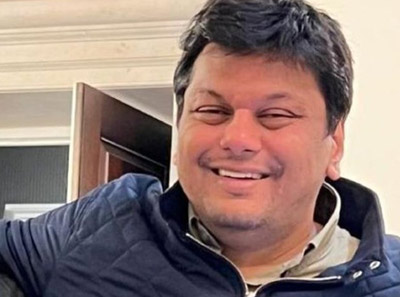
– The 49-year-old Agnivesh Agarwal was injured while skiing in the United States and was admitted to Mount Sinai Hospital in New York for treatment.
– On January 7, 2026, he suffered a cardiac arrest at the hospital and passed away.
– Fulfilling a promise made to his son, Anil Agarwal will donate 75% of his personal income.
– Prime Minister Narendra Modi expressed condolences on social media platform X.
Agnivesh Agarwal’s career
– Agnivesh Agarwal was born on June 3, 1976, in Patna.
– He completed his early education at Mayo College, Ajmer.
– His sister, Priya Agarwal Hebbar, currently serves as Chairperson of Hindustan Zinc and as a Non-Executive Director at Vedanta.
Modernising mining
– Agnivesh was on the board of Vedanta’s Talwandi Sabo Power Limited (TSPL).
– He served as Chairman of Hindustan Zinc Limited until 2019.
– Under his leadership, Hindustan Zinc modernised mining technology, now considered an international benchmark.
– He also played a significant role in establishing Fujairah Gold, a large gold and silver refinery in the UAE and part of the Vedanta Group.
Served as director in these companies
– Tengpani Tea Company Limited
– Twin Star International Limited
– Sterlite Infrastructure Private Limited
– Sterlite Infrastructure Holdings Private Limited
– Sterlite Iron and Steel Company Limited
– Primex Healthcare and Research Private Limited
Vedanta’s beginnings
– Anil Agarwal started Vedanta in 1976 with scrap metal trading.
– Today, it is one of the world’s largest natural resource companies.
– Anil Agarwal rose from Patna, Bihar, to become a global businessman.
– According to the Forbes July 2025 list, his net worth reached ₹35,000 crore, making him the richest person from Bihar.
– He ranks 16th on the Hurun India Rich List 2025 and fourth among NRI wealth creators.
—————
10. When is the Defence Research and Development Organisation (DRDO) Foundation Day celebrated?
a. January 2
b. January 3
c. January 4
d. January 1
Answer: d. January 1
– DRDO celebrated its 68th Foundation Day on January 1, 2026, at its headquarters in New Delhi.
– It functions under the Ministry of Defence.
– The ceremony was attended by Defence Minister Rajnath Singh, Minister of State Sanjay Seth, DRDO Chairman and Secretary of the Department of Defence R&D Dr. Samir V. Kamat.
– According to the Ministry of Defence, DRDO was formed in 1958 by merging the Technical Development Establishments (TDEs) of the Indian Army and the Directorate of Technical Development and Production (DTDP) with the Defence Science Organisation (DSO).
PDF Download: Click here