
This is the current affairs of 14 July 2025. Here are questions and answers of daily current affairs for better preparation of competitive exams for government jobs.
PDF Download: Click here
1. Who was nominated by the President as Rajya Sabha member in July 2025?
a. Ujjwal Nikam, Sadanandan Master
b. Meenakshi Jain and Harshvardhan Shringla
c. Madhuri Dixit, Mukesh Ambani
d. a and b
Answer: d. a and b (Ujjwal Nikam, c. Sadanandan Master, Meenakshi Jain and Harshvardhan Shringla)
Nomination to the Rajya Sabha:
– Article 80 of the Indian Constitution provides for the formation of the Rajya Sabha.
– The maximum strength of the Rajya Sabha can be 250 members; however, currently, it has 245 members.
– Out of these, 233 members are elected from the states and union territories, and 12 members are nominated by the President from fields such as literature, science, art, and social service.
– Four of these seats were previously vacant, which have now been filled.
– The minimum age to become a Rajya Sabha member is 30 years.
– The minimum age to become a Lok Sabha member is 25 years.
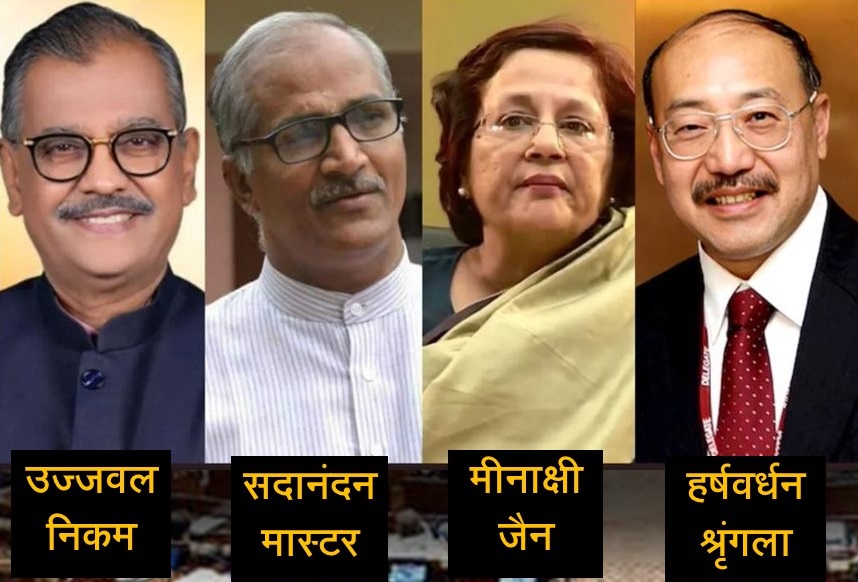
About the new Rajya Sabha members:
– Ujjwal Nikam: He served as the special public prosecutor in the 26/11 Mumbai terror attacks case. He was the BJP candidate from the Mumbai North Central seat in the 2024 Lok Sabha elections but lost.
– C. Sadanandan Master: A former teacher. His political rivals amputated both his legs in 1994. He has also been a BJP candidate from the Kuthuparamba Assembly constituency in Kerala.
– Meenakshi Jain: A historian and Padma Shri awardee. She served as an academic at Gargi College, University of Delhi. She has authored several books on Indian history during British rule, Indian civilization, and indigenous education and languages.
– Harsh Vardhan Shringla: A former Foreign Secretary. He has served as India’s ambassador to the USA, Bangladesh, and Thailand. After retirement, he joined the BJP and worked as the Chief Coordinator for the G-20 Summit held in New Delhi in 2023.
List of posts of nominated members of Rajya Sabha –
Nominated Member, Field, Tenure
1) Ujjwal Nikam: Law: 12-July-2031
2) C. Sadanandan Master: Social Work: 12-July-2031
3) Harsh Vardhan Shringla: Diplomacy: 12-July-2031
4) Meenakshi Jain: Literature and Education: 12-July-2031
5) Sudha Murthy: Social Work and Education: 07-March-2030
6) Ilaiyaraaja: Arts: 06-July-2028
7) V. Vijayendra Prasad: Arts: 06-July-2028
8) PT Usha: Sports: 06-July-2028
9) Virendra Hegde: Social Work: 06-July-2028
10) Ranjan Gogoi: Law: 16-March-2026
11) Satnam Singh Sandhu: Education: 30-January-2030
12) Ghulam Ali Khatana: Social Work: 13-September-2028
—————-
2. Name the winner of the United Nations Population Prize 2025?
a. Rajni Verma
b. Rahat Patel
c. Varsha Deshpande
d. Ajay Paswan
Answer: c. Varsha Deshpande
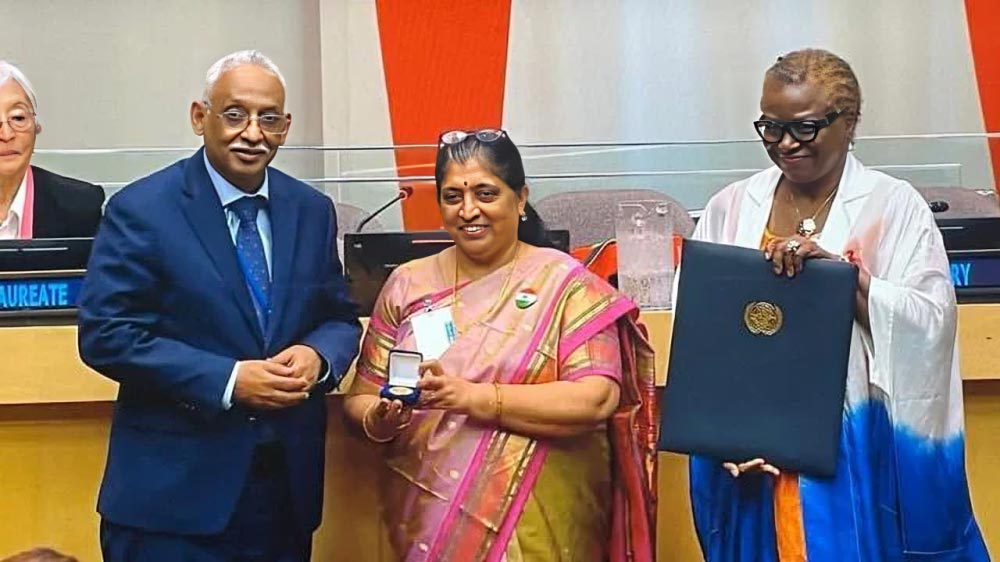
– Varsha Deshpande is from Satara, Maharashtra.
– She is the Secretary of the Dalit Mahila Vikas Mandal of India.
– She has conducted sting operations to prevent sex-selective abortions.
– She received this honor at an event held in New York on the occasion of World Population Day (11 July 2025).
– Reason for the Award: “For my efforts to combat gender-discriminatory sex selection and the declining sex ratio.”
About the United Nations Population Award:
– The United Nations Population Award is a prestigious international award.
– It is presented to individuals and institutions for outstanding work in the field of population and demography.
– The award was established by the United Nations General Assembly in 1981 and was first presented in 1983.
– Its objective is to recognize those who have made significant contributions in areas such as population and reproductive health, family planning, population control, and the promotion of human welfare.
—————
3. When is World Population Day celebrated?
a. 11th July
b. 12th July
c. 13 August
d. 11th August
Answer: a. 11th July
Theme 2025
– Empowering young people to create the families they want in a fair and hopeful world
World Population Day
– In 1987, when the global population reached 5 billion, 11 July was observed as “Five Billion Day”.
– In 1989, the United Nations Development Programme (UNDP) formally established World Population Day.
– Objective: To raise global awareness on issues related to population growth, family planning, gender equality, poverty, maternal and child health, and sustainable development.
– India became the most populous country in the world in 2023.
—————-
4. According to the United Nations’ World Population Prospects 2024 report, by the beginning of which decade, India’s population will reach 170 crores and then start decreasing gradually?
a. 2040s
b. 2050s
c. 2060s
d. 2070s
Answer: c. 2060s
– The United Nations released the World Population Prospects 2024 in June 2025.
Estimates Regarding India’s Population:
– Population Size & Estimate: The report estimates that India’s population will be 1.4639 billion (146.39 crore) in April 2025, making it the largest in the world.
– India’s population is expected to peak at 1.7 billion (170 crore) in the early 2060s, after which it is projected to gradually decline.
– India, which surpassed China in 2024 to become the world’s most populous country, is expected to retain this position until 2100.
Projections for the Global Population:
– According to the World Population Prospects 2024 report, the global population is expected to continue growing over the next 50–60 years.
– It is projected to reach a peak of around 10.3 billion in the mid-2080s, up from 8.2 billion in 2024.
– After reaching this peak, the world population is expected to gradually decline, dropping to around 10.2 billion by the end of the century.
– The report estimates that China, currently the second-most populous country, will experience the largest population decline, losing 204 million (20.4 crore) people between 2024 and 2054.
—————-
5. What is the total fertility rate (TFR) of India as per the State of World Population 2025 report of the United Nations Population Fund (UNFPA)?
a. 1.9
b. 2.0
c. 2.1
d. 2.5
Answer: b. 2.0
– Theme of the State of World Population 2025 Report: The Real Fertility Crisis
Report Facts:
– One in three adult Indians (36%) faces unintended pregnancies.
– Meanwhile, 30% of people are unable to fulfill their desire to have more or fewer children.
– 23% of people face both problems.
– Lack of reproductive agency is a major issue, which means that people are unable to make free and informed decisions about when, how many, and whether to have children.
– Financial limitations (39%), job insecurity (21%), lack of housing (22%), and unavailability of reliable childcare (18%) are major obstacles to reproductive freedom.
– Health-related barriers such as poor general health (15%), infertility (13%), and limited access to pregnancy-related care (14%) are also challenges.
– Concerns about the future (such as climate change, political/social instability) and pressure from family/partners (19%) also influence people to have fewer children.
Fertility rate and regional inequalities:
– India’s total fertility rate (TFR) is 2.0, which is below the replacement level (2.1) {meaning necessary to maintain the population}. In 31 states/union territories, the TFR is less than 2.1.
– States with high fertility rates: Bihar (TFR 3.0, TWFR 2.2), Meghalaya (TFR 2.9, TWFR 2.2), Uttar Pradesh (TFR 2.7).
– States with low fertility rates: Sikkim (TFR 1.0, TWFR 0.9), Delhi, Kerala, Tamil Nadu.
Progress and challenges:
– India has made remarkable progress in reducing fertility rate from 5 children per woman in 1970 to 2 now, credited to better education and reproductive health services.
– Maternal mortality rate has declined, resulting in millions of mothers surviving and contributing to community building.
– Still, deep inequalities remain among states, castes, and income groups.
Modern Challenges and Social Factors:
– The growing loneliness epidemic, changing relationships, lack of supportive partners, and social/gender stereotypes affect reproductive decisions.
– Expectations of intensive parenting place an unequal caregiving burden on women.
– 41% of women and 33% of men consider 2 children ideal, while 13–14% prefer one child and 4–6% prefer three children.
UNFPA Recommendations:
– Promote reproductive autonomy, such as universal access to contraception, safe abortion, maternal health, and infertility care.
– Remove structural barriers: invest in childcare, education, housing, and workplace flexibility.
– Inclusive policies: services for unmarried individuals, LGBTQIA+ community, and other marginalized groups.
– Social change: increase health literacy and challenge social stereotypes through community initiatives.
Global Perspective:
– A survey of 14,000 people from 14 countries (including India, Brazil, Morocco, South Africa, etc.) shows that lack of reproductive autonomy is a global issue.
– In India, the rates of unintended pregnancies and unmet fertility desires are higher compared to other countries.
—————
6. Which state government started work on revival of at least one small river in 75 districts?
a. Bihar
b. West Bengal
c. Uttar Pradesh
d. Madhya Pradesh
Answer: c. Uttar Pradesh
– Chief Minister Yogi Adityanath has directed the district magistrates of all 75 districts of Uttar Pradesh to work on a plan to revive at least one small river in each district.
– Subsequently, help has been taken from premier institutions like IIT Kanpur, IIT BHU, IIT Roorkee, and BBAU Lucknow. Studies have been conducted on the “channelization, route improvement, and uninterrupted flow of water” of the rivers.
– According to this plan, the government will map the rivers from their source to their “final confluence.”
– In fact, this campaign was originally started in 2018 under the Mahatma Gandhi National Rural Employment Guarantee Act (MGNREGA) scheme, which has now developed into a more structured and technically empowered mission.
– Under the campaign, districts have also been asked to undertake extensive tree plantation along the riverbanks.
– Under this initiative, work has already begun on the revival of the old Rapti river in Shravasti, with an estimated length of about 67 kilometers.
—————
7. When is World Youth Skills Day celebrated?
a. 13 July
b. 14 July
c. 15 July
d. 16 July
Answer: c. 15 July
Theme 2025
– Youth empowerment through AI and digital skills
– It is a day declared by the United Nations General Assembly.
– World Youth Skills Day was first celebrated globally on 15 July 2015.
– The theme for the year 2022 is ‘Transforming youth skills for the future’.
—————-
8. Which player created the national record of India’s fastest runner in July 2025 by running 100 meters in 10.18 seconds?
a. Gurinderveer Singh
b. Animesh Kujur
c. Manikanta Hobalidhar
d. Ramakant Verma
Answer: b. Animesh Kujur
Achievement of Animesh Kujur
– On 12 July 2025, Animesh Kujur set a national record by completing the men’s 100-meter race in 10.18 seconds, becoming India’s fastest sprinter.
– He is the first Indian to run 100 meters in less than 10.2 seconds.
– Kujur’s time is 0.6 seconds slower than Usain Bolt’s world record of 9.58 seconds (2009).
– Previously, this record was held by Gurinderveer Singh, who set a national record of 10.20 seconds in March 2025; he is now the second fastest Indian.
– Manikanta Hobalidhar became the third fastest Indian in 2025 by running the race in 10.22 seconds.
—————-
9. Who became the 87th Grandmaster of India?
a. Bhanu Mehta
b. Harikrishnan A. Ra
c. Vijay V. Ra
d. Ajay Mehra
Answer: b. Harikrishnan A. Ra
– He is 24 years old.
– He achieved his third Grandmaster norm on 11 July 2025 at the La Plaine International Chess Festival in France and became the 87th Grandmaster of the country.
– Srihari LR was the 86th Grandmaster of India and now Harikrishnan has achieved this feat.
List of Grandmasters
– 87th Grandmaster: Harikrishnan A Ra
– 86th Grandmaster: LR Srihari
– 85th Grandmaster: P Shyamnikhil
– 84th Grandmaster: R. Vaishali
– 83rd Grandmaster: Aditya S Samant
– 82nd Grandmaster: Vuppala Praneeth
– 81st Grandmaster: Sayantan Das
– 80th Grandmaster: Vignesh NR
– 79th Grandmaster: Pranesh M
– 78th Grandmaster: Kaustuv Chatterjee
What is a Grandmaster?
– Grandmaster is a title given to chess players by the World Chess Organization FIDE.
– Apart from the World Champion, Grandmaster is the highest title a chess player can achieve.
How does one become a Grandmaster?
– To become a Grandmaster, any male chess player must fulfill two essential conditions – first, his rating should be 2500 or above, and second, he must achieve Grandmaster-level performance (called norms) three times in international tournaments.
Who was the first Indian Grandmaster?
– Viswanathan Anand
– He earned the title in 1988.
– He is a five-time World Champion.
—————
10. Kota Srinivasa Rao passed away on 13 July, he was famous for which of the following?
a. Acting in films
b. Sports
c. Literary writing
d. Scientific leadership
Answer: a. Acting in films
– He was a famous actor.
– He was 83 years old. He had celebrated his 83rd birthday on July 10. He passed away on July 13, 2025.
– He was honored with the Padma Shri in 2015.
– Kota Srinivas acted in more than 750 films in Telugu, Tamil, Kannada, and Hindi languages.
– Apart from a successful film career, Kota Srinivas also played an important role in politics. From 1999 to 2004, he was the MLA of Vijayawada East in Andhra Pradesh.
– Kota Srinivas worked with Allu Arjun in the film Son of Satyamurthy. Besides this, he played a significant role in Amitabh Bachchan’s film Sarkar.
– He has also played villain roles in Hindi films Pratighat, Rakt Charitra, and Tiger Shroff’s Baaghi.
PDF Download: Click here