
This is the current affairs of 1 March 2024. Here are questions and answers of daily current affairs for better preparation of competitive exams for government jobs.
PDF Download: Click here
1. What is ‘Interim unity government’, which is in discussion in view of ‘one country, one election’?
a. Interim government for national unity
b. Interim coalition government of all parties
c. Interim government of only one party
d. None of these
Answer: b. Interim coalition government of all parties
What is a Unity Government?
– A unity government is a comprehensive coalition government that includes all parties in the legislature.
– It is typically formed during times of war or other national emergencies.
– A unity government is based on a broad coalition, with representatives from rival parliamentary groups as members.
– In India, there is discussion about forming an interim unity government based on the rules if the government falls upon the enactment of the “One Nation, One Election” law.
– There is talk of amending laws to hold simultaneous elections in May-June 2029. Then there will be elections for the 19th Lok Sabha in the country.
What’s the Case?
– The 22nd Law Commission can propose adding a new chapter to the Constitution regarding One Nation-One Election. Through this, the commission can recommend holding elections for Lok Sabha, Vidhan Sabha, and local bodies simultaneously until 2029.
– Newspapers have reported, citing sources, that Justice (Retd) Rituraj Awasthi-led commission will recommend amending the Constitution to add a new chapter on simultaneous elections.
– What this chapter entails hasn’t been disclosed yet, but based on it, there’s a plan to hold legislative assemblies simultaneously in three phases over the next five years.
Recommendation for the Formation of a Unity Government if the Government Falls
– If a government falls due to a vote of no confidence or a hung assembly, the commission will recommend the formation of a unity government with representatives from various political parties.
– If the formula for the unity government doesn’t work, the Law Panel will recommend holding new elections for the remaining term of the legislative assembly.
– Sources have said that after the failure of the unity government formula, new elections will be necessary. If the government still has three years left, elections should be held for the remaining term (three years) to ensure stability.
The Central Government formed an 8-member committee in September 2023.
Committee Chairman – Former President Ram Nath Kovind
Committee Members:
– Home Minister Amit Shah
– Former Opposition Leader in the Rajya Sabha Ghulam Nabi Azad
– Former Chairman of the Finance Commission NK Singh
Senior Advocate Harish Salve
– Former Secretary-General of Lok Sabha Subhash C Kashyap
– Former Chief Vigilance Commissioner Sanjay Kothari
Special Invited Members:
– Law Minister Arjun Ram Meghwal
– Secretary of Legal Affairs Nitin Chandra will work as the secretary of the panel.
Committee’s Tasks:
– To examine how Lok Sabha and state legislative assembly elections can be held simultaneously, as was the case until 1967.
– To investigate the issue of holding elections for Lok Sabha, legislative assemblies, municipal bodies, and panchayats simultaneously.
– To prepare reports on the Indian Constitution, Representation of the People Act, and any other laws and regulations.
– To recommend specific amendments, including the need for amendments for holding simultaneous elections.
What are the Benefits of One Nation-One Election?
– Almost every year, elections are held in some states of the country.
– This affects administrative work along with policy decisions.
– There is also a significant economic burden on the country.
– It will help in curbing black money and corruption.
– To avoid all this, there is a proposal to hold Lok Sabha and state legislative assembly elections simultaneously.
– Some experts say that with the increasing population of the country, the possibility of One Nation-One Election is through technology.
– Some experts believe that One Nation-One Election is a development-oriented idea.
– Holding simultaneous elections will eliminate the need to implement the Model Code of Conduct repeatedly.
– Repeated enforcement of the Model Code of Conduct hinders the implementation of necessary policy decisions and plans by the government.
What are the Disadvantages of One Nation-One Election?
– Some other experts believe that the Constitution has provided for a parliamentary model.
– Lok Sabha and legislative assemblies are elected for five years.
– There are many provisions in the Constitution that seem contrary to ‘One Nation-One Election.’
– If the term of some legislative assemblies is reduced or extended for certain reasons, it could affect the autonomy of states.
– Additionally, it could increase centralization of power.
– However, alternatives are being explored, such as adding the option of a Unity Government by amending the Constitution.
One Nation-One Election Has Been Done Four Times Before:
– Lok Sabha and state legislative assembly elections were held simultaneously in the country in 1952, 1957, 1962, and 1967.
– However, in 1968-69, some state legislative assemblies were dissolved prematurely for various reasons.
– After that, there were fluctuations in the timing of assembly and Lok Sabha elections in the country.
————–
2. Under which law did the Himachal Pradesh Assembly Speaker disqualify 6 Congress MLAs who violated the party whip issued during the budget session?
a. Anti-defection law
b. Defamation law
c. IPC (Indian Penal Code)
d. Representation of the People Act
Answer: a. Anti-defection law
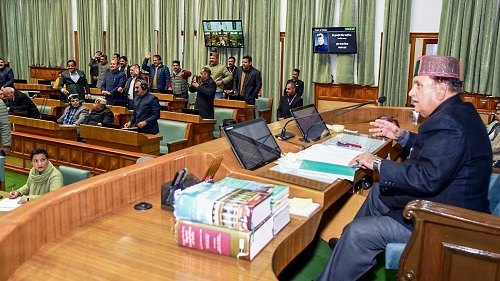
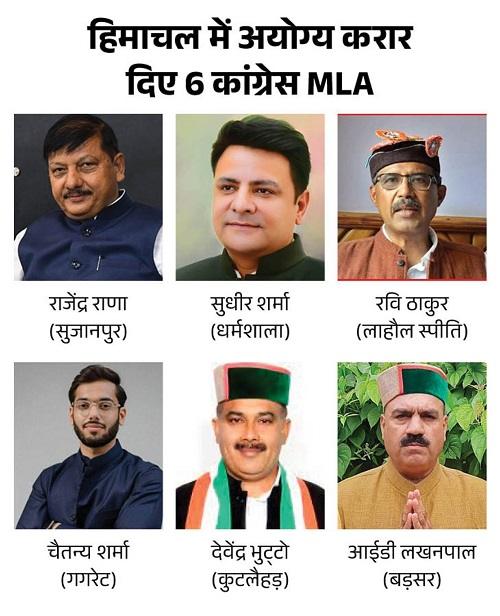
– Himachal Pradesh Vidhan Sabha Speaker Kuldeep Pathania disqualified 6 Congress MLAs in February 2024.
– They were deemed guilty of violating the party whip during the budget session.
– All of them had also indulged in cross-voting during the Rajya Sabha elections.
– The Speaker said, “These people are practicing ‘come and go’ politics. This should not happen. These people themselves invited the Anti-Defection Law.”
– This law was applied for the first time in Himachal Pradesh.
What is the Anti-Defection Law?
– In 1967, Haryana MLA Gaya Lal changed his party three times in one day.
– Since then, the phrase ‘come and go’ has become famous in politics.
– To prevent defections driven by positions and money, the Rajiv Gandhi government introduced the Anti-Defection Law in 1985.
– Parliament added it to the Tenth Schedule of the Constitution to bring stability to governments by dissuading legislators from changing parties.
– The Tenth Schedule, also known as the Anti-Defection Act, was included in the Constitution through the 52nd Amendment Act, 1985.
– It states that if a legislator or MP voluntarily leaves their party and joins another, they can lose their membership from the house under the anti-defection law.
– If a member does not follow the party whip during voting on any issue in the house, their membership can also be terminated.
– However, there is no provision for action regarding leaving or joining a coalition by any party.
Himachal Pradesh:
– CM: Sukhvinder Singh Sukhu
– Governor: Shiv Pratap Shukla
– Capital: Shimla and Dharamshala (winter)
—————

—————
3. When is Zero Discrimination Day celebrated?
a. 4 March
b. 3 March
c. 2 March
d. 1 March
Answer: d. 1 March
Theme of the year 2024:
– To protect everyone’s health, protect everyone’s rights.
– This day is celebrated to challenge discrimination and inequality against women and girls. Later it was also linked with the AIDS program.
– The symbol of Zero Discrimination Day is a butterfly, while people celebrate this day on social media by showing butterflies in their pictures.
– It was initiated in 2014, linked with the AIDS program because the United Nations believes that fighting discrimination against women is essential to eliminate AIDS.
————-
4. When does India aim to establish its space station in space?
a. 2040
b. 2035
c. 2030
d. 2025
Answer: b. 2035
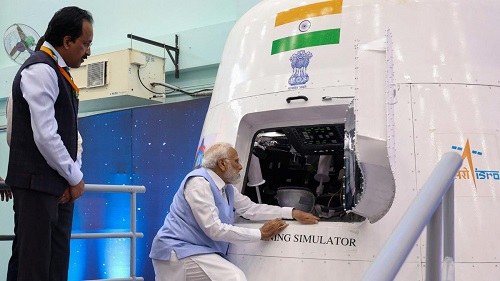

– After the announcement of the names of the space travelers for the Gaganyaan mission on February 27, 2024, Prime Minister Narendra Modi said that by 2035, India will have its own space station.
Plan to send Indians to the moon by 2040:
– Mentioning a plan for a human-led lunar mission by the year 2040, the Prime Minister said, during the “Amrit Kal”, an Indian astronaut will land on the moon using an Indian spacecraft.
Space economy in the next 10 years:
– According to The Hindu newspaper, India’s space economy will grow fivefold in the next decade and reach up to 44 billion US dollars.
Which is the world’s first space station?
– The world’s first space station was Salyut 1 (DOS-1), established by the Soviet Union on April 19, 1971.
– Two years later in 1973, the United States established the Skylab space station.
– So far, more than a dozen space stations have been established in space.
– Of these, only two space stations (ISS and TSS) are working.
ISS – International Space Station (Largest station)
– It is a large space station built by the collaboration of several space agencies.
– Such as NASA (United States), Roscosmos (Russia), JXA (Japan), ESA (Europe), CSA (Canada), and their contractors etc.
TSS – Tiangong Space Station (It is a separate space station of China.)
How many orbits does a space station make in a day?
– In one day or 24 hours, the space station orbits the Earth 16 times. This means 16 sunrises and sunsets.
How many people have been to space now?
– So far, more than 600 people have been to space, many of whom have also died. However, most have returned. Three countries sent humans to space for the first time –
1. Yuri Gagarin of the Soviet Union on April 12, 1961 (stayed for 108 minutes)
2. Alan Shepard of the United States on May 5, 1961 (stayed for 15 minutes)
3. Yang Liwei of China on October 15, 2003 (stayed for 21 hours)
Note:
– Russian cosmonaut Oleg Kononenko set the world record for spending the most time in space.
– He set this record on February 4, 2024.
– He spent 879 days in space.
ISRO
Chairman: S Somanath
Headquarters: Bengaluru
Established: August 15, 1969 (53 years ago)
————–
5. Cricketer Neil Wagner, who played for which country, announced his retirement from international cricket?
a. India
b. Australia
c. New Zealand
d. France
Answer: c. New Zealand

– Born in South Africa, Neil Wagner played a total of 64 Test matches for New Zealand in his career.
– He helped the New Zealand team win the 2021 World Test Championship.
New Zealand
Capital – Wellington
Prime Minister – Christopher Luxon
Currency – New Zealand Dollar
—————
—————-
6. Which Indian was awarded Britain’s ‘Knight Commander of the Most Excellent Order of the British Empire’ (KBE) in February 2024?
a. Mukesh Ambani
b. Ratan Tata
c. Sunil Bharti Mittal
d. Azim Premji
Answer: c. Sunil Bharti Mittal (Founder of Bharti Enterprises)

– KBE stands for ‘Knight Commander of the Most Excellent Order of the British Empire’.
– He has been honored for ‘services to UK-India trade relations’.
– He is the founder and chairman of Bharati Enterprises.
– He was honored by the King of Britain, Charles III, on February 28, 2024.
– Bharati Enterprises Limited is an Indian multinational conglomerate headquartered in Delhi. It was founded in 1976.
Previous Indian recipients honored with KBE:
– Ratan Tata (2009)
– Ravi Shankar (2001)
– Jamshed Irani (1997)
– They were conferred by the late Queen Elizabeth II.
Britain’s recognized knighthood:
– This honor is bestowed by the King of Britain.
– It is one of the highest honors in Britain.
– The KBE, bestowed for exceptional contribution in any field of activity, is granted to foreign nationals with honorary capacity.
– While British citizens are given knighthood, which confers the title of Sir or Dame.
– Conversely, non-British recipients append KBE (or DBE for women) before their names.
Note: – Britain’s current King is Charles III.
Britain
PM – Rishi Sunak
————–
7. In Uzbekistan, the court there sentenced 23 people to jail in the case of death of about 68 children due to drinking cough syrup of which Indian company?
a. Genes Biotech
b. Marion Biotech
c. Roma Healthcare
d. Shreya Exim
Answer: b. Marion Biotech

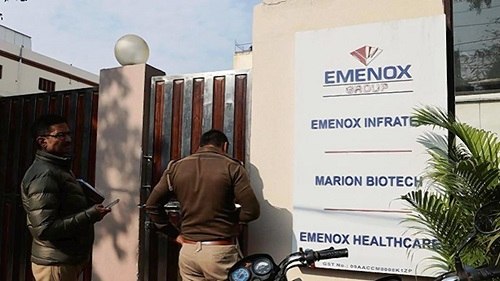
– This cough syrup was manufactured by the Noida-based company Marian Biotech in India.
– Drinking this syrup led to a total of 86 children being affected by poisoning, out of which 68 died.
Indian sentenced to 20 years imprisonment:
– On February 26, 2024, a court in Uzbekistan sentenced 23 people, including an Indian, to jail.
– They were found guilty of drug theft, sale of substandard or fake medicines, misuse of office, negligence, fraud, and bribery.
– In Uzbekistan, Singh Raghavendra Pratap, the Executive Director of Curemax Medical, a company that sells medicines produced by Marian Biotech in India, was sentenced to 20 years in prison.
– The court decided that each family of the 68 children who died from consuming the syrup will be compensated with $80,000 (1 billion Uzbek amounts).
– Compensation will also be provided to four other children who became disabled due to drinking the syrup.
– And the parents of eight other affected children will receive between $16,000 and $40,000.
– According to WHO, two syrups produced by this company (Marian Biotech) contained imbalanced levels of toxic substances.
1. Ambroxol syrup
2. DOK-1 Max syrup
– WHO found in its investigation that these syrups did not contain the toxic substance diethylene glycol or ethylene glycol in the correct amount.
A similar case also occurred in Gambia:
– On October 5, 2022, WHO issued an alert regarding four cough and cold syrups produced by Maiden Pharmaceuticals Limited in Haryana.
– In this alert, WHO held Maiden Pharmaceuticals Limited responsible for the deaths of 70 children in Gambia.
Ethylene glycol:
– According to WHO, ethylene glycol is a carbon compound.
– It has no odor and no color.
– It has a sweet taste.
– It is mixed in children’s syrups in balanced amounts so that children can easily drink it.
– If the dosage becomes imbalanced, this substance can be fatal.
– That’s why it is banned in many countries.
WHO
Headquarters – Geneva, Switzerland
Chief – Tedros Adhanom Ghebreyesus
Uzbekistan
Capital – Tashkent
President – Shavkat Mirziyoyev
Prime Minister – Abdulla Aripov
Currency – Uzbek som
————–
8. Who became the first woman Chief Minister of the province in Pakistan?
a. Rajiya Begum
b. Maryam Nawaz
c. Rashida Khanam
d. Hina Rabbani
Answer: b. Maryam Nawaz
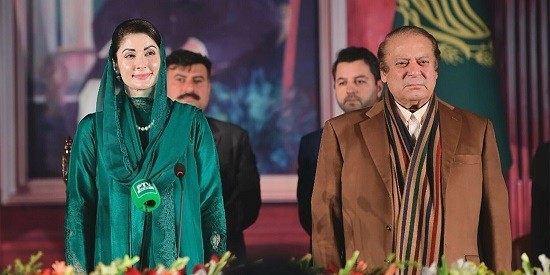
– PML-N leader Maryam Nawaz became the Chief Minister of Punjab province in Pakistan in February 2024.
– She is the first female Chief Minister of any province in Pakistan.
– Maryam Nawaz is the daughter of Nawaz Sharif, who has served as Prime Minister of Pakistan three times.
– Maryam Nawaz entered active politics in 2011.
Pakistan
– Even months after the elections in Pakistan, the formation of the government has not been possible. No party has a majority. Efforts are being made for a coalition.
– Capital – Islamabad
– Prime Minister – Anwar ul Haq Kakar (Acting)
– President – Arif Alvi
– Currency – Pakistani Rupee
– Who was the first female PM of Pakistan – Benazir Bhutto
————–
9. When is World Wildlife Day celebrated?
a. 2 March
b. 3 March
c. 4 March
d. 5 March
Answer: b. 3 March
Theme of 2024:
– Connecting People and Planet: Exploring Digital Innovation in Wildlife Conservation
– Every year on March 3, awareness is raised about the world’s wildlife and plants.
– This day was proposed by Thailand and was recognized by the United Nations General Assembly (UNGA) in 2013.
World Wildlife Fund
Headquarters: Gland, Switzerland
Established: April 29, 1961
————–
10. After the strictness of RBI, the non-executive chairman of Paytm Payments Bank Board resigned, name him?
a. Rakesh Pratap Verma
b. Vinod Kumar Sharma
c. Vijay Shekhar Sharma
d. Ajay Kumar Shekhar
Answer: c. Vijay Shekhar Sharma
PDF Download: Click here