This is the current affairs 19 May 2026. Here are questions and answers of daily current affairs for better preparation of competitive exams for government jobs.
1. Who became the new Chief Minister of Kerala, and took the oath along with the entire cabinet?
a. VD Satheesan
b. Ramesh Chennithala
c. Pinarayi Vijayan
d. K. C. Venugopal
Answer: a. VD Satheesan
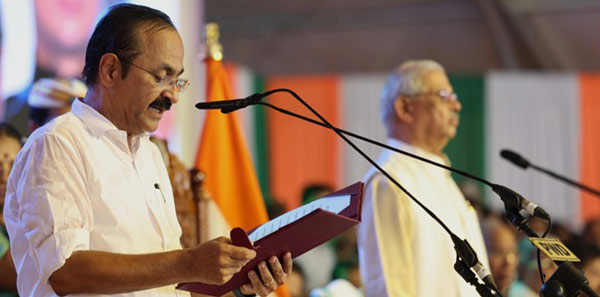
– Congress leader 61-year-old Vadasseri Damodaran (VD) Satheesan became the 13th Chief Minister of Kerala on 18 May 2026.
– Governor Rajendra Vishwanath Arlekar administered the oath not only to him but also to the entire cabinet consisting of 20 ministers.
– Earlier, R. Shankar, the state’s third Congress Chief Minister, had taken oath along with the full cabinet in 1962, but his government collapsed in 1964 after a no-confidence motion.
– The Congress-led United Democratic Front (UDF) registered a massive victory in the Assembly elections held on 9 April.
– The Congress-led UDF returned to power 15 years after the Congress had last come to power under the leadership of late former Chief Minister Oommen Chandy.
– In the cabinet, 14 MLAs took oath as ministers for the first time.
Political Career of VD Satheesan
– He was born on 12 August 1964 in Ernakulam, Kerala.
– He obtained an LLM degree and practiced law in the High Court.
– He started his political journey through the Kerala Students Union.
– He later joined the Indian Youth Congress and NSUI.
– In 1996, he contested his first election from the Paravur Assembly constituency in Kerala and lost by 1,100 votes.
– He won the Paravur seat for the first time in 2001.
– He has won elections from the same seat six consecutive times.
– In 2021, he became the Leader of the Opposition in the
—————-
2. Which country handed over the historical ‘Anaimangalam Copper Plates’ of the Chola dynasty to India?
a. Spain
b. France
c. Netherlands
d. Norway
Answer: c. Netherlands
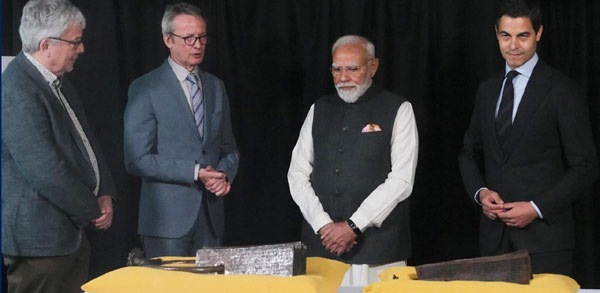
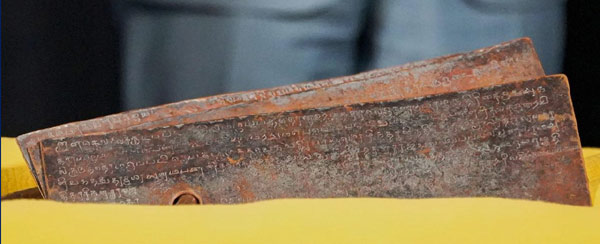
– During Prime Minister Narendra Modi’s visit to the Netherlands, the Dutch government announced the handover of the historical ‘Anaimangalam Copper Plates’ of the Chola dynasty to India.
– These copper plates had been in the possession of Leiden University in the Netherlands since 1862.
– The plates belong to the period of Chola king Rajaraja I (985–1014 CE) and his son Rajendra Chola I (1012–1044 CE).
– The charter consists of 21 copper plates with a total weight of approximately 30 kilograms.
– These plates are connected through a massive bronze ring bearing the royal seal of Rajendra Chola.
– The charter has two sections — one in Sanskrit and the other in Tamil. It contains the genealogy of the Chola dynasty.
Religious and Geographical Context
– The charter records that 26 villages around Anaimangalam were donated for a Buddhist monastery called Chudamanivarmavihara located in the port city of Nagapattinam on the Coromandel Coast.
– This Buddhist vihara was constructed by the king of the Srivijaya Empire (Malay Empire).
Provenance and Loot History
– It is believed that the Dutch East India Company (VOC) illegally excavated these plates in Nagapattinam between 1687 and 1700.
– Later, in the early 18th century, a Dutch minister named Florentius Camper took them to the Netherlands.
Note: In India, these copper plates will be handed over to the Archaeological Survey of India (ASI) under the Ministry of Culture.
11th Century Maritime Diplomacy and Global Relations
– These copper plates are not merely historical artefacts but an important documentary proof of the rich history of the Indian Ocean Region (IOR).
– They reflect strong diplomatic, trade, and cultural ties between the Chola Empire and the Srivijaya Empire of Southeast Asia.
Script Used in the Copper Plates
– Two different scripts were used in writing these plates:
– The Sanskrit section is written in the Grantha script, which was used in South India for writing Sanskrit during that period.
– The Tamil section is engraved in the ancient Tamil script.
—————-
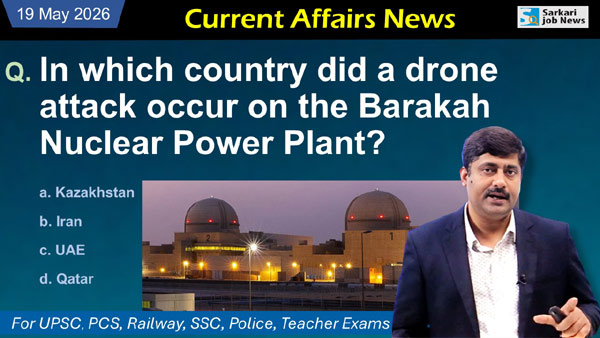
3. The Barakah Nuclear Power Plant was in the news in May 2026 due to a drone attack. Where is it located?
a. Kazakhstan
b. Iran
c. UAE
d. Qatar
Answer: c. UAE
– A drone attack occurred outside the inner perimeter of the Barakah Nuclear Power Plant in the Al Dhafra region of Abu Dhabi, UAE, on 16 May 2026.
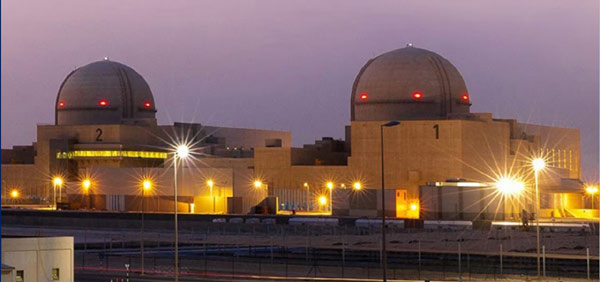
– Due to the attack, a power generator caught fire.
– However, no impact on nuclear safety or plant operations was reported.
– The Federal Authority for Nuclear Regulation (FANR) stated that the incident did not affect “the safety of the plant or the readiness of its essential systems,” and confirmed that all units at the Barakah facility were operating normally.
– The UAE is currently investigating who carried out the attack.
————–
4. In which city is the Bhojshala-Kamal Maula complex situated, regarding whose temple-mosque dispute the Madhya Pradesh High Court declared it a temple?
a. Lucknow
b. Jabalpur
c. Dhar
d. Indore
Answer: c. Dhar
– The judgment was based on the report submitted by the Archaeological Survey of India (ASI).
– The court delivered its verdict on 15 May 2026.
– The complex was recognized as a temple of Goddess Vagdevi, allowing the Hindu community to worship at the site.
– The claim of the Muslim community was rejected.
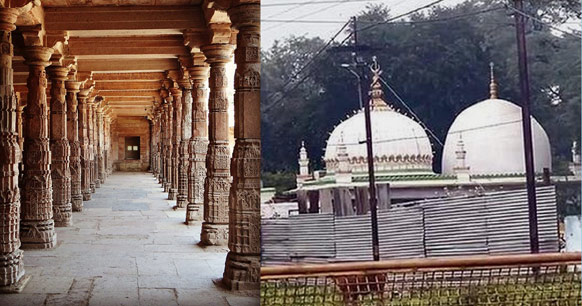
– The court said Muslim representatives could seek an alternative piece of land from the Madhya Pradesh government in Dhar district.
– The court also cancelled the 2003 ASI order that allowed the Muslim community to offer Friday prayers at the site.
Earlier, Hindus were restricted to worship only on Tuesdays and Basant Panchami at the Bhojshala complex.
– Inspired by the Ayodhya Ram Janmabhoomi-Babri Masjid verdict, the court laid down 10 principles in its decision.
– The order stated that “the disputed Bhojshala and Kamal Maula Mosque area has been treated as a protected monument since 18 March 1904 under the Ancient Monuments and Archaeological Sites and Remains (AMASR) Act, 1958.”
– It further said that the religious character of the disputed site is Bhojshala, a temple of Goddess Vagdevi (Saraswati).
– The court also directed the Central Government to make efforts to bring back the idol of Goddess Saraswati from a London museum.
– The idol had been taken to the United Kingdom in the late 1800s, and the court directed that it be reinstalled in the Bhojshala complex.
– The court rejected the Muslim side’s argument that a proclamation issued by the former Dhar princely state in August 1935 had declared the site a mosque under the Government of India Act, 1935.
– The court noted that the Act came into force only in April 1937 and dismissed the validity of that proclamation.
The site is an 11th-century monument protected by the ASI.
– Under a 2003 agreement with the ASI, which has now been cancelled by the court, Hindus were allowed to worship every Tuesday while Muslims were allowed to offer namaz every Friday.
————–
5. Which UT launched the ‘Monday Metro’ campaign?
a. Delhi
b. Uttar Pradesh
c. West Bengal
d. Karnataka
Answer: a. Delhi
– Delhi Chief Minister Rekha Gupta launched the ‘Metro Monday’ campaign on 18 May 2026 following Prime Minister Narendra Modi’s appeal to promote public transport usage and fuel conservation.
– The campaign is linked to the Delhi government’s 90-day initiative titled ‘Mera Bharat, Mera Yogdan’.

– It includes additional Delhi Metro Rail Corporation (DMRC) services every Monday.
– The objective is to reduce traffic congestion, pollution, and fuel consumption.
– From 18 May onward, 24 extra train trips will operate on the metro network every Monday.
– Services may be increased further depending on demand.
– DMRC stated that the initiative aims to encourage people to prefer metro travel over private vehicles and help reduce traffic and fuel consumption across Delhi-NCR.
– Along with extra metro services, DMRC has deployed additional security personnel, more baggage scanners, extra DFMD machines, and special arrangements at frisking points.
– Ticketing counters have also been increased.
– On 18 May, Delhi Chief Minister Rekha Gupta herself travelled by metro.
—————-
6. When is World Hypertension Day observed?
a. 16 May
b. 17 May
c. 18 May
d. 19 May
Answer: b. 17 May
Theme for 2026: “Controlling Hypertension Together!”
– Hypertension is known as the “Silent Killer.”
– Maintaining healthy blood pressure through lifestyle changes such as reducing salt intake and increasing consumption of fruits and vegetables can be highly beneficial for the general population.
—————
7. Due to the crisis in West Asia, which country surpassed the UAE to become India’s second-largest export destination?
a. USA
b. Saudi Arabia
c. Malaysia
d. Singapore
Answer: d. Singapore
– Rising tensions in West Asia have now started affecting India’s trade as well.
– Especially after the closure of the Strait of Hormuz, major changes have occurred in India’s export routes.
– As a result, in April 2026, Singapore overtook the UAE to become India’s second-largest export market.
– After the United States, Singapore has emerged as India’s biggest export destination.
– This shift demonstrates how geopolitical crises can reshape global supply chains and trade maps within a short period.
Data
– India’s exports to Singapore increased by 180% in April 2026, reaching USD 3.20 billion.
– In 2025, exports to Singapore stood at USD 1.14 billion.
– On the other hand, exports to the UAE declined by 36% to only USD 2.18 billion.
– In 2025, exports to the UAE were USD 3.43 billion.
– For a long time, the UAE had been India’s second-largest export market, but Singapore has now taken its place.
– Trade experts believe this shift is directly linked to the Strait of Hormuz crisis.
– Since disruption began in this crucial maritime route in March 2026, shipping goods through the UAE became more expensive and risky.
– As a result, Indian exporters started looking for alternative routes.
Major Shift in Trade with Gulf Countries
– Not only exports, but import data also shows major changes.
– India’s imports from Oman tripled in April.
– Meanwhile, imports from Qatar fell by 47%.
– Imports from Saudi Arabia have started rising again.
– This indicates that India no longer wants to remain dependent solely on traditional Gulf routes.
– Companies are giving priority to routes and countries where supply chains can remain more secure and stable.
Implications for India
– A positive aspect of this shift is greater diversification in India’s export markets.
– Stronger trade ties with ASEAN countries may create new opportunities for Indian companies.
– However, the new maritime routes may be more expensive than earlier routes, increasing export costs.
– Experts believe that if the Strait of Hormuz crisis continues for a long time, Singapore could permanently emerge as a major export hub for India.
– This is why India is now increasingly focusing on expanding trade with Southeast Asia and the ASEAN region.
—————
8. When is the International Day of Living Together in Peace celebrated?
a. 13 May
b. 14 May
c. 15 May
d. 16 May
Answer: d. 16 May
– This day was declared by the United Nations.
– It was established in 2018.
—————
9. When is World AIDS Vaccine Day observed?
a. 17 May
b. 18 May
c. 19 May
d. 20 May
Answer: b. 18 May
– There is currently no vaccine to prevent or cure HIV, but there are vaccines being developed that may help people living with HIV.
– The first World AIDS Vaccine Day was observed in 1998, marking the anniversary of the first international AIDS vaccine trial conducted in 1997.
– The day is dedicated to raising awareness about the urgent need for AIDS vaccines and recognizing the efforts of doctors, scientists, and community members.
– AIDS stands for Acquired Immunodeficiency Syndrome and is caused by the Human Immunodeficiency Virus (HIV).
—————-
10. Who became the Speaker of the Kerala Legislative Assembly?
a. K. A. Tulsi
b. Thiruvanchoor Radhakrishnan
c. K. Muraleedharan
d. Sunny Joseph
Answer: b. Thiruvanchoor Radhakrishnan
– Congress leader Thiruvanchoor Radhakrishnan was appointed Speaker of the Legislative Assembly.
– Shanimol Usman was appointed Deputy Speaker.
– Thiruvanchoor Radhakrishnan is an Indian National Congress (INC) leader from Kerala.
– He is the president of the Kottayam region.
– He served as the Minister for Home, Roads, Forests, and Transport in the Oommen Chandy government.
– He was born on 26 December 1949 in Kottayam, Kerala.
– He earned B.A. and LL.B. degrees.
– He started his political career through the Kerala Students Union (KSU) and Youth Congress.
—————
11. Iran established the ‘Persian Gulf Strait Authority’ (PGSA) to oversee taxation and management of the Strait of Hormuz; which seas does this strait connect?
a. Red Sea and Gulf of Aden
b. Persian Gulf and Gulf of Oman
c. Persian Gulf and Arabian Sea
d. Mediterranean Sea and Red Sea
Answer: b. Persian Gulf and Gulf of Oman
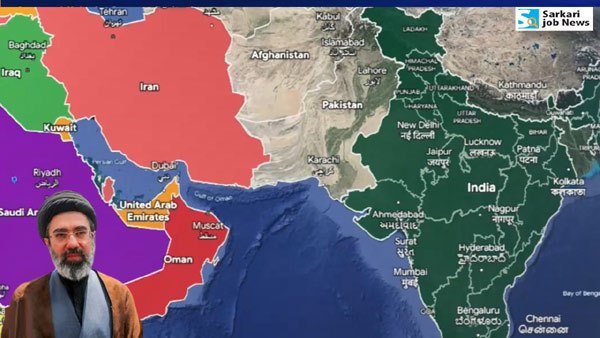
– Iran has established an authority to collect taxes and manage the Strait of Hormuz.
– The authority was formed by Iran’s Supreme National Security Council.
– Name of the body: Persian Gulf Strait Authority (PGSA).
– Claiming full sovereignty over this strategic waterway, Iran has started imposing tolls and regulations on ships passing through it.
– Objective: To enforce Iran’s sovereignty over the Strait of Hormuz, issue new rules for ships, and monitor real-time operations.
– Geopolitical background: Since the war involving the United States, Israel, and Iran began on 28 February 2026, Iran has kept this waterway nearly blocked. Although a temporary ceasefire has been in effect since 8 April 2026, Iran has clarified that traffic through the route will not return to pre-war levels.
Geographical Location of the Strait of Hormuz
– It connects the Gulf of Oman and the Persian Gulf.
– Iran lies to the north, while Oman and the United Arab Emirates (UAE) lie to the south.
– Economic importance: Under normal conditions, it is the world’s most important oil transit chokepoint, through which nearly one-fifth (20%) of global oil and liquefied natural gas (LNG) supplies pass. It is also a major route for fertilizer shipments.
Impact on Global Energy Security
– Iran’s imposition of toll taxes and strict regulations on ships passing through the Strait of Hormuz may increase global crude oil and LNG prices.
– Any disruption in supply chains could trigger inflation worldwide, directly affecting import-dependent economies like India.
International Maritime Law and Freedom of Navigation
– Iran’s move may be seen as contrary to the principles of the United Nations Convention on the Law of the Sea (UNCLOS), which supports the rights of “innocent passage” and “transit passage” through international straits.
– Iran’s unilateral claim presents a serious challenge to global maritime diplomacy.
How Much Tax Will Be Charged?
– Iran has not yet officially announced any fixed public rate.
– However, several international reports claim that some ships are being asked to pay tolls or transit fees ranging from USD 1 million to USD 2 million per vessel (approximately ₹8 crore to ₹17 crore).
– Large oil tankers and LNG ships may face even higher charges.
– “Friendly” countries such as China and Russia may receive exemptions or special permissions.
– Some vessels are reportedly being allowed to pass through “safe corridors” under the supervision of the Islamic Revolutionary Guard Corps (IRGC).
– Iran’s military claims that controlling the strait would be more profitable than oil exports themselves.
Impact on India’s Interests
– Energy crisis: India imports a major portion of its oil requirements from Gulf countries such as Saudi Arabia, Iraq, and the UAE, all of which use this route.
– Strategic trade: India’s trade routes and the Chabahar Port being developed in Iran are directly linked to the stability of this region.
– Safety of expatriates: Millions of Indians work in Gulf countries, and military or economic tensions in the region could affect their security and remittances.
Situation in Hormuz After the West Asia War
– Iran effectively closed the Strait of Hormuz soon after the war began on 28 February 2026.
– The United States attempted several measures to restore freedom of navigation, but all failed.
– Operation Epic Fury and air strikes: The United States and Israel jointly carried out around 900 air strikes on Iran’s missile bases, air defence systems, and IRGC naval bases to weaken Iran’s ability to target ships.
– Iranian Naval Blockade: After peace talks mediated by Pakistan failed, the US military (CENTCOM), under orders from President Donald Trump, imposed a strict naval blockade on Iran’s coastline and ports on 13 April 2026.
– Strategy: The US Navy announced it would not stop non-Iranian ships passing through the Strait of Hormuz, but would intercept, redirect, or seize any vessel entering or leaving Iranian ports. This blockade reportedly caused Iran losses of USD 500 million per day.
– Strategic oil reserves: To control the historic surge in oil prices, the United States, along with International Energy Agency (IEA) countries, released 400 million barrels of oil into the market.
Iran’s Counter-Response
– Instead of backing down under US military pressure and blockade, Iran adopted an aggressive and strategic response described by experts as a “Dual Blockade.”
– Complete blockade of the Persian Gulf: In response to the US blockade of Iranian ports, Iran again closed the Persian Gulf and the Strait of Hormuz to commercial shipping. The IRGC warned ships, launched drone and missile attacks on commercial vessels, and laid sea mines in the waterway.
– Formation of PGSA: On 18 May 2026, Iran took another step by officially announcing the PGSA to assert complete sovereignty over the strait.
– Under this system, Iran has begun collecting arbitrary toll taxes from all foreign vessels passing through the international waterway and imposing strict regulations.
PDF Download: Click here