
This is the current affairs of 10 January 2026. Here are questions and answers of daily current affairs for better preparation of competitive exams for government jobs.
PDF Download: Click here
1. Which three countries form the Weimar Triangle, a political group whose meeting was attended by the Indian Foreign Minister for the first time in January 2026?
a. France, Germany, Poland
b. Italy, Spain, France
c. Russia, India, China
d. India, Nepal, Bhutan
Answer: a. France, Germany, Poland

– The meeting was held in January 2026 in Paris, the capital of France.
– India’s External Affairs Minister S. Jaishankar participated in India’s first meeting with the Weimar Triangle countries—France, Poland, and Germany.
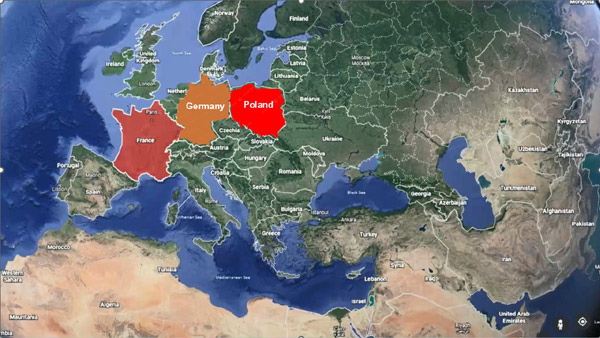
About the Weimar Triangle
– It is a regional political group of France, Germany, and Poland.
– It was formed on 29 August 1991 through a joint declaration in Weimar, Germany.
– Its purpose was to involve France in German–Polish reconciliation using the France–Germany experience.
– Its objective is to strengthen political dialogue and cooperation among the three countries.
What S. Jaishankar said
– He emphasized contemporary global transformations driven by trade, finance, technology, energy, resources, and connectivity.
– A change in mindset has been an important factor, and he also highlighted India’s growing importance.
—————-
2. In which state did the Public Investment Board (PIB) approve ₹26,070 crore for the 1,720 MW Kamala Hydroelectric Project?
a. Assam
b. Mizoram
c. Arunachal Pradesh
d. Madhya Pradesh
Answer: c. Arunachal Pradesh (project on the Kamala River, a major tributary of the Subansiri River)

– In January 2026, the Public Investment Board approved the 1,720 MW Kamala Hydroelectric Project costing ₹26,070 crore in Arunachal Pradesh.
– The project is proposed on the Kamala River in Kamle district of Arunachal Pradesh.
– It is a storage-based scheme with a flood-control component.
– The project includes construction of a 216-meter-high concrete gravity dam and an underground power station.
– After completion, it will generate 6,869.92 million units of green energy annually.
– Besides power generation, the project also aims to provide flood relief in the Brahmaputra Valley.
– The equity structure will be 74% NHPC and 26% Government of Arunachal Pradesh (GoAP).
Public Investment Board
– In India, the Public Investment Board (PIB) is an important body under the Department of Expenditure, Ministry of Finance.
– It is responsible for evaluating and approving large public-funded projects of more than ₹500 crore for central ministries and public sector undertakings, ensuring efficient public spending and better planning.
—————–
3. The Chief Minister of Madhya Pradesh announced a plan to rename the Ratapani Tiger Sanctuary after which archaeologist?
a. Dr. Alok Verma
b. Ajay Kumar Sood
c. Dr. Vishnu Shridhar Wakankar
d. Vijay Nagrekar
Answer: c. Dr. Vishnu Shridhar Wakankar
– Chief Minister Dr. Mohan Yadav stated that the state’s tiger sanctuary would be renamed after the world-renowned archaeologist Dr. Vishnu Wakankar.
– The World Heritage Site of Bhimbetka, located in the Ratapani Tiger Sanctuary, received recognition due to Dr. Wakankar’s tireless efforts.
About Ratapani Tiger Reserve
– Located in Raisen and Sehore districts of Madhya Pradesh.
– It is the 8th tiger reserve of Madhya Pradesh and the 57th in India.
– It lies in the hills of the Vindhya Range.
– Spread over an area of 1,271 square kilometers.
– Situated parallel to the northern bank of the Narmada River.
– The Kolar River forms its western boundary.
– Major water bodies nearby or within include the Barna Reservoir and Ratapani Dam (Barrasot Lake).
– It also includes several historical and religious sites such as Ginnorgarh Fort, a war-prisoners’ camp, Keri Mahadev, Ratapani Dam, Jholiyapur Dam, etc.
—————-

4. Which edition of the Asian Waterbird Census took place in January 2026?
a. 10th
b. 15th
c. 25th
d. 40th
Answer: d. 40th
– On 10 and 11 January 2026, bird species found in Coringa Wildlife Sanctuary and adjoining wetland areas were counted.
– The census focused on the presence of Indian Skimmer, Great Knot, Eurasian Curlew, and Eurasian Oystercatcher at the mouth of the Godavari River.
– It is one of the major sites in India where Indian Skimmer and Great Knot can be seen together.
Organizations involved
– Andhra Pradesh Forest Department
– Bombay Natural History Society (BNHS)
– Wildlife Institute of India (WII)
– World Wide Fund for Nature (WWF)
– This was the tenth waterbird census conducted in Coringa Wildlife Sanctuary and surrounding wetlands.
Four species monitored
– Endangered Indian Skimmer (Rynchops albicollis)
– Endangered Great Knot (Calidris tenuirostris)
– Near-threatened Eurasian Curlew (Numenius arquata)
– Eurasian Oystercatcher (Haematopus ostralegus)
– All four are migratory species that arrive at the Godavari estuary during winter in search of food.
—————–
5. Which Indian armed force established the “Bhairav Light Commando Battalions”?
a. Indian Army
b. Indian Air Force
c. Indian Navy
d. Indian Coast Guard
Answer: a. Indian Army
– In January 2026, the Indian Army announced the formation of the “Bhairav Light Commando Battalions.”
– These are small but highly effective special commando units capable of rapid cross-border action.
– The Army is expanding these battalions and equipping them with modern weapons, advanced training, and specialized geographical knowledge.
– The battalions were formed after reviewing lessons from recent global conflicts, especially the use of drones, cyber-enabled operations, and rapid small-team missions.
—————–
6. Which Muslim country in West Asia made pre-marital medical tests legally mandatory in January 2026?
a. Turkey
b. Oman
c. Saudi Arabia
d. Qatar
Answer: b. Oman
– This decision was implemented from 1 January 2026 under Royal Decree No. 111/2025 issued by Sultan Haitham bin Tariq of Oman.
– Both partners must now pass the test before finalizing the marriage contract, whether the marriage takes place inside or outside Oman.
– The rule applies even if one partner is a non-Omani.
– Oman’s Ministry of Health introduced this rule to improve family health and protect future generations from genetic diseases.
– Earlier, the test was optional and had been in place since 1999.
– In 2025, only 42–43% of people were opting for it, leading to its mandatory enforcement.
– The UAE already has a similar rule.
Two types of diseases tested
Hereditary blood disorders
– Sickle Cell Anemia
– Thalassemia
– Carrier status is identified; if both partners are carriers, the child may be severely affected.
– These diseases are very common in Oman, affecting about 9.5% of the population.
Infectious diseases
– Hepatitis B
– Hepatitis C
– HIV/AIDS
– These diseases can spread from one partner to another or from mother to child.
Early detection makes treatment easier.
– Tests are conducted at primary healthcare centers.
– After testing, couples receive a fitness certificate, which is required for the marriage contract.
– Reports are not shared with third parties; privacy is fully maintained.
Risk of genetic diseases due to cousin marriages
– Cousin marriages are common in Gulf countries like Oman, increasing the spread of genetic diseases.
– Saudi Arabia, UAE, and Qatar already have mandatory testing.
– Saudi Arabia has enforced this rule since 2004, mainly for sickle cell and thalassemia.
– UAE expanded genetic testing in 2025 to include 570 genes linked to over 840 diseases.
Oman
– Capital: Muscat
– Population: 5.6 million
– Language: Arabic
– Currency: Omani Rial
– Neighbors: United Arab Emirates, Saudi Arabia, and Yemen
—————–
7. In which neighboring country were rare decorative stones and coins discovered during excavations at the UNESCO-listed site of Taxila, reflecting India’s ancient history and civilization?
a. Pakistan
b. Sri Lanka
c. Bangladesh
d. Nepal
Answer: a. Pakistan
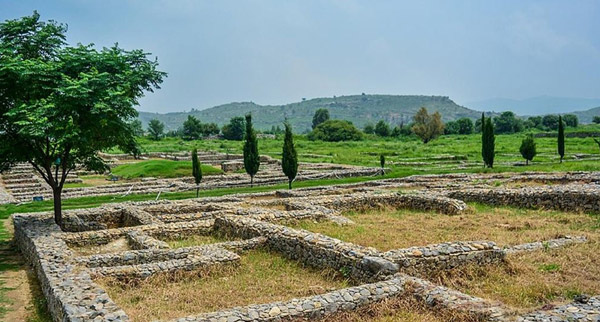
– On 1 January 2026, Pakistani archaeologists discovered rare decorative stones and coins near the historic city of Taxila.
– This provided a rare glimpse into one of the earliest urban settlements of ancient Indian civilization.
– The artifacts were found at the ancient Bhir Mound.
– Experts recovered decorative stones dating to the 6th century BCE and coins from the 2nd century CE.
– The decorative stones were identified as lapis lazuli.
– Rare bronze coins from the Kushan dynasty were also found.
– This discovery adds a new dimension to the material history of ancient Gandhara.
– The coins bear the image of Emperor Vasudeva, considered the last Kushan ruler of the region.
– Archaeologist Aasim Dogar stated that nearby evidence suggests these remains were part of residential areas.
– The findings indicate that Taxila was at the peak of its political, cultural, and economic influence during Kushan rule 2,000 years ago.
Pakistan
– Capital: Islamabad
– President: Asif Ali Zardari
– Prime Minister: Mian Muhammad Shehbaz Sharif
– Population: 241.5 million (2023)
– Currency: Pakistani Rupee
– Language: Urdu
– Neighbors: India, China, Afghanistan, and Iran
—————-
8. When is Pravasi Bharatiya Divas celebrated?
a. 5 January
b. 9 January
c. 10 January
d. 11 January
Answer: b. 9 January
– Mahatma Gandhi returned to India from South Africa on 9 January 1915 and played a crucial role in India’s freedom struggle.
– Therefore, 9 January was chosen to commemorate his return as Pravasi Bharatiya Divas.
Pravasi Bharatiya Conference
– On this occasion, the Government of India organizes a major conference every two years.
– Pravasi Bharatiya Divas was first celebrated in 2003, and in 2015 it was revised to hold the conference biennially.
Contribution of the Indian diaspora
– Indians abroad send over USD 120 billion annually as remittances, making India the world’s largest recipient.
– The diaspora boosts investment in startups, infrastructure, healthcare, and education.
– With over 35 million people across more than 200 countries, India has the world’s largest diaspora.
—————–
9. Renowned film director Béla Tarr passed away on January 6, 2026, due to illness. Which country was he from?
a. Germany
b. Hungary
c. USA
d. France
Answer: b. Hungary

– He was 70 years old.
– Béla Tarr was known for films such as Damnation and Sátántangó.
– He is regarded as the founder of the “slow cinema” movement.
– Slow cinema features black-and-white visuals, very long shots, minimal dialogue, no conventional storyline, and a bleak portrayal of everyday life in Eastern Europe.
– The best example is his 1994 film Sátántangó, which is seven hours long.
– Béla Tarr was born on 21 July 1955 in Pécs, Hungary.
– He began making films at the age of 16.
– His first major film was Family Nest (1979).
– His notable films include The Outsider, The Prefab People, and Almanac of Fall.
—————
10. Former world billiards champion Manoj Kothari passed away on January 5, 2026. In which year did he win this title?
a. 1995
b. 1991
c. 1990
d. 1980
Answer: c. 1990

– The 67-year-old died due to a heart attack.
– He had undergone a liver transplant ten days earlier at a hospital in Tirunelveli, Tamil Nadu.
– He received the prestigious Major Dhyan Chand Award in 2005.
– He also served as head coach of the Indian national team.
– His son Saurabh Kothari is also a former world billiards champion, having won the title in 2025.
PDF Download: Click here