
This is the current affairs of 10 September 2025. Here are questions and answers of daily current affairs for better preparation of competitive exams for government jobs.
PDF Download: Click here
1. Who won the election of the 15th Vice President of the country?
a. Sudarshan Reddy
b. CP Radhakrishnan
c. Venkaiah Naidu
d. none of these
Answer: b. CP Radhakrishnan
– On September 9, 2025, CP Radhakrishnan won the Vice Presidential election.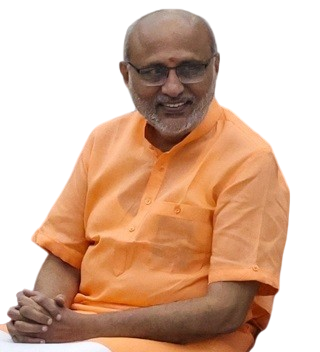
– He was the NDA candidate. His opponent was INDIA alliance candidate Sudarshan Reddy (a retired Supreme Court judge).
– CP Radhakrishnan received 452 first-preference votes.
– INDIA candidate Sudarshan Reddy received 300 first-preference votes.
– Radhakrishnan won by a margin of 152 votes.
– Out of 788 members, 767 MPs (98.2%) cast their votes.
– 15 votes were declared invalid.
– There are speculations that at least 14 opposition MPs cross-voted in favor of the NDA.
14th Vice President
– The 14th Vice President before him was Jagdeep Dhankhar.
– He abruptly resigned from the post of Vice President on July 21, 2025, citing poor health.
– His term was supposed to last until August 10, 2027.
About the 15th Vice President, CP Radhakrishnan
– Full name: Chandrapuram Ponnusamy Radhakrishnan
– Date of Birth: October 20, 1957
– Associated with the Rashtriya Swayamsevak Sangh (RSS).
– Elected as Member of Parliament from Coimbatore in 1998 and 1999.
– Radhakrishnan was once very close to becoming a Union Minister, but due to a confusion caused by a similar name, the position was mistakenly given to another leader, Pon Radhakrishnan.
– Served as the BJP President of Tamil Nadu from 2004 to 2007.
– In 2016, he was appointed Chairman of the Coir Board, based in Kochi. Under his leadership, India’s coir exports reached a record ₹2,532 crore.
(Note – Coir is a natural, versatile, and eco-friendly fiber obtained from the outer husk of coconuts. It is used in making ropes, mats, brushes, upholstery, and horticultural products.)
– Appointed Governor of Jharkhand in 2023. (Additional charge: Governor of Telangana and Lt. Governor of Puducherry)
– Became Governor of Maharashtra in 2024.
– Won the Vice Presidential election in September 2025.
Constitutional Provisions Related to the Vice President
– Article 63: There shall be a Vice President of India.
– Article 64: The Vice President shall be the ex-officio Chairman of the Rajya Sabha (Council of States).
– Article 65: In the event of vacancy in the office of the President, or in case of absence or inability to discharge duties, the Vice President shall act as the President.
– Article 66: Deals with the election of the Vice President and related provisions.
– Article 67: Term of office of the Vice President – 5 years (or until a successor assumes office).
– Article 68: Procedure for filling vacancy in the office of the Vice President.
– Article 71: The Supreme Court shall decide disputes relating to the election of the Vice President.
Election Process of the Vice President
1) Electoral College
– The Vice President is elected by the members of both Houses of Parliament (Lok Sabha + Rajya Sabha), including both elected and nominated members.
– State Legislative Assemblies have no role in this election (unlike in the Presidential election).
2) Voting Method
– The election is conducted using the Single Transferable Vote System (STV) based on Proportional Representation.
– Voting is done through a secret ballot.
3) Qualifications to Become Vice President
To be eligible for the office of Vice President, a person must:
– Be a citizen of India.
– Be at least 35 years of age.
– Be eligible to be elected as a member of the Rajya Sabha.
– Not hold any office of profit under the Government of India or any state government.
4) Nomination
– A candidate must be nominated by at least 20 proposers and 20 seconders, all of whom must be Members of Parliament.
– A security deposit must be submitted along with the nomination.
5) Election Authority
– The election of the Vice President is conducted by the Election Commission of India.
—-
Term and Removal from Office
– The term of office is 5 years, but the Vice President can be re-elected.
– After the completion of the term, the Vice President continues to hold office until a successor takes charge.
Removal from Office:
– The Constitution provides a procedure for the removal of the Vice President.
– A resolution for removal can be introduced only in the Rajya Sabha.
– It must be passed by an effective majority (i.e., a majority of the total members who are currently elected and living).
– After being passed in the Rajya Sabha, the resolution must be approved by a simple majority in the Lok Sabha.
————
2. In France, the fourth Prime Minister had to resign in two years, which PM was removed from office by the Parliament in September 2025?
a. Emmanuel Macron
b. Sebastien Lecornu
c. Michel Barnier
d. Francois Bayrou
Answer: d. Francois Bayrou
– On September 9, 2025, a no-confidence motion was passed against François Bayrou in the French Parliament, triggering a new political crisis.
– He was forced to resign.
– France now faces the need to appoint its fifth Prime Minister in two years and fourth in just one year.
– François Bayrou had been serving as Prime Minister for only nine months.
– Lawmakers were unhappy with his budget proposals and the rapidly rising national debt.
– Right-wing parties are demanding parliamentary elections, while the left-wing is calling for President Emmanuel Macron’s resignation.
——
————
3. Who has been appointed by the French President as the new Prime Minister of France in September 2025?
a. Emmanuel Macron
b. Sebastian Lecornu
c. Michel Barnier
d. François Bayrou
Answer: b. Sebastian Lecornu
– On September 9, 2025, French President Emmanuel Macron appointed his close ally Sébastien Lecornu as the new Prime Minister of France.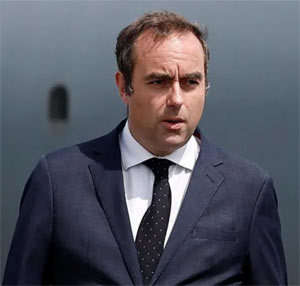
– This announcement came 24 hours after François Bayrou was removed from office following a vote of no confidence.
– Lecornu is 39 years old.
– Since President Macron’s party does not have a majority in the French Parliament, Prime Minister Sébastien Lecornu has had to reach out to opposition parties to remain in office.
What Is the Difference Between the President and the Prime Minister in France?
– President of France = The face of the nation, head of foreign policy and defense.
– Prime Minister of France = Head of the government, responsible to Parliament, leads domestic policy and administration.
What Is the “Semi-Presidential System” in France?
– France follows a Semi-Presidential System, established by the Constitution of the Fifth Republic (since 1958).
– In this system, both a President and a Prime Minister exist, with clearly divided powers.
– The President holds the primary executive power, and the Prime Minister works under the President’s direction.
President of France
– Directly elected by the people for a 5-year term → making the President the most legitimate and powerful political figure.
– The President is the Head of State.
Key Roles:
– In charge of foreign policy and defense.
– Supreme commander of the French armed forces.
– Signs international treaties and represents France globally.
– Appoints the Prime Minister, usually considering the majority in the National Assembly.
– Has the power to dissolve the National Assembly.
– Can exercise special powers in emergency situations.
Prime Minister of France
– Appointed by the President, but must be someone who commands the majority in the National Assembly (Assemblée Nationale).
– The Prime Minister is the Head of Government.
Key Roles:
– Accountable to Parliament.
– Leads domestic policy.
– Responsible for implementing laws and running the administration.
– Oversees the work of government ministries.
– Enforces presidential decisions and legislative acts.
“Cohabitation” in French Politics
– If the President and the majority party in the National Assembly are from different political camps, the President is forced to appoint a Prime Minister from the opposition.
– This situation is known as “Cohabitation” in French politics.
– In such cases, the President focuses on foreign affairs, while the Prime Minister controls domestic policy.
————
4. Who became the oldest person to climb Japan’s highest mountain Mount Fuji at the age of 102?
a. kokichi akuzawa
b. rojan kuchalu
c. Robert Sinoli
d. Himachi Takeuchi
Answer: a. kokichi akuzawa
Kokichi Akuzawa Sets Guinness World Record
– On August 5, 2025, 102-year-old Kokichi Akuzawa set a Guinness World Record as the oldest person to climb Mount Fuji.
– Mount Fuji is the highest mountain in Japan.
– Height of Mount Fuji: 3,776 meters (12,389 feet).
– Kokichi Akuzawa trained for three months before the climb.
– He began his preparation with long walking sessions and climbed one mountain each week in the mountainous Nagano Prefecture as part of his training.
Japan – Quick Facts
– Capital: Tokyo
– Currency: Yen
————
5. When is International Day of Charity celebrated?
a. 03 September
b. 04 September
c. 05 September
d. 06 September
Answer: c. 05 September
International Day Honoring Mother Teresa
– This day is observed on the anniversary of Mother Teresa’s death.
– It has been officially declared by the United Nations.
Note:
– Mother Teresa was awarded the Nobel Peace Prize in 1979 for her efforts to overcome poverty and distress.
About Mother Teresa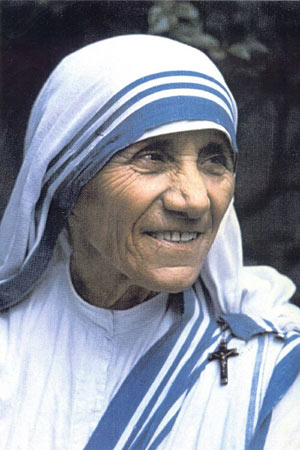
– Born: August 26, 1910, in Skopje (present-day North Macedonia)
– Died: September 5, 1997, in Kolkata, India
– In 1948, she founded the organization “Missionaries of Charity”.
– Her mission was to serve the poor, sick, orphaned, and helpless.
– In Kolkata, she opened the shelter “Nirmal Hriday” (Pure Heart), where the homeless and terminally ill were cared for with dignity in their final days.
– She also established centers for leprosy patients, malnourished individuals, and orphaned children.
————
6. Which country tried to target Hamas leaders by carrying out an airstrike in Doha, the capital of Qatar?
a. France
b. Russia
c. USA
d. Israel
Answer: d. Israel
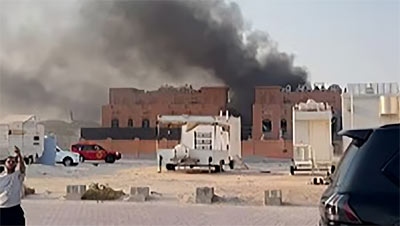
– On September 9, 2025, Israel carried out a targeted airstrike against Hamas leaders in Doha, the capital of Qatar.
– The strike occurred during discussions by Hamas’s political leadership in Doha over a U.S.-mediated proposal concerning a ceasefire in Gaza and the release of hostages.
Note:
– The United States has a major military base in Qatar.
– A few months earlier, the Emir of Qatar gifted a large ship to Donald Trump and promised investments worth billions of dollars.
– Hamas leaders in Doha were considering the American proposal when the attack took place.
Target and Outcome
– The target of the attack was top Hamas leaders, such as Hamas’s chief negotiator in Gaza, Khalil al-Hayya, Zaher Jabarin (West Bank chief), Muhammad Ismail Darwish (head of the Shura Council), and former leader Khaled Mashal.
– According to Hamas, the senior leaders were saved, but Khalil al-Hayya’s son and some others were killed.
– Additionally, a Qatari security officer also lost his life.
Israeli Claims
– The Israel Defense Forces (IDF) and Shin Bet described the operation as a “precise strike” and claimed full responsibility for the mission.
– They justified the attack as a necessary response to the Hamas attacks of October 7, 2023, and recent hostile activities.
International Response
– Qatar condemned the attack as a violation of international law and sovereignty and described it as very “deadly.”
– Several countries including Turkey, the UK, Saudi Arabia, UAE, France, and Egypt strongly criticized the attack.
– Turkey’s President Erdoğan called it “state terrorism.”
– Qatar’s Prime Minister described the attack as “deadly” and “a betrayal” of peace efforts, also stating that the attack could affect the path of mediation.
American Response
– U.S. President (Donald Trump) said he is “very uncomfortable” with the attack and called it against American and Israeli interests.
– The White House admitted that warnings were given beforehand but also distanced itself from the attack.
Key Points
– The attack on Qatar challenges the role of a sovereign country. It raises questions under international rules—whether it falls under self-defense or is a conscious violation of international law.
– The attack occurred at a time when ceasefire talks in Gaza were underway. It has heavily impacted the peace process and raises questions about the credibility of mediation efforts.
– The attack has provoked anger and dissatisfaction among Gulf countries (Qatar, Saudi Arabia, UAE, etc.), increasing the likelihood of destabilizing regional stability and harmony.
Qatar
– Capital: Doha
– Emir: Tamim bin Hamad
– Prime Minister: Mohammed bin Abdulrahman
– Currency: Qatari Riyal
Israel
– Capital: Jerusalem
– Prime Minister: Benjamin Netanyahu
– President: Isaac Herzog
– Currency: New Shekel
————
7. Which operation was launched by the Indian Army to rescue people stranded in floods in Punjab, Himachal Pradesh and Jammu and Kashmir?
a. Operation Hamdard
b. Operation Rahat
c. Operation Yakeen
d. Operation Sahayta
Answer: b. Operation Rahat
– In September 2025, several northern Indian states were hit by severe floods.
– Under “Operation Rahat,” the Western Command of the Indian Army rescued people trapped in floods in Punjab, Himachal Pradesh, and Jammu and Kashmir.
– More than 6,000 people were evacuated, and over 13,000 civilians were provided medical assistance.
————
8. When is International Literacy Day celebrated?
a. 03 September
b. 04 September
c. 05 September
d. 08 September
Answer: d. 08 September
Theme 2025
– Promoting literacy in the digital era
– This day was declared by UNESCO in 1966 and was first observed in 1967.
– Literacy is a fundamental human right for all. It opens the door to other human rights, greater freedoms, and the enjoyment of global citizenship.
Note:
– India’s first digitally literate state: Kerala
————
9. After Tripura, Mizoram, Goa and Ladakh, which State/UT was declared fully literate?
a. Himachal Pradesh
b. Bihar
c. Uttar Pradesh
d. Rajasthan
Answer: a. Himachal Pradesh
– On World Literacy Day, September 8, 2025, Himachal Pradesh was declared a “fully literate state.”
– This made it part of an exclusive club that includes only three other states – Tripura, Mizoram, and Goa – and one Union Territory – Ladakh.
– Announcing this achievement, Chief Minister Sukhvinder Singh Sukhu said the state’s literacy rate has reached 99.3 percent, which is well above the national benchmark of 95 percent.
Himachal Pradesh
– Capital – Shimla
– Chief Minister – Sukhvinder Singh Sukhu
– Governor – Shiv Pratap Shukla
– Neighboring States – Uttarakhand, Haryana, Punjab, Jammu & Kashmir, Ladakh
————
10. In which neighbouring country did Gen-Z youth burn down the Parliament, Supreme Court, houses of leaders and the PM had to resign and run away?
a. China
b. Nepal
c. Bhutan
d. Pakistan
Answer: b. Nepal
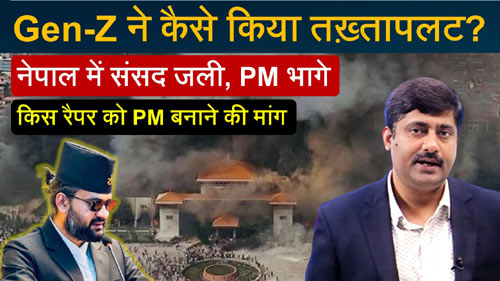
– Bad situation in the neighborhood – Sri Lanka, Bangladesh, and then Nepal in September 2025.
– When the youth protested in Nepal as well, the government fled.
– The Gen-Z youth protests in Nepal began on social media on the issue of a ban and escalated to corruption, misgovernance, and nepotism.
– On the first day, under government orders, bullets were fired killing 19 youths and injuring hundreds.
– As a result, on the very next day, September 9, 2025, the youth overthrew the government.
– Nepal’s Parliament, Supreme Court, political party offices, President, Prime Minister and ministers’ private homes, and most notably Kathmandu’s Singha Durbar, all burned down in a single day.
– Reports say the wife of former PM Jhalanath Khanal was burnt alive.
– Finance Minister Vishnu Paudel was beaten to death after being chased.
– The Prime Minister’s private house was set on fire. The homes of former Prime Ministers Sher Bahadur Deuba and Pushpa Kamal Dahal were also set ablaze.
– The President’s private residence was seized.
– The Finance Minister was chased and beaten on the streets.
– Former Prime Minister and Nepali Congress leader Sher Bahadur Deuba and his wife Arju Rana Deuba, who is the current Foreign Minister, were attacked at their residence.
– The Foreign Minister was dragged out of her burning home.
– The Home Minister’s house was set on fire.
– The Prime Minister had to flee by helicopter.
– Under army orders, PM KP Sharma Oli resigned.
– A fire was set at PM KP Sharma Oli’s party, the CPNUML’s office.
– The major media house Kantipur Times’ office was also set on fire.
– Kathmandu Airport was shut down.
– PM KP Sharma Oli submitted his resignation to the President.
– Then the army and the President appealed to the public for peace.
– The President called on the protesters for talks next week.
Who is 35-year-old Balen Shah? The one who could become the new PM
– After the resignation, a new name is trending on social media — Balendra Shah, the Mayor of Kathmandu, whom the Gen Z protesters see as the new hope for the country and are demanding to make him the Prime Minister.
– Balen Shah is the 15th Mayor of Kathmandu, a civil engineer, and a rapper. His full name is Balendra Shah.
– In 2023, Time Magazine included him in their list of top 100 emerging leaders, while global media like The New York Times have also praised him.
– Recently, he supported the Gen Z-led protests. On Facebook, he wrote that although he cannot join the protests due to the age limit (under 28 years), he has full sympathy and support for the protesters.
– On social media in Nepal, especially on Facebook, there is an outpouring of posts supporting Balen Shah.
– Gen Z is writing on their timelines, “Dear Balen, if not now then never,” urging him to form a new political party and lead the country in a new direction. The youth say the reason is that leaders of Nepal’s three major traditional parties have pushed the country into a pit of despair. Therefore, only honest and young leaders like Balen can show the path to progress.
– The Nepal government has clarified that Mayor Balen Shah’s role in the violent protests in Kathmandu and other cities is suspicious.
Political Crisis in Nepal
– In the last five years, Nepal has seen four different Prime Ministers.
– First KP Sharma Oli, then Sher Bahadur Deuba, followed by Pushpa Kamal Dahal Prachanda, and then KP Sharma Oli again.
– Because of this instability, the protesters’ demands grew stronger. They were not only demanding the lifting of social media bans but were raising their voices against the government, corruption, and the structure of power itself.
Why did the Nepal government ban social media apps?
– The youth in Nepal were already angry, but the ban on social media apps made the situation explosive.
– The government’s reasoning was that this step was taken to control fake identities, disorder, and the spread of hatred on the internet.
– The government had asked social media companies to register, but most of them did not comply.
India’s Response
– The Ministry of External Affairs (MEA) of India and the United Nations (UN) both expressed deep concern over the situation, and Indian citizens were urged to remain cautious.
6 Key Reasons Behind the Gen-Z Movement
1. Ban on 26 Social Media Platforms
2. Corruption, Inflation, Unemployment, and Nepotism: Gen-Z was disheartened by corruption, rising prices, and unemployment. Nepotism and favoritism led to politicians’ children enjoying foreign trips, branded goods, and lavish parties, which became widely discussed on social media. The ‘Nepo Baby’ campaign from the Philippines and Indonesia also started trending on Nepalese social media. When the government imposed bans, Gen-Z saw it as a curb on freedom of expression.
3. Three Major Scandals: Three major scams emerged in four years. In 2021, the Giri Bandhu Land Swap scam worth ₹54,600 crore; in 2023, the Oriental Cooperative scam worth ₹13,600 crore; and in 2024, the Cooperative scam worth ₹69,600 crore. These scandals increased youth anger towards the government.
4. Political Instability: Three governments came in five years. Sher Bahadur Deuba became PM in July 2021, Prachanda in December 2022, and Oli from July 2024.
5. Unemployment and Economic Inequality: The unemployment rate was 10.39% in 2019 and is now 10.71%. Inflation was 4.6% in 2019 and now 5.2%. Economic inequality is rampant, with 20% of people holding 56% of the wealth.
6. Foreign Pressure: When Oli came to power, Nepal’s tilt towards China increased. Earlier governments made several decisions under US influence. During the social media ban, only the Chinese app TikTok remained accessible. Youth feel that Nepal is being used as a pawn under the pressure of major countries.
What Does Setting Fire to the Parliament Building Mean?
1. A Symbolic Attack: Showing Rebellion Against Power
– The parliament building in any country symbolizes the democratic system, the constitution, and the representative institution of the people.
– Setting fire or attacking it directly shows rebellion against the system and those in power.
2. An Extreme Expression of Public Anger
– When people feel their voices are not being heard and the government is acting forcefully (like banning social media, corruption, unemployment), their anger is vented on political symbols.
– An attack on the parliament building sends a message that the public is deeply dissatisfied with the current political system.
3. A Way to Pressure the Government
– Such actions are often meant to indicate that the legitimacy of the government and politicians is being questioned.
– Protesters want to show that “if you suppress our voice, we will target the very place from where decisions are made.”
4. A Dangerous Turn: Chaos and Instability
– Attacking or setting fire to the parliament is not just protest but a direct attack on law and order and state sovereignty.
– Such events can weaken democracy and give the army/police a pretext to take harsh repressive actions.
Note – Setting fire to the parliament building means that the angry and dissatisfied protesters are rejecting not just the government, but the entire political system. It is an extreme sign of rebellion.
Nepal’s Politics – What Could Happen Next?
1. An Interim/Caretaker Government Will Be Formed
– Oli has resigned, but until a new government is formed, he may remain the caretaker Prime Minister.
– The President will appoint a Prime Minister based on a new coalition.
– Who will be the interim Prime Minister after Oli is a complicated question. If we take the appeals of some young protesters as a sign, then Balendra Shah—a rapper, structural engineer by education, and the current Mayor of Kathmandu—is a strong contender for this position.
2. Government of a New Coalition
– If parties come to an agreement, a new Prime Minister will be chosen.
– It is likely that either Sher Bahadur Deuba (Nepali Congress) or Prachanda (Maoist) will lead.
– But this government could also be unstable since coalition politics in Nepal is always contentious.
– Moreover, forming this government will be difficult because the public is fed up with these political leaders.
3. Early General Elections
– If no party succeeds in forming a majority coalition, the parliament may be dissolved, and elections called soon.
– This situation could make Nepal more unstable but would also give youth and new political forces a chance to emerge.
4. Entry of Youth (Gen-Z) into Politics
– The current movement has organized the youth.
– It is possible that in the upcoming elections, a new political party or platform will emerge that directly represents the younger generation and digital freedom.
– In the long term, this movement could bring new political power and great opportunities for the youth.
5. Potential Risks
– If dialogue between the government and protesters does not happen, violence could flare up again.
– The role of the army/security forces may increase, impacting democracy.
– Nepal’s already fragile economy and tourism sector could be severely affected.
Regional Impact
– India: Unrest may rise in border areas, affecting trade and movement.
– China: Wants stability in Nepal and may pressure political parties.
– International Pressure: The UN and Western countries will keep a close watch on Nepal in the name of democracy and human rights.
————
PDF Download: Click here