This is the current affairs of 20 August 2025. Here are questions and answers of daily current affairs for better preparation of competitive exams for government jobs.
PDF Download: Click here
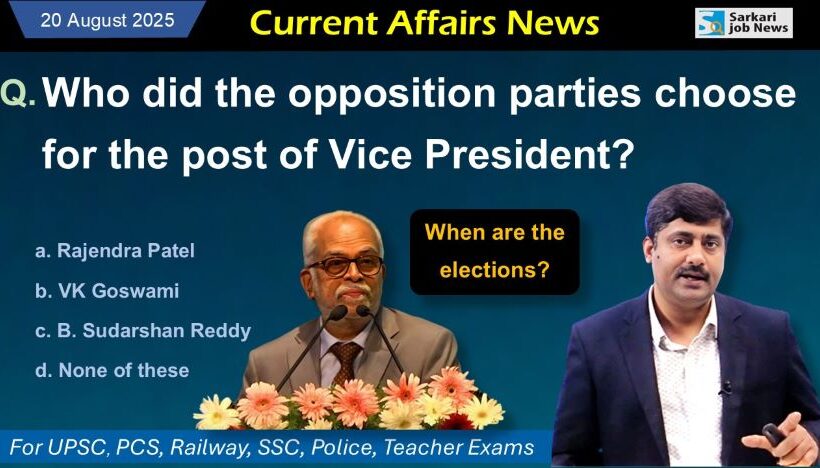
1. Who did the opposition parties make the Vice Presidential candidate?
a. Rajendra Patel
b. VK Goswami
c. B. Sudarshan Reddy
d. None of these
Answer: c. B. Sudarshan Reddy
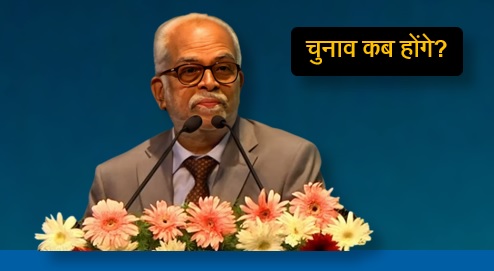
– B. Sudarshan Reddy is a retired judge of the Supreme Court.
– He was born on 8 July 1946 in Akula Mylaram village of Andhra Pradesh.
– He was enrolled as an advocate in 1971.
– Worked as a government advocate in the High Court during 1988–90.
– Appointed as a judge of the Andhra Pradesh High Court on 2 May 1995.
– Appointed Chief Justice of the Guwahati High Court in 2005.
– He became a judge of the Supreme Court in 2007 and retired in 2011.
NDA appointed C.P. Radhakrishnan as its candidate
– NDA has declared Maharashtra Governor and senior BJP leader C. Radhakrishnan as its candidate for the upcoming Vice Presidential election.
When will the election be held?
– Voting for the Vice Presidential election will be held on 9 September 2025 at the Parliament House.
– Counting of votes will take place immediately after the voting ends, and the result will be declared on the same day by the Returning Officer under the supervision of the Election Commission.
————-
2. For the first time after the Galwan conflict, the Foreign Minister of China visited India in August 2025, name him?
a. Li Qiang
b. Dong Jun
c. Li Shangfu
d. Wang Yi
Answer: d. Wang Yi
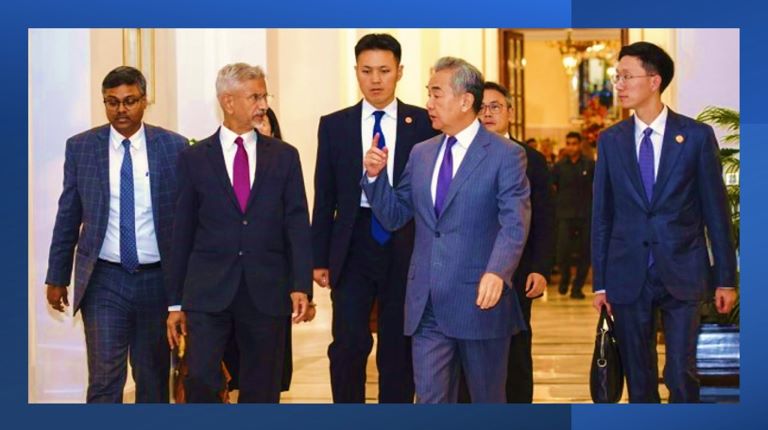
Visit of Chinese Foreign Minister to India
– For the first time since the Galwan clash (2020), Chinese Foreign Minister Wang Yi arrived in Delhi in August 2025.
Why did Wang Yi come to India
– According to Professor Srikanth Kondapalli of JNU’s Chinese Studies, there are three reasons for the visit.
First Reason
– He was to participate in the 24th round of talks between the Special Representatives of India and China.
– In this, issues related to bilateral relations were discussed. His opinion was that both countries should continue mutual dialogue and focus on global economic instability.
– However, Indian Foreign Minister S. Jaishankar did not agree with this.
– He clearly stated that unless three things are ensured, it will be difficult to move forward in bilateral relations.
– These three things are: mutual respect, sensitivity, and consideration of each other’s interests.
Second Reason
– The second purpose of Wang Yi’s visit was to build consensus on those issues that will be included in the joint statement after the Shanghai Cooperation Organization’s summit meeting later this month.
– Usually, before every major event, the host country’s foreign minister visits participating countries to build early consensus on the issues to be discussed at the summit.
– This two-day summit is proposed to be held in Tianjin, China, in which Prime Minister Narendra Modi may participate. It would be the first visit by an Indian Prime Minister to China in seven years.
Third Reason
– The third reason for the Chinese Foreign Minister’s visit to Delhi was to persuade India to adopt a joint stance on U.S. tariffs.
– It is believed that as the U.S. tries to exert pressure by increasing tariffs, countries need to unite to counter it.
– Such an effort had been initiated, and economies like China, the European Union, and India tried to come together, but the initiative did not succeed.
BRICS Angle
– According to JNU’s Chinese Studies professor Srikanth Kondapalli, BRICS is also an issue here.
– Both China and India are important members of this organization. The U.S. views this group with suspicion.
– U.S. President Donald Trump believes that this organization is pushing for “de-dollarization”—that is, working to reduce the dominance of the dollar in international trade.
– He even announced 100% tariffs on countries attempting such measures.
– However, in saying so, Trump overlooked the fact that India has denied participating in any such initiative. While some international transactions have been conducted in rupees, China seeks to expand the use of the renminbi (the official name of the Chinese currency, yuan), which is not favored by other BRICS countries.
————-
3. The Foreign Minister of which neighbouring country assured India in August 2025 that it would start supplying fertilizers, rare minerals and tunnel making machines?
a. Sri Lanka
b. Bangladesh
c. China
d. Bhutan
Answer: c. China
– For the first time since the Galwan clash (2020), Chinese Foreign Minister Wang Yi arrived in Delhi in August 2025.
– In talks with India, China assured that it would resume the supply of fertilizers, rare minerals, and tunnel-boring machines.
– Due to tensions in bilateral relations, China had halted the supply of these critical items to India.
– But now, as relations between the two countries are getting back on track, China has decided to lift the restrictions.
– Chinese Foreign Minister Wang Yi met with External Affairs Minister S. Jaishankar on 18 August 2025.
– Sources say that during this meeting, both sides reached an agreement on the matter. Further improvement is expected.
What are rare minerals?
– Rare minerals refer to a group of 17 elements.
– These include samarium, gadolinium, terbium, dysprosium, lutetium, scandium, and yttrium.
– These are magnetic elements used in cars, electronics, and other products.
– China produces 65% of the world’s total output but controls 90% of the global supply.
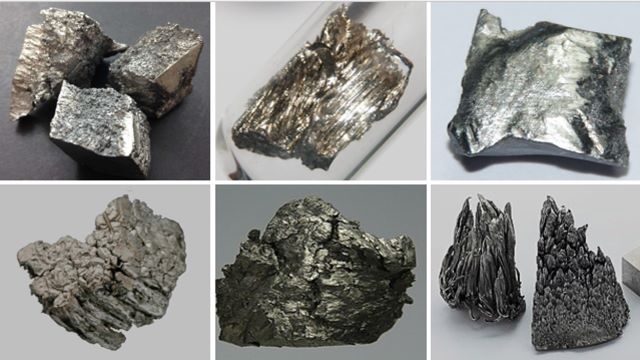
17 Rare Earth Metals and their Uses
1) Gadolinium: MRI machines, nuclear reactors, data storage
2) Samarium: Nuclear reactor controls, high power magnets, electric motors, bone cancer, military technology like missile guided systems
3) Lutetium: PET scan (cancer detection), catalysts, OLED, production of gasoline and diesel, apart from killing cancer cells. 4) Terbium: Fluorescent lights, LEDs, high-powered magnets, sensors and speakers
5) Scandium: Aerospace alloys (aircraft parts), sports equipment, LEDs, semiconductors
6) Lanthanum: Camera and telescope lenses, hybrid car batteries, petroleum refining
7) Cerium: Catalyst (in purifying car exhaust fumes), glass polishing, LEDs
8) Praseodymium: Strong magnets, airplane engines, green colour in glass
9) Neodymium: Powerful magnets for wind turbines and EV motors, lasers
10) Promethium: Nuclear batteries, luminescent paint, rare radioactive element
11) Europium: Red and blue lights in TVs and LED displays, security in anti-counterfeit notes
12) Dysprosium (Dysprosium): Heat-tolerant magnets in EV and wind turbine motors, lasers
13) Holmium: Strongest magnetic properties, lasers and nuclear reactors
14) Erbium: Fiber-optic communication, lasers, nuclear technology
15) Thulium: Portable X-ray machines, lasers
16) Ytterbium: In strengthening steel, lasers, seismic sensors
17) Yttrium: Superconductors, lasers, TV screens, medical technology
How China Uses It as a Strategic Weapon
– China treats rare earth elements (REEs) not just as economic resources but also as strategic weapons.
– It uses REEs as “strategic leverage,” similar to how OPEC countries use oil.
– China holds about 60–65% of the world’s REE production and 85–90% of its processing capacity. The U.S., Japan, and Europe also rely on it.
– In 2010, China halted REE supply to Japan during the Senkaku Islands dispute.
– The U.S. has mines (like Mountain Pass in California), but it depends on China for processing.
– In 2025, when U.S. President Donald Trump intended to increase tariffs, China reduced its rare earth metal sales. This put pressure on Trump, and he refrained from significantly raising tariffs.
In the Indian Context
– India has REE reserves (especially monazite sand in Kerala, Odisha, and Andhra Pradesh).
– However, India’s processing technology is limited and production is very low.
– Due to China’s dominance in the supply chain, India faces challenges in its electronics, defense, and energy sectors.
– India is working with the U.S., Australia, and Japan under the “Critical Minerals Partnership.”
In Summary –
– China: Uses supply as a weapon by creating a monopoly.
– USA: Can mine, but depends on China for processing → Moving towards diversification.
– India: Has reserves, but lacks technology and scale → Seeking cooperation.
————-
4. The central government approved a project worth ₹ 62 thousand crores to purchase how many LCA Mark 1A fighter jets for the Indian Air Force?
a. 50
b. 87
c. 97
d. 99
Answer: c. 97

– The Cabinet Committee on Security (CCS) approved a ₹62,000 crore project on 19 August 2025 to purchase 97 LCA Mark 1A fighter jets for the Indian Air Force (IAF).
– The aircraft will be manufactured by Hindustan Aeronautics Limited (HAL).
– This is the second order for indigenous LCA Mark 1A fighter jets.
– In February 2021, the government had placed an order worth about ₹48,000 crore for 83 jets.
– This project will enable the Indian Air Force to phase out its aging MiG-21 fleet, which is scheduled to retire in September this year.
– The project will not only strengthen indigenization but also generate significant business opportunities for small and medium enterprises in the defense sector.
Challenge in Engine Supply
– However, this development comes at a time when HAL’s ability to deliver the previously ordered 83 LCA MK-1As on time is in question.
– In March 2025, HAL received the first American-made GE engine for this program.
– Earlier, in August 2021, the company had signed a ₹5,375 crore contract with GE Aerospace for 99 F404 engines to power the Tejas MK 1A.
– Defense Minister Rajnath Singh recently spoke on the phone with U.S. Defense Secretary Pete Hegseth, during which the two leaders reviewed ongoing and upcoming initiatives to deepen defense cooperation.
More Features in LCA Mark 1A than Tejas
– LCA Mark 1A is equipped with an AESA radar. This radar has a longer range than the older Tejas aircraft and better counters jamming.
– It has mid-air refueling capability, which will help extend the range of the single-engine fighter jet.
– Approximately 40 improvements have been made, making maintenance easier.
– It includes an upgraded Radar Warning Receiver (RWR) system that enables the aircraft to detect threats quickly.
– It also features a digital map generator, smart multi-function displays, and an advanced radio altimeter.
————-
5. When is National Renewable Energy Day celebrated?
a. 18 August
b. 19 August
c. 20 August
d. 21 August
Answer: c. 20 August
– This day, Akshaya Urja Diwas (Renewable Energy Day), was started by the central government in 2004.
– The day was established to support the Renewable Energy Development Program and to promote the use of renewable energy sources instead of traditional energy sources.

————-
6. India achieved 50% of its electricity generation capacity from non-fossil fuel (renewable energy) sources in 2025, how many years ahead of the target?
a. 1
b. 2
c. 4
d. 5
Answer: d. 5 (India had set a target in the Paris Agreement to achieve 50% of national electricity generation capacity by 2030.)
Goal Achieved 5 Years Early
– On 30 June 2025, India achieved a significant milestone by obtaining 50% of its total electricity capacity of approximately 484 gigawatts from non-fossil fuel sources (renewable energy).
– This goal was reached five years ahead of the target set under the nationally determined contributions (NDC) of the Paris Agreement.
– Renewable energy includes solar, wind, biomass, hydropower (small and large), green hydrogen, and nuclear energy.
India’s Total Electricity Generation Capacity
– In July 2025, India’s total electricity capacity was about 484.8 gigawatts.
– Out of this, 242.8 gigawatts of generation capacity was from renewable energy.
Supply Only 30% Due to Lack of Electricity Storage
– According to a report by the newspaper The Hindu, publicly available data shows that the actual share of clean energy in the electricity supplied is less than 30%.
– Reason: To improve the use of solar energy, mainly two things are needed: grid flexibility and better battery storage. Due to the lack of battery storage, dependence on coal-based power plants increases as evening approaches.
– To meet India’s growing peak and 24-hour electricity demands, the way forward is to increase ‘hybrid’ power projects combining solar, wind, hydropower, and storage elements.
– When paired with battery storage, these hybrids can store excess energy and supply it during peak demand periods, especially in the evenings.
————-
7. Namita Kumari of Bihar hoisted the tricolor on which highest mountain peak of Europe?
a. Mount Elbrus
b. Lhotse
c. Kamet Mountain
d. Manaslu
Answer: a. Mount Elbrus
– Namita Kumari successfully conquered Europe’s highest peak, Mount Elbrus, in August 2025.
– Namita says that hoisting the tricolor on Mount Elbrus is not just her personal achievement. It is dedicated to the countless daughters of Bihar who dream of doing something big beyond societal boundaries.
– She is the daughter of Tribhuvan Pandey and Chinta Devi, residents of Ishakchak, Bhagalpur, and Assistant Manager at Bihar Gramin Bank.
————-
8. heavy rain in mumbai
– 20 August marks the third consecutive day of heavy rainfall in Mumbai.
– The city received 300mm of rain in 24 hours.
– For the third day in a row, schools, colleges, and government and semi-government offices have remained closed.
– 34 Mumbai local trains (17 pairs) have been cancelled. Over 250 flights have also been affected.
– On the evening of 19 August, around 800 people were rescued from two monorails in Mumbai.
– One monorail got stuck on an elevated track near Mysore Colony railway station at around 6 PM.
– The 582 passengers on board were rescued from a height of about 40–50 feet using cranes, after breaking the windows.
– A passenger named Sagar said – due to power and AC failure, the compartments became suffocating. It was raining outside and darkness was increasing. The scariest moment was when the train tilted dangerously — we were praying to get out alive.
– The Mithi River, which once looked like a drain, has now risen above the danger mark.
————-
9. In which city World Robot Games 2025 was organized?
a. Japan (Tokyo)
b. China (Beijing)
c. India (Bengaluru)
d. France (Paris)
Answer: b. China (Beijing)
– Over 500 humanoid robots from 16 countries gathered in Beijing, the capital of China, to compete in the World Humanoid Robot Games.
Events
– 100-meter sprint – Fastest robot completed it in 21.5 seconds
– Football – Fully autonomous robots attempted coordinated gameplay
– Kickboxing – Demonstrated real-time balance and recovery
– Dance and relay race – Tested coordination and group dynamics
– Each event aimed to challenge the robots’ sensors, AI decision-making, motor control, and adaptability, as well as to push the current limits of engineering.
PDF Download: Click here