This is the current affairs of 7 August 2025. Here are questions and answers of daily current affairs for better preparation of competitive exams for government jobs.
PDF Download: Click here
1. What percentage of extra tariff did the US President announce on India in August 2025, making the total tariff 50%?
a. 25%
b. 15%
c. 5%
d. 40%
Answer: a. 25%

– U.S. President Donald Trump has announced an additional 25% tariff on India. He signed the related executive order on August 6, 2025. This order will come into effect 21 days later, i.e., from August 27.
– The executive order states that this action has been taken against India due to its purchase of Russian oil. Earlier, on July 30, he had already announced a 25% tariff on India. Now, a total of 50% tariff will be imposed on India.
– When Trump was later asked why only India is being targeted strictly, while other countries like China are also buying Russian oil, he replied – “It’s only been 8 hours. You’re going to see a lot more. Many secondary sanctions are coming.”
– Trump’s statement makes it clear that in the coming days, the U.S. may impose ‘secondary sanctions’ against India and other countries that continue to maintain trade relations with Russia.
India’s Response
– The Indian Ministry of External Affairs has called this action unjustified.
– The ministry said: “The United States has recently targeted India’s oil imports from Russia. We have already made it clear that we purchase oil based on market conditions, with the aim of ensuring energy security for 1.4 billion Indians. It is extremely unfortunate that the U.S. is imposing additional tariffs on India, while many other countries are doing the same in their own interest. We reiterate that these steps are unfair, illegitimate, and wrong. India will take all necessary measures to safeguard its national interests.”
Data from the Centre for Research on Energy and Clean Air (CREA) should be considered:
Purchase of pipeline gas from Russia (2025):
– European Union – 37%
– China – 29%
– Turkey – 27%
Purchase of crude oil from Russia (2025):
– China – 47%
– India – 38%
– European Union – 6%
Purchase of LNG (liquefied natural gas) from Russia (2025):
– European Union – 50%
– China – 21%
– Japan – 19%
India Will Not Compromise on Farmers’ Interests: PM Modi
– Prime Minister Narendra Modi said on Thursday that the interests of Indian farmers are of the highest priority. “India will never compromise on the interests of its farmers, livestock rearers, and fisherfolk.”
– He added, “I know I will have to personally pay a heavy price for this, but I am ready. India is ready today—for my country’s fishermen, for my country’s animal rearers.”
– PM Modi’s statement is being linked to President Trump’s announcement of doubling tariffs on India.
What Are Secondary Sanctions?
– These are sanctions not imposed directly on a country, but due to its trade or financial relationships with a third country.
– In other words, instead of targeting India directly, the U.S. could take action against companies and banks involved in the purchase of Russian oil.
– India has continued buying cheap crude oil from Russia despite the Russia-Ukraine war.
– The U.S. has long pressured India over this decision. However, India has consistently maintained that its energy needs are tied to its national interests.
What Is a Tariff?
– A tariff is a border tax or duty.
– It is imposed on goods coming from abroad.
– Tariffs make foreign products more expensive in the domestic market.
– They also increase government revenue.
– The main goal is to promote domestic production and protect local industries.
PM Modi to Visit China for SCO Summit
– Preparations are underway for Prime Minister Narendra Modi’s visit to China, where leaders of the Shanghai Cooperation Organization (SCO) will gather for a summit in Tianjin from August 31 to September 1.
– During the summit, a bilateral meeting between Modi and Chinese President Xi Jinping is also expected.
– This will be Modi’s first visit to China in seven years — his last visit was in 2018.
– The summit comes amid rising tensions over U.S. trade tariffs and India’s ongoing oil trade with Russia.
– The two leaders last met on October 23, 2024, during the BRICS Summit in Kazan, Russia. That meeting set the stage for military disengagement and the resumption of patrolling at two friction points along the Line of Actual Control in Eastern Ladakh.
—————-
2. Which African country’s Defense Minister and Environment Minister died in a helicopter crash in August 2025?
a. Indonesia
b. Niger
c. DRC Congo
d. Ghana
Answer: d. Ghana
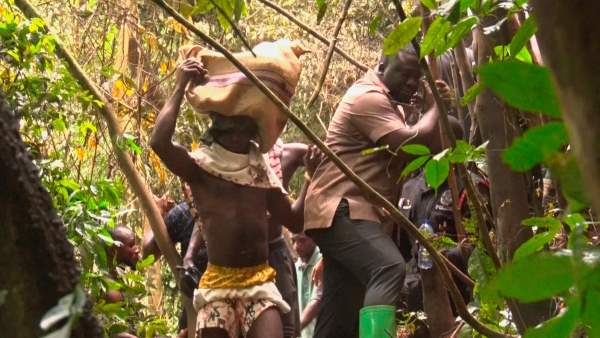
Ghana Helicopter Crash: Defense and Environment Ministers Among 8 Dead
– On August 6, 2025, a military helicopter crash in Ghana claimed the lives of all eight people on board, including the country’s Defense Minister and Environment Minister, along with other top officials.
– According to the Ghanaian military, the helicopter took off in the morning from the capital Accra and was headed northwest toward Obuasi, a gold mining area in a conflict zone, when it disappeared from radar. The wreckage was later found in the Adansi region of the Ashanti area.
– Who died: Among the victims were Defense Minister Edward Oman Bomah, Environment Minister Ibrahim Murtala Muhammad, the Vice President of the ruling National Democratic Congress party, a senior national security advisor, and the crew members.
– This was one of the deadliest air accidents in Ghana in over a decade.
About Ghana
President: John Mahama
Capital: Accra
Currency: Cedi
Population: 35 million
Neighboring countries: Côte d’Ivoire, Burkina Faso, Togo
Coastline: Gulf of Guinea
Note:
1. In July 2025, Ghana honored Indian PM Narendra Modi with the “Officer of the Order of the Star of Ghana” award.
2. In the same month, the WHO declared Ghana trachoma-free.
—————-
3. In August 2025, the Jammu and Kashmir Home Department banned the publication of how many books on Kashmir written by many authors including Arundhati Roy and Noorani?
a. 10
b. 20
c. 25
d. 30
Answer: c. 25
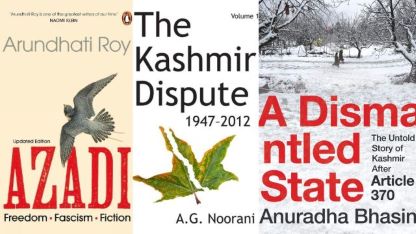
– The Jammu and Kashmir Home Department has imposed a ban on the publication of 25 books related to Kashmir, including works by authors like Arundhati Roy and A.G. Noorani.
– They claim that these books promote “separatism.”
– These books include political commentary and historical details, such as the well-known constitutional expert Noorani’s ‘The Kashmir Dispute 1947-2012’, Sumanta Bose’s ‘Kashmir at the Crossroads’, and ‘Contested Lands’.
– The notification states, “This literature has contributed to radicalizing youth in Jammu and Kashmir, including distorting historical facts, glorifying terrorists, insulting security forces, promoting religious fanaticism, encouraging separatism, paving the way for violence and terrorism, etc.”
List of Banned Books (with authors and publishers):
1. Azadi – Arundhati Roy (Penguin India)
2. Kashmir: The Case for Freedom – Arundhati Roy, Tariq Ali, Hilal Bhatt, Angana P. Chatterji, Pankaj Mishra (Verso Books)
3. Human Rights Violations in Kashmir – Piotr Balcerowicz & Agnieszka Kuszewska (Routledge / Manohar Publishers and Distributors)
4. Kashmiris’ Fight for Freedom – Mohammad Yusuf Saraf (Ferozsons, Pakistan)
5. Colonizing Kashmir: State-Building Under Indian Occupation – Hafsa Kanjwal (Stanford University Press)
6. Kashmir Politics and Plebiscite – Dr. Abdul Ghani Jabbar (Gulshan Books, Kashmir)
7. Do You Remember Kunan Poshpora? – Essar Batool and others (Zubaan Books)
8. Mujahid Ki Azaan – Imam Hassan al-Banna Shaheed, Editor: Maulana Mohammad Inayatullah Subhani (Markazi Maktaba Islami Publishers, Delhi)
9. Al-Jihad fil Islam – Maulana Maududi (Darul Musannifeen / Markazi Maktaba Islami Publishers, Delhi)
10. Independent Kashmir – Christopher Snedden (Manchester University Press / Sanctum Books, Delhi)
11. Resisting Occupation in Kashmir – Haley Duschinski, Mona Bhan, Ather Zia, Cynthia Mahmood (University of Pennsylvania Press)
12. Between Democracy and Nation: Gender and Militarization in Kashmir – Seema Kazi (Oxford University Press)
13. Contested Lands – Sumantra Bose (HarperCollins India)
14. In Search of a Future: The Story of Kashmir – David Devadas (Viking Penguin)
15. Kashmir in Conflict: India, Pakistan and the Unending War – Victoria Schofield (Bloomsbury India Academic)
16. The Kashmir Dispute: 1947–2012 – A.G. Noorani (Tulika Books)
17. Kashmir at the Crossroads: Inside a 21st Century Conflict – Sumantra Bose (Pan Macmillan India)
18. A Dismantled State: The Untold Story of Kashmir After Article 370 – Anuradha Bhasin (HarperCollins India)
19. Resisting Disappearance: Military Occupation and Women’s Activism in Kashmir – Ather Zia (Zubaan Books)
20. Confronting Terrorism – Editor: Maroof Raza (Penguin India)
21. Freedom in Captivity: Negotiations of Belonging Along the Kashmiri Frontier – Radhika Gupta (Cambridge University Press)
22. USA and Kashmir – Dr. Shamshad Shan (Gulshan Books)
23. Law and Conflict Resolution in Kashmir – Piotr Balcerowicz & Agnieszka Kuszewska (Routledge)
24. Tareekh-e-Siyasat Kashmir – Dr. Afaq (Karwan-e-Tahqiq-o-Saqafat, Kashmir)
25. Kashmir and the Future of South Asia – Editors: Sugata Bose & Ayesha Jalal (Routledge)
Lieutenant Governor of Jammu & Kashmir: Manoj Sinha
—————
4. When is National Handloom Day celebrated?
a. 7 August
b. 6 August
c. 5 August
d. 4 August
Answer: a. 7 August
Theme for 2025
“Weaving Innovation into Tradition”
(Blending innovation into tradition in such a way that the soul of tradition remains intact while embracing a touch of modernity.)
National Handloom Day – August 7
– The Indian handloom industry is one of the oldest and most vibrant cottage industries in the world, contributing 95% of the world’s handmade fabric.
– National Handloom Day commemorates the launch of the Swadeshi Movement on August 7, 1905, celebrating its lasting legacy and crucial role in India’s freedom struggle.
– The movement began as a response to the British decision to partition Bengal and became a powerful symbol of resistance against British rule, with handloom emerging as a form of protest and self-reliance.
– Its aim was to revive Indian culture and traditions by promoting indigenous crafts, empowering local artisans, and encouraging the use of Indian languages, arts, and crafts.
– National Handloom Day was officially inaugurated on August 7, 2015, by Prime Minister Narendra Modi in Chennai.
– The handloom sector is a vital source of livelihood in rural and semi-rural India, supporting over 3.5 million people, including more than 2.5 million women weavers and allied workers. It plays a significant role in women’s economic empowerment.

—————-
5. When is National Javelin Day celebrated?
a. 8 August
b. 7 August
c. 6 August
d. 5 August
Answer: b. 7 August
– This day is celebrated in honor of athlete Neeraj Chopra, who won a gold medal for India in the javelin throw event at the Tokyo Olympics 2020.
– It was on August 7, 2021, that Neeraj Chopra won the historic gold medal in javelin throw, marking a monumental achievement for Indian athletics.
– In recognition of this, the Athletics Federation of India (AFI) declared August 7 as National Javelin Day.
– At the Paris Olympics 2024, Neeraj Chopra added to his legacy by winning a silver medal in the same event.
————–
6. How many countries participated in the meeting held in Geneva for the United Nations Environment Programme’s (UNEP) proposed global plastic pollution treaty?
a.180 countries
b.100 countries
c.150 countries
d.110 countries
Answer: a. 180 countries
– The International Negotiating Committee (INC) for the Plastic Pollution Treaty held its session from August 5 to 14, 2025, at the United Nations headquarters in Geneva.
– The negotiation round is titled INC-5.2.
– This is the second part of the fifth session of the intergovernmental negotiating committee (INC) formed to develop an international agreement on plastic pollution.
Background
– The negotiation process began following the unanimous adoption of Resolution 5/14 by the United Nations Environment Assembly (UNEA) in 2022.
– The resolution initiated the drafting of a legally binding global treaty to address plastic pollution.
– The first session of INC-5 was held in Busan, South Korea, in November 2024, where the “Chair’s Text” and a draft report were prepared.
– While there was consensus on some points, significant disagreements remained on critical issues such as:
– Capping global plastic production
– Providing financial and technological assistance to developing nations
Statement from UNEP Chief
– UNEP Executive Director Inger Andersen stated:
“This treaty is what the world needs. Plastic has entered our oceans, nature, and even our bodies—places where it clearly does not belong. The road may be tough, but the possibility of agreement still exists.”
Global Significance
– If an agreement is reached this month, it would mark the first comprehensive international treaty against plastic pollution.
– The treaty would guide global policy for plastic production, consumption, and waste management for the decades to come.
—————
7. Which is the safest city in the world according to Numbeo’s Safety Index Report-2025?
a. Geneva
b. London
c. Abu Dhabi
d. Doha
Answer: c. Abu Dhabi
Abu Dhabi Declared the Safest City in the World
– Abu Dhabi, the capital of the United Arab Emirates (UAE), has been ranked the safest city in the world with a score of 88.8.
– This marks the ninth consecutive year that Abu Dhabi has secured the top spot globally as the safest city.
– At the country level, the UAE ranks second in overall safety.
—————
8. Which is the safest city in India according to Numbeo’s Safety Index Report-2025?
a. Jaipur
b. Mangalore
c. Hyderabad
d. Mumbai
Answer: b. Mangalore
– The report has been released on 5 August 2025.
– Numbeo Safety Index Report – Released August 5, 2025
About Numbeo Index:
– Numbeo is an independent global data platform that collects information directly from residents of countries and cities regarding safety, crime rates, social stability, and trust in police.
– It is not based on official government data, but rather on citizens’ opinions and experiences.
– Mangalore has been praised for its low crime rate and strong civic infrastructure.
Index Parameters:
– Public safety situation
– Fear of going out alone at night
– Risk of theft, robbery, and other crimes
– Police responsiveness and public trust
– Social and political stability
India Rank, Urban Location
1) Mangalore, Karnataka (Global Rank 49)
2) Vadodara, Gujarat (Global Rank 85)
3) Ahmedabad, Gujarat (Global Rank 93)
4) Surat, Gujarat (Global Rank 106)
5) Jaipur, Rajasthan (Global Rank 118)
6) Navi Mumbai, Maharashtra (Global Rank 128)
7) Thiruvananthapuram, Kerala (Global Rank 149)
8) Chennai, Tamil Nadu (Global Rank 158)
9) Pune, Maharashtra (Global Rank 167)
10) Chandigarh (Global Rank 175)
Unsafe cities in India
– The capital Delhi, along with Noida and Ghaziabad, is among the most unsafe Indian cities.
– The cities’ growing concern over safety, especially for women, has pushed them to the bottom of the index.
– Delhi’s crime index score is 59.03, Ghaziabad’s 58.44 and Noida’s 55.1.
—————
9. Who became the champion of Chess Esports World Cup (EWC 2025)?
a. Rameshbabu Praggnanandhaa
b. Alireza Firouzja
c. Magnus Carlsen
d. D Gukesh
Answer: c. Magnus Carlsen
– Norway’s Magnus Carlsen won the first chess title at the eSports World Cup.
– He defeated Iranian and French chess grandmaster Alireza Firouzja in the World Cup final in Riyadh.
– Thanks to Carlsen’s victory, his team, Team Liquid, took the lead in the overall championship table at the eSports World Cup.
– After the victory, Carlsen was taken to another venue in a golf buggy by the organisers, where he was handed a triangular key.
PDF Download: Click here