This is the current affairs of 7 March 2026. Here are questions and answers of daily current affairs for better preparation of competitive exams for government jobs.
1. Which is the first Indian state to announce a plan to ban social media use for children below 16 years of age?
a. Uttar Pradesh
b. Karnataka
c. Tamil Nadu
d. Telangana
Answer: b. Karnataka
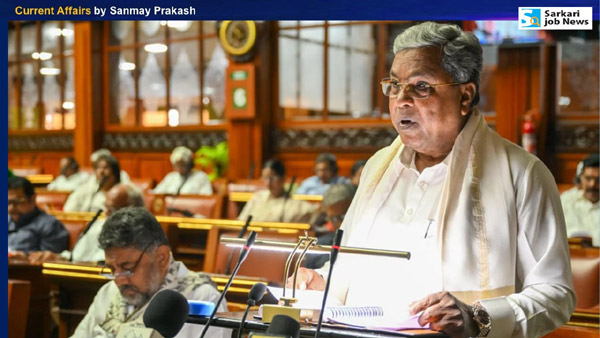
– The Karnataka government announced a plan to ban the use of social media for children below 16 years of age in the state budget presented on March 6, 2026.
– Chief Minister Siddaramaiah said that the aim of this step is to reduce the negative impact of mobile phones and excessive screen time on children.
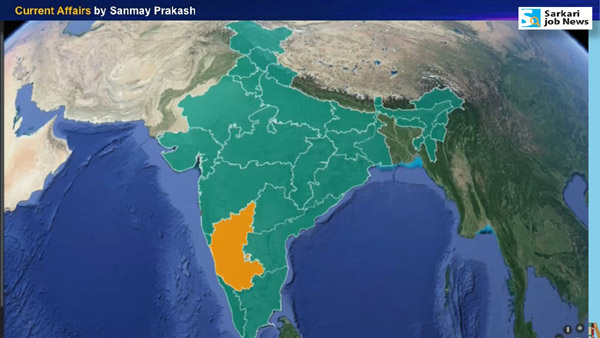
– Karnataka has become the first state in India to take such a step.
Proposal related to the data protection law
– This proposal is also linked to the Digital Personal Data Protection Act, 2023 (DPDP Act) and the Personal Data Protection Rules, 2025.
– Under this, children will be required to obtain parental consent before creating an account on social media platforms.
– Age verification of children will also be necessary.
– Government identity systems or digital identity systems such as DigiLocker may be used for this purpose.
– The government is also considering implementing this plan through educational institutions, such as:
– Ban on mobile phone use in school campuses
– Blocking social media websites on school networks
– Rules on mobile use in hostels
– The government has also sought suggestions from university vice-chancellors and academicians on this matter.
Discussion in other states as well
– Discussion on this issue has also begun in Andhra Pradesh.
– Chief Minister N. Chandrababu Naidu informed the Assembly on March 6, 2026, that the state government has received a suggestion to impose a ban on social media for children below 13 years of age.
Social media restrictions in other countries
– Australia banned social media platforms such as TikTok, YouTube, Instagram, and Facebook for teenagers in December 2025.
– Australia became the first country in the world to take such a step.
– France has banned social media use for children below 15 years of age without parental consent.
– Denmark has also restricted social media access for children below 15 years of age.
– Norway has proposed increasing the minimum age for social media use to 15 years.
– Spain is preparing to impose a ban on social media for children below 16 years of age.
Karnataka
– Capital: Bengaluru
– Governor: Thawar Chand Gehlot
– Population: Approximately 73.6 million
– Official language: Kannada
– Neighboring states: Maharashtra, Goa, Andhra Pradesh, Telangana, Tamil Nadu, and Kerala.
—————
2. When is World Obesity Day celebrated?
a. March 7
b. March 6
c. March 5
d. March 4
Answer: d. March 4
Theme for 2026
– 8 Billion Reasons to Act on Obesity
Objective
– The purpose of observing this day is to spread awareness about obesity.
– World Obesity Day was launched in 2015.
– It is organized every year by the World Obesity Federation, which works in collaboration with the WHO and other health organizations.
– According to the WHO, obesity cases worldwide have nearly tripled since 1975.
– This problem is no longer limited to wealthy countries but is rapidly spreading in developing nations as well.
—————–
3. According to the World Obesity Federation’s World Obesity Atlas 2026, what is India’s rank in terms of obesity and number of overweight children?
a. Second
b. Fourth
c. First
d. Third
Answer: a. Second
– The World Obesity Atlas 2026 released on the occasion of World Obesity Day (March 4, 2026) has expressed serious concern about children’s health in India.
– India ranks second in the world in terms of the number of obese and overweight children.
– Only China is ahead of India on this list.
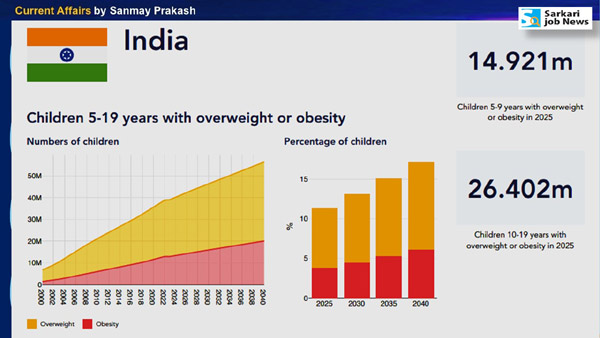
– According to the report, about 41 million children in India have been found to have a high Body Mass Index (BMI).
– Out of these, about 14 million children are suffering from obesity.
Obesity among children is rising rapidly
– The rate of childhood obesity in India is increasing at an average rate of about 5 percent per year.
– This is considered one of the fastest-growing rates in the world.
– According to the report, by 2025 about 41.3 million children and adolescents aged 5–19 in India had become overweight or obese.
Figures by age group
– 5–9 years: about 14.9 million children
– 10–19 years: about 26.4 million adolescents
– These figures indicate that the global target to halt obesity by 2025 has not been achieved.
– Now controlling it by 2030 is also becoming a major challenge.
Global situation
– Only 10 countries in the world have more than 20 million children aged 5–19 suffering from obesity or overweight.
– China, India, and the United States each have more than 10 million obese children.
– India ranks second after China in terms of the number of children with high BMI.
Why India’s situation is concerning
– According to World Obesity Federation CEO Johanna Ralston, India is among the countries where childhood obesity is increasing the fastest.
– This situation is the result of an environment where children do not get adequate opportunities for healthy food and physical activity.
– India’s large population is also a major reason for its second position in global rankings.
– However, India ranks first in childhood obesity in the WHO South-East Asia region.
Possible future health problems
– According to the report, if the current trend continues, many metabolic diseases among youth could increase rapidly by 2040, such as:
– Fatty liver disease: may rise from about 8.39 million to 11.88 million
– High triglycerides
– Hypertension (high blood pressure)
– Hyperglycemia (high blood sugar)
Major reasons for rising obesity among children
– Lack of physical activity among children and adolescents
– According to data, about 74% of adolescents aged 11–17 do not get the required daily physical activity
– Increasing consumption of junk food and sugary beverages
– Limited availability of balanced meals in schools
– Lack of proper nutrition in early life
—————-
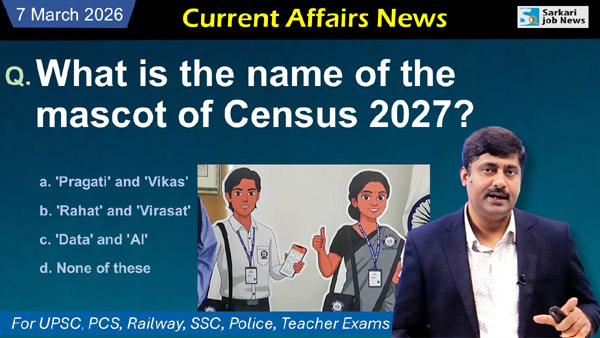
4. What is the name of the mascot of Census 2027?
a. “Pragati” and “Vikas”
b. “Rahat” and “Virasat”
c. “Data” and “AI”
d. None of these
Answer: a. “Pragati” and “Vikas”
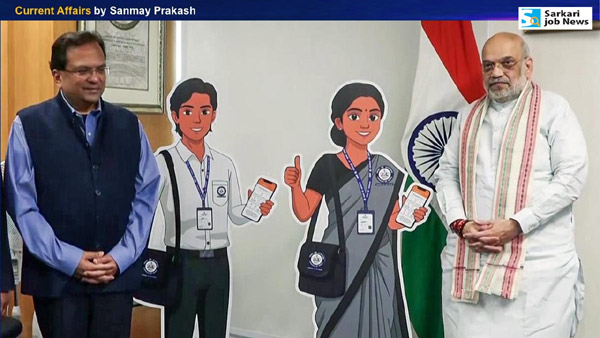
– Union Home Minister Amit Shah unveiled two mascots, “Pragati” and “Vikas,” for Census 2027 on March 5, 2026.
– The two mascots are “Pragati” (female) and “Vikas” (male).
– He also soft-launched four digital tools that will be used during this process.
– This will be the first digital census and the first census that will allow self-enumeration and caste enumeration.
—————-
5. Who has become the new Chairman and Managing Director (CMD) of GAIL (India) Limited?
a. Anupam Srivastava
b. Deepak Gupta
c. P. K. Purwar
d. J. Ravi
Answer: b. Deepak Gupta
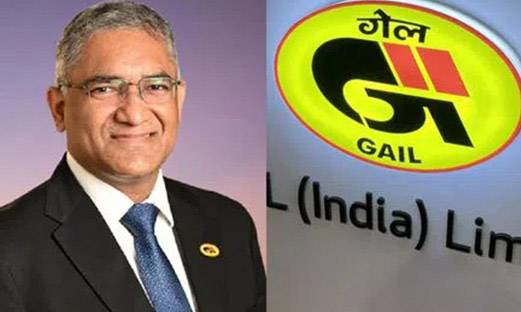
– Deepak Gupta assumed charge as the Chairman and Managing Director (CMD) of GAIL (India) Limited on March 1, 2026.
– He will hold this position until 2029.
– He has more than 35 years of experience in the oil and gas value chain.
– He joined GAIL in February 2022 as Director (Projects).
– He studied Mechanical Engineering at Delhi College of Engineering.
– He has led several important projects such as natural gas and LPG pipelines, gas processing units, critical SCADA infrastructure, and green energy initiatives aimed at achieving net-zero targets.
About GAIL
– GAIL (India) Limited (Gas Authority of India Limited) is India’s leading natural gas company and has the status of a Maharatna PSU.
– Established in 1984, it is involved in sourcing, transmission, distribution, and marketing of natural gas, along with petrochemicals and LPG production.
– GAIL holds about 52% share in India’s natural gas market and operates more than 16,420 kilometers of pipeline network.
—————-
6. In view of the war in the Middle East, the Indian government issued orders to refineries to increase LPG production under the emergency powers of which law?
a. Essential Commodities Act, 1955
b. Industries (Development and Regulation) Act, 1951
c. Energy Conservation Act, 2001
d. Petroleum and Natural Gas Regulatory Board Act, 2006
Answer: a. Essential Commodities Act, 1955
{Under this law, the Petroleum Products (Maintenance of Production, Storage and Supply) Order, 1999 has been implemented}
Impact of the Middle East war: India invoked emergency powers to increase LPG production
– The impact of the escalating war in the Middle East has now started to be seen in India.
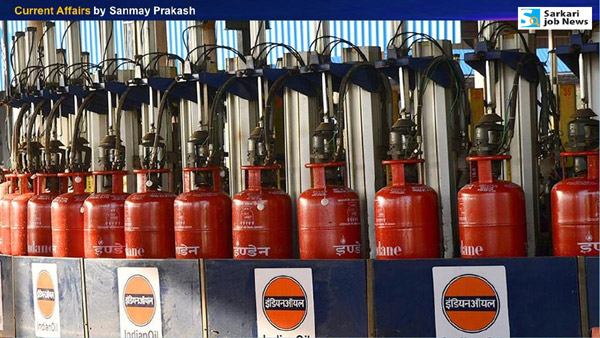
– Considering the possibility of a gas crisis, the Indian government has invoked emergency powers to increase the production of LPG (Liquefied Petroleum Gas).
– The government has directed all refineries in the country to immediately increase LPG production and give top priority to supplying gas to domestic consumers.
Emergency powers invoked under which law
– In a government order issued on March 5, 2026, the Essential Commodities Act, 1955 and the Petroleum Products (Maintenance of Production, Storage and Supply) Order, 1999 were cited.
– Under this, three public sector oil companies—Indian Oil, Hindustan Petroleum, and Bharat Petroleum—have been asked to ensure adequate availability of LPG and prioritize its supply to domestic consumers.
Middle East war behind the decision
– The background of this decision is the ongoing tension and war situation in the Middle East, which has created a threat to global energy supply.
– About 330 million families in India depend on cooking gas, so the government wants to prepare in advance for any possible crisis.
– However, Petroleum Minister Hardeep Singh Puri has said that India has sufficient energy reserves and consumers do not need to worry at present, but this step has been taken as a precaution.
India’s dependence on LPG
– India is the second-largest importer of LPG in the world. The country’s annual LPG consumption is about 33 million metric tons.
– However, domestic production cannot meet this demand, due to which about two-thirds of LPG has to be imported.
– The most important point is that about 85–90 percent of India’s LPG imports come from the Middle East. This means that if the war in the Middle East continues for long or energy supply is affected, it could directly impact kitchens in India.
Orders given to refineries
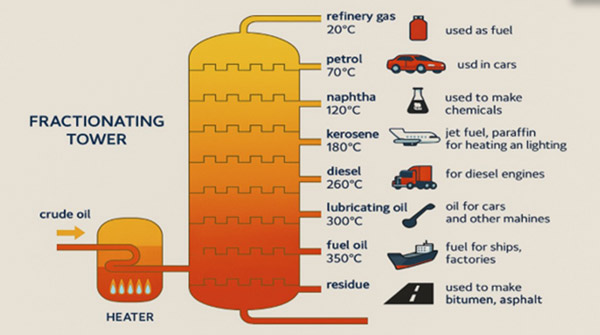
– The government has issued several key instructions to oil refineries. The main one is diverting propane and butane gases toward LPG production.
– Under normal conditions, these gases are used to produce petrochemical products, but in the current situation they have been directed to be used for LPG production.
– Refineries have also been instructed to reduce petrochemical production and prioritize domestic LPG supply.
– Such steps are usually taken only in emergency situations.
Possible impact on industries
– The government’s decision may affect the petrochemical industry.
– Propane and butane are used in the production of many industrial products such as polypropylene, alkylates, and other petrochemical products. Alkylates are used in gasoline blending, welding torch fuel, plastics, synthetic rubber, and chemical manufacturing.
– If these gases are diverted toward LPG production, petrochemical companies may face a decline in profits.
– For example, the production of alkylates used for gasoline blending by Reliance Industries may be affected.
– According to available data, Reliance exported about four cargoes of alkylates per month last year.
LNG crisis and impact on industries
– The impact of the Middle East crisis is not limited to LPG. India is already facing a shortage in LNG (Liquefied Natural Gas) supply.
– LNG is natural gas, mainly methane, cooled to about −162°C and stored in liquid form, and it is widely used in power generation and industries.
– Due to the decline in LNG supply, some industrial units have had to reduce gas consumption. According to reports, many industries in Gujarat are operating at only 40–50 percent capacity.
Difference between LPG, LNG, and CNG
– In the energy sector, LPG, LNG, and CNG are often mentioned, but all three are different types of gases.
– LPG mainly consists of propane and butane and is used as domestic cooking gas.
– LNG is natural gas (methane) converted into liquid form by extreme cooling and is used in power generation and industries.
– CNG (Compressed Natural Gas) is also made from natural gas, but it is not liquefied. It is compressed at about 200–250 bar pressure and filled in cylinders, mainly used as fuel in vehicles such as buses, autos, taxis, and cars.
– Overall, the government’s move is being seen as a precautionary strategy before a possible energy crisis so that domestic consumers in India do not face a gas shortage even if tensions in the Middle East escalate.
—————
7. Who became the first Kashmiri woman superintendent of Srinagar Central Jail?
a. Saba Shawl
b. Dr. Syed Sehrish Asgar
c. Iltija
d. Saba Karim
Answer: a. Saba Shawl
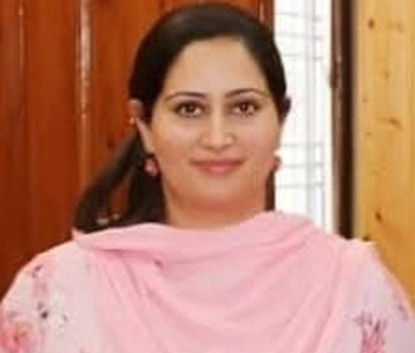
– Saba Shawl is the first Kashmiri woman to take charge of this high-security jail.
– The order of her appointment was issued on March 2, 2026.
– She has been transferred from the post of Staff Officer to the Director General of Prisons and given charge of Srinagar Jail.
– Saba is a resident of Peerbagh, Srinagar.
– She completed a Master’s degree in Social Work.
– After that, she passed the Jammu and Kashmir Public Service Commission (JKPSC) examination in 2012.
– After clearing the JKPSC exam, she gained experience in prison administration and prisoner management while serving at Central Jail Kot Bhalwal in Jammu and Kupwara Jail.
– She was selected for the only open merit post of Superintendent of Police (SP) in prisons.
—————
8. When is Jan Aushadhi Diwas celebrated?
a. March 7
b. March 8
c. March 9
d. March 10
Answer: a. March 7
– This day is dedicated to raising awareness about the benefits and importance of generic medicines.
– Jan Aushadhi Diwas was first observed on March 7, 2019.
—————-
9. When is International Women’s Day celebrated?
a. March 7
b. March 8
c. March 9
d. March 10
Answer: b. March 8
Theme for 2026
– Give To Gain
– This theme is based on a deep message: “When we support others, humanity as a whole benefits.”
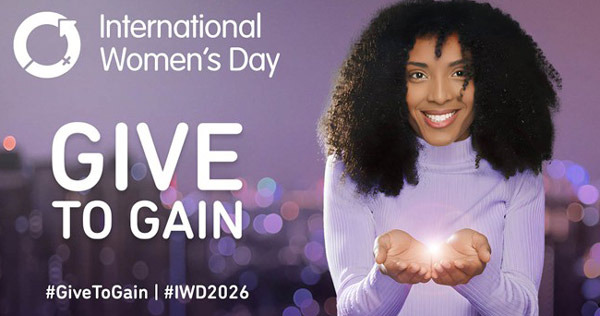
– This day is a global platform to celebrate women’s social, economic, cultural, and political achievements and to accelerate progress toward gender equality.
The glorious history of Women’s Day
– The roots of this day lie in the labor movements of the early 20th century:
– The struggle of 1908
– In New York, about 15,000 women marched demanding shorter working hours, better wages, and the right to vote.
Proposal by Clara Zetkin
– In 1910, during an international conference in Copenhagen, German activist Clara Zetkin proposed celebrating “International Women’s Day” every year, which was unanimously accepted.
Why March 8?
– The date is linked to the struggle of Russian women. In 1917, during World War I, Russian women went on strike demanding “Bread and Peace.”
– As a result of this strike, the Tsar had to abdicate power and the interim government granted women the right to vote.
– That historic day was February 23 in the Russian calendar, which corresponds to March 8 in the Gregorian calendar.
—————-
10. The first country in the American continents to be certified by the WHO for leprosy elimination?
a. Brazil
b. Colombia
c. Chile
d. Argentina
Answer: c. Chile
– According to the World Health Organization (WHO) and the Pan American Health Organization (PAHO), no local case of leprosy has been reported in Chile for more than 30 years.
– The last case of the disease was recorded in 1993.
– Chile has become the first country in the Americas and the second country in the world to be certified for the elimination of leprosy.
– Earlier, Jordan received this status in 2024.
WHO data
– According to the World Health Organization (WHO), 172,717 new cases of leprosy were reported worldwide in 2024.
– This shows that the disease still exists in many countries.
– In some regions of Asia, Africa, and Latin America, leprosy remains a major public health challenge.
Leprosy
– Leprosy is also known as Hansen’s Disease.
– It is an infectious disease but is considered to be low contagious.
– It is caused by the bacterium Mycobacterium leprae.
– The disease develops slowly and its incubation period is usually about 5 years.
– If not treated in time, it can cause permanent disability.
– However, it can be successfully treated with multidrug therapy (MDT).
– Leprosy is classified as a Neglected Tropical Disease (NTD).
– It mainly affects vulnerable populations living in low-income areas.
Symptoms
– Skin lesions that are lighter or darker than the surrounding skin
– Loss of sensation in affected areas
– Muscle weakness due to nerve damage
– Eye problems and blindness in severe cases
Chile
– Capital: Santiago
– President: Gabriel Boric
– Population: 19.9 million
– Currency: Chilean Peso
– Language: Spanish
– Neighboring countries: Peru, Bolivia, and Argentina.
PDF Download: Click here