

This is the current affairs of 6August 2025. Here are questions and answers of daily current affairs for better preparation of competitive exams for government jobs.
PDF Download: Click here
1. In which district of Uttarakhand, a whole village was swept away due to cloudburst, killing many and leaving many missing?
a. Pithoragarh
b. Uttarkashi
c. Haridwar
d. Chamoli
Answer: b. Uttarkashi (The incident took place on 5 August 2025 in Dharali village)
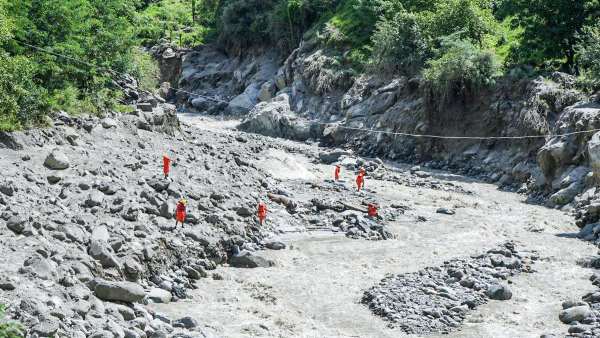
– Uttarkashi district of Uttarakhand is located at an altitude of 800 to 6,900 meters above sea level. A large geographical area here remains snow-covered throughout the year, and there are also glaciers in many parts of the district.
– It includes the upper regions of the Ganga and Yamuna rivers, with their snow-covered source regions located near Gangotri and Yamunotri respectively.
– On the afternoon of August 5, 2025, a cloudburst occurred on a mountain in Uttarkashi.
– Due to this, a torrent of water came through the mountain stream along with a massive amount of debris (mudslide, which is even more dangerous than a landslide), and within 34 seconds, an entire village was washed away.
– The name of the village is Dharali. This village was completely devastated.
– Dharali is a major stop on the way to Gangotri and has several hotels, restaurants, and homestays.
– Due to this incident, the Kheer Ganga river turned into a river of debris.
– On the very first day of the incident, the death of 4 people has been confirmed, and more than 60 people are missing. These include soldiers from an army camp as well.
– The cause of this massive destruction is the cloudburst.
– NDRF and SDRF teams are conducting rescue operations in the area.
– According to Lieutenant Colonel Manish Srivastava, Army Public Relations Officer in Dehradun, 20 people have been rescued so far.
What is a cloudburst?
– When an extremely high amount of rain falls in a very short time over a small area, it is called a cloudburst.
– In reality, clouds do not “burst” as such. Yes, the rain is so intense that it feels as if a large polythene bag full of water has burst in the sky. That’s why it is called “cloudburst” in English and “baadal phatna” in Hindi.
– However, not all incidents of very heavy rainfall are cloudbursts.
– There is a very specific definition of a cloudburst: Rainfall of 10 cm or more in an area of approximately 10 km x 10 km within an hour is considered a cloudburst. According to this definition, 5 cm of rainfall within half an hour in the same area also qualifies as a cloudburst.
– This means that if 100 liters or more of water falls in an area measuring 1 meter long and 1 meter wide, in an hour or less, it is considered a cloudburst.
Why do cloudbursts occur?
– In fact, clouds are vapor masses formed above the sea due to the sun’s heat, which move over land carried by the moist winds from the sea. When these moisture-laden clouds reach the land from the sea, we say that the monsoon has arrived.
– Just like condensation forms on the surface when cold water is poured into a glass or jug, similarly, when clouds cool down in the upper atmosphere, they begin turning into droplets.
– When these droplets become heavy and start falling to the ground, it is called rain.
– Monsoon clouds, when they collide with the Himalayas, start accumulating heavily, and a time comes when these clouds hovering over an area burst like a water-filled pouch. That is, they pour down rapidly over a small area.
How common are cloudbursts?
– Cloudbursts are not uncommon, especially during the monsoon months.
– Most such incidents occur in the Himalayan states, where local topography, wind systems, and temperature differences between the lower and upper atmosphere promote such events.
Why do mountains collapse in Uttarakhand due to cloudbursts?
– The Himalayas are considered the youngest mountain range in the world. They are formed due to the collision of the Earth’s crustal tectonic plates. Hence, the rocks of the Himalayan mountains are made of fragile and weak soil.
– During a cloudburst, hydrostatic pressure (i.e., water pressure) on the soil increases, and due to the loose soil, there is no strong grip on the land. As a result, large amounts of soil flow with the water as debris to lower regions.
– Tree roots help hold the soil together. But due to deforestation in the Himalayan mountainous regions, soil layers have become loose. In such cases, the fast flow of water easily washes away the soil.
Can cloudbursts be predicted in advance?
– The Indian Meteorological Department (IMD) can predict rainfall events well in advance, but it cannot estimate the amount of rainfall.
– In fact, for any weather agency, it is difficult to do this for a small area.
– Forecasts can mention light, heavy, or very heavy rain, but it is difficult for meteorologists to predict exactly how much rain will fall at a particular place.
– These forecasts are generally made for relatively large geographic areas — typically a region, a state, a meteorological sub-division, or at most, a district.
– But as the focus narrows down to smaller areas, the forecasts become increasingly uncertain.
Are cloudburst events increasing?
– A major reason for this is global warming.
– Incidents of extreme rainfall and other extreme weather events are increasing not just in India, but all over the world.
– Although there has not been a significant change in the total amount of rainfall in India, the proportion of rainfall occurring in a short period has increased.
– This means there are intense rainfall events, and even during the rainy season, there are long dry spells in between.
– Climate change patterns suggest that cloudburst events are also increasing.
Uttarakhand
– Capital: Dehradun and Gairsain (Bhararisain)
– CM: Pushkar Singh Dhami
– Governor: Gurmeet Singh
—————-
2. Former Governor Satyapal Malik passed away on 5 August 2025, he had been the Governor of which states?
a. Jammu and Kashmir, Meghalaya
b. Goa, Odisha, Bihar
c. UP, MP, Kerala
d. Both a and b
Answer: d. Both a and b (Jammu and Kashmir, Meghalaya, Goa, Odisha and Bihar)
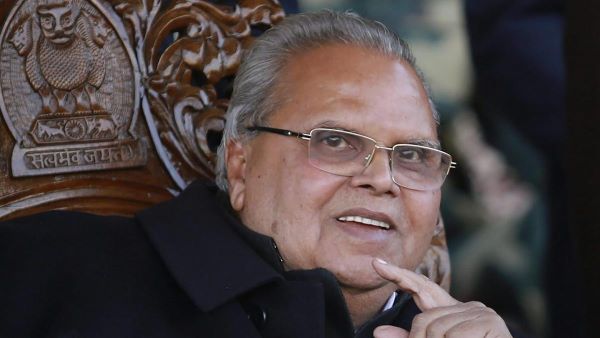
– Satyapal Malik was 79 years old.
– He had been suffering from several health issues for a long time, including diabetes and kidney disease.
– He had served as the Governor of Jammu & Kashmir, Meghalaya, Goa, Odisha, and Bihar.
– He was the Governor at the time when Jammu & Kashmir’s special status under Article 370 was revoked on August 5, 2019.
Political Career
– He entered politics in the mid-1960s, inspired by the socialist ideology of Ram Manohar Lohia.
– In the mid-1980s, he worked with the Congress party for some time.
– He joined the Bharatiya Janata Party (BJP) in 2004 and was appointed its National Vice President in 2012.
– Before the 2014 Lok Sabha elections, he was a member of Prime Minister Narendra Modi’s team.
– Politically influential, Malik belonged to the Jat community and was from Baghpat, Uttar Pradesh, with ancestral roots in Haryana.
—————-
3. Name the Indian Army Research Cell (IARC) established at IIT Madras, which was inaugurated by Army Chief Upendra Dwivedi in August 2025?
a. Agni Yatra
b. fire research
c. bravery
d. fire shield
Answer: b. fire research
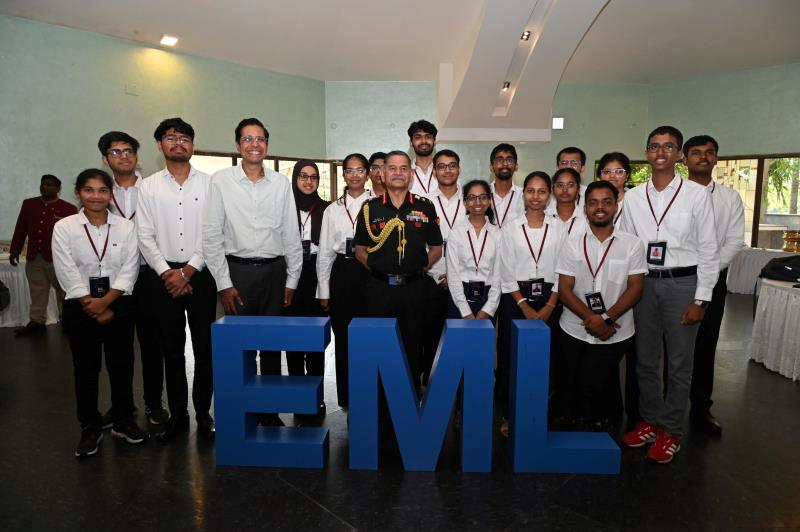
– The Army Chief inaugurated the Indian Army Research Cell (IARC) “AgniShodh” at IIT Madras on August 4, 2025.
– This cell will play a vital role in upskilling military personnel in emerging domains. These include additive manufacturing, cybersecurity, quantum computing, wireless communication, and unmanned aerial systems, thereby building a technologically empowered human resource base within the armed forces.
—————-
4. The Central Government advised the UP Government to scientifically assess the possible impact on the foundation of the Taj Mahal due to which type of dam proposed on the Yamuna?
a. Arch dam
b. Rubber dam
c. Buttress dam
d. Diversion dam
Answer: b. Rubber dam
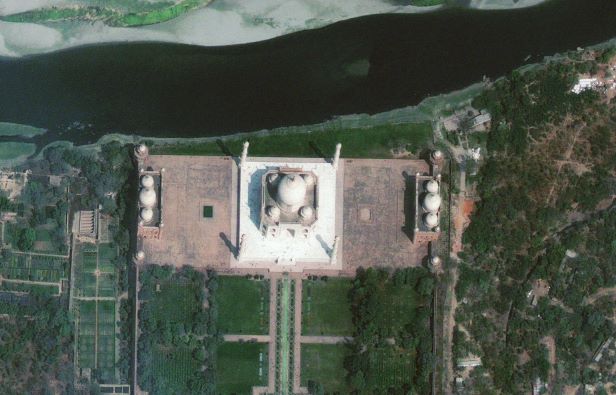
– Minister of State for Jal Shakti, Raj Bhushan Chaudhary, informed the Lok Sabha about this on August 1, 2025.
– Raj Bhushan Chaudhary stated that the Department of Irrigation and Water Resources has been advised to conduct a scientific assessment and hydrogeological study on the potential impact of water retention through the proposed rubber dam on the foundation of the Taj Mahal.
– The state government is planning to construct a rubber dam 1.5 kilometers downstream from the monument in Agra.
– A rubber dam is made of fabric coated with rubber.
– The height of a rubber dam can be adjusted by controlling the amount of water or air inside it.
– It rests on a concrete foundation and can be inflated or deflated to regulate the flow of the river.
Question about threat to Taj Mahal’s foundation was raised in Rajya Sabha in 2022
– Rajya Sabha member Dr. Ashok Vajpeyi had asked whether the government was aware that in the absence of a dam/barrage on the Yamuna River, the stability of the iconic Taj Mahal’s foundation could be at risk.
– In response to a question by Minister of State Bishweshwar, the Ministry of Jal Shakti informed the Rajya Sabha that according to the Archaeological Survey of India (ASI), there is no threat to the stability of the Taj Mahal’s foundation.
– It is worth noting that in March 2019, the Uttar Pradesh government had sought approval for the project from the National Mission for Clean Ganga (NMCG), which comes under the Ministry of Jal Shakti.
– The state also submitted a proposal for environmental clearance, stating that 28.975 hectares of land would be required for the dam and other facilities.
—————
5. Which new topic has been added by NCERT in the syllabus of class 3 to 12?
a. Operation Mahadev
b. Operation Sindoor
c. Axiom Mission-4
d. Both b and c
Answer: d. Both b and c
– To help students understand India’s defense system and diplomatic responses, NCERT is introducing a new module based on Operation Sindoor.
– This module will be released in two parts, explaining India’s strategic military response to the Pahalgam terror attack.
– The aim is to help students understand how the country takes action against terrorism.
– Along with this, it will also teach children how coordination between defense, diplomacy, and various ministries plays a crucial role in national security.
26 people were killed in the Pahalgam terror attack
– On 22 April 2025, a terrorist attack in Pahalgam, Jammu & Kashmir, led to the death of 26 people.
– In response, India targeted terror sites in POK and Pakistan.
– This action was named Operation Sindoor.
– Following this, a conflict-like situation persisted between the two countries for four days.
Mission LiFE will also be taught
– This is India’s lifestyle campaign that teaches how to live while protecting the environment.
– A section related to space is also being added to the module. It will include information on Chandrayaan-1, Aditya L1, and the achievements of Group Captain Shubhanshu Shukla.
Chapter on Shubhanshu Shukla also added in NCERT
– “The Earth looks like one whole. No borders are visible from space.”
– This quote is part of a conversation between Group Captain Shubhanshu Shukla and Prime Minister Narendra Modi.
– It has been included in the Environmental Studies textbook, in the chapter titled “Our Shared Home” for Class 5.
– This textbook has been prepared by Vishu Adhana.

—————-
6. The Banking Laws (Amendment) Act 2025 came into force from August 1, which laws have been amended through it?
a. Reserve Bank of India Act, 1934,
b. Banking Regulation Act, 1949 and State Bank of India Act, 1955
c. Banking Companies (Acquisition and Transfer of Undertakings) Acts, 1970 and 1980
d. All of the above
Answer: d. All of the above (Reserve Bank of India Act 1934, Banking Regulation Act 1949, State Bank of India Act 1955 and Banking Companies (Acquisition and Transfer of Undertakings) Acts 1970 and 1980)
– All provisions of the Banking Laws (Amendment) Act, 2025 came into effect today (August 1).
– The objective of the new law is to improve bank governance, protect depositors and investors, enhance auditing in public sector banks, and extend the tenure of directors (excluding Chairpersons and full-time directors) in cooperative banks.
– The related bill was passed in the Lok Sabha in December 2024 and in the Rajya Sabha in March 2025.
19 amendments in 5 core banking laws
– The Reserve Bank of India Act, 1934
– The Banking Regulation Act, 1949
– The State Bank of India Act, 1955
– The Banking Companies (Acquisition and Transfer of Undertakings) Acts, 1970 and 1980
Key Reforms:
– Revised Substantial Interest Limit: The threshold for defining “Substantial Interest” has been increased from ₹5 lakh to ₹2 crore, in line with current economic conditions (unchanged since 1968).
– What is Substantial Interest: For example, if a government officer awards a tender to a company in which a family member holds significant ownership (e.g., shares or a director’s position), the officer is said to have a substantial interest in that company. The term refers to situations where a director or officer has a major financial stake in a firm, potentially causing a conflict of interest.
– Cooperative Bank Reforms: The tenure of directors in cooperative banks (excluding Chairpersons and full-time directors) has been increased from 8 years to 10 years, aligning with the 97th Constitutional Amendment Act, 2011, and promoting governance continuity.
– Audit Quality in Public Sector Banks: Public sector banks are now empowered to fix and provide remuneration for statutory audits.
– Investor Protection and Fund Transparency: Public Sector Banks (PSBs) can now transfer unclaimed shares, interest, and bonds to the Investor Education and Protection Fund (IEPF).

—————
7. When is World Breastfeeding Week 2025 observed?
a. 1 to 7 August
b. 2 to 8 August
c. 3 to 7 August
d. 4 to 9 August
Answer: a. 1 to 7 August
Theme 2025
– Invest in breastfeeding, invest in the future
– This day is celebrated on the first week of the month of August.
– This day is celebrated to create awareness about the importance of breastfeeding for babies.
– The first World Breastfeeding Week was celebrated in the year 1992.
—————-
8. When is Hiroshima Day celebrated?
a. 7 August
b. 6 August
c. 5 August
d. 4 August
Answer: b. 6 August
– The year was 1945. At that time, the Second World War was reaching its decisive phase, and the victory of the Allied Powers was almost certain.
– Germany had surrendered, and only Japan was still resisting the Allied Powers.
– In July 1945, U.S. President Harry Truman, British Prime Minister Winston Churchill, and Soviet leader Joseph Stalin met in the German city of Potsdam and decided that if Japan did not surrender unconditionally, strict action would have to be taken against it.
– On August 6, 1945, the United States dropped an atomic bomb called “Little Boy” on the Japanese city of Hiroshima.
– Just three days later, a second atomic bomb was dropped on the city of Nagasaki in Japan, and both cities were devastated.
– More than two hundred thousand people lost their lives, and those who survived had their lives turned into hell.
– The atomic bombs were used for the first and only time in history during the Second World War.
– Every year on August 6, Hiroshima Day is observed to promote peace and raise awareness about the dangers of nuclear energy and nuclear weapons.
—————
9. RBI did not change the repo rate in the bi-monthly monetary policy review (August 2025), what is this repo rate?
a. 5.5%
b. 5.8%
c. 6.2%
d. 6.5%
Answer: a. 5.5%
– The Monetary Policy Committee (MPC) of the Reserve Bank of India (RBI) held its meeting on August 6, 2025.
– In this meeting, it was decided to keep the policy repo rate unchanged at 5.5%.
– However, in previous meetings, the repo rate was reduced in several phases from 6.5% to 5.5%.
What is Repo Rate?
– Simply put, banks give us loans and we have to pay interest on those loans.
– Similarly, banks also need large amounts of money for their daily operations and they borrow from the Reserve Bank of India (RBI).
– The interest rate at which the Reserve Bank charges interest from these banks is called the repo rate.
How does the Repo Rate affect the common man?
– The RBI has a powerful tool called the repo rate to fight inflation.
– When inflation is very high, RBI tries to reduce the money flow in the economy by increasing the repo rate.
– When banks get loans at a lower interest rate (i.e., repo rate is low), they can provide cheaper loans to their customers.
– Conversely, if the RBI raises the repo rate, borrowing becomes expensive for banks, and they in turn increase the cost of loans for their customers.
Reverse Repo Rate
– This is the opposite of the repo rate.
– When banks have surplus funds after their daily operations, they deposit that money with the Reserve Bank.
– RBI pays interest on this amount.
– The interest rate at which RBI pays this interest is called the reverse repo rate.
Ex-officio Chairperson of the Monetary Policy Committee – Governor of the Reserve Bank of India, Sanjay Malhotra
PDF Download: Click here