
This is the current affairs of 31 July 2025. Here are questions and answers of daily current affairs for better preparation of competitive exams for government jobs.
PDF Download: Click here
1. US President Trump announced to impose what percentage of tariff on India from August 1, along with which a penalty will also be imposed?
a. 15%
b. 25%
c. 35%
d. 45%
Answer: b. 25%
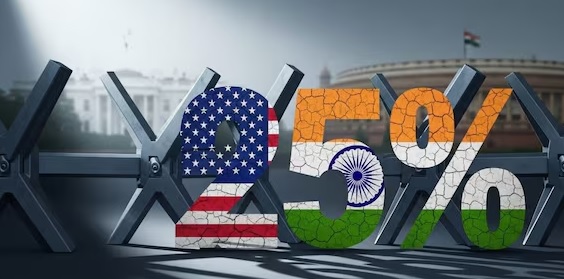
– U.S. President Donald Trump has announced a 25% tariff on India starting August 1.
– Trump stated that the U.S. has a large trade deficit with India, which is why he is imposing tariffs on Indian goods.
What Did Trump Say in His Announcement?
– India is a friend of the U.S., but over the past few years, the U.S. has done less trade with India because its tariffs are very high. In fact, many of India’s policies make it difficult for American companies to do business there.
– India still buys most of its weapons from Russia. Not only that, along with China, India also buys large quantities of oil and gas from Russia, even though the whole world wants Russia to stop the violence in Ukraine.
– Trump also took a jab at India regarding BRICS.
What Did India Say?
– Responding to President Trump’s decisions, the Indian government said it understands the impact of this decision and will take all necessary steps to protect the country’s interests.
– The Ministry of Commerce said – “We have seen the U.S. President’s statement regarding trade. We are studying its impact. India and the U.S. are working towards a good and mutually beneficial trade agreement. We are ready to achieve this objective.”
What is a Tariff?
– A tariff is a border duty or tax.
– It is imposed on goods coming from foreign countries.
– This makes foreign goods more expensive in the domestic market.
– Tariffs also increase government revenue.
– The aim is to promote domestic production and protect local industries.
India–U.S. Trade Situation
– In the financial year 2023–24, after China, the United States was India’s second-largest trading partner.
– Trade with China: Total trade amounted to $118.41 billion, with exports at $16.66 billion and imports at $101.75 billion, resulting in a trade deficit of $85.09 billion.
– Trade with the U.S.: Total trade stood at $118.29 billion, with exports at $77.62 billion and imports at just $40.77 billion, leading to a trade surplus of $36.74 billion.
Top 5: What Does India Export to the U.S.?
– Petroleum
– Pharmaceuticals and pharma products
– Textiles
– Telecom instruments
– Pearls and precious stones
– Electrical machinery and equipment
Top 5: What Does India Import from the U.S.?
– Crude petroleum
– Gold
– Petroleum products
– Electronics and components
– Coal and coke
Why Did Trump Suddenly Make This Decision? Is It a Pressure Tactic?
Mismatched Trade Deals with Several Countries
– On July 17, 2025, Donald Trump had said that American products would soon get access to Indian markets, and that India would impose zero tariffs on U.S. goods, similar to the “Indonesia formula.” However, tensions remained during talks on several issues.
– On July 15, Trump had imposed a 19% tariff on Indonesia, effective from August 1 on all goods coming from Indonesia to the U.S. Meanwhile, Indonesian tariffs on U.S. goods would be zero.
– The deal with Japan was even more surprising. Under this agreement, Japan agreed to invest $550 billion in the U.S., which is expected to create “millions” of jobs in America. In return, Japanese imports into the U.S. will face a 15% tariff.
– A similar situation occurred with the European Union (EU) during trade deal negotiations with Chairwoman Ursula von der Leyen. According to this deal, U.S. goods entering the EU will face no tariffs, but EU goods entering the U.S. will face a 15% tariff.
– The EU also promised to invest $750 billion in American energy and $600 billion more in other sectors in the coming years. However, some specific categories—aircraft and parts, certain chemicals, select agricultural products, generic medicines, critical raw materials, semiconductor equipment—will remain exempt from tariffs. Steel and aluminum will face a 50% tariff.
– Following the EU–U.S. deal, several European countries expressed dissatisfaction. Germany claimed its interests were sold off, while France’s Prime Minister François Bayrou called the deal a “dark day.”
Why is There a Delay in the India–U.S. Deal?
– India wants to avoid deals like the EU–U.S. and Indonesia–U.S. agreements.
– This is the main reason why there is a delay in the trade deal between India and the U.S.
– India is trying to ensure that labor-intensive industries like leather, gems and jewelry, and agriculture, which employ a large workforce, get favorable treatment. India wants the U.S. to reduce tariffs on such goods, so that Indian products remain competitively priced compared to other countries.
– There is also an ongoing dispute between India and the U.S. over dairy products. In the U.S., cattle are fed animal meat as fodder, and the milk produced by such cattle is often referred to in India as non-vegetarian milk. India does not want to allow this milk at zero or very low tariff, as doing so would be devastating for Indian dairy farmers.
– Trump has imposed a 25% tariff on Indian products starting August 1, 2025. Some experts believe this is a pressure tactic, meant to intimidate Indian negotiators into quickly finalizing a deal.
Electronics Sector – A Point of Friction
– In the electronics sector too, India has become a sore point for the U.S.
– Recently, there were reports that one out of every three mobile phones sold in the U.S. is being exported from India. India has become a major exporter, and this has irritated U.S. officials.
– The issue could also be that the phone parts are made in China but assembled in India, and the U.S. may be trying to impose higher tariffs because of this – similar to what happened with Vietnam.
– The U.S. imposed a 20% tariff on Vietnamese goods, but if the phones were assembled in Vietnam using parts made in China, they were taxed at 40%.
– A U.S. delegation is set to visit India in the last week of August for trade negotiations.
What Does the Penalty on Trade with Russia Mean?
– Trump has imposed penalties on India for two reasons:
1. India’s military equipment purchases and crude oil imports from Russia
2. India’s growing role in BRICS
– In January, Trump had claimed that he would end the Russia–Ukraine war as soon as he became President. But months later, that hasn’t happened.
– Trump hasn’t been able to assert influence over Putin, and there is increasing pressure from American voters.
– Another issue is that the U.S. wants India to reduce its military purchases from Russia and buy more from America.
India’s Strategic Concerns
– The problem for India is that Pakistan also buys military equipment from the U.S., so depending completely on the U.S. is risky.
– The U.S. wants to sell F-35 fighter jets to India.
– In 2019, when India conducted an airstrike in Balakot, Pakistan responded using F-16s. At that time, the U.S. reprimanded Pakistan for using the fighter jet without permission.
– This raises a concern: if India buys fighter jets from the U.S., will it also need permission every time to use them?
– For India, this is not acceptable for national security.
Oil Issue
– If Trump insists on the oil matter, India may slightly yield in this regard. Yielding here means that currently, India purchases around 40% of its total oil imports from Russia. The U.S. wants India to reduce this dependence.
– India’s Petroleum Minister Hardeep Singh Puri had stated:
“We are under no kind of pressure. India’s oil imports do not depend on any one country. We are not at all troubled by the situation. If anything happens, we will handle it. There is no issue with oil supply.”
BRICS Issue
– Trump also cited India’s membership in the BRICS group as another reason for the penalties.
– Trump said:
“You know BRICS is essentially a group of countries that are anti-America. And if you can believe it, India is also a member.”
– He further added:
“This is an attack on the dollar, and we will not allow anyone to attack the dollar. So yes, this is partially about BRICS and partially about trade… this is about the trade situation… the deficit—we had a very large deficit.”
How Much Damage from Tariffs?
– India’s exports to the U.S. account for 2.4% of India’s GDP. That means if India’s GDP is ₹100, then the share of exports to the U.S. is ₹2.40.
– It’s not like the tariff will reduce India’s exports to zero.
– The estimated impact on growth is around 0.2% to 0.6%, meaning growth could fall by that margin due to the tariff hike.
—————-
2. With which neighbouring country of India did US President Donald Trump sign an agreement to develop huge oil reserves there?
a. Pakistan
b. Bhutan
c. China
d. Sri Lanka
Answer: a. Pakistan
– Just hours after announcing a 25% tariff along with additional penalties on India, U.S. President Donald Trump announced a trade agreement with Pakistan on July 30, 2025.
– The agreement includes a joint initiative to develop oil reserves in Pakistan.
– It even floated the idea that “someday Islamabad could sell oil to New Delhi.”
– In a post on Truth Social, Mr. Trump said that the United States and Pakistan are currently in the process of selecting an oil company to lead the partnership.
What Did Trump Say?
“We have just made a deal with Pakistan, under which Pakistan and the United States will work together to develop their massive oil reserves. We are in the process of selecting the oil company that will lead this partnership. Who knows, maybe someday they’ll even sell oil to India!”
—————-
3. ISRO and NASA jointly launched the most expensive and most powerful Earth observation satellite ever in July 2025, name it?
a. Vihar
b. Nisar
c. Nagar
d. Viman
Answer: b. Nisar
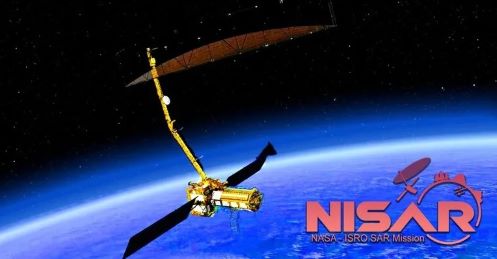
– NISAR: NASA-ISRO Synthetic Aperture Radar
– Cost: $1.5 billion (about Rs 12,500 crore)
—————–
4. What are the purpose of ISRO and NASA’s satellite “NISAR”?
a. Making a map of the earth
b. Recording the geographical changes of the earth
c. Understanding the earth and its environment closely
d. All of the above
Answer: d. All of the above (Making a map of the earth, Recording the geographical changes of the earth, Understanding the earth and its environment closely)
– NISAR: NASA–ISRO Synthetic Aperture Radar
– Cost: $1.5 billion (approximately ₹12,500 crore)
– Launch Date: July 30, 2025
– Launched Using: GSLV-F16 rocket
– Launch Site: Sriharikota, Andhra Pradesh
– Orbital Altitude: 743 kilometers
– NISAR will orbit in a polar orbit at an altitude of 747 km.
– Polar orbit is a path in which the satellite passes over the Earth’s poles.
– Mission Duration: 5 years
– This satellite will complete one orbit of the Earth every 97 minutes.
– In 12 days, it will complete 1,173 orbits, mapping almost every inch of the Earth’s surface.
– It has the capability to see through clouds, dense forests, smoke, and even in darkness.
– It can detect very minute changes on the Earth’s surface.
Main Objectives of the Mission
– The main purpose of the NISAR mission is to closely understand the Earth and its environment. This satellite will specially monitor three things:
– Changes in land and ice: It will observe how much change is happening on the Earth’s surface or glaciers, such as land subsidence or ice melting.
– Land ecosystems: It will monitor the condition of forests, farms, and other natural areas to understand the state of the environment.
– Marine regions: It will track the waves of the ocean, their changes, and the marine environment.
– ISRO says that the NISAR satellite can detect even small changes in land, ocean, ice, and vegetation; NASA says that NISAR will help decision-makers respond quickly to natural disasters and also assist in mapping agricultural land to improve crop production.
How Is It Different from Traditional Satellites?
– The rapidly changing Earth cannot be tracked with complete accuracy by traditional satellites.
– NISAR fills this gap. It takes high-quality images in all weather conditions. It will show almost real-time movements of the Earth, both big and small.
How Does the NISAR Satellite Work?
– The answer: NISAR has a 12-meter diameter gold-plated radar antenna attached to a 9-meter long boom. This antenna sends microwave signals to the Earth, which bounce back with information. The special thing is it does not require sunlight to operate.
– It is the first satellite to use two types of radar – NASA’s L-band and ISRO’s S-band.
– L-band: 24-centimeter wavelength. Better at seeing inside forests or thick surfaces.
– S-band: 9-centimeter wavelength. These waves help detect finer details.
– The satellite will take 90 days to fully deploy, and after all systems are tested, it will start collecting data.
– ISRO Chairman Dr. V. Narayanan
—————-
5. When is World Ranger Day celebrated?
a. 28 July
b. 29 July
c. 30 July
d. 31 July
Answer: d. 31 July
– This day is observed to remember rangers who have been killed or injured while on duty and to raise awareness about the efforts of rangers in protecting the world’s natural and cultural heritage.
Who are Rangers?
– The job of a ranger is to conserve nature.
– The Forest Department has the position of ranger, who patrols the forests to protect forest resources and animals.
—————-
6. India’s first AI-based road safety pilot project has started in which state?
a. Uttar Pradesh
b. Madhya Pradesh
c. Bihar
d. Rajasthan
Answer: a. Uttar Pradesh
– The Ministry of Road Transport and Highways, Government of India, has granted formal No Objection Certificate (NOC) to this project.
– This will enable the quick identification of technical faults behind road accidents.
– The Ministry has clarified that this initiative will fully comply with the Motor Vehicles Act 1988 and the Central Motor Vehicles Rules 1989, and will not impose any financial burden on the Central Government.
– In fact, Uttar Pradesh is one of the states with the highest number of road accidents.
– From January to June 2025, a total of 25,830 road accidents occurred, resulting in 14,205 deaths.
– These accidents happened due to poor road engineering, adverse weather conditions, driver faults, or other reasons—none of which have been analyzed so far.
Report to be prepared in six weeks
– Under the pilot project, the phase of initial proof of concept using AI (Artificial Intelligence) must be completed within six weeks.
– Data will be collected under this, accident reports will be prepared, and sent to the Ministry of Road Transport and Highways.

—————-
7. Who was the winner of Formula One Belgian Grand Prix 2025?
a. Oscar Piastri
b. Charles Leclerc
c. Michael Schumacher
d. Lando Norris
Answer: a. Oscar Piastri
– On 27th July 2025, a race was held at the Spa-Francorchamps racetrack in Spa, Belgium.
– In this, Australian McLaren driver Oscar Piastri won the title of the winner.
– When Oscar Piastri crossed the finish line, the checkered flag was waved.
– The second place was secured by British McLaren driver Lando Norris, and third place went to Monaco’s Ferrari driver Charles Leclerc.
—————-
8. India ranked 20th in the FISU World University Games 2025 by winning how many medals including two gold?
a. 12
b. 11
c. 10
d. 9
Answer: a. 12 (two gold, five silver and five bronze medals)
– FISU: International University Sports Federation
– Venue of FISU World University Games 2025: Germany
– When: In July
– India’s rank: 20th
– Total medals won by India: 12 (2 Gold, 5 Silver, and 5 Bronze medals)
– Country at the top position: Japan (79 medals including 34 Gold)
Archery: 5 medals
– Sahil Rajesh Jadhav: Gold medal in Men’s Compound Individual event
– Parnit Kaur: Silver medal in Women’s Individual event
– Mixed Team: Gold medal
– Men’s Team: Silver medal
– Women’s Team: Bronze medal
Badminton and Tennis: 2 Medals
– India won the bronze medal in Mixed Team Badminton.
– Vaishnavi Adkar won the bronze medal in Tennis Singles.
Athletics: 5 Medals
– Praveen Chitravel: Silver medal in Men’s Triple Jump.
– Seema: Silver medal in Women’s 5000 meters race.
– Ankita Dhyan: Silver medal in Athletics (Women’s 5000 meters steeplechase).
– Men’s 4×100 meters relay team (Lalu Prasad Bhoi, Animesh Kujur, Manikanta Hoblidhar, and Dondapati Mrutyum Jayaram) completed the race in 38.89 seconds and won the bronze medal.
– Sejal Singh, Munita Prajapati, Mansi Negi: Bronze medal in Athletics (Women’s 20 km race walk team).
—————
9. India ranked sixth in the 57th International Chemistry Olympiad by winning how many medals?
a. 2 gold
b. 2 silver
c. 4 bronze
d. Both a and b
Answer: d. Both a and b (2 gold and 2 silver)
Names of the Winners
– Gold Medal Winners: Devesh Pankaj Bhaiya from Jalgaon, Maharashtra and Sandeep Kuchhi from Hyderabad, Telangana
– Silver Medal Winners: Debadatta Priyadarshi from Bhubaneswar, Odisha and Ujjwal Kesari from New Delhi
– The event was held in Dubai from 5th to 14th July, with participation from 354 students representing 90 countries.
– India was represented by a team of four students, selected through national-level competitions.
– The selection and training of the Indian team was conducted by the Homi Bhabha Centre for Science Education (HBCSE) in Mumbai, which operates under the Tata Institute of Fundamental Research (TIFR).
– India has been participating in the IChO since 1999 and has consistently performed well.
– The International Chemistry Olympiad (IChO) is an annual global competition where the most talented school students worldwide demonstrate their theoretical knowledge and practical skills in chemistry.
—————
10. Which Indian player won the gold medal in the under-15 girls’ singles at the 29th Asian Youth Table Tennis Championship?
a. Rakesh Parmar
b. Abha Sinha
c. Divyanshi Bhowmik
d. None of these
Answer: c. Divyanshi Bhowmik
– 14-year-old Divyanshi was competing in the Under-15 category of this championship.
– Divyanshi Bhaumik won the title by defeating Zhu Kihui of China.
– After 36 years, an Indian player has won the gold medal title.
– India won one gold, one silver, and two bronze medals in this tough competition.
PDF Download: Click here