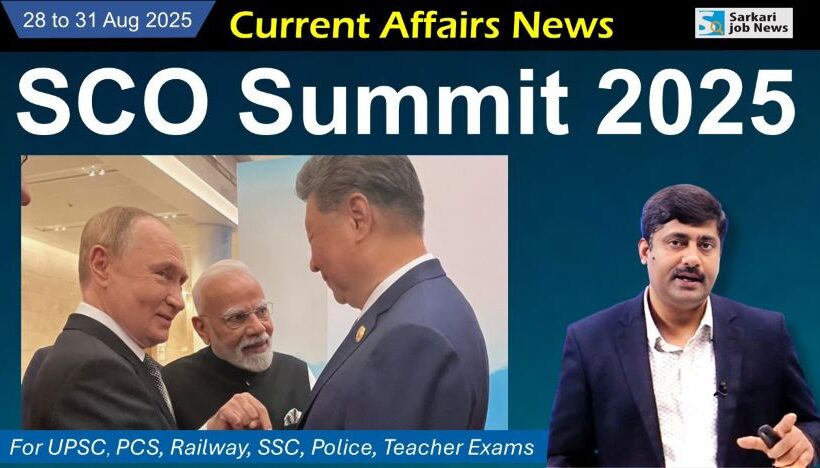
This is the current affairs of 28 to 31 August 2025. Here are questions and answers of daily current affairs for better preparation of competitive exams for government jobs.
PDF Download: Click here
1. In which city of China was the Shanghai Cooperation Organisation (SCO) summit 2025 organized?
a. Shanghai
b. Tianjin
c. Beijing
d. Shenzhen
Answer: b. Tianjin (31 August and 1 September 2025) {Theme – Upholding the Shanghai Spirit: Progress of SCO}
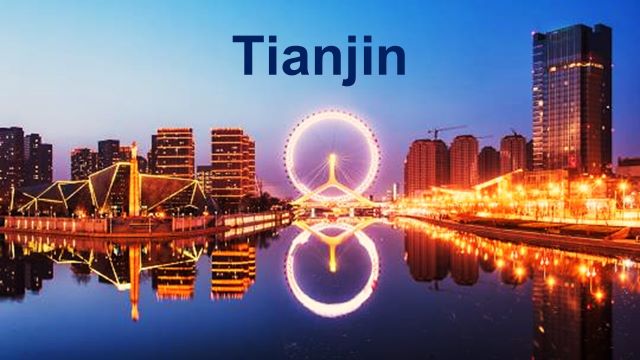
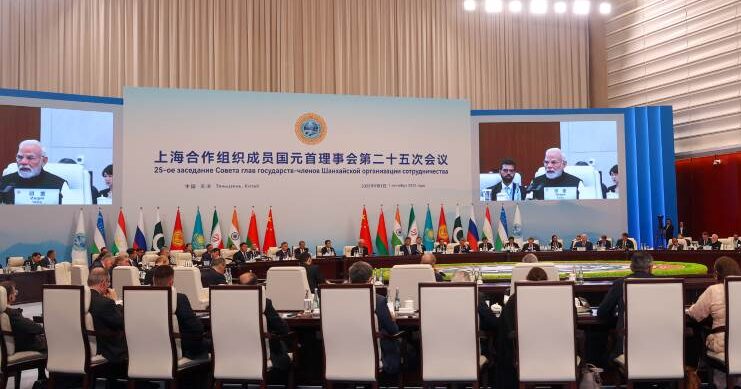
– Duration: 31 August and 1 September 2025
– Which Summit: 25th
– Theme: Upholding the Shanghai Spirit: SCO on the Move
– In 2025, China declared it the “SCO Year of Sustainable Development,” focusing on sustainable development and climate change.
– Prime Minister Narendra Modi’s visit to China happened after a gap of seven years.
About SCO
– SCO is a regional international organization.
– It is a Eurasian political, economic, international security, and defense organization established by China and Russia.
– It is an expansion of the Shanghai Five, which was formed in 1996 between the People’s Republic of China, Kazakhstan, Kyrgyzstan, Russia, and Tajikistan.
– It has emerged as an influential economic and security bloc and one of the largest inter-regional international organizations.
– Currently, SCO has 10 member countries.
– Member countries: China, Russia, Kazakhstan, Kyrgyzstan, Tajikistan, Uzbekistan, India, Pakistan, Iran, Belarus.
Which heads of state of the member countries participated
1) China: Xi Jinping (President) (Host)
2) Russia: Vladimir Putin (President)
3) Kazakhstan – Kassym-Jomart Tokayev (President)
4) Kyrgyzstan – Sadyr Japarov (President)
5) Tajikistan – Emamoli Rahman (President)
6) Uzbekistan – Shavkat Mirziyoyev (President)
7) India – Narendra Modi (Prime Minister)
8) Pakistan – Shahbaz Sharif (Prime Minister)
9) Iran – Masoud Pezeshkian (President)
10) Belarus – Alexander Lukashenko (President) (became a new member in 2024)
Observer countries
1) Afghanistan – Taliban representative (but dispute over official recognition)
2) Mongolia – Ukhnaa Khurelsukh (President)
Dialogue countries (Dialogue Partners) (These countries cooperate with SCO, but are not full members)
1) Nepal
2) Maldives
3) Sri Lanka
4) Turkey
5) Cambodia
6) Vietnam
7) Laos
8) Turkmenistan
9) Azerbaijan
10) Armenia
11) Egypt
12) Qatar
13) Kuwait
14) Saudi Arabia
15) UAE
16) Bahrain
17) Myanmar
International Organizations whose representatives came
1) United Nations (UN) – Antonio Guterres
2) ASEAN – Kao Kim Horn
3) CIS (Commonwealth of Independent States) – Sergey Lebedev
4) CSTO (Collective Security Treaty Organization) – Imangali Tasmagambetov
5) ECO (Economic Cooperation Organization) – Asad Majeed Khan
6) CICA – Kairat Saribay
7) AIIB – Jin Liqun
8) SCO Secretariat – Nurlan Yermekbayev
9) SCO-RATS – Ularbek Sharshiev
Note – Who is the current Secretary General of SCO: Nurlan Yermekbayev (Kazakhstan)
—————-
2. Which terrorist incident in India was strongly condemned in the Tianjin Declaration of SCO Summit 2025?
a. Rajouri attack
b. Uri attack
c. Pahalgam attack
d. Sukma attack
Answer: c. Pahalgam attack (attack took place on 22 April 2025)
– SCO called it the Tianjin Declaration.
Important facts about the Tianjin Declaration:
– Strong condemnation of terrorism in all forms and expressions, including the April 22 Pulwama attack in India and the attacks on the Jaffar Express and in Khuzdar, Pakistan.
– A call to end the cross-border movement of terrorists.
– Reaffirmation of the firm commitment to fight against terrorism, separatism, and extremism.
– Rejection of attempts to use terrorist, separatist, and extremist groups for “mercenary purposes.”
– Focus on strengthening the Global South amid global uncertainties in trade and an “unstable and chaotic global situation.”
– Member countries also opposed “unilateral coercive measures, including those of an economic nature,” which violate the principles of the United Nations Charter and the World Trade Organization, likely referring to US tariffs.
– India, along with other members of the group, strongly condemned in June the military attacks carried out by Israel and the US against Iran, a member country, targeting Tehran’s nuclear facilities.
– The declaration also mentioned the political situation in Afghanistan, which has observer status in the group.
– All member countries except India confirmed their support for China’s Belt and Road Initiative.
PM Modi said
– In his address at the summit, Prime Minister Modi gave a clear message that “the dual policy of some countries towards terrorism is unacceptable”—this remark was an indirect reference to Pakistan, as its Prime Minister was present there.
– Note – In the June 2025 SCO defense ministers’ level meeting, India differed from the declaration because it did not mention the Pulwama attack.
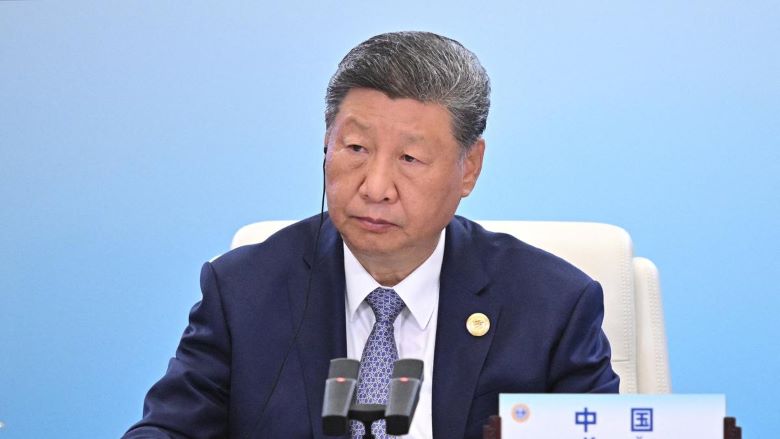
What Xi Jinping said
– Chinese President Xi Jinping criticized “bullying behavior” in the world order.
– He said the global international situation is becoming more “chaotic and interconnected.”
– In this statement, Xi did not name anyone, but it is believed to be a message regarding US tariffs.
– Xi said, “The shadow of Cold War mentality and intimidation is not fading, and new challenges are increasing, not decreasing.”
– He has often used the term “Cold War mentality” to describe uncertainties related to US tariffs.
– The Chinese President promised to grant 2 billion yuan (approximately 281 million dollars) to SCO member countries this year.
At the SCO summit, Chinese President Xi introduced the Global Governance Initiative (GGI). The proposal has five main dimensions:
– We must respect sovereign equality.
– We must abide by international rules.
– Behavior should be multipolar.
– People should be placed at the center.
– Focus should be on concrete actions.
—————-
3. The President of China called for the establishment of which bank with the aim of strengthening regional economic cooperation at the SCO Summit 2025?
a. Eurasian Development Bank
b. Shanghai Infrastructure Bank
c. SCO Development Bank
d. Islamic Development Bank
Answer: c. SCO Development Bank
– At the SCO Summit 2025, Chinese President Xi Jinping called for the early establishment of the SCO Development Bank.
– He announced $1.4 billion in loan assistance to SCO countries over the next three years.
– SCO leaders supported the Chinese proposal and agreed on the establishment of the bank in a joint declaration (Tianjin Declaration).
– The declaration also showed a commitment to promote economic cooperation and trade facilitation.
Purpose of the SCO Development Bank:
– To fund joint development projects (transport, energy, digital connectivity) among SCO countries.
– To promote trade and investment.
– To provide development loans to smaller member countries (such as Central Asian countries).
– China wants the bank to be aligned with the Belt and Road Initiative (BRI).
– This proposal is part of China’s strategy to advance SCO as a financial instrument towards a multipolar world order.
– Russia and India are cautious about this, while China wants to push it forward rapidly.
Why is it controversial?
– China wants the bank to be Yuan (Renminbi)-based, increasing its financial influence.
– India and Russia fear this will strengthen China’s dominance within SCO.
– Some countries view it similarly to the AIIB (Asian Infrastructure Investment Bank) and the BRICS New Development Bank.
Some major development banks:
– NDB: New Development Bank (Headquarters – Beijing) {BRICS bank}
– World Bank (Headquarters – Washington DC) {United Nations}
– ADB: Asian Development Bank (Headquarters – Manila, Philippines)
– AIIB: Asian Infrastructure Investment Bank (Headquarters – Beijing) (China’s initiative)
– IDB: Islamic Development Bank
Key points:
– The SCO Development Bank is currently only proposed, while both NDB and AIIB are actively funding projects.
– NDB operates on the principle of equality – equal shares for every BRICS country, while AIIB is dominated by China.
– If the SCO Bank is established, it could be linked to China’s BRI (Belt and Road Initiative), which is a sensitive issue for India.
– India is actively involved in the NDB and is the second-largest shareholder in the AIIB but maintains a cautious stance regarding the SCO Bank.

—————
4. In which summit in China did bilateral talks take place between Indian PM Modi and Russian President Putin?
a. BRICS
b. G20
c. G7
d. SCO
Answer: d. SCO
– Some major development banks:
– NDB: New Development Bank (Headquarters – Beijing) {BRICS bank}
– World Bank (Headquarters – Washington DC) {United Nations}
– ADB: Asian Development Bank (Headquarters – Manila, Philippines)
– AIIB: Asian Infrastructure Investment Bank (Headquarters – Beijing) (China’s initiative)
– IDB: Islamic Development Bank
Key points:
– The SCO Development Bank is currently only proposed, while both NDB and AIIB are actively funding projects.
– NDB operates on the principle of equality – equal shares for every BRICS country, while AIIB is dominated by China.
– If the SCO Bank is established, it could be linked to China’s BRI (Belt and Road Initiative), which is a sensitive issue for India.
– India is actively involved in the NDB and is the second-largest shareholder in the AIIB but maintains a cautious stance regarding the SCO Bank.
PM Modi said:
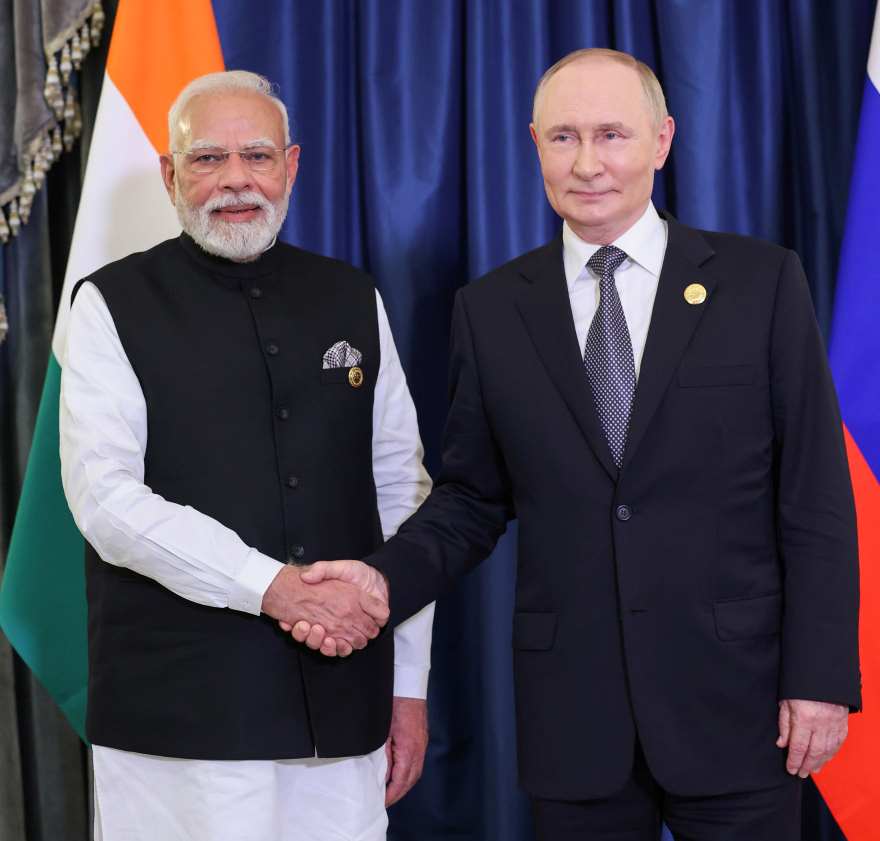
– PM Modi said that India and Russia have always stood shoulder to shoulder.
– Prime Minister Narendra Modi emphasized to Russian President Vladimir Putin the need to accelerate the ceasefire.
Importance of the meeting:
– This meeting took place against the backdrop of a 25% tariff on India-Russia oil trade and 25% penalties imposed by the US on Indian goods, along with several provocative remarks by US officials on the issue.
– However, the statement issued by the Ministry of External Affairs after the meeting mentioned bilateral cooperation but did not refer to oil trade or US tariffs.
– The Ministry said, “The leaders discussed bilateral cooperation including economic, financial, and energy sectors” and expressed satisfaction over the “continuous growth in relations” in these areas.
India-China bilateral talks:
– Prime Minister Modi and President Xi Jinping discussed strengthening relations, trade ties, and resolving border issues during the SCO summit.
– Both leaders agreed on the need to strengthen people-to-people ties through direct flights and visa facilitation. They also emphasized restoring the Kailash Mansarovar Yatra and tourist visas, as well as strengthening the improving relations between the two neighbors.
– Chinese President Xi Jinping said the border issue should not define the overall relationship.
The SCO summit is causing tension in the US.
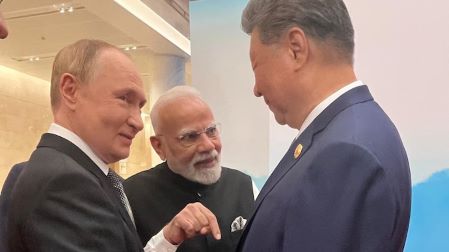
– There is significant debate in the US about Indian Prime Minister Narendra Modi’s visit to China.
– Modi’s visit is being viewed in the context of deteriorating relations with US President Donald Trump.
– Not only is it being observed, but the American media is also warning India.
– In fact, the US has imposed a 50% tariff on India. This move is a major blow to India’s economy.
– Trump’s advisor Peter Navarro frequently targets India.
– In an interview with Fox News, Navarro said, “Modi is a great leader, but I don’t understand why he is getting closer to Putin and Xi Jinping, especially when India is the world’s largest democracy.”
—————-
5. When will the 23rd India-Russia annual summit take place, in which Russian President Putin will visit India?
a. December 2025
b. January 2026
c. February 2026
d. March 2026
Answer: a. December 2025
– During the SCO Summit 2025, Prime Minister Narendra Modi told Russian President Putin that he looks forward to welcoming him at the 23rd India-Russia Annual Summit to be held at the end of this year.
—————-
6. Which country got the chairmanship of the Shanghai Cooperation Organisation (SCO) for the year 2025-26?
a. Russia
b. Kyrgyzstan
c. India
d. Iran
Answer: b. Kyrgyzstan
– Indian PM Narendra Modi congratulated Kyrgyzstan on taking over the SCO chairmanship.
Kyrgyzstan:
– Capital – Bishkek
– President – Sadyr Japarov
– Currency – Kyrgyzstani Som
– Population – 7.3 million
– Neighboring countries – Kazakhstan, China, Tajikistan, Uzbekistan
—————-
7. India has signed a Letter of Intent (LoI) with which UN agency to supply fortified rice to combat global hunger?
a. Food and Agriculture Organization (FAO)
b. World Food Programme (WFP)
c. United Nations Environment Programme (UNEP)
d. United Nations Development Programme (UNDP)
Answer: b. World Food Programme (WFP)
– On 25 August 2025, a Letter of Intent (LoI) was signed.
– The Government of India and the United Nations World Food Programme (WFP) have formed an ambitious partnership to make India’s agricultural prosperity a lifeline for the world’s most vulnerable communities.
– Under this agreement, India will provide 200,000 tons of fortified rice from the warehouses of the Food Corporation of India over the next five years to meet humanitarian food and nutrition needs worldwide.
– This agreement is based on the fact that, according to the United Nations, more than 670 million people around the world still go to bed hungry every night.
– The LoI signed by the Government of India allows the World Food Programme to distribute this rice to populations living in crisis-affected areas.
– By receiving rice from India, the World Food Programme will use the resources of an agriculturally surplus country to provide life-saving assistance and make solid progress against hunger.
– Fortified rice is rich in essential nutrients such as iron, folic acid, and vitamin B12, which help address hidden hunger, a form of malnutrition caused by nutrient deficiencies.
World Food Programme (WFP)
– Headquarters: Rome, Italy
—————-
8. The Ministry of Environment, Forest and Climate Change has constituted an authority to enable carbon emissions trading system (carbon trading), name it?
a. National Carbon Authority (NCA)
b. National Designated Authority (NDA)
c. International Air Authority (IAA)
d. None of these
Answer: b. National Designated Authority (NDA)

National Designated Authority (NDA)
– A 21-member National Designated Authority (NDA) has been established, chaired by the Environment Secretary.
– This agency will play a key role in implementing carbon trading and other market-based mechanisms under Article 6 of the Paris Agreement.
Functions and objectives of the NDA:
1. Project evaluation and approval: The NDA will review projects that generate Emission Reduction Units (ERUs) for emission reduction and grant approval.
2. Comprehensive and coordinated decision-making: It includes representatives from various ministries and organizations such as External Affairs, Steel, Renewable Energy, Power Ministry, and NITI Aayog. This ensures policies align with national needs and global commitments.
3. Forward-looking development action: The NDA will determine what types of activities are tradable— including international carbon credit transfers, sustainable development, technology transfer, and other innovations.
Importance behind this:
– India’s NDC (Nationally Determined Contributions) achievements: The establishment of the NDA will help India meet its climate commitments under the Paris Agreement—such as reducing GDP emission intensity by 45% by 2030—on time.
– Promoting investment in clean energy: A key objective is to attract investment in clean technology, renewable energy, and low-carbon projects. The NDA will ensure transparency and prevent double counting, strengthening India’s role in global climate action.
What is Carbon Trading?
– Carbon trading is a market-based mechanism where “carbon credits” are bought and sold to limit greenhouse gas (GHG) emissions.
– A carbon credit is a certificate that shows an activity/project has reduced 1 ton of CO₂ or equivalent greenhouse gas emissions.
India and Carbon Trading:
– India launched the Carbon Credit Trading Scheme (CCTS) in 2023.
– Recently (in 2025), the National Designated Authority (NDA) was formed to formalize carbon trading under Article 6 of the Paris Agreement.
India’s goals:
– Net-zero emissions by 2070
– 50% electricity generation from non-fossil fuel sources by 2030
—————
9. Rare cases of brain-eating amoeba infection were found in Kerala, what is the name of this amoeba?
a. Keraltingal fauri
b. Naegleria fowleri
c. Nigorika nivokari
d. None of these
Answer: b. Naegleria fowleri
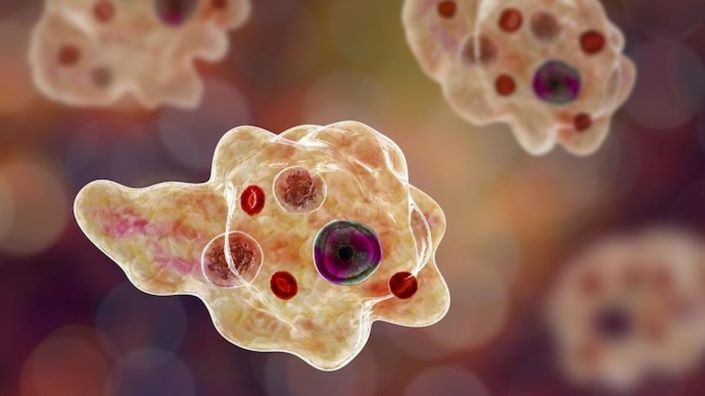
Events in August 2025 (India, especially Kerala):
– In August 2025, several cases of this disease emerged in Kerala, especially in Kozhikode and Malappuram districts.
– A 9-year-old girl died, and other children including a 3-month-old infant and adults have been affected and are undergoing treatment.
– Health officials have started chlorination of nearby wells and water sources, fever surveys, and awareness campaigns.
What is Primary Amoebic Meningoencephalitis (PAM)?
– It is a rare but almost always fatal brain infection caused by an amoeba called Naegleria fowleri, a single-celled organism.
– This amoeba is usually found in warm fresh water such as ponds, lakes, rivers, hot springs, and swimming pools with low chlorine levels.
How does infection occur?
– Infection happens when contaminated water enters the body through the nose, allowing the amoeba to reach the brain via the nasal passage and destroy brain tissue.
– The infection does not spread by swallowing or drinking water, but only when water enters through the nose.
Symptoms and effects:
– Symptoms usually appear within 1–12 days (average 5 days) after infection.
– Early symptoms: severe headache, fever, nausea, vomiting.
– Later symptoms: neck stiffness, confusion, decreased attention, lack of coordination, seizures, hallucinations, and possibly coma.
Mortality rate and prognosis:
– The mortality rate is extremely high—above 97%; some sources say 98%–99%.
– However, early diagnosis and treatment can potentially save lives.
Prevention and safety measures:
– Use nose clips while swimming, diving, or sitting in warm fresh water to prevent water from entering the nose.
– Proper chlorination of pools and other water sources should be maintained.
—————-
10. Where did DRDO conduct the first flight test of Integrated Air Defense Weapons System (IADWS)?
a. On the coast of Gujarat
b. On the coast of Goa
c. On the coast of Tamil Nadu
d. On the coast of Odisha
Answer: d. On the coast of Odisha
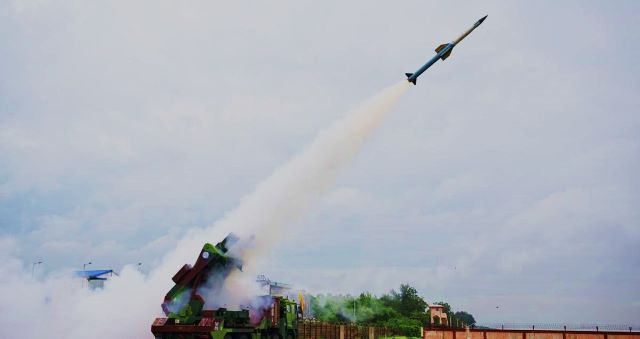
When and where was the test conducted?
– This test was conducted on 23 August 2025 at around 12:30 PM near Odisha.
What is the system and what does it include?
– IADWS (Integrated Air Defence Weapon System) is a multi-layered air defense system, fully developed indigenously in the country.
Components included:
– QRSAM: Quick Reaction Surface to Air Missile — short-range surface-to-air missile with a range of approximately 3–30 km
– VSHORADS: Very Short Range Air Defence System — portable system with a range of 300 meters to 6 km; specifically against drones and other small aerial threats
– DEW (Directed Energy Weapon): high-power laser-based weapon system effective up to around 3 km
What were the results of the test?
– During the test, three different targets were effectively destroyed simultaneously: two fast-flying fixed-wing UAVs and one multi-rotor drone.
Strategic significance:
– Defence Minister Rajnath Singh praised this flight test, stating that it will strengthen the country’s multi-layered air defense capabilities and enhance security of critical locations.
– This test is an important step towards India’s Mission Sudarshan Chakra — which aims to establish a comprehensive multi-domain defense shield by 2035.
– The need for an indigenous air defense system arose during Operation Sindhur.
—————–
11. Which command of the Indian Armed Forces successfully tested the nuclear capable missile AGNI-5?
a. Andaman and Nicobar Command
b. Strategic Forces Command
c. Maritime Theater Command
d. DRDO
Answer: b. Strategic Forces Command
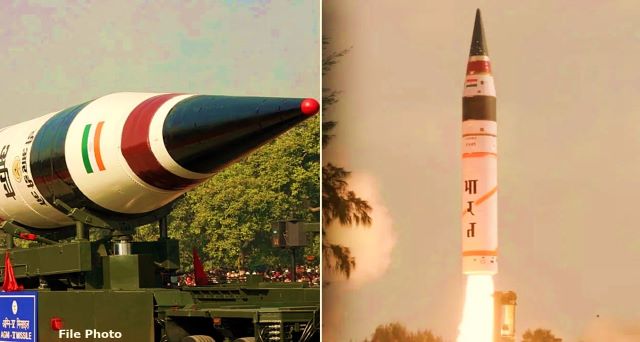
– India successfully tested the Agni-5 missile on 20 August 2025 from Chandipur Integrated Test Range, Odisha.
– Agni-5 is a medium-range ballistic missile (MRBM) with nuclear capability and intercontinental ballistic missile (ICBM) status.
– The Defence Ministry stated that the launch met all operational and technical parameters, conducted under the Strategic Forces Command.
Agni-5 details:
– Range: 5,000 to 5,500 kilometers
– Speed: Mach 24 (approximately 30,000 km/h) — Delhi to Beijing flight time: 10–15 minutes
– Designed by DRDO and produced by Bharat Dynamics Limited
– Controlled by the Strategic Forces Command
– Previous test was on 11 March 2024
– Features MIRV (Multiple Independently Targetable Re-entry Vehicle) technology — one missile can hit multiple targets independently
– Features MARV (Maneuverable Re-entry Vehicle) — warheads can change direction mid-air, making interception difficult
– Powered by solid fuel technology with a three-stage propulsion system
Strategic significance:
– Agni-I and II: Pakistan-focused range
– Agni-III and IV: Reach southern China
– Agni-V and VI: Strike capability across Asia, Europe, and potentially America
Strategic Forces Command (SFC)
– It was established on 4 January 2003 by the Vajpayee government.
– It is a command of the Indian Armed Forces (Army, Navy, and Air Force).
– Strategic Forces Command (SFC) is sometimes called the Strategic Nuclear Command.
– It is a part of India’s Nuclear Command Authority (NCA).
– It is responsible for the management and administration of the country’s non-strategic and strategic nuclear weapons stockpile.
Why missile testing is done at Chandipur
– Chandipur is located near the Bay of Bengal.
– Missiles are tested here directly over the sea.
– This ensures no risk to populated areas and provides a vast empty area to track the missile’s trajectory. Chandipur’s Integrated Test Range is affiliated with DRDO.
– All state-of-the-art facilities are available here. All technical equipment required for missile testing, such as radar, telemetry, and electro-optical tracking systems, are present.
—————-
12. When is National Small Scale Industries Day celebrated?
a. 30 August
b. 29 August
c. 28 August
d. 27 August
Answer: a. 30 August
– National Small Industries Day is celebrated every year on 30th August across the country.
– This day is observed to celebrate the contributions made by small industries in the development of India.
—————
13. What is the rank of India in the Global Peace Index (GPI) 2025?
a. 100
b. 116
c. 114
d. 115
Answer: d. 115
– India has been ranked 115th in the index, while in 2024 India was ranked 116th.
– In 2023, India was ranked 126th, which means India’s rank is improving.
—————
14. Which is the most peaceful country in the world as per the Global Peace Index (GPI) 2025?
a. Iceland
b. Greenland
c. Norway
d. United Kingdom
Answer: a. Iceland
– The Institute for Economics and Peace (IEEP) released this index in June.
– The GPI includes 163 countries representing 99.7 percent of the world’s population.
– According to the 2025 Global Peace Index, over the past 17 years, the average country score has declined by 5.4 percent, indicating a continuous decline in global peace since 2008.
– However, a positive aspect is that this year 74 countries have shown improvement in their peace.
– According to the report, Iceland has remained the most peaceful country since 2008.
– It is followed by Ireland, Austria, New Zealand, and Singapore.
Top 10 Peaceful Countries
1. Iceland
2. Ireland
3. New Zealand
4. Austria
5. Switzerland
6. Singapore
7. Portugal
8. Denmark
9. Slovenia
10. Finland
115. India
Ranking Criteria
– Three criteria have been set for ranking, which include social security and safety, the extent of domestic and international conflict, and militarization.
– Additionally, 23 indicators are also included in this.
Percentage in “Peace Inequality”
– The gap between the most and least peaceful countries has increased, and over the past two decades, “peace inequality” has risen by 11.7 percent.
– Note: The report states that the decline in peace is now at its highest level since the end of World War II.
Least Peaceful Countries
– Russia
– Ukraine
– Sudan
– Democratic Republic of Congo
– Yemen
PDF Download: Click here