
This is the current affairs 27 & 28 March 2026. Here are questions and answers of daily current affairs for better preparation of competitive exams for government jobs.
1. Who took the oath as the 47th Prime Minister of Nepal?
a. Balen Shah
b. Sushila Karki
c. KP Sharma Oli
d. Ravi Sushant
Answer: a. Balen Shah
– The promise made by Gen-Z in Nepal to bring political change has been fulfilled.
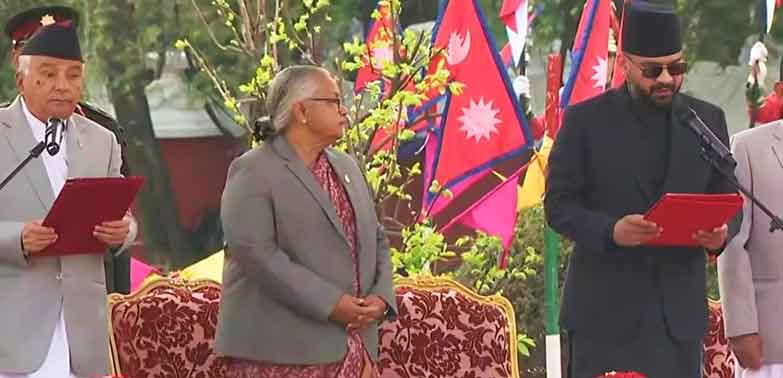
– 35-year-old Balen Shah became the 47th Prime Minister of Nepal on March 27, 2026.
– He was administered the oath by President Ramchandra Paudel.
– He is the youngest Prime Minister of the country.
– He was a rapper.
– His party, National Independent, won 182 out of 275 seats in the elections held on March 5.
– Balen Shah defeated four-time Prime Minister KP Sharma Oli in his stronghold Jhapa-5 by 49,614 votes.
– This victory is considered one of the biggest in Nepal’s parliamentary history since 1991.
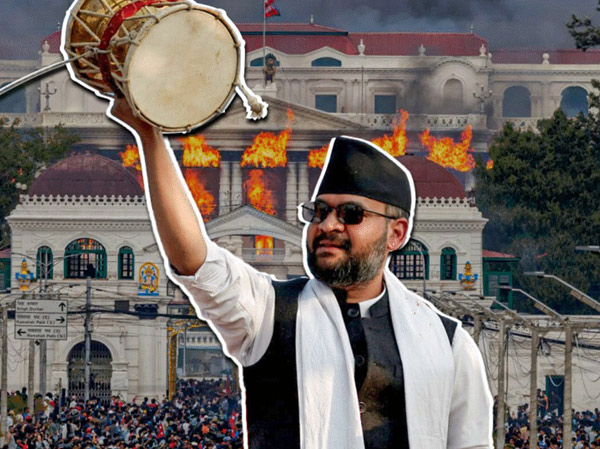
Balen Shah
– Born in 1990 in Kathmandu into a Maithili Madheshi family of Buddhist origin.
– Madheshis are people living in the Terai (plains) region of Nepal, whose language, culture, and traditions are similar to those in Bihar and Uttar Pradesh, India.
– During his school years, he became associated with Nepal’s hip-hop scene in the early 2010s.
– He holds a Master’s degree in Structural Engineering from Visvesvaraya Technological University in India.
– His academic background in engineering gave him practical understanding of infrastructure, urban development, and public works.
– He served as Mayor of Kathmandu Metropolitan City.
His stance toward India
– He completed his M.Tech in India.
– After becoming Mayor of Kathmandu in 2022, he was often in the news for his anti-India stance.
– He has built an image as a nationalist leader.
In 2022, he banned Indian films in Kathmandu over objections to the film Adipurush.
– He alleged that portraying Sita as India’s daughter insulted Nepal.
– The ban was later lifted following a court order.
– However, his anger continued.
– He criticized the Nepal government and court on social media, calling them “slaves of India.”
Opposition to both India and China
– In 2023, a mural in India’s new Parliament showing the expansion of the Ashokan Empire sparked controversy.
– It was portrayed in the media as a map of “Akhand Bharat.”
– In response, Balen Shah displayed a “Greater Nepal” map in his office.
– The map showed several Indian regions as part of Nepal.
– A major controversy arose in November 2025 after a Facebook post in which he used offensive language against India, China, and other countries.
– He later deleted the post, but it had already gone viral.
Despite his stance, the people of Nepal generally favor good relations with India.
What is Greater Nepal?
– Similar to the idea of “Akhand Bharat” in India, some political groups in Nepal promote the idea of “Greater Nepal.”
– They refer to an 1805 British-era map showing boundaries before Anglo-Nepal wars.
– They claim Uttarakhand, parts of Himachal Pradesh, and Sikkim belong to Nepal.
– In 2020, KP Sharma Oli released a new map including Indian territories like Kalapani, Lipulekh, and Limpiyadhura.
– The map was approved by Nepal’s Parliament, and people celebrated it as a step toward reclaiming territory.
– China’s role in this issue is considered suspicious.
—————-
2. In which Pacific Ocean nation did U.S.-led countries agree to assess funding for an ammunition assembly and production line?
a. Malaysia
b. Philippines
c. Japan
d. Indonesia
Answer: b. Philippines
– In March 2026, a U.S.-led intergovernmental defense group agreed to assess funding for such a facility in the Philippines.
– The decision was taken by 16 members of the – Partnership for Indo-Pacific Industrial Resilience.
Members include the United Kingdom, Australia, Japan, South Korea, and the Philippines.
China’s warning
– China warned the U.S. not to bring “conflict and chaos of war” into the Asia-Pacific region.
– The warning followed the proposal to build a weapons production facility in the Philippines.
– Chinese Foreign Ministry spokesperson Lin Jian said it could destabilize the region.
– He warned that countries becoming a “powder keg” would face consequences.
Why China warned
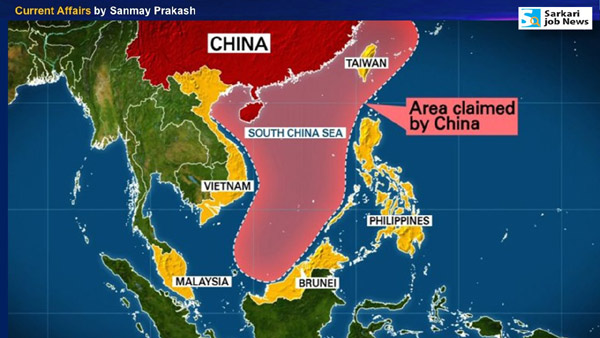
– China and the Philippines have ongoing tensions over the South China Sea.
– China claims most of this region, though an international ruling rejected its claim.
– China reiterated its commitment to protecting its sovereignty and security interests.
Philippines
– Capital: Manila
– President: Bongbong Marcos
– Currency: Philippine Peso
—————–
3. Under which law did the Central Government block 111,185 instances of suspicious online content by March 31, 2025?
a. Indian Penal Code, 1860
b. Information Technology Act, 2000
c. Data Protection Act, 2023
d. Indian Evidence Act, 1872
Answer: b. Information Technology Act, 2000
– The Ministry of Home Affairs issued about 290 takedown notices per day.
– On March 13, 2024, the Indian Cyber Crime Coordination Centre was authorized under Section 79(3)(b).
– According to the 2024–25 report, 111,185 content items were blocked by March 31, 2025.
– Data is tracked by the Indian Computer Emergency Response Team.
– The government informed Parliament in March 2026.
Legal provisions
– Section 79(1): Platforms are not liable for user content.
– Section 79(3)(b): Platforms must remove flagged content or lose safe harbor protection.
Time limit
– Earlier: 3 hours
– Now: 1 hour (new rule, March 2026)
Criticism
– Increase in content takedowns raised concerns about freedom of expression.
Government says it is necessary to combat fake news and deepfakes.
—————-
4. Who was appointed as India’s new High Commissioner to the United Kingdom in March 2026?
a. Periasamy Kumaran
b. Vikram Doraiswami
c. Rajendra Chola Verma
d. Ajay Kumar Shankh
Answer: a. Periasamy Kumaran
– Previously served as Special Secretary in the Ministry of External Affairs.
– Vikram Doraiswami has been appointed Ambassador to China.
—————-
5. When is the International Day for the Elimination of Racial Discrimination observed?
a. March 20
b. March 21
c. March 22
d. March 23
Answer: b. March 21
– Commemorates the 1960 Sharpeville massacre in South Africa where 69 people were killed.
– Observed globally following a UN General Assembly resolution.
—————-
6. Which state became the second in independent India, after Uttarakhand, to pass the UCC Bill 2026?
a. Madhya Pradesh
b. Rajasthan
c. Uttar Pradesh
d. Gujarat
Answer: d. Gujarat
– Uttarakhand passed a similar UCC Bill in February 2024.
– After that, the Gujarat Assembly passed the bill on March 24, 2026.
– However, Uttarakhand is the second state after Goa to implement UCC.
– But in Goa, UCC is implemented under the Portuguese Civil Code.
– Therefore, Uttarakhand is the first state after independence to implement UCC, and Gujarat will be the second.
– This bill was prepared based on the recommendations of a committee headed by retired Supreme Court judge Justice Ranjana Desai.
What is UCC?
– Generally, there are two types of laws in the country:
Criminal law
– Civil law
Criminal law
– Deals with crimes such as theft, robbery, assault, murder, and fraud.
– The same courts, processes, and punishments apply to all communities.
Civil law
– Deals with matters like marriage and property.
In India, different religions have their own customs, traditions, and personal laws regarding these matters.
– Hence, these are called personal laws.
– For example, Muslims follow Muslim Personal Law for marriage and inheritance.
– Hindus follow the Hindu Marriage Act.
– Similarly, Christians and Sikhs have their own personal laws.
What will change with UCC in the state
– Personal laws will be abolished, and a uniform law will be applied to all.
– Every citizen in Gujarat will have the same law in personal matters regardless of religion or caste.
– Example: Muslim men can have four marriages under personal law, but under the Hindu Marriage Act, a second marriage during the lifetime of the first wife is a crime.
– With UCC, one law will apply to all.
Key features of Gujarat UCC
– Strict enforcement of monogamy
– Mandatory registration of all marriages within 60 days
– Ban on non-judicial practices like triple talaq
– End of conditional remarriage practices like halala
– Mandatory registration of live-in relationships within 30 days; if one partner is below 21, parents must be informed
– Removal of gender discrimination in inheritance

—————–
7. Who is allowed to participate in the women’s category as per IOC’s new policy?
a. All transgender athletes
b. Only biological women
c. Only DSD athletes
d. All who identify as female
Answer: b. Only biological women
– New policy introduced in March 2026.
Applies to the 2028 Los Angeles Olympics.
—————-
8. Which scientific test will IOC use to determine eligibility of female athletes?
a. DNA fingerprinting
b. Hormone level test
c. SRY gene screening
d. Blood group analysis
Answer: c. SRY gene screening
– IOC introduced this policy in March 2026.
What is the SRY gene?
– This test checks a part of DNA associated with male development.
– It needs to be done only once in a lifetime.
– It can be conducted using saliva, cheek swab, or blood sample.
– Athletes who were female at birth but now identify as transgender men can continue to compete in women’s events.
– The SRY gene is located on the Y chromosome.
It triggers male biological development.
– IOC will use it to determine whether an athlete is biologically female.
IOC’s justification
– Fairness: Higher testosterone gives men physical advantage
– Safety: Risk of injury in contact sports
– Integrity: Ensuring fair competition
Impact of the policy
– Transgender women excluded from women’s category
– DSD athletes may face restrictions
Criticism
– Human rights concerns
– Gender is not purely biological
Paris Olympics controversy
– Two boxers’ participation was questioned
– Algerian boxer Imane Khelif and Taiwan’s Lin Yu-Ting
– Lin Yu-Ting was earlier declared ineligible by IBA but still won gold
– IOC did not accept IBA’s process
—————-
9. Who received the ‘Women Empowerment Trailblazer Award’ at BRICS CCI WE Summit 2026?
a. Gayatri Devi
b. Deepika Pandey Singh
c. Kalpana Soren
d. Aruna Jaiman
Answer: c. Kalpana Soren
– MLA from Gandey and wife of Jharkhand CM Hemant Soren.
– Honored for contributions to women empowerment and rural entrepreneurship.
—————–
10. Which state released a draft policy on digital usage for students (Classes 9–12)?
a. Andhra Pradesh
b. Karnataka
c. Tamil Nadu
d. Kerala
Answer: b. Karnataka
– Released on March 24, 2026.
– Recommends no internet after evening and reduced screen time before sleep.
Key features
– Digital well-being education in schools
– Cyber safety awareness
– Digital detox days
– Monitoring screen usage
– Regulation of AI use in education
PDF Download: Click here