This is the current affairs of 21 & 22 August 2025. Here are questions and answers of daily current affairs for better preparation of competitive exams for government jobs.
PDF Download: Click here
1. Parliament passed the ‘Online Gaming Promotion and Regulation Bill, 2025’, it provides for what is the punishment on operators of real money games apps?
a. Imprisonment for maximum 3 years, fine of ₹1 crore or both for violation
b. Imprisonment for 3–5 years and fine up to ₹2 crore for repeat offence
c. Maximum life imprisonment and fine up to ₹50 crore
d. Both a and b
Answer: d. Both a and b (Imprisonment for maximum 3 years, fine of ₹1 crore or both for violation. Imprisonment for 3–5 years and fine up to ₹2 crore for repeat offence.)

– Name and Objective: This bill, called the Promotion and Regulation of Online Gaming Bill, 2025, aims to make the field of online gaming structured, safe, and innovative.
– Its objective is to promote e-sports, educational, and social gaming while prohibiting risky online money games (such as real-money betting/gambling).
– E-sports are recognized as legitimate competitive sports, with training institutes, research centers, and competitions to be organized.
– Special incentives, digital platforms, and awareness campaigns will be provided for social and educational games.
Three Main Categories
– E-sports: Skill-based, competitive digital games played at a professional level.
– Online Social Games: Games played for entertainment without any monetary rewards.
– Online Money Games: Games that promise financial gain in exchange for stakes or deposits.
Formation of an Authority
– The bill provides for the establishment of the National Online Gaming Authority/Commission.
– This authority will handle policy coordination, regulatory oversight, support for game developers, and infrastructure development.
Key Provisions
– Offering, operating, advertising, or facilitating financial transactions for “online real money games” (based on gambling, skill + chance, or pure chance) will be prohibited.
– It will also be illegal for banks and financial institutions to process payments for such games or provide permissions.
Strict Punishment and Financial Penalty
– Operating or facilitating an “online real money game” app: Up to 3 years imprisonment and up to ₹1 crore fine.
– Repeat offenses: 3–5 years imprisonment and up to ₹2 crore fine.
– Advertising such games: 2 years imprisonment and up to ₹50 lakh fine.
Expected Impacts
– Gaming industry and companies: Major crisis for real-money platforms like Dream11, MPL, My11Circle; they will either have to shut down or change their business model.
– Financial impact: Estimated industry value (₹2 lakh crore) and tax revenue (₹20–31 thousand crore) at risk.
– Social safety: Helps protect youth and families from financial and mental risks; reduction in issues like fraud.
———-
2. India’s marine fisheries production increased by 8.9% to what amount in the year 2023–24?
a. 34.76 lakh tonnes
b. 44.95 lakh tonnes
c. 54.16 lakh tonnes
d. 64.06 lakh tonnes
Answer: b. 44.95 lakh tonnes
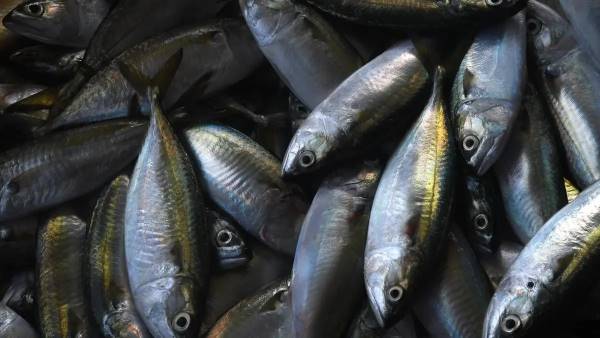
– During the Monsoon Session, Minister of State George Kurian informed the Parliament that India’s marine fish production reached 4.495 million tonnes in the year 2023–24.
Marine Fish Production
– 2020–21: 3.476 million tonnes
– 2023–24: 4.495 million tonnes
– Average annual growth rate: 8.9%
———-
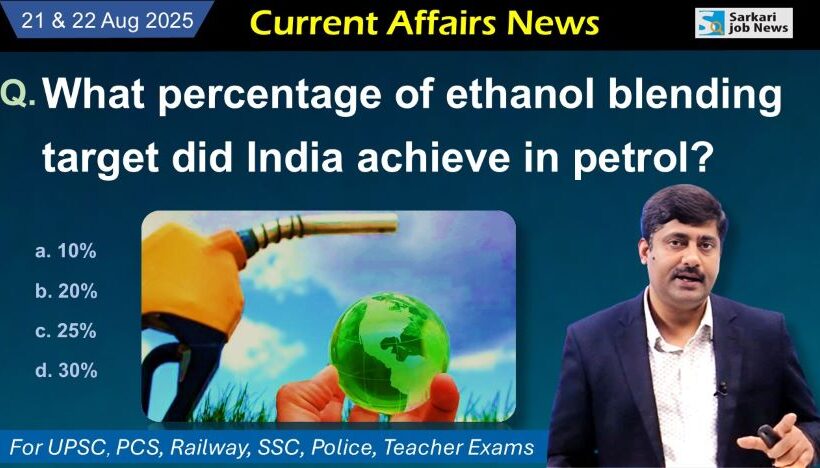
3. India achieved the target of blending what percentage of ethanol in petrol in the year 2025?
a. 10%
b. 20%
c. 25%
d. 30%
Answer: b. 20% (This petrol is known as E20.)
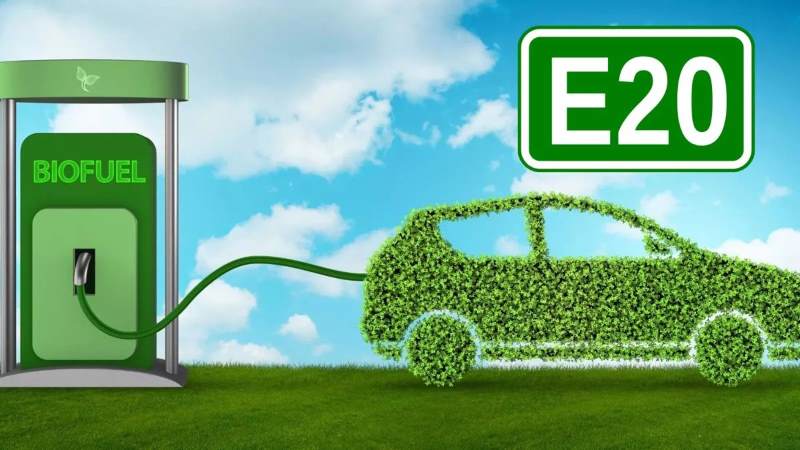
– In 2025, India achieved its target of blending 20% ethanol in petrol.
– This petrol is known as E20.
– The government considers it a major shift towards reducing carbon emissions and cutting oil imports.
– However, it has raised concerns among vehicle owners about its impact on mileage and vehicle maintenance.
What is Ethanol?
– Ethanol, or ethyl alcohol, is a biofuel: it is produced from plant waste known as biomass.
– In contrast, regular petrol is a hydrocarbon derived from fossilized organic matter buried for millions of years.
Environmental Impact and Foreign Exchange Savings
– Since 2014, ethanol blending has helped India reduce around 70 million tonnes of carbon dioxide emissions.
– It will support India in meeting its Paris Agreement climate targets.
Economic Impact
– It has helped save ₹1.36 trillion ($15.5 billion; £11.5 billion) in foreign exchange.
Future: Ethanol Blending to Reach 30%
– According to Petroleum Minister Hardeep Puri, “The country will now gradually move towards E25, E27, and E30 in a phased manner.”
What Are the Key Factors Behind the Success of Ethanol Blending in India?
– Policy and Regulatory Framework: The National Policy on Biofuels (2018, revised in 2022) advanced the 20% ethanol blending target from 2030 to 2025-26.
– The policy promotes the use of diverse feedstocks: sugarcane, molasses, maize, damaged food grains, agricultural residues, and even waste biomass.
– The PM-JIVAN scheme encourages the production of advanced biofuels from agricultural and forestry residues, industrial waste, and algae, thereby expanding the biofuel ecosystem.
Vehicle Owners Worried About Impact on Engines
– No official data is available regarding the impact of E20 fuel on engines, yet consumers regularly share stories on social media about deteriorating mileage of their vehicles.
– The Central Petroleum Ministry has described these concerns as “largely unfounded.”
Ethanol Production from Agricultural Produce
– Ethanol is produced from crops like sugarcane and maize, and increasing its use means allocating more agricultural produce for fuel production.
– According to government estimates, India will need 1 billion liters of ethanol to meet its E20 requirements by 2025.
– The Bangalore-based think tank Center for Study of Science, Technology and Policy (CSTEP) estimates that this demand will rise to 2 billion liters by 2050.
– Currently, about 40% of ethanol production in India comes from sugarcane.
– The Food Corporation of India (FCI) has approved an unprecedented allocation of 5.2 million tons of rice for ethanol production.
– The rice stocks held by FCI are meant to be distributed to the poor in India at subsidized rates.
Concerns Regarding Agriculture
– Agricultural expert Devinder Sharma has stated that this policy could lead to “an agricultural disaster in a few years.”
– Sharma said, “In a country like India, where 250 million people remain hungry, we cannot use food to run cars.”
– According to the Bangalore-based think tank Center for Study of Science, Technology and Policy (CSTEP), to meet ethanol demand through maize and sugarcane in a 50-50 ratio as set by the NITI Aayog, India will need to bring an additional 8 million hectares under maize cultivation by 2030, unless there is a significant increase in yield.
Positive Impact on Farmers
– Value from waste: Converting damaged grains, jaggery, crop residues, and agricultural waste into ethanol reduces landfill burden and methane emissions, aligning with the principles of a circular economy.
———-
4. Which place in Shahjahanpur district of Uttar Pradesh was renamed as “Parshurampuri”, for which the Central Government gave NOC to the UP Government?
a. Umde nagargar
b. Jalalabad City
c. Rajendrapuri
d. Osmanabad
Answer: b. Jalalabad city
– The central government has approved the renaming of Jalalabad town in Shahjahanpur district to Parshurampuri in August 2025.
– Jalalabad is considered the birthplace of Lord Parshuram. The central Ministry of Home Affairs has accepted the long-standing demand of the local people.
– Earlier, the Jalalabad Municipal Council had also passed this demand in board meetings held in March 2018 and September 2023.
– Subsequently, the state government sent the matter to the Ministry of Home Affairs for NOC (No Objection Certificate).
Here is the situation regarding Lord Parshuram’s temple
– Jalalabad is the birthplace of Lord Parshuram. There is also a very old historic temple of Lord Parshuram there.
– Because of this, the demand to rename Jalalabad as Parshurampuri has been ongoing.
———-
5. Which state launched the ‘Shramshree Yojana’ for migrant workers who faced alleged linguistic discrimination and harassment in other states?
a. Bihar
b. Uttar Pradesh
c. Madhya Pradesh
d. West Bengal
Answer: d. West Bengal
– Chief Minister Mamata Banerjee launched the ‘Shramshree Yojana’ in August 2025.
– She stated that after being targeted in various states over the past few months, nearly 10,000 people have returned to the state.
– This is the state’s first welfare initiative aimed at Bengali migrant workers who have allegedly faced linguistic discrimination and harassment in other states and are now returning to their home state.
– Under this scheme, migrant workers will receive a monthly financial assistance of ₹5,000, available for up to one year or until they find new employment in the state.
– The amount will be directly transferred to the worker’s bank account through the Labor Department.
– Returned workers will be issued job cards.
– Returned workers will be provided government-backed loans for self-employment.
– Entrepreneurship training and financial assistance will also be made available.
– It is mandatory that the applicant be a Bengali migrant worker.
West Bengal
Capital – Kolkata
Chief Minister – Mamata Banerjee
Governor – C.V. Anand Bose
———-
6. What was the retail inflation rate in the country in July 2025?
a. 1.55%
b. 2.34%
c. 3.22%
d. 4.48%
Answer: a. 1.55% (Retail inflation was 2.1% in June 2025)
– Retail inflation in India decreased to 1.55% in July 2025, the lowest since June 2017.
– This is also below the RBI’s inflation target range of 2-6%.
– The main reason for the decline in inflation is attributed to the fall in food prices.
– Inflation in the Food and Beverages category was -0.8% in July 2025, compared to -0.2% in June and 5.1% in July 2024.
Who Releases the Retail Inflation Report?
– NSO (National Statistical Office)
– It functions under the Ministry of Statistics and Programme Implementation.
How is Retail Inflation Determined?
– It is calculated based on the Consumer Price Index (CPI).
– CPI measures inflation in food items, fruits, clothing, footwear, housing, fuel, electricity, and others.
– As consumers, when we buy goods from the retail market, CPI reflects the changes in prices related to these goods and services. It measures the average price paid by consumers for goods and services.
How Does Inflation Affect Us?
– Inflation has a direct relationship with purchasing power. For example, if the inflation rate is 6%, the value of ₹100 earned becomes only ₹94 in terms of purchasing power.
– Therefore, investment decisions should consider inflation; otherwise, the value of your money will decrease.
How Does RBI Control Inflation?
– To control inflation, the money flow (liquidity) in the market is reduced.
– For this, the Reserve Bank of India (RBI) adjusts the repo rate.
– When inflation rises, RBI increases the repo rate, and when inflation is very low, it reduces the repo rate.
– Since inflation has been under control recently, RBI did not change the repo rate for the ninth consecutive time in August.
Inflation Limit Set by RBI
– The inflation limit set by RBI based on the Consumer Price Index (CPI) is 4%. However, it can vary by ±2%.
– Thus, inflation below 2% or above 6% is not considered good for the country’s economic growth.
———-
7. What was India’s wholesale inflation rate in July 2025?
a. – 0.58%
b. – 0.13%
c. 1.89%
d. 0.39%
Answer: a. – 0.58% (In June it was -0.13%)
– Wholesale price inflation based on the Wholesale Price Index (WPI) stood at -0.58% in July 2025, remaining in negative territory for the second consecutive month.
– In June, WPI-based inflation was -0.13%. In July last year, it was 2.10%.
– The decline is attributed to lower prices of food items, mineral oils, crude petroleum and natural gas, basic metals manufacturing, and others.
– However, prices of manufactured items increased.
Who Releases the Wholesale Inflation Report?
– Department for Promotion of Industry and Internal Trade (DPIIT)
– This department functions under the Ministry of Commerce and Industry.
(Note – Retail inflation reports are released by NSO.)
What is Wholesale Inflation Rate?
– This inflation rate is based on the Wholesale Price Index (WPI).
– WPI refers to the prices charged in the wholesale market when one trader sells to another.
– These prices are related to business conducted in bulk.
(Note – Retail inflation rate is determined by the Consumer Price Index (CPI).)
———-
8. Sadbhavna Diwas is celebrated on 20 August to mark the birth anniversary of which former Prime Minister of India?
a. Indira Gandhi
b. Atal Bihar Vajpayee
c. Rajiv Gandhi
d. Lal Bahadur Shastri
Answer: c. Rajiv Gandhi
– On this day, 20 August 1944, Rajiv Gandhi was born.
– This day is observed to pay tribute to former Prime Minister Rajiv Gandhi and to promote the spirit of goodwill.
– The Indian National Congress established the Rajiv Gandhi Goodwill Award in 1992, one year after his death.
———-
9. When is World Senior Citizen Day celebrated?
a. 21 August
b. 22 August
c. 23 August
d. 24 August
Answer: a. 21 August
– This day is observed by the United Nations General Assembly.
– It is celebrated to raise awareness about issues affecting elderly people, such as declining health with age and abuse of senior citizens, and to honor and recognize their achievements with support and respect.
– International Day of Older Persons was first observed in the United States on 21 August 1988.
———-
10. New order of Supreme Court in the case of dogs
– On 22 August 2025, a two-judge bench of the Supreme Court stayed the directive issued on 11 August, which stated that stray dogs caught from the Delhi National Capital Region (NCR) should not be released.
– A three-judge bench comprising Justice Vikram Nath, Justice Sandeep Mehta, and Justice N.V. Anjaria clarified that stray dogs caught should only be released after sterilization and vaccination, except those infected with rabies or showing aggressive behavior.
– The court also ordered a ban on public feeding of stray dogs and directed the creation of designated feeding areas.
– The Supreme Court reiterated the August 11 directive that no individual or organization should prevent municipal authorities from capturing dogs as per ABC (Animal Birth Control) rules.
– The court expanded the scope of the case beyond Delhi-NCR, making it applicable across India. All states and Union Territories have been included.
– The court also stated that it will transfer similar pending petitions from High Courts across India to the Supreme Court to formulate an all-India policy.
Background
– On 13 August, in a dramatic turn of events, the suo motu case regarding stray dogs, in which a two-judge bench comprising Justice J.B. Pardiwala and Justice R. Mahadevan had issued directives on 11 August, was transferred to this three-judge bench. This happened after some lawyers brought to the Chief Justice of India’s attention that the directives contradicted previous orders passed by other benches.
PDF Download: Click here