This is the current affairs of 19 March 2025. Here are questions and answers of daily current affairs for better preparation of competitive exams for government jobs.
PDF Download: Click here
1. Name the Indian-origin American astronaut who went to International Space Station for 8 days but took more than 9 months to return to Earth?
a. Kalpana Chawla
b. Sunita Williams
c. Raja Chari
d. Sirisha Bandla
Answer: b. Sunita Williams
– Indian-origin American astronaut Sunita Williams and American astronaut Butch Wilmore went on NASA’s 8-day joint “Crew Flight Test Mission” on June 5, 2024. However, there was a malfunction in the spacecraft.
– Their 8-day mission ended up taking more than 9 months.
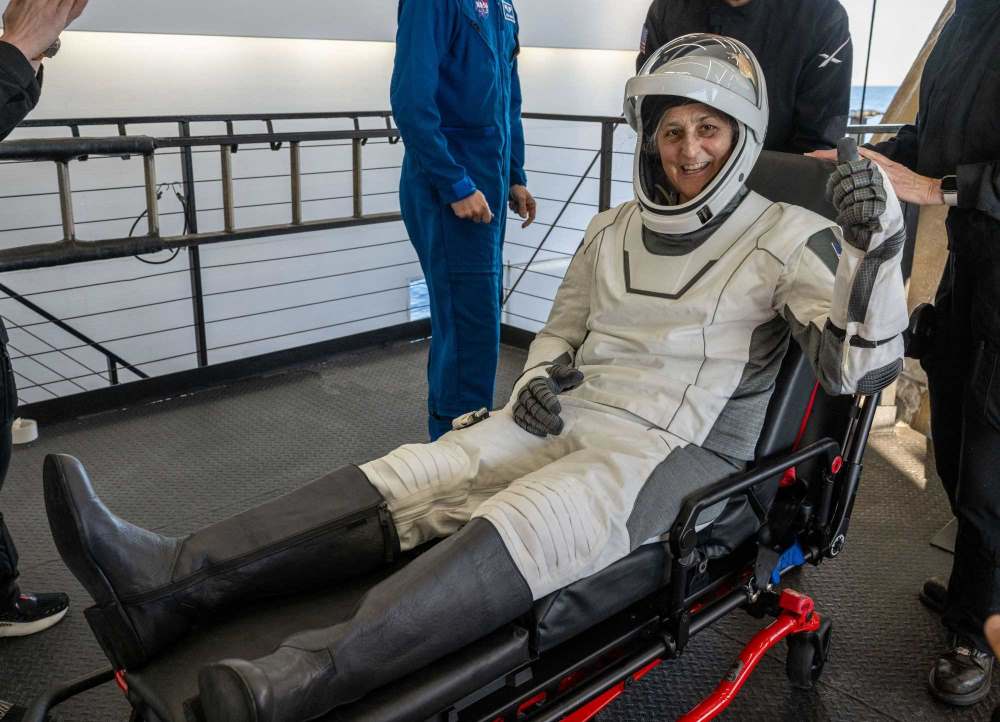
Return to Earth after 9 months and 14 days:
– Sunita Williams and Butch Wilmore returned to Earth on March 19, 2025, after 9 months and 14 days.
– Along with them, two other astronauts from Crew-9, America’s Nick Hague and Russia’s Aleksandr Gorbunov, also returned.
– Their “Dragon spacecraft” landed off the coast of Florida at 3:27 AM IST on March 19.
– These four astronauts had departed from the International Space Station (ISS) a day earlier, on March 18, 2025.
– It took approximately 17 hours from the separation of the Dragon capsule from the ISS to its landing in the ocean.
– When the spacecraft entered Earth’s atmosphere, its temperature exceeded 1650°C.
– During this time, there was a communication blackout for about 7 minutes, meaning there was no contact with the spacecraft.
– However, they made a safe return.
They went on an 8-day mission, but it took more than 9 months:
– Astronauts Sunita Williams and Butch Wilmore went on NASA’s 8-day joint “Crew Flight Test Mission” on June 5, 2024.
– The purpose of this mission was to test Boeing’s Starliner spacecraft’s ability to carry astronauts to the space station and bring them back.
– The astronauts were also supposed to conduct research and several experiments on the space station over the course of 8 days.
– However, after a malfunction in the thrusters, their 8-day mission ended up taking more than 9 months. – Initially, there was also a helium leak. This helium was essential to deliver propellants to the thrusters.
– Williams and Wilmore are experienced astronauts, and they didn’t face any major issues. Therefore, NASA was not in a hurry to bring them back. The ISS is so large that it can accommodate 10-12 astronauts at any time, although it usually has fewer people. It is only near crew changeovers that it is nearly at full capacity.
– After a long time, NASA entrusted the responsibility of bringing the astronauts back from the ISS to Elon Musk’s company, SpaceX.
What is the process of returning:
– The astronauts wear pressure suits. Then, the spacecraft is checked for any leaks.
– After that, the spacecraft separates from the ISS. Its thrusters push the spacecraft away from the station.
– Next, the deorbit burn is initiated. The thrusters fire in the opposite direction of the spacecraft’s orbit. This slows down the spacecraft.
– After this, the spacecraft enters Earth’s atmosphere at a speed of 27,000 km/h. As a result, the temperature of the spacecraft’s exterior reaches 1650°C. For a few minutes, communication is interrupted.
– At around 18,000 feet altitude, two parachutes are deployed. Then, at 6,000 feet, four main parachutes open. This slows the spacecraft down to 24 km/h.
– When the spacecraft lands in the ocean, it is called a “splashdown.” Recovery ships are already on standby. – Teams arrive and check the temperature and gases. After this, the astronauts are extracted.
Sunita Williams sets a new record in space:
– Record in Spacewalk: Sunita Williams has completed a total of 62 hours and 6 minutes in spacewalk over 9 occasions. This is the record for the longest time spent on spacewalk by any female astronaut. In January 2025, she conducted two major spacewalks—one lasting 5 hours 26 minutes and the other lasting 6 hours.
– Scientific Experiments: She and her colleague Butch Wilmore conducted more than 150 scientific experiments on the space station. These included biomedical research, environmental studies, and testing new technologies.
– Space Station Maintenance: Sunita performed regular maintenance tasks such as cleaning the ISS, replacing old equipment, and inspecting hardware. The ISS is as large as a football field, and it requires constant maintenance to function smoothly.
Sunita’s experience will be useful for science:
– Sunita Williams and Wilmore could be very useful in NASA’s ongoing study to assess how the human body responds to long-term space stays.
– They did not undergo specific training to spend such a long time on the ISS, and their bodies would have reacted differently from those who were adequately prepared for extended stays.
Experience will be useful in building a station on the Moon:
– NASA and other space agencies are preparing to establish a permanent science facility on the Moon, which will require humans to stay in space for long periods.
– Consequently, a program is underway to study the health impacts of long-term stays in space. U.S. astronauts going to the ISS may now voluntarily participate in such experiments.
What happens to the body when staying in space for long periods?
– Previous studies have shown that in space, bone density and muscle quality deteriorate much faster compared to Earth.
– Low gravity affects brain fluids, and prolonged stays may lead to potential changes in brain structure.
– Prolonged stays could also increase the risk of heart disease.
– Williams and Wilmore may provide researchers with the opportunity to study the mental and psychological effects of being stranded in space.
—————
2. Which female astronaut set the record for most hours of spacewalking?
a. Kalpana Chawla
b. Sunita Williams
c. Raja Chari
d. Sirisha Bandla
Answer: b. Sunita Williams
– Sunita Williams has completed a total of 9 spacewalks so far. This number is the second-highest by any woman astronaut.
– Out of these 9 spacewalks, she has spent a total of 62 hours and 6 minutes in spacewalks. This is the record for the longest time spent on spacewalk by any female astronaut.
– In January 2025, she conducted two major spacewalks—one lasting 5 hours 26 minutes and the other lasting 6 hours.
– Sunita Williams returned to Earth on March 19, 2025, after more than 9 months in space.
—————
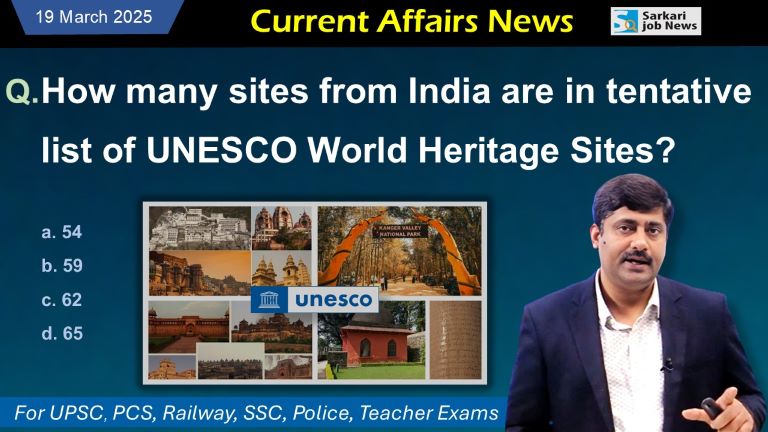
3. Which sites were included by UNCESO in the tentative list of World Heritage Sites, taking its number to 62 in India?
a. Kanger Valley National Park, Mudumal Megalithic Menhir
b. Ashokan inscriptions along Mauryan routes, Chausath Yogini Temple
c. Gupta temples in North India, Bundelas’ palaces-forts
d. All of the above
Answer: d. All of the above [1. Kanger Valley National Park, 2. Mudumal Megalithic Menhir, 3. Ashokan inscriptions along Mauryan routes, 4. Chausath Yogini Temples, 5. Gupta temples in North India and 6. Palace-forts of Bundelas]
– The notification of inclusion of these six World Heritage Sites in the UNCESO Tentative List was published in March 2025.
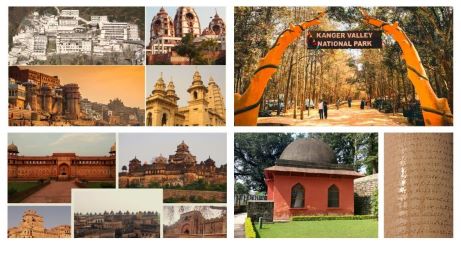
Tentative List of New World Heritage Sites
1) Kanger Valley National Park (Chhattisgarh)
2) Mudumal Megalithic Menhir (Telangana)
3) Ashokan Inscription Sites along Mauryan Routes (Bihar, Uttar Pradesh, Madhya Pradesh, Delhi, Karnataka, Andhra Pradesh, Gujarat)
4) Sixty-four Yogini Temples (Madhya Pradesh, Uttar Pradesh, Tamil Nadu, Odisha)
5) Gupta Temples in North India (Madhya Pradesh, Uttar Pradesh, Rajasthan, Bihar)
6) Palaces-Forts of the Bundelas (Madhya Pradesh and Uttar Pradesh {Bundelkhand region})
Kanger Valley National Park, Chhattisgarh:
– Kanger Valley National Park (KVNP) is located in Jagdalpur, Bastar district, in the state of Chhattisgarh, India.
– The park is named after the Kanger River, which flows from the northwest to the southeast.
– Designated under the Wildlife (Protection) Act of 1972 in 1982, this national park spans an area of 200 square kilometers.
Mudumal Megalithic Menhir, Telangana:
– Located about 4 kilometers southwest of the Mudumal village, near the banks of the Krishna River in Telangana.
– This site covers an area of approximately 80 acres, which also includes a small hill.
– Here, ancient stones stand tall and silent like the forgotten sentinels of an ancient era.
– The Mudumal Megalithic Menhir site, which was created around 3500 to 4000 years ago, is an important remnant of the Megalithic tradition in South Asia.
Ashoka’s Inscriptions Along the Mauryan Routes:
– These inscriptions are located in Bihar, Uttar Pradesh, Madhya Pradesh, Delhi, Karnataka, Andhra Pradesh, and Gujarat.
– Emperor Ashoka, the third ruler of the Maurya dynasty, ruled the Indian subcontinent from around 268 to 232 BCE and is famous for his significant influence and achievements in ancient times.
– The history of Ashoka’s inscriptions holds an important place in Indian history. These inscriptions were primarily commissioned by Emperor Ashoka during the 3rd century BCE.
– These inscriptions provide details of Ashoka’s policies, religion, administrative orders, and the actions he took during his reign. During the Maurya Empire, Ashoka established many inscriptions across different regions, some of which are located along the Mauryan routes.
Chausath Yogini Temples (In Various States):
– These temples are located in Madhya Pradesh, Uttar Pradesh, Tamil Nadu, and Odisha.
– The Chausath Yogini temples house statues of 64 Yoginis, each placed in their respective chambers or temples, with intricate stone carvings arranged in a circular form.
– These temples are mostly situated at the tops of hills.
Yogini refers to a female practitioner of yoga, and “Chausath” is the Hindi word for 64. The number of Yoginis is 64, hence they are called Chausath Yogini.
Gupta Temples in North India (In Various States):
– These temples are located in Madhya Pradesh, Uttar Pradesh, Rajasthan, and Bihar.
– One of the most prominent cultural contributions of the Gupta dynasty was the construction of architectural temples. Gupta temples in India are distinctive in their form and design.
– These temples exhibit architectural features influenced by both Buddhist and Hindu traditions.
Bundela Palaces and Forts (In Various States):
– These forts are located in Madhya Pradesh and Uttar Pradesh (Bundelkhand region).
– “Bundela Palaces and Forts”: Garhkundar Fort, Raja Mahal, Jahangir Mahal, Datia Mahal, Jhansi Fort, and Dhubela Mahal.
– These forts and palaces reflect the cultural traditions, architectural style, and political history of the Bundela Rajputs, who played an important role in Indian history from the 16th to the 19th century.
UNESCO Tentative World Heritage Sites: 62
– Kanger Valley National Park
– Mudumal Megalithic Menhirs
– Ashokan Inscription Sites along the Mauryan Routes
– Chausath Yogini Temples
– Gupta Temples in North India
– Palace-Forts of the Bundelas
– Gwalior Fort, Madhya Pradesh
– Khooni Bhandara, Burhanpur
– Rock Art Sites of the Chambal Valley
– Bhojeshwar Mahadev Temple, Bhojpur
– Gond Monuments of Ramnagar, Mandla
– The Historic Ensemble of Dhamnar
– Progressive nomination of coastal fortifications along the Konkan coast, Maharashtra
– Sun Temple, Modhera and Monuments in and around it
– Rock-cut sculptures and reliefs of Unakoti, Unakoti Range, Unakoti District
– Vadnagar – A Multi-layered Historic Town, Gujarat
– Geoglyphs of the Konkan Region of India
– Jingkieng Jari: Living Root Bridge Cultural Landscapes
– Sri Virbhadra Temple and Monolithic Bull (Nandi), Lepakshi (Vijayanagara – Sculpture and Painting Art Tradition)
– Iconic Riverfront of the Historic City of Varanasi
– Temples of Kanchipuram
– Hire Benkal, Megalithic Site
– Bhedaghat-Lametaghat in Narmada Valley
– Satpura Tiger Reserve
– Serial Nomination of Maratha Military Architecture in Maharashtra
– Historic Heritage of Orchha
– Garo Hills Conservation Area (GHCA)
– Keibul Lamjao Conservation Area
– Cold Desert Cultural Landscapes of India
– Sites along Uttarapath, Badshahi Road, Sadak-e-Azam, Grand Trunk Road
– Evolution of Temple Architecture – Aihole-Badami-Pattadakal
– Monuments and Forts of the Deccan Sultanates
– Cellular Jail, Andaman Islands
– Iconic Sari Weaving Clusters of India
– Apatani Cultural Landscape
– Sri Ranganathaswamy Temple, Srirangam
– Monuments of Srirangapatna Island Town
– Chilika Lake
– Padmanabhapuram Palace
– Sites of Satyagraha, India’s non-violent freedom movement
– Thembang Fortified Village
– Narcondam Island
– Ekamra Kshetra – City of Temples, Bhubaneswar
– Neolithic settlement of Burzahom
– Archaeological remains of Harappan port-town, Lothal
– Mountain Railway of India (Extension)
– Village clusters of Chettinad, Tamil traders
– Baha’i House of Worship in New Delhi
– Delhi – a heritage city
– Mughal Gardens in Kashmir
– Qutb Shahi Monuments of Hyderabad Golconda Fort, Qutb Shahi Tombs, Charminar
– Silk Road Sites in India
– Neora Valley National Park
– Desert National Park
– Namdapha National Park
– Wild Ass Sanctuary, Little Rann of Kutch
– River island of Majuli in the middle of Brahmaputra River in Assam
– Sri Harimandir Sahib, Amritsar, Punjab
– Temples in Bishnupur, West Bengal
– Mattancherry Palace, Ernakulam, Kerala
– In Mandu, Madhya Pradesh Group of Monuments
– Ancient Buddhist Site, Sarnath, Varanasi, Uttar Pradesh
—–
UNESCO World Heritage Sites: 43
– Agra Fort
– Ajanta Caves
– Ellora Caves
– Taj Mahal
– Group of Monuments at Mahabalipuram
– Sun Temple, Konark
– Kaziranga National Park
– Keoladeo National Park
– Manas Wildlife Sanctuary
– Churches and Convents of Goa
– Fatehpur Sikri
– Group of Monuments at Hampi
– Khajuraho Group of Monuments
– Elephanta Caves
– Great Living Chola Temples
– Group of Monuments at Pattadakal
– Sunderbans National Park
– Nanda Devi and Valley of Flowers National Parks
– Buddhist Monuments at Sanchi
– Humayun’s Tomb, Delhi
– Qutub Minar and its Monuments, Delhi
– Mountain Railways of India
– Mahabodhi Temple Complex at Bodh Gaya
– Rock Shelters of Bhimbetka
– Champaner-Pavagadh Archaeological Park
– Chhatrapati Shivaji Terminus (formerly Victoria Terminus)
– Lal Fort Complexes
– Jantar Mantar, Jaipur
– Western Ghats
– Hill Forts of Rajasthan
– Great Himalayan National Park Conservation Area
– Rani-ki-Vav (Rani ki Bawdi) in Patan, Gujarat.
– Archaeological Site of Nalanda Mahavihara in Nalanda, Bihar
– Khangchendzonga National Park
– The Architectural Work of Le Corbusier, an Outstanding Contribution to the Modern Movement*
– Historic City of Ahmedabad
– Victorian Gothic and Art Deco Ensembles of Mumbai
– City of Jaipur, Rajasthan
– Dholavira: A Harappan City
– Kakatiya Rudreshwara (Ramappa) Temple, Telangana
– Santiniketan, West Bengal
– Sacred Ensembles of the Hoysalas (Group of Three Temples)
– Charaideo Moidam (Mound-burial System of the Ahom Dynasty), Assam
UNESCO
Headquarters- Paris, France
Foundation- Year 1945
Director General- Audrey Azole
—————
4. What was the retail inflation in the country in February 2025?
a. 3.61%
b. 4.31%
c. 5.22%
d. 5.48%
Answer: a. 3.61%
– According to the data released on March 12, food prices decreased in February 2025, bringing India’s retail inflation to a seven-month low of 3.61%.
– This drop occurred due to a sharp decline in food inflation.
– In comparison, retail inflation was 4.26% in January 2025.
Who releases the retail inflation report?
– NSO (National Statistical Office)
– It comes under the Ministry of Statistics and Programme Implementation.
How is the retail inflation rate determined?
– It is determined by the Consumer Price Index (CPI).
– The CPI calculates inflation for food items, fruits, clothing, footwear, housing, fuel, electricity, and others.
– As consumers, we buy goods from the retail market. The CPI shows the price changes associated with these items. The CPI measures the average price we pay for goods and services.
How does inflation affect?
– Inflation is directly related to purchasing power. For example, if the inflation rate is 6%, the value of 100 rupees earned will be only 94 rupees.
– Therefore, investments should be made considering inflation, or else the value of your money will decrease.
How does the RBI control inflation?
– To control inflation, the Reserve Bank of India (RBI) reduces the flow of money (liquidity) in the market.
– To do this, the RBI adjusts the repo rate.
– When inflation rises, the RBI increases the repo rate, and when inflation becomes very low, the RBI decreases the repo rate.
– Inflation has been reported to be under control for some time now, which is why in August, the RBI did not make any changes to the repo rate for the ninth consecutive time.
Inflation Target Set by the RBI:
– The inflation target set by the RBI is 4% based on the Consumer Price Index (CPI). However, it can vary by 2% either way.
– Therefore, inflation below 2% or above 6% is not good for the country’s economic growth.
————-
5. What was India’s wholesale inflation rate in February 2025?
a. 2.31%
b. 2.38%
c. 1.89%
d. 2.37%
Answer: b. 2.38%
India’s Wholesale Price Inflation:
– According to the data released on March 17, 2025, wholesale price inflation increased to 2.38% in February 2025.
– This rise was driven by the increasing cost of manufactured food items, including vegetable oils and beverages.
– In comparison, wholesale price inflation was 2.31% in January 2025.
Who released the wholesale inflation report?
– Department for Promotion of Industry and Internal Trade (DPIIT)
– It comes under the Ministry of Commerce and Industry. (Note – Retail inflation is released by NSO.)
What is Wholesale Inflation?
– Wholesale inflation is determined based on the Wholesale Price Index (WPI).
– The Wholesale Price Index (WPI) refers to the prices that one trader charges another trader in the wholesale market.
– These prices are related to the business conducted in wholesale transactions. (Note – Retail inflation is determined by the Consumer Price Index (CPI).)
Commerce and Industry Minister: Piyush Goyal
————–
6. Who was given the ‘Balbir Singh Senior Award’ for the best male player at the 7th Annual Awards 2024 ceremony of Hockey India?
a. Harmanpreet Singh
b. Manpreet Singh
c. Surendra Kumar
d. Roop Singh
Answer: a. Harmanpreet Singh
– On March 15, 2025, the Hockey India Annual Awards ceremony held in New Delhi celebrated 100 years of Indian hockey.
– Harmanpreet Singh, captain of the Indian hockey team and bronze medalist at the Paris Olympics, was awarded the Best Male Player award.
– He received the award from Kabir Singh Bhomiya, the grandson of the late Balbir Singh Senior, a three-time Olympic gold medalist, along with Hockey India President Dilip Tirkey and Secretary-General Bholanath Singh.
– As part of the award, Harmanpreet received a trophy and 25 lakh rupees.
————–
7. Who was given the ‘Balbir Singh Senior’ award for the best female player at the 7th Annual Awards 2024 ceremony of Hockey India?
a. Rani Rampal
b. Savita Punia
c. Sharmila Devi
d. Jyoti
Answer: b. Savita Punia
– Legendary goalkeeper and former captain of the women’s hockey team, Savita, has received this award for the third time.
– Savita had finished in fourth place at the Tokyo Olympics 2021.
– She also played her 300th international match.
– Savita was also awarded the Baljit Singh Trophy for the Best Goalkeeper of the Year.
Other Players Who Received Awards:
– Hockey India Pargat Singh Award (Best Defender of the Year): Amit Rohidas
– Hockey India Ajitpal Singh Award (Best Midfielder): Hardik Singh
– Hockey India Dhanraj Pillay Award (Best Forward): Abhishek
– Hockey India Asunta Lakra Award (Female – Emerging Player Under 21): Deepika
– Hockey India Jugraj Singh Award (Male – Emerging Player Under 21): Araijit Singh Hundal
————–
8. Devendra Pradhan, who was a Union Minister during the tenure of which Prime Minister, died on 17 March 2025?
a. HD Deve Gowda
b. Manmohan Singh
c. Atal Bihari Vajpayee
d. VP Singh
Answer: c. Atal Bihari Vajpayee
– Devendra Pradhan’s son, Dharmendra Pradhan, is a central minister in the Modi government.
– The 83-year-old Devendra Pradhan served as the Transport Minister in the Atal Bihari Vajpayee government.
– Before becoming a politician, Devendra Pradhan was a professional doctor.
– Even after resigning from government service in 1973, he continued to serve.
– In 1980, he stepped into the field of politics.
In 1998, he contested elections from the Devgad Lok Sabha seat, won, and entered Parliament.
– Later, he took on the role of a central minister in Vajpayee’s government.
– He returned to Parliament in the 13th Lok Sabha elections and again became a minister in the Vajpayee government.
—————
9. How many medals did India win in total in the World Para Athletics Grand Prix 2025?
a. 70
b. 72
c. 123
d. 134
Answer: d. 134 (45 gold, 40 silver and 49 bronze)
– India topped the medal tally with a total of 134 medals in this competition.
Which medals and how many
– Gold: 45
– Silver: 40
– Bronze: 49
– This competition was held from 11 to 13 March at Jawaharlal Nehru Stadium.
– Top para athletes from 20 countries participated in it.
—————
10. When is National Vaccination Day celebrated?
a. 17 March
b. 16 March
c. 15 March
d. 14 March
Answer: b. 16 March
– This day is celebrated to spread the importance of vaccination across the country.
– National Vaccination Day was first celebrated on 16 March 1995.
– In the year 1995, India started the Pulse Polio program and gave the first dose of Oral Polio Vaccine.
– The campaign to eradicate polio from India was started by the Government of India through the Pulse Polio Campaign.
PDF Download: Click here