

This is the current affairs of 17 & 18 September 2025. Here are questions and answers of daily current affairs for better preparation of competitive exams for government jobs.
PDF Download: Click here
1. UNESCO included the Deccan Traps located in which state in the tentative list of World Heritage?
a. Meghalaya
b. Nagaland
c. Andhra Pradesh
d. Maharashtra
Answer: d. Maharashtra
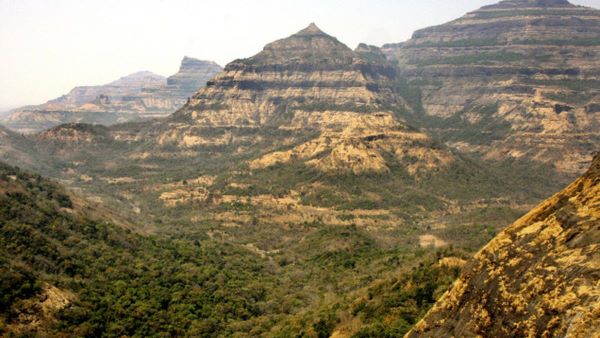
– It is located in Panchgani and Mahabaleshwar in Maharashtra and has been included in UNESCO’s tentative list of World Heritage Sites.
What are the Deccan Traps?
– The Deccan Traps are a vast volcanic region in India, spread across Maharashtra, Madhya Pradesh, Gujarat, and southern Rajasthan.
– They were formed around 65 million years ago when a large amount of lava and gases erupted from inside the Earth.
– It is one of the largest volcanic regions on Earth, covering an area of about 500,000 square kilometers.
– Earlier, it was even larger.
– The Deccan Traps are significant not only from a geological point of view but also for Indian agriculture, culture, and the environment. They tell us a lot about Earth’s ancient history and natural processes.
How it was formed:
– This region was formed due to the Réunion hotspot, which was located beneath India at that time. Hot lava from this hotspot came out from within the Earth and solidified upon reaching the surface.
– This volcanic activity continued for hundreds of thousands of years, forming multiple layers of lava that look like steps.
– That’s why it is called “Traps,” because the word “Trap” means “stairs” in Swedish.
Where is it spread?
– It is mainly located in the Western Ghats of Maharashtra, in places like Panchgani, Mahabaleshwar, Nashik, Pune, and the Satpura hills.
– In some areas, the layers of lava are up to 2 kilometers thick.
What is its relation to the extinction of dinosaurs?
– Scientists believe that the extinction of dinosaurs was caused by a meteor, but several other factors were also responsible.
– The volcanoes of the Deccan Traps had already started damaging the Earth’s environment.
– At the same time, massive volcanic eruptions were occurring in India and some other countries. The gases and lava released from these eruptions changed the climate.
– Gases like sulfur and carbon dioxide in the atmosphere caused the Earth to cool down and then heat up, making it difficult for living beings to survive.
– The meteor impact delivered the final and most devastating blow.
– This meteor struck the Earth around 66 million years ago. It released dust and gases into the atmosphere, blocking sunlight, increasing cold, and halting plant growth. As a result, dinosaurs and many other species died out.
– But the story of the Deccan Traps is also highly significant.
Economic benefits:
– The rocks here produce “black soil,” which is very fertile, especially for cotton cultivation. That’s why this region is known as the “Cotton Bowl.”
– Some minerals are also found in this area.
Nature and culture:
– Because of the Deccan Traps, the region has beautiful hills and natural landscapes, such as the Western Ghats.
– It is also famous for historical sites like the Ajanta and Ellora caves, which are carved into these rocks.
Scientific perspective:
– Scientists study this region to understand Earth’s ancient history, climate changes, and the reasons behind the extinction of dinosaurs.
– Gases released from volcanic eruptions, such as sulfur and carbon dioxide, altered the Earth’s temperature, significantly impacting the environment.
—
UPSC & State PCS Level Prelims Questions: –
Q. The Deccan Traps were included in UNESCO’s tentative list in September 2025. Consider the following statements about it:
1. Its formation is linked to the Réunion hotspot, which was once located beneath the Indian Plate.
2. The Deccan Traps are primarily composed of granite and gneiss rocks.
3. This region is associated with historical heritage sites like the Ajanta and Ellora caves.
4. Its formation is believed to be related to the Cretaceous–Paleogene (K–Pg) boundary period.
Which of the above statements is/are correct?
a. 1 and 3 only
b. 2 and 4 only
c. 1, 3, and 4 only
d. 1, 2, 3, and 4
Answer: c. 1, 3, and 4 only
Brief Explanation:
1. Correct – The Deccan Traps were formed due to the Réunion hotspot.
2. Incorrect – The Deccan Traps are primarily made of basalt rocks, not granite or gneiss.
3. Correct – The Ajanta and Ellora caves are carved into the basalt rocks of the Deccan Traps.
4. Correct – Their formation is believed to have occurred around 65–66 million years ago, at the Cretaceous–Paleogene (K–Pg) boundary.
—–
Q. Consider the following statements regarding the ‘black soil’ formed from the Deccan Traps, which were included in UNESCO’s tentative list in September 2025:
1. It is suitable for cotton cultivation.
2. It has high water holding capacity.
3. It is rich in nitrogen and phosphorus.
Choose the correct answer –
a. 1 and 2 only
b. 2 and 3 only
c. 1 and 3 only
d. 1, 2, and 3
Answer: a. 1 and 2 only
Brief Explanation –
1) Correct – It is called “Cotton Soil.”
2) Correct – It has a high water retention capacity.
3) Incorrect – It is deficient in nitrogen and phosphorus, but is rich in potash and lime.
—–
Mains Level Questions:
Question 1:
“The Deccan Traps are not just a geological formation but also the key to understanding Earth’s climate change, mass extinction of species, and the development of agriculture and culture in India.”
Critically examine this statement.
Question 2:
“The formation of the Deccan Traps and the Cretaceous–Paleogene Extinction Event are deeply interconnected.”
Explain with examples how this volcanic activity was responsible for global environmental crises and the decline in biodiversity.
Question 3:
Analyze the geological basis and economic significance of India’s black soil (Regur Soil).
————
2. UNESCO included the ‘Geological Heritage of St. Mary’s Island Cluster’ located in which state in the tentative list of World Heritage?
a. Karnataka
b. Nagaland
c. Andhra Pradesh
d. Maharashtra
Answer: a. Karnataka
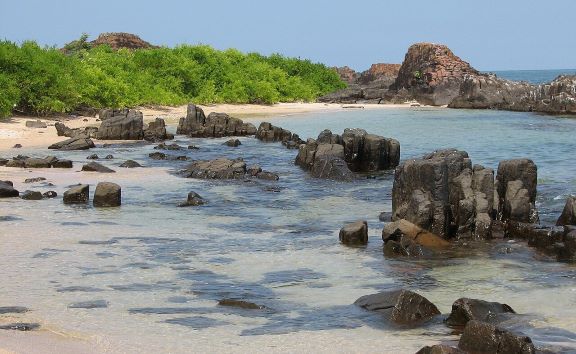
– In September 2025, UNESCO included the ‘Geological Heritage of St. Mary Island Cluster’ located in Karnataka in its tentative list of World Heritage Sites.
– These rocks are approximately 88 million years old, belonging to the Late Cretaceous period. This was the time when the Indian subcontinent was still connected to Madagascar, and later the two separated.
St. Mary Island Cluster
– The St. Mary Island Cluster is a group of small islands located in the Arabian Sea along the coastal region of Karnataka (near Malpe, Udupi district). It mainly includes four islands:
Coconut Island, 2) North Island, 3) Darya Bahadurgarh Island, 4) South Island
– Additionally, it includes a rocky formation called Middle Rock.
– The St. Mary Island Cluster is not just a tourist destination but holds national and international significance in terms of India’s geological past, scientific research, education, conservation, and global recognition.
Geological Significance
– This site is a living testimony of the Earth’s Late Cretaceous period (88 million years ago).
– The columnar volcanic rocks (Columnar Basalt/Rhyolite) here help in understanding plate tectonics, volcanic activity, and continental drift.
– It explains how India and Madagascar separated.
Scientific Research Importance
– This site is important for the study of palaeomagnetism.
– It serves as a natural laboratory for researchers in geology, earth sciences, and marine geomorphology.
Key Geological Features
1. Columnar Volcanic Rocks (Columnar Rhyolitic Lava):
– Columnar joints are visible on Coconut Island, consisting of rhyolite and rhyodacite formations. Most of these columns have a diameter of about 20–25 cm.
2. Age and Geological Context:
– These rocks are approximately 88 million years old, belonging to the Late Cretaceous period. This was the time when the Indian subcontinent was still connected to Madagascar, before the two separated.
3. Palaeomagnetic and Plate Tectonics Significance:
– Studies related to palaeomagnetism have been conducted on these rocks, indicating that this formation is linked to plate tectonics and continental drift events.
4. Aesthetic and Visual Characteristics:
– The geometric structure of the columns — a group of polygonal columns — is visually attractive and presents an artistic image of natural formation. These columns, which can be several meters tall, are well preserved in their natural environment.
Conservation and Legal Status
– St. Mary Islands have been declared a National Geological Monument.
– This site is also protected under the Government of India’s Coastal Regulation Zone (CRZ) rules.
Meaning of Inclusion in UNESCO Tentative List
– In September 2025, this site was included in UNESCO’s Tentative List. This means the Government of India has proposed it as a potential World Heritage Site for nomination.
—–
UPSC & State PCS Prelims Level Questions: –
Q. Consider the following statements regarding the St. Mary Island Cluster, which has been included in UNESCO’s tentative list of World Heritage Sites:
1. The site is famous for its columnar rhyolitic lava structures.
2. Its rocks date back to the Late Cretaceous period and are linked to the separation of India and Madagascar.
3. It has been declared a National Geological Monument by the Government of India.
4. The site is protected under the Silent Valley National Park.
Choose the correct option:
a. 1 and 2 only
b. 1, 2, and 3 only
c. 3 and 4 only
d. 1, 2, 3, and 4
Answer: b. 1, 2, and 3 only
Brief Explanation:
1. Correct – The site features columnar rhyolitic/rhyodacite lava structures.
2. Correct – These rocks are about 88 million years old (Late Cretaceous period) and are linked to the India-Madagascar separation.
3. Correct – The Government of India has declared it a National Geological Monument.
4. Incorrect – It is not part of the Silent Valley National Park (Kerala).
—
Q. Why is the St. Mary Island Cluster considered geologically significant, leading to its inclusion in UNESCO’s tentative list of World Heritage Sites?
a. It represents the oldest Precambrian rocks in India.
b. The site provides evidence of the separation between the Indian subcontinent and Madagascar.
c. Paleolithic human remains have been found here.
d. It is the largest basaltic trap in India.
Answer: b. The site provides evidence of the separation between the Indian subcontinent and Madagascar.
Brief Explanation:
a. Incorrect – These are not Precambrian rocks but belong to the Late Cretaceous period.
b. Correct – It provides geological evidence of the separation between India and Madagascar.
c. Incorrect – No human remains have been found here.
d. Incorrect – This is not the largest basaltic trap in India; the Deccan Traps hold that distinction.
—
UPSC & State PCS Mains Level Questions:-
Question 1:
“St. Mary Island Cluster is not just a tourist destination but also makes a significant contribution to understanding India’s geological past and global geology.”
Critically examine this statement from a scientific perspective.
Question 2:
Explain the significance of the St. Mary Island Cluster in the context of plate tectonics and continental drift.
————
3. UNESCO included Meghalayan Age caves in the tentative list of World Heritage, when did the Meghalayan Age begin?
a. 1,200 years ago
b. 2,200 years ago
c. 3,200 years ago
d. 4,200 years ago
Answer: d. 4,200 years ago
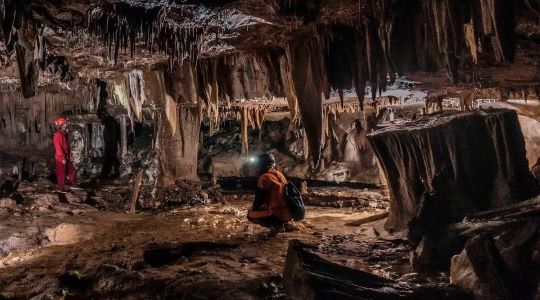
– In September 2025, the Meghalaya Caves of the Meghalayan Age were included in UNESCO’s tentative list of World Heritage Sites.
What is the Meghalayan Age?
– It is the most recent unit on the geological time scale in Earth’s 4.6 billion-year history.
– Its time period began about 4,200 years ago and continues to the present.
– The “Meghalayan Age” started 4,200 years ago and was marked worldwide by a sudden severe drought and a cold period.
Meghalayan Age Caves (East Khasi Hills, Meghalaya)
– The Meghalayan Age Caves are located in the East Khasi Hills district of Meghalaya.
– These caves are made of limestone and are very special.
– They were included in UNESCO’s tentative list of World Heritage Sites in 2025.
– These caves represent the Holocene epoch’s ‘Meghalayan Age,’ which began approximately 4,200 years ago (4.2 ka BP).
– These caves are not only beautiful but also very important for understanding Earth’s history and nature.
– Some caves, like Krem Puri, are the world’s longest sandstone caves.
Location and Appearance
– Location: Near Shillong, in the East Khasi Hills of Meghalaya. These caves are situated in high hills (around 1,200 meters in altitude).
– Major Meghalayan Age caves:
1. Mawmluh
2. Arwah
3. Mawsmai
4. Krem Puri
– There are at least 12 caves in total, but based on size, geological features, and accessibility, four have been selected.
– Altitude: Approximately 4,025 feet (1,227 meters) above sea level.
– Features: These caves have beautiful natural formations such as stalactites (stones hanging from the ceiling) and stalagmites (stones rising from the ground). The Krem Puri cave is 24.5 km long and contains rivers, pools, and glowing stones inside.
Why are they special?
Earth’s History:
– These caves tell the story of the ‘Meghalayan Age’ (which began around 4,200 years ago).
– During that time, the world experienced a major drought that affected civilizations like Harappa, Egypt, and Mesopotamia.
– The Mawmluh cave contains stalagmite records that provide information about the climate (rainfall, temperature) of that period.
– These records help us understand Earth’s history.
Scientific and Educational Importance:
– The caves preserve isotope data (such as oxygen isotopes) used to study global climate history.
– This site serves as a natural laboratory for earth sciences, environmental sciences, and geological research.
Biodiversity:
– These caves are home to many rare animals and insects, including unique fish, spiders, and crickets. These species are found nowhere else, so their conservation is essential.
Beauty:
– The scenery of the caves is very attractive, drawing many tourists.
Contribution of Local People:
– The Khasi tribe takes care of these caves.
– They preserve them in their natural state.
– Some caves, like Arwah Cave, are open to tourists and are located near Cherrapunji (Sohra).
Challenges:
– Excessive tourism can harm the cave’s flora and fauna.
– Climate change poses a threat to the cave formations (stalactites and stalagmites).
– To protect the caves, the government and local communities are working together.
—–
UPSC & State PCS Level Prelims Questions: –
Q.1 Consider the following statements:
1. The Meghalayan Age is the latest unit of the Earth’s geological time scale, which began around 4,200 years ago.
2. This period is characterized by sudden drought and cold conditions in various parts of the world.
3. The Meghalayan Age caves are formed of basalt rocks, and Krem Puri is the longest basalt cave in the world.
Which of the statements above is/are correct?
a. 1 and 2 only
b. 2 and 3 only
c. 1 and 3 only
d. 1, 2, and 3
Answer: a. 1 and 2 only
Brief Explanation:
1. Correct – The Meghalayan Age is the latest unit of the Earth’s geological time scale, which began about 4,200 years ago.
2. Correct – It is identified globally by sudden droughts and cold conditions.
3. Incorrect – The caves are made of limestone, not basalt. Krem Puri is the longest sandstone cave in the world.
—–
Q. 2 Which is the correct matching pair in the context of Meghalayan Age caves?
1. Mawmluh Cave – Stalagmite records of climate change
2. Krem Puri Cave – World’s longest sandstone cave
3. Arwah Cave – Mainly limestone formations
4. Mawsmai Cave – Recently permanently included in the World Heritage list
Choose the correct option:
a) Only 1, 2, and 3
b) Only 2 and 4
c) Only 1 and 3
d) 1, 2, 3, and 4
Answer: a) Only 1, 2, and 3
Explanation:
1. Correct – Mawmluh Cave has stalagmite records related to climate change.
2. Correct – Krem Puri Cave is the world’s longest sandstone cave.
3. Correct – Arwah Cave consists mainly of limestone formations.
4. Incorrect – Mawsmai Cave is part of the tentative list, not permanently included; the entire Meghalayan Age caves are on the tentative list.
—–
Q.3 What is the role of the Khasi tribe in the context of the Meghalayan Age caves?
a. Conducting archaeological excavations in the caves
b. Traditional conservation and caretaking of the caves
c. Declaring the caves as private property for tourism
d. Conducting isotope research inside the caves
Answer: b. Traditional conservation and caretaking of the caves
—–
UPSC & State PCS Mains Level Questions:-
Q.1 The Meghalayan Age caves were recently included in UNESCO’s Tentative World Heritage List. Explain the significance of these caves in the context of:
– Global climate history
– The decline of ancient civilizations
– The role of the local Khasi community
Q.2 “The Meghalayan Age caves are not only symbols of natural beauty and biodiversity but also serve as a ‘natural laboratory’.”
Explain the scientific justification of this statement and discuss the challenges posed by tourism and climate change to these caves.
————
4. UNESCO has included the Naga Hill Ophiolite in the World Heritage Tentative List, which is evidence of the collision between the Indian and which tectonic plate?
a. Myanmar/Burma Plate
b. Australian Plate
c. Pacific Plate
d. Antarctic Plate
Answer: a. Myanmar/Burma Plate

– This collision occurred approximately between 90 million years ago (90 Ma) and 65–60 million years ago (Ma).
– UNESCO included Naga Hill Ophiolite in the tentative list of World Heritage in September 2025.
Naga Hill Ophiolite (Kiphire, Nagaland)
– It is an important geological site located in the Kiphire and Fak districts of Nagaland.
– These are located in the Naga Hills, which are part of the Arakan Range, and rise up to 12,552 feet above sea level.
– It is part of the Indo-Myanmar Range (IMR) and is found in the Naga Hills.
Geological Importance
What is Ophiolite?
– Ophiolites are rocks from the ocean floor that come to the surface due to the collision of tectonic plates.
– The Naga Hill Ophiolite is a result of the collision between the India and Myanmar/Burma plates, which are remnants of the Tethys Sea (Neo-Tethys).
– This collision occurred between the Late Cretaceous and early Paleogene periods.
– It is estimated that this collision happened approximately between 90 million years ago (90 Ma) and 65–60 million years ago (Ma).
– As a result of this collision, oceanic rocks (ophiolite complex) have been uplifted and are visible in the Naga Hills.
– Therefore, the Naga Hill Ophiolite is considered an important geological heritage in India, as it provides evidence for understanding continental plate tectonics and the origin of the Himalayas.
Scientific Value:
– These ophiolites help in understanding the processes of the mid-ocean ridge. They include chemical properties of mafic rocks like Mid-Ocean Ridge Basalt (MORB) and Ocean Island Basalt (OIB), which represent different tectonic settings (subduction and non-subduction).
Suture:
– In Naga Hills, the “Naga Suture” is evidence of the India-Myanmar collision during the Upper Cretaceous and Eocene periods. It is the southern extension of the Indus-Tsangpo suture zone.
– National Geoheritage: The Geological Survey of India (GSI) has declared the Naga Ophiolite near Pangro as a National Geoheritage Monument.
Biodiversity:
– Nature: The Naga Hills are rich in biodiversity. Here, IUCN Red-listed species such as Blyth’s Tragopan, Dark-rumped Swift, and Naga Wren-Babbler are found.
– Importance: This biodiversity and geological features qualify the Naga Hills for UNESCO World Heritage status under criteria (viii) and (x).
Cultural and Social Importance
– Local communities: The Naga tribes are an integral part of the cultural identity of this region. These caves and hills are connected to their traditions.
– Tourism and livelihood: There is potential for geo-tourism in the Naga Hills, which can become a source of employment and income for the local people. The proposed Geoheritage Bill will further promote this.
Conservation Challenges
– Threats: Damage caused by mining, illegal logging, and environmental degradation.
– Conservation: The Geoheritage Bill (proposed in 2022) will promote the protection and conservation of these sites. The participation of local communities is important.
——
UPSC & State PCS Prelims Level Questions: –
Q. 1. Consider the following statements regarding the Naga Hill Ophiolite, which is included in UNESCO’s Tentative World Heritage List:
1. Ophiolites are sea-floor rocks that come to the surface due to the collision of tectonic plates.
2. The Naga Hill Ophiolite is a result of the collision between the India and Myanmar plates.
3. The timing of this collision is estimated to be around 200 million years ago (Jurassic period).
Which of the above statements is/are correct?
a. Only 1 and 2
b. Only 2 and 3
c. Only 1 and 3
d. 1, 2, and 3
Answer: a. Only 1 and 2
Brief Explanation:
1. Correct – Ophiolites are sea-floor rocks that come to the surface due to the collision of tectonic plates.
2. Correct – The Naga Hill Ophiolite is the result of the collision between the India and Myanmar plates.
3. Incorrect – The collision occurred between the Upper Cretaceous (about 90 million years ago) and Early Paleogene (65–60 million years ago), not 200 million years ago (Jurassic period).
——
Q. 2. Which of the following is correct regarding the “Naga Suture” of the Naga Hills?
a. It is evidence of the collision between the Indian and African plates.
b. It is evidence of the India-Myanmar collision during the Upper Cretaceous and Eocene periods.
c. It is only a geological evidence from the Jurassic period.
d. It is an extension of the Narmada Son Rift Zone.
Answer: b. The Naga Suture is evidence of the India-Myanmar collision during the Upper Cretaceous and Eocene periods.
Brief Explanation:
a. Incorrect – The Naga Suture relates to the collision between the India and Myanmar plates, not India and Africa. The India-Africa separation occurred in the Jurassic period (~180 million years ago) during the breakup of Gondwana.
b. Correct – According to content: The Naga Suture represents the India-Myanmar collision between the Upper Cretaceous (90 Ma) and Early Paleogene/Eocene (65–60 million years ago).
c. Incorrect – It is wrong to link it only to the Jurassic period (200–145 million years ago). The India-Myanmar collision and the emergence of ophiolites happened around the Cretaceous-Paleogene boundary (~90–60 million years ago).
d. Incorrect – The Narmada-Son Rift Zone is an ancient fault system located in Central India and is unrelated to the Naga Suture or the India-Myanmar plate collision.
——
UPSC & State PCS Mains Level Questions:-
Question 1. (GS-1, 10 marks)
Why is the ‘Naga Hill Ophiolite’, included in UNESCO’s Tentative World Heritage List, considered a geological heritage in the context of the “India-Myanmar plate collision and the origin of the Himalayas”? Explain.
Question 2. (GS-3, 15 marks)
“The Naga Hill Ophiolite is not only of geological importance but is also connected to biodiversity, cultural traditions, and local livelihoods.”
Discuss this statement in light of the above.
————
5. R. Vaishali won which tournament in 2025 to qualify for the Women’s Candidates Tournament 2026?
a. Tata Steel Masters
b. Women’s Grand Prix
c. FIDE Women’s Grand Swiss
d. Chess Olympiad
Answer: c. FIDE Women’s Grand Swiss (R. Vaishali defeated Kateryna Lagno (Russia) on September 6, 2025. The 2026 Candidates Tournament will be held in Toronto, Canada.)
– Chess player R. Vaishali has won the FIDE Women’s Grand Swiss 2025 tournament for the second consecutive time.
– She became the first female player to win this title twice in a row.
– With this victory, she has qualified for the Women’s Candidates Tournament 2026.
– Tournament: FIDE Women’s Grand Swiss 2025
– Location: Samarkand, Uzbekistan
– Dates: 25 August – 6 September 2025
– Result: The tournament concluded on 6 September 2025, with R. Vaishali winning the title. She defeated Kateryna Lagno (Russia) in the final.
– As a result, both players qualified for the Women’s Candidates Tournament 2026 (Toronto, Canada).
Importance
– Vaishali became the first female player to win the Grand Swiss consecutively.
– She had previously won the Grand Swiss 2023 (Isle of Man, UK).
– This is a proud moment for India as Indian players are now reaching the Candidates Tournament in both men’s and women’s categories.
What is the Candidates Tournament?
– It is the second biggest chess competition organized by FIDE.
– The winner earns the right to challenge the reigning World Chess Champion.
– The 2026 Women’s Candidates Tournament will be held in Toronto, Canada.
Contribution of India and Vaishali
– Vaishali is the sister of Grandmaster R. Praggnanandhaa.
– Together, the siblings are giving new recognition to Indian chess.
– This achievement reflects the growing strength of Indian female chess players.
————
6. Anandkumar Velkumar won the first title for India in the Speed Skating World Championships 2025 in which event?
a. 500 meter relay
b. 1000 meter sprint
c. 1500 meter race
d. 200 meter time trial
Answer: b. 1000 meter sprint
– Anandkumar Velkumar became the first Indian player to win a gold medal at the Speed Skating World Championship.
– Age: 22 years
Speed Skating World Championship 2025
– Venue: Beidaihe, China
– Dates: 13 September 2025 – 21 September 2025
– This was a roller/inline speed skating competition.
– The event is organized by the International Skating Union (ISU), the top governing body for ice skating and speed skating sports.
What did Anandkumar Velkumar win?
– Gold Medal: Senior Men’s 1000 meters sprint (time: 1:24.924 minutes)
– Bronze Medal: Senior Men’s 500 meters sprint (time: 43.072 seconds)
Other Indian Achievement
– Junior Category: Krish Sharma won the gold medal in the 1000 meters sprint.
– The bronze medal in the 500 meters sprint is India’s first senior world championship medal in this category.
————
7. Who has been held responsible by the Independent Commission of the United Nations Human Rights Council (UNHRC) for the genocide in Gaza as defined in the Genocide Convention 1948?
1) Benjamin Netanyahu
2) Isaac Herzog
3) Yoav Galant
4) Mahmoud Abbas
Choose the correct option:
a. 1 and 2 only
b. 1, 2, and 3 only
c. 2 and 4 only
d. 1, 2, 3, and 4
Answer: b. Only 1, 2 and 3 (Benjamin Netanyahu {Israeli PM}, Isaac Herzog {Israeli President} and Yoav Galant {Former Defense Minister})
– The United Nations Human Rights Council (UNHRC) formed an independent commission to investigate the situation in Palestine, especially Gaza.
– Name of the commission: Commission of Inquiry on the Occupied Palestinian Territory and Israel.
– Chairperson of the commission: Navi Pillay, former judge of the International Criminal Court (ICC).
What were the findings?
– The commission stated that Israel has committed four acts of genocide in Gaza, as defined under the 1948 Genocide Convention.
– The commission concluded that Israel has perpetrated genocide in Gaza.
Which Israeli leaders were found to have incited genocide?
– Prime Minister Benjamin Netanyahu
– President Isaac Herzog
– Former Defense Minister Yoav Gallant
The commission found that Israel has committed—
– Mass killings,
– Blocking humanitarian aid,
– Forced displacement,
– Destruction of health facilities and infrastructure.
“Genocide Convention, 1948” – Five Acts and Allegations Against Israel
1– Killing members of an ethnic or religious group
(✔️ The allegation was found valid by the commission.)
2– Causing serious bodily or mental harm to members of the group
(✔️ The allegation was found valid by the commission.)
3– Deliberately inflicting conditions of life intended to destroy the group in whole or in part
(✔️ The allegation was found valid by the commission.)
4– Imposing measures intended to prevent births within the group
(✔️ The allegation was found valid by the commission.)
5– Forcibly transferring children of the group to another group
(❌ This allegation was not substantiated by the commission.)
Israel’s Stand –
– Israel rejected the report, calling it “biased and false.”
– It described the commission as a “spokesperson for Hamas.”
Legal and International Significance of the Report
– The report is non-binding.
– Its significance lies in the fact that it may strengthen the possibility of legal proceedings at forums like the International Court of Justice (ICJ) and the International Criminal Court (ICC).
– The report is also relevant in the context of the South Africa vs. Israel genocide case at the ICJ.
– It may intensify global moral pressure and spark debate on humanitarian aid.
About the Genocide Convention, 1948
– The Genocide Convention, 1948, officially known as the “Convention on the Prevention and Punishment of the Crime of Genocide” (CPPCG), was adopted by the United Nations General Assembly on 9 December 1948 and came into force in 1951.
– Definition: Any act committed with intent to destroy, in whole or in part, a national, ethnic, racial, or religious group. It is considered one of the most serious crimes under international law.
What Acts Are Considered “Genocide” (According to Article II of the Genocide Convention):
1) Killing members of the group.
2) Causing serious bodily or mental harm to members of the group.
3) Deliberately inflicting conditions of life intended to destroy the group in whole or in part.
4) Imposing measures intended to prevent births within the group.
5) Forcibly transferring children of the group to another group.
Judicial Enforcement
– International Court of Justice (ICJ): Can hear disputes between states.
– International Criminal Court (ICC): Can prosecute individuals (though established in 2002, its authority draws from the principles of the Genocide Convention).
Significance
– This was the first international treaty to define genocide as an independent crime.
– It provided a legal framework for the international community in response to crimes like those committed by Nazi Germany (the Holocaust).
– Currently, more than 150 countries are State Parties to the Convention.
—-
UPSC & State PCS Prelims Level Questions: –
Q. 1. The United Nations Human Rights Council (UNHRC) established the Commission of Inquiry on the Occupied Palestinian Territory and Israel to investigate the situation in Palestine, particularly Gaza. The commission concluded that Israel committed several acts in Gaza that fall under the definition of genocide as per the Genocide Convention, 1948.
Consider the following statements related to these acts:
1. The commission found that Israel committed mass killings in Gaza, blocked humanitarian aid, carried out forced displacement, and destroyed health facilities and infrastructure.
2. According to Article II of the Genocide Convention, 1948, forcibly transferring children of a group to another group is considered an act of genocide.
3. The commission proved that Israel forcibly transferred children from Gaza to another group.
4. The report is non-binding but can increase the possibility of legal proceedings in forums like the ICJ and ICC.
Choose the correct option:
a. Only 1 and 2 are correct
b. Only 1 and 4 are correct
c. Only 2 and 3 are correct
d. All statements are correct
Answer: b. Only 1 and 4 are correct
Brief Explanation:
1. Correct – Because the commission confirmed mass killings, blocking of humanitarian aid, forced displacement, and destruction of infrastructure in Gaza.
2. Correct – This is indeed stated in Article II of the Genocide Convention.
3. Incorrect – Because the commission did not find evidence that Israel forcibly transferred children to another group.
4. Correct – The report is non-binding but may influence international courts.
—-
Q. Which of the following statement(s) is/are correct regarding the “Genocide Convention, 1948”?
1. It was adopted by the UN General Assembly in 1948 and came into force in 1951.
2. It applies only to crimes committed during wartime.
3. Currently, more than 150 countries are State Parties to the Convention.
Choose the correct code:
a. Only 1 and 2
b. Only 2 and 3
c. Only 1 and 3
d. 1, 2, and 3
Answer: c. Only 1 and 3
Brief Explanation:
1. Correct – It was adopted in 1948 and entered into force in 1951.
2. Incorrect – It is not limited to wartime; it applies during both war and peace.
3. Correct – Currently, more than 150 countries are State Parties to the Convention.
—
UPSC & State PCS Mains Level Questions:-
Q1. “In September 2025, the UNHRC Commission’s report held Israel responsible for genocide in Gaza.”
In the light of this development, explain the relevance and limitations of the Genocide Convention, 1948.
Q2. “In the Israel–Palestine conflict, the recent commission’s report is merely a tool of moral pressure, but its legal consequences are limited.”
Critically examine this statement in the context of the roles of the International Court of Justice (ICJ) and the International Criminal Court (ICC).
————
8. When is World Bamboo Day celebrated?
a. September 8th
b. September 18th
c. September 28th
d. September 30th
Answer: b. September 18th
– Its purpose is to raise awareness about the importance of bamboo and its environmental, economic, and cultural benefits.
– It was started in 2009 by the World Bamboo Organization to promote bamboo as a versatile and sustainable resource.
Environmental Importance:
– Bamboo is a fast-growing plant that helps in carbon dioxide absorption.
– It prevents soil erosion and increases soil fertility.
– Bamboo can be used as an alternative to plastic and wood, reducing deforestation.
Bamboo in India:
– India is the second-largest producer of bamboo (after China).
– Bamboo cultivation and usage are widespread in Northeast India (such as Nagaland, Mizoram, Assam).
– The Indian government’s National Bamboo Mission promotes bamboo cultivation and industry.
————
9. Which country appointed the world’s first AI minister named Diella?
a. USA
b. Japan
c. Albania
d. France
Answer: c. Albania
– On 11 September 2025, Albania took a historic step by appointing the world’s first AI-created “minister.”
– Prime Minister Edi Rama inducted an artificial intelligence (AI) system named “Diella” into the cabinet to ensure transparency in public procurement and government contracts.
– This move is seen as a significant initiative to curb corruption and advance towards European Union membership.
Name and Role
– “Diella” (meaning “Sun” in Albanian) has been appointed as the Minister of Public Procurement.
– It is a virtual minister, not physically present, but functioning as an AI system.
Development and Scope
– Diella was developed by the National Information Society Agency (AKSHI) and was launched as a virtual assistant on the e-Albania platform in January 2025.
– It has now been entrusted with the responsibility to monitor public procurement processes and ensure transparency.
Legal and Political Perspective
– Constitutional status: The appointment of Diella has raised constitutional questions. The opposition Democratic Party has termed it unconstitutional and a political stunt. President Bajram Begaj has also not given full support to this appointment, raising doubts about its legal validity.
Albania
– Capital: Tirana
– Prime Minister: Edi Rama
– Currency: Albanian Lek
– NATO member: Since 2009
– European Union: Striving for future membership
————
10. What was India’s wholesale inflation rate in August 2025?
a. – 0.58%
b. – 0.13%
c. 1.89%
d. 0.52%
Answer: d. 0.52%
– Wholesale Price Inflation (WPI) returned to positive territory at 0.52% in August after two months, as prices of food items and manufactured goods rose slightly.
– The inflation based on the Wholesale Price Index was (-) 0.58% and (-) 0.19% in July and June respectively. In August last year, it was 1.25%.
Who releases the wholesale inflation rate?
– Department for Promotion of Industry and Internal Trade (DPIIT)
– It comes under the Ministry of Commerce and Industry.
(Note – Retail inflation rate is released by NSO.)
What is wholesale inflation rate?
– This inflation rate is calculated based on the Wholesale Price Index (WPI).
– Wholesale Price Index (WPI) refers to the prices that a wholesaler charges another wholesaler in the wholesale market.
– These prices are related to business done in bulk.
(Note – Retail inflation rate is determined by the Consumer Price Index.)
PDF Download: Click here