
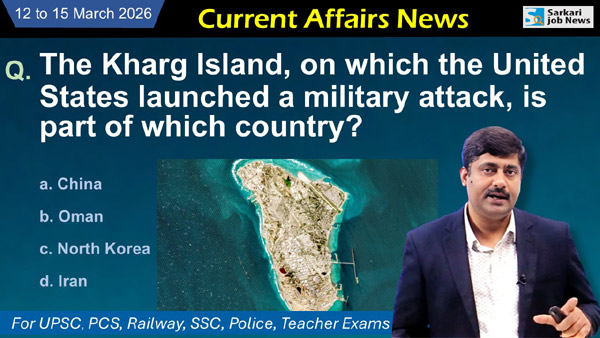
This is the current affairs 12 to 15 March 2026. Here are questions and answers of daily current affairs for better preparation of competitive exams for government jobs.
1. For the first time, Opposition MPs have submitted a notice for a motion to remove the Chief Election Commissioner; what is the minimum number of MPs’ signatures required for this?
a. Lok Sabha 50, Rajya Sabha 25
b. Lok Sabha 100, Rajya Sabha 50
c. Lok Sabha 150, Rajya Sabha 75
d. Lok Sabha 200, Rajya Sabha 100
Answer: b. Lok Sabha 100, Rajya Sabha 50
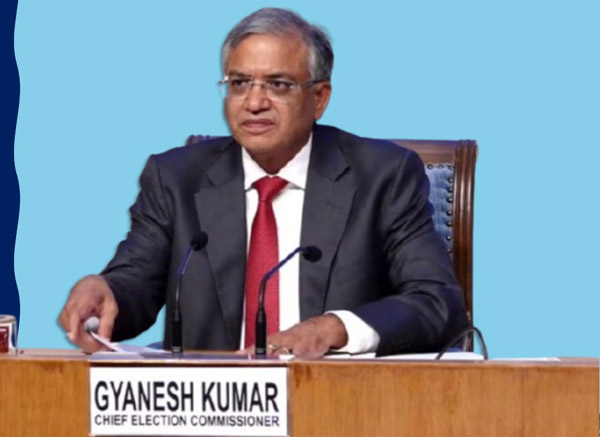
– During the Budget Session of Parliament in March 2026, MPs of the INDIA alliance submitted a notice to remove Chief Election Commissioner (CEC) Gyanesh Kumar from office.
– A total of 193 MPs signed the notice, including about 130 Lok Sabha MPs and 63 Rajya Sabha MPs.
– This is the first time in India’s parliamentary history that a formal notice has been submitted to remove a sitting Chief Election Commissioner.
—————
2. Under which article of the Constitution can the Chief Election Commissioner be removed from office through a procedure similar to that of a Supreme Court Judge?
a. Article 124
b. Article 324
c. Article 327
d. Article 356
– Answer: b. Article 324 (Article 324(5) → Procedure for removal of the CEC and Election Commissioners)
– This is the first time in India’s parliamentary history that a formal notice has been submitted to remove a sitting Chief Election Commissioner.
– The Opposition alleged biased and discriminatory conduct in the functioning of the Election Commission and demanded action against him.
– During the Budget Session of Parliament in March 2026, MPs of the INDIA alliance submitted a notice to remove Chief Election Commissioner Gyanesh Kumar from office.
– A total of 193 MPs signed the notice, including around 130 Lok Sabha MPs and 63 Rajya Sabha MPs.
Reason for the removal notice
– MPs of the INDIA alliance submitted the notice to remove Chief Election Commissioner Gyanesh Kumar on the grounds of “proved misbehaviour and bias.”
– The Opposition alleged that the CEC showed inclination toward a particular political party while holding office, affecting the neutrality of the Election Commission.
– The Opposition stated that certain decisions of the Election Commission raised questions about the fairness of the electoral process.
– Allegations were also raised regarding irregularities and political bias in the Special Intensive Revision (SIR) of the voter list.
– The notice states that the conduct of the CEC falls under the category of “proved misbehaviour,” which can constitutionally serve as grounds for removal.
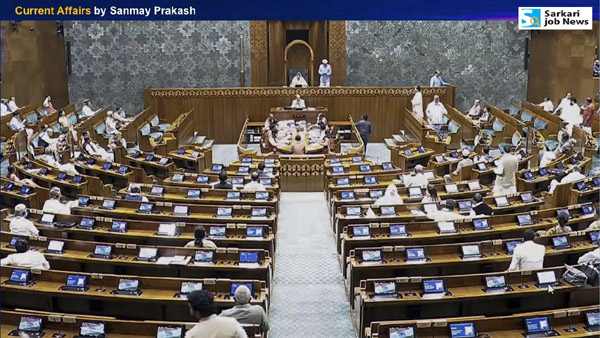
Chief Election Commissioner (CEC)
– The Chief Election Commissioner is the head of the Election Commission of India.
– Functions include conducting elections for the Lok Sabha, State Legislative Assemblies, the President and the Vice President, supervising the election process, and ensuring enforcement of the Model Code of Conduct.
Procedure for removal of the CEC
– Article 324(5) of the Constitution mentions the establishment of the Election Commission.
– The procedure for removing the CEC is similar to that of a Supreme Court judge.
– Process: A motion is introduced in Parliament. It must be passed in both Houses by a special majority, after which the President removes the CEC from office.
– Required support for notice in Parliament: At least 100 MPs in the Lok Sabha and 50 MPs in the Rajya Sabha.
– Meaning of special majority: A majority of the total membership of the House and at least two-thirds of the members present and voting.
How other Election Commissioners can be removed
– The removal process for other Election Commissioners is different.
– They can be removed by the President of India, but the recommendation of the Chief Election Commissioner is required.
– Therefore, the government cannot remove them directly.
—————–
3. The Election Commission of India announced Assembly elections in five states/UTs
– On 15 March 2026, the Election Commission announced assembly elections in Assam, Kerala, Puducherry, Tamil Nadu, and West Bengal.
– In West Bengal, voting will be held in two phases on 23 and 29 April.
– Tamil Nadu, Kerala, Assam, and Puducherry will have single-phase elections.
– Voting in Tamil Nadu will be held on 23 April, while Kerala, Assam, and Puducherry will vote on 9 April.
– Results for all five states will be declared on 4 May.
– Chief Election Commissioner Gyanesh Kumar stated that there are 17.4 crore voters across these states/UTs.
– Elections will be held for 824 seats.
– The Model Code of Conduct came into effect on 15 March.
Chief Ministers
– Assam — Himanta Biswa Sarma (BJP)
– Kerala — Pinarayi Vijayan (Left Alliance)
– Puducherry — N. Rangaswamy (AINRC – All India N.R. Congress)
– Tamil Nadu — M. K. Stalin (DMK)
– West Bengal — Mamata Banerjee (TMC)
—————-
4. When was World Kidney Day observed in 2026?
a. 9 March
b. 12 March
c. 11 March
d. 14 March
Answer: b. 12 March (Observed every year on the second Thursday of March)
Theme for 2026
– Kidney Health for All – Caring for People, Protecting the Planet
– World Kidney Day is observed every year on the second Thursday of March.
– In 2026, it was observed on 12 March.
– The observance was initiated in 2006 by the International Society of Nephrology and the International Federation of Kidney Foundations.
– The kidney is one of the most important organs of the human body. Surprisingly, this small organ filters about one-fourth of the blood every day.
– It removes excess water and fluids from the body and eliminates toxic and waste substances.
—————–
5. An international debate arose regarding the U.S. Secretary of Defense’s use of the term “No Quarter” in the context of the Iran conflict; what does this term mean?
a. Killing enemy soldiers and taking no prisoners
b. Creating safe corridors for humanitarian assistance
c. Taking enemy soldiers as prisoners and keeping them safely
d. Deployment of international peacekeeping forces
Answer: a. Killing enemy soldiers and taking no prisoners
– In the background of the U.S.–Iran conflict, an international debate started after the U.S. Secretary of Defense used the term “No Quarter.”
– Many experts and leaders stated that the term is extremely serious in the context of International Humanitarian Law (IHL) because it implies not taking prisoners of war and killing them instead.
– In modern diplomacy and military terminology, this expression is considered highly sensitive.
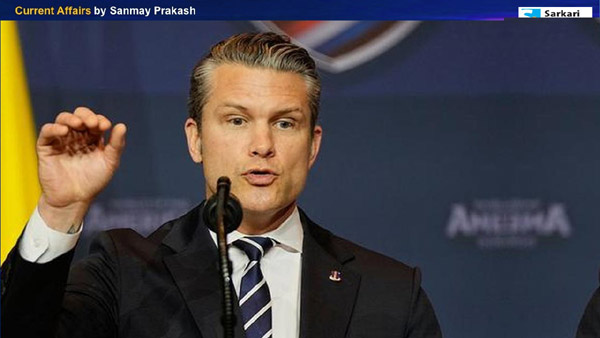
Meaning of “No Quarter”
– Enemy soldiers will not be taken as prisoners but will be killed.
– Even if a soldier surrenders, no mercy will be shown.
In simple terms
– “To give quarter” = Allow the enemy to live / take them prisoner
– “No Quarter” = No mercy, no prisoners (Take no prisoners)
Origin of the term
– In earlier times, captured soldiers were given living quarters after a battle.
– If a commander declared “No Quarter,” it meant that no living space would be given to captured soldiers—effectively meaning they would be killed.
– Some scholars interpret “quarter” as a form of relationship or dealing, implying no negotiation or mercy toward the enemy.
Historical usage
– During medieval European wars (5th–15th centuries), in siege warfare, if a defending army refused to surrender for a long time, the attacking army might declare “No Quarter.” After capturing the city, soldiers could be killed.
– Sometimes a red flag (Bloody Flag) was raised to signal that no mercy would be shown.
– Pirates occasionally raised a red flag to signal that if resistance continued, no one would be spared.
Prohibited in international law
– Hague Convention (1907): Declaring that no quarter will be given is explicitly prohibited.
– International Humanitarian Law: Killing a soldier who has surrendered, is wounded, or is unable to fight is considered a war crime.
– According to the International Committee of the Red Cross (ICRC), “No Quarter” implies that no one will survive, which is not a lawful method of warfare. Even threatening to issue such an order is prohibited.
—————
6. Kharg Island, which was subjected to a military attack by the United States in March 2026, is part of which country?
a. China
b. Oman
c. North Korea
d. Iran
Answer: d. Iran (About 90% of Iran’s oil exports pass through this island)
– U.S. President Donald Trump stated on 14 March that the U.S. military destroyed several military facilities located on Kharg Island in Iran.
– The attack occurred during the 2026 U.S.–Iran conflict.
– According to U.S. Central Command (CENTCOM), more than 90 military targets were attacked, including missile storage sites, naval mine depots, and other military facilities.
– However, the United States deliberately avoided targeting oil export infrastructure.
– The U.S. is also concerned that if it attacks Iran’s oil infrastructure, Iran might retaliate by attacking oil facilities of Middle Eastern countries, which could trigger a global oil crisis.
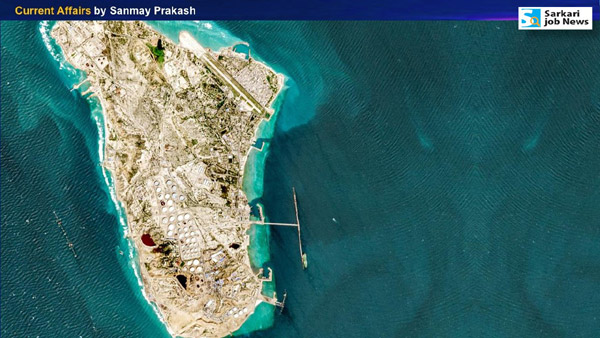
Why Kharg Island is important
– Kharg Island is located in the Persian Gulf.
– Around 90% of Iran’s oil exports pass through this island.
– Analysts believe that if the island is severely damaged, Iran’s economy could be heavily affected because oil is its primary source of revenue.
Strategic objectives stated by the U.S.
– Weakening Iran’s military capability
– Preventing attacks on ships in the Strait of Hormuz
What does it mean that 90% of oil exports pass through Kharg Island?
– It does not mean oil is produced there.
– Most of Iran’s oil production occurs in Khuzestan province’s onshore oil fields and offshore fields in the Persian Gulf.
– Kharg Island is about 25–30 km from these offshore fields.
– It functions as an oil export terminal.
– Oil is transported through pipelines to large storage tanks on the island and then loaded onto supertanker ships for export.
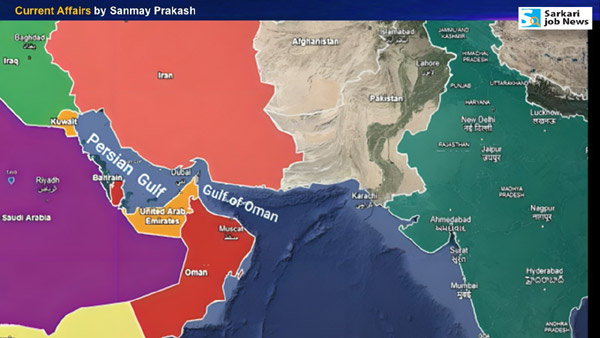
Why exports happen from here
– It is a deep-water port, allowing very large oil tankers to dock easily.
– Near the Iraq-Iran border lies the Shatt al-Arab delta, where heavy sedimentation creates shallow waters unsuitable for large ships.
– Kharg Island is farther from this sediment zone, making the port more stable.
Why not export from the Gulf of Oman coast?
– The Zagros mountain range lies between Iran’s oil fields and the Gulf of Oman coast.
– Building pipelines there is technically difficult and extremely expensive.
– Historically, exporting oil through the Persian Gulf has been easier.
– The waters near Kharg Island are naturally deep, allowing direct loading of very large tankers.
– Iran has attempted to bypass the Strait of Hormuz by building a pipeline to the Jask port on the Gulf of Oman.
– However, the export capacity there is still much smaller compared to Kharg.
——————
7. Who won the men’s singles title at the 2026 Indian Wells Open (BNP Paribas Open)?
a. Carlos Alcaraz
b. Jannik Sinner
c. Daniil Medvedev
d. Novak Djokovic
Answer: b. Jannik Sinner
In the men’s singles final, Italy’s Jannik Sinner defeated Russia’s Daniil Medvedev.
About the Indian Wells Open
– The Indian Wells Open is a major international tennis tournament held annually in Indian Wells, USA.
– Its official name is the BNP Paribas Open.
– It is considered one of the most prestigious tournaments after the Grand Slams.
– The name “Indian Wells” is not related to India.
– It comes from the city Indian Wells in California where the tournament is held.
– In the 19th century, this desert region in the Coachella Valley was inhabited by Native American tribes.
– When Christopher Columbus reached the Americas in 1492, native people were mistakenly called “Indians.”
– The area had several water wells, and thus the place became known as “Indian Wells,” meaning wells used by the native people.
—————-
8. Who was the winner of the women’s singles title at the 2026 Indian Wells Open?
a. Iga Swiatek
b. Elena Rybakina
c. Aryna Sabalenka
d. Coco Gauff
Answer: c. Aryna Sabalenka
– In the women’s singles final, Aryna Sabalenka defeated Elena Rybakina of Kazakhstan.
—————–
9. When is the International Day of Action for Rivers celebrated?
a. 12 March
b. 13 March
c. 14 March
d. 15 March
Answer: c. 14 March
Theme for 2026
– Protect Rivers, Protect People
– This day is dedicated to raising awareness about river protection, conservation of water resources, and the rights of communities affected by dams and water projects.
Objective and importance
– The main objective is to highlight the need for river conservation and promote global awareness against the illegal exploitation of water resources.
– Rivers are not only a source of drinking water but also play a crucial role in agriculture, electricity generation, biodiversity, and ecological balance.
Challenges
– Rivers around the world face problems such as pollution, encroachment, uncontrolled industrialization, and climate change.
– Large dams and water projects often lead to the displacement of local communities.
– In India, rivers such as the Ganga, Yamuna, and Brahmaputra are severely affected by pollution, impacting both aquatic life and human health.
—————–
10. Who was awarded the Polly Umrigar Award (Best International Cricketer – Men) at the 2026 BCCI Naman Awards ceremony?
a. Rohit Sharma
b. Shubman Gill
c. Virat Kohli
d. Jasprit Bumrah
Answer: b. Shubman Gill

– He received the award for his outstanding performance in the 2023–24 international season.
– This was his second time receiving the award.
– The BCCI (Board of Control for Cricket in India) presents the Naman Awards annually to honor outstanding performances in Indian cricket.
Major winners in 2026
– Best International Cricketer (Men) – Shubman Gill
– Best International Cricketer (Women) – Smriti Mandhana
Other major honours
– C. K. Nayudu Lifetime Achievement Award: Rahul Dravid, Roger Binny
– Women’s Lifetime Achievement Award: Mithali Raj
—————–
11. Who received the Best International Cricketer (Women) award at the BCCI Naman Awards 2026?
a. Harmanpreet Kaur
b. Mithali Raj
c. Smriti Mandhana
d. Deepti Sharma
Answer: c. Smriti Mandhana
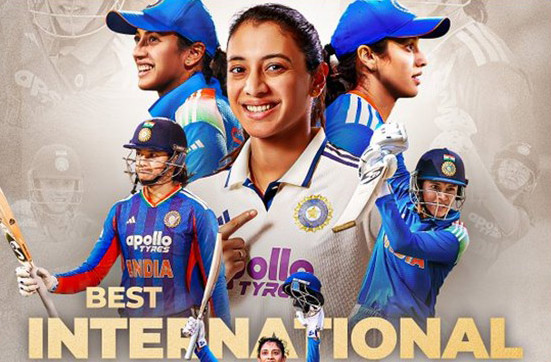
– She received the award for her outstanding performance in the 2023–24 season.
– Smriti Mandhana has received this award a record fifth time.
—————-
12. When is Pi Day celebrated?
a. 11 March
b. 12 March
c. 13 March
d. 14 March
Answer: d. 14 March
– Pi Day is celebrated in honor of the mathematical constant Pi (π).
– The date 14 March (3/14) represents the first three digits of Pi — 3.14, which is why the day is chosen.
– Pi (π) is a mathematical constant representing the ratio of the circumference of a circle to its diameter.
—————–
13. Who won the 2026 Australian Grand Prix?
a. George Russell
b. Kimi Antonelli
c. Charles Leclerc
d. Max Verstappen
Answer: a. George Russell
– The Formula-1 Australian Grand Prix 2026 was held at the Albert Park Circuit in Melbourne, Australia.
– The race was won by George Russell of the United Kingdom (Mercedes).
– Kimi Antonelli (Mercedes) finished in second place.
—————-
14. Who won the gold medal in the men’s high jump T63 category at the 2026 World Para Athletics Grand Prix?
a. Arvind Kumar
b. Rajesh Verma
c. Shailesh Kumar
d. Ajay Paswan
Answer: c. Shailesh Kumar

– Shailesh Kumar won the event with a jump of 1.84 meters.
– The competition was held in New Delhi.
—————-
15. The Indian women’s hockey team qualified for the Hockey World Cup 2026
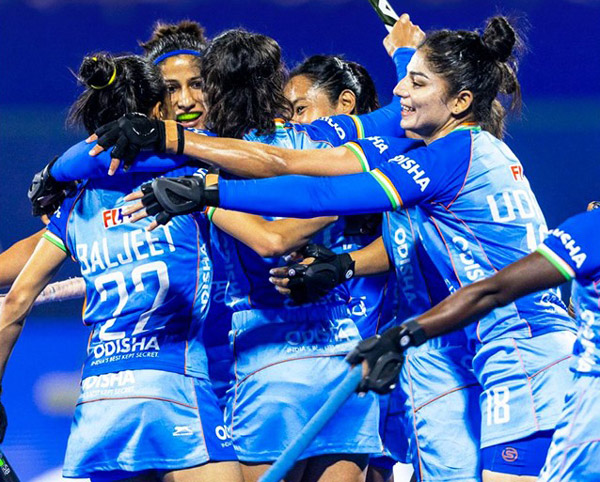
– The Indian women’s hockey team has qualified for the Hockey World Cup 2026.
– The qualification was secured even before the semifinal stage of the Hockey World Cup Qualifier held in Hyderabad.
PDF Download: Click here