
This is the current affairs of 13 December 2025. Here are questions and answers of daily current affairs for better preparation of competitive exams for government jobs.
PDF Download: Click here
1. In which states is the Djuku (Dzukou) Valley located, the forests in the southern part of which caught fire?
a. Kerala and Telangana
b. Mizoram and Assam
c. Tripura and Mizoram
d. Nagaland and Manipur
Answer: d. Nagaland and Manipur
(The fire occurred in the western part of the Djuku (Dzukou) Valley, which lies in the Nagaland region.)
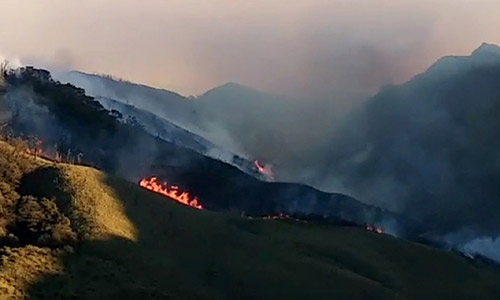
– On 12 December 2025, a massive forest fire broke out in the western Djuku (Dzukou) Valley of Kohima district, Nagaland.
– The fire was first spotted by a tourist guide, who immediately informed the officials of Khonoma village and the district administration.
– Djuku (Dzukou) Valley is a valley spread across the border areas of the Indian states of Nagaland and Manipur.
– It is located at an altitude of 2,452 metres (8,045 feet) above sea level.
– Djuku (Dzukou) Valley, known as the “Valley of Flowers,” is situated on the border of Nagaland and Manipur.
—————
2. Which company started work on Project ‘Suncatcher’ to set up a data center in space?
a. ISRO
b. Google
c. Meta
d. Microsoft
Answer: b. Google
– Google CEO Sundar Pichai announced that his company is working on Project Suncatcher.
– Its objective is to establish solar-powered data centers in space by 2027.
– Small racks of machines will be sent into space in low Earth orbit, placed in satellites, tested, and then expanded further from there.
– He further stated that within a decade, building extraterrestrial data centers would become commonplace.
– It is being considered a future sustainable option to address rising energy consumption, rapidly increasing AI demand, and limited geographical resources.

Core concept of the project
– Developing heavy computing capacity such as AI using solar energy in space.
– Installing Google’s TPU (Tensor Processing Unit)-based mini data centers on satellites.
– Creating network-like capability by connecting satellites through laser-based optical links.
– Reducing pressure on resource-intensive data centers on Earth.
Why is the project necessary?
– Rising AI computing demand: Demand for large language models (LLMs), generative AI, robotics, and cloud AI is increasing rapidly, putting immense pressure on energy, water, and land resources of traditional data centers.
– Energy crisis and environmental pressure: Global data centers currently consume about 2–3% of the world’s total electricity, with massive water usage for cooling, increasing environmental stress.
– Continuous availability of solar energy: Sunlight in space is continuous and more intense, enabling clean energy-based computing.
– Land and geographical constraints: Scarcity of land for large data centers and rising local objections (heat island effect, water usage issues).
How will it work?
– Satellites will be deployed in Low Earth Orbit.
– Each satellite will have solar panels, AI computing units (TPUs), and cooling systems.
– Satellites will function like a mesh network.
– Data flow will occur between Earth and satellites, and satellite-to-satellite through optical laser links.
– Two prototypes are planned to be launched in 2027.
Challenges
– Damage to electronic chips due to radiation.
– Cooling technology is more difficult than on Earth.
– Repair and upgrades are almost impossible.
Very high launch costs.
– Expensive specialized hardware and rocket services.
– Which companies want to build data centers in space?
– Amazon founder and CEO Jeff Bezos also intends to move in this direction. A key objective of his space company Blue Origin is to shift polluting industries away from Earth.
– In early 2025, Lonestar Data Holdings sent a mini data center to the Moon under an Intuitive Machines lunar mission. This data center weighs one kilogram and has 8 terabytes of SSD storage capacity.
– OpenAI CEO Sam Altman proposed a Dyson Sphere–like structure of AI data centers encircling the solar system to harness solar energy.
What is a data center?
– A data center is a large and secure building/facility where computer servers, storage systems, network equipment, and software are installed.
– These servers run the world’s internet services—such as Google Search, YouTube, WhatsApp, Amazon, cloud storage, AI systems, banking, and government and private portals and apps.
– A data center can also be called the “brain of the Internet.”
What does a data center contain?
– Servers: Computers that store, process, and transfer data.
– Storage systems: To securely store photos, videos, emails, documents, bank records, website data, etc.
– Networking equipment: Such as routers and switches that manage internet traffic.
– Cooling systems: Large ACs, cooling units, and chillers to prevent servers from overheating.
– Power infrastructure: 24×7 power supply through generators, batteries, UPS, and substations.
—————
3. In which state did the Zoological Survey of India (ZSI) discover two new species of jumping spiders, ‘Asemonia dentis’ and ‘Colletus nongwar’?
a. Sikkim
b. Assam
c. Arunachal Pradesh
d. Meghalaya
Answer: d. Meghalaya
– On 9 December 2025, ZSI discovered two new species, Asemonia dentis and Colletus nongwar.
– With this study, the number of jumping spider species found in Northeast India has increased to 45.
– Asemonia dentis is only the third Indian species of the genus Asemonia.
– The name ‘dentis’ refers to the tooth-like structure on the male’s palpal femur, a key identifying feature.
– The male has a greenish-brown body with a light yellow V-shaped mark on the abdomen.
– The female is creamy white with fine black patterns.

Colletus nongwar
– Named after Nongwar village in the Khasi Hills.
– Both male and female have an oval, reddish-brown carapace and a light brown abdomen.
– The abdomen has creamy margins and five distinct chevron-shaped spots towards the rear.
—————
4. Which Indian received the United Nations’ (UN) highest environmental honour, the “Champions of the Earth Award 2025”?
a. Jinali Modi
b. Chris Kemper
c. Maria
d. Supriya Sahu
Answer: d. Supriya Sahu
– Supriya received this award in the ‘Inspiration and Action’ category, given to individuals who create transformative environmental benefits for humanity and the Earth.
– Along with Supriya Sahu, five climate activists received this honour in different categories.
– The award was announced during the United Nations Environment Assembly (UNEA-7) held in Nairobi on 10 December 2025 by the United Nations Environment Programme (UNEP).
– Supriya Sahu is the Additional Chief Secretary in the Tamil Nadu government.

Why was Supriya Sahu honoured?
– According to UNEP, Supriya Sahu created 2.5 million green jobs.
– Increased forest cover in Tamil Nadu.
– Integrated heat adaptation measures in public spaces and infrastructure.
– Improved climate resilience of about 12 million people.
– Established Tamil Nadu as a global leader in adaptation and sustainable cooling.
Champions of the Earth Award 2025 winners
– Supriya Sahu – India: Inspiration and Action category
– Pacific Islands student group: Policy Leadership
– Mariam Issoufou – France: Entrepreneurial Vision
– Emazon– Brazil: Science and Innovation
– Manfredi Caltagirone (posthumous): Lifetime Achievement Award
—————
5. Who became the United Nations High Commissioner for Refugees (UN Refugee chief)?
a. Barham Salih
b. Aslam Madeen
c. Arom Vinom
d. Akhtar Mohammad
Answer: a. Barham Salih (former President of Iraq)
– Former Iraqi President Barham Salih was appointed as the United Nations High Commissioner for Refugees (UNHCR).
– He replaced Filippo Grandi, who had been in office since 2016.
– Appointment details: Barham Salih, former President of Iraq, has been appointed High Commissioner for Refugees of the UNHCR for a five-year term starting 1 January 2026.
– Selection process: Breaking tradition that usually prioritises candidates from major donor countries (such as European nations), Salih was selected.
– Approval: The appointment is provisional and requires formal approval from the UNHCR Executive Committee.

Context of the global refugee crisis
– Displacement figures: The number of forcibly displaced people worldwide has reached a record level—over 122 million, including refugees, internally displaced persons (IDPs), and refugee-like populations.
– Major causes: Conflicts (such as Ukraine, Gaza, Sudan), climate change, and economic inequality are driving displacement. UNHCR was established in 1950, based on the 1951 Refugee Convention.
– Implications for India: India is a member of UNHCR but is not a signatory to the 1951 Convention.
—————
6. How much amount was approved by the Union Cabinet for Census 2027?
a. ₹9,718 crore
b. ₹10,718 crore
c. ₹11,718 crore
d. ₹12,718 crore
Answer: c. ₹11,718 crore
– On 12 December 2025, the Union Cabinet approved ₹11,718.24 crore for the Census of India 2027.
– The decision was taken under the chairmanship of Prime Minister Narendra Modi.
– This will be India’s 16th census and the 8th since Independence.
– The previous census was conducted in 2011, while the 2021 census was postponed due to COVID-19 and other administrative reasons.
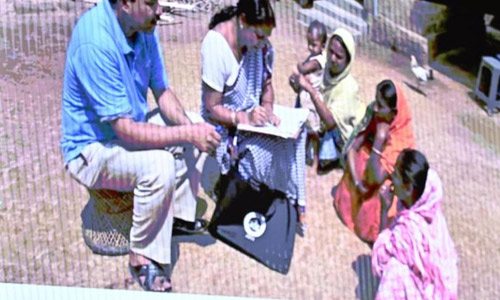
– This will be the first fully digital census.
Objectives and importance
– The census is India’s primary source of data, providing granular information on housing, population, education, language, economic activity, migration, fertility rates, customs, etc.
– This data forms the basis for policy-making, targeting of schemes, parliamentary delimitation, and evaluation of government programmes.
– Census 2027 will be conducted in two main phases
– House-listing & Housing Census: Between April and September 2026.
– Population Enumeration: Mainly in February 2027.
– However, in difficult regions such as Himachal Pradesh, Uttarakhand, Jammu & Kashmir, and Ladakh, it will be conducted in September 2026 due to harsh winters.
First fully digital census
– Census 2027 will be India’s first fully digital census, using mobile applications (Android and iOS) and the Census Management & Monitoring System (CMMS) portal.
– These technologies will enable real-time monitoring, improved data quality, and a self-enumeration option. The HLB Creator web map tool will assist in data organisation.
– Caste data and sensitive social parameters
– Caste enumeration has been included in the 2027 census, which will play an important role in understanding social diversity and inequalities and will be useful for targeted policies and reservation schemes.
—————
7. Former Union Minister, former Lok Sabha Speaker and former Governor Shivraj Patil, associated with which party, passed away on 12 December 2025?
a. BJP
b. Congress
c. JD(U)
d. Shiv Sena
Answer: b. Congress
– Shivraj Patil was 90 years old and had a political career spanning five decades, during which he served as Lok Sabha Speaker and held several central ministerial positions.
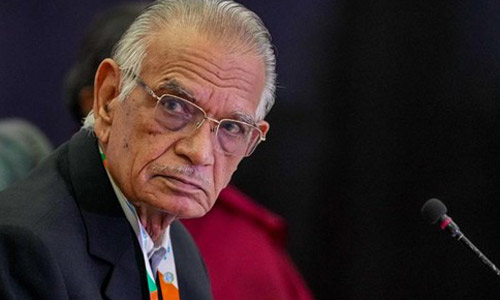
– He was born in 1935 in the Chakur area of Latur.
– He was elected seven times as a Member of Parliament from the Latur Lok Sabha constituency of Maharashtra.
– He served as the 10th Speaker of the Lok Sabha from 1991 to 1996.
– He is known for introducing technology for broadcasting parliamentary proceedings and for the construction of the Parliament Library building.
– He served as Minister of State for Defence (1980–82) and Minister of Commerce (1982–83).
– During the Rajiv Gandhi government, he also held portfolios of Personnel, Defence Production, Civil Aviation, and Tourism.
– In 2004, he was given charge of the Union Home Ministry but resigned on 30 November 2008, taking moral responsibility for security lapses during the 26/11 attacks.
– He later served as Governor of Punjab and as Administrator of the Union Territory of Chandigarh from 2010 to 2015.
—————
8. When is Human Rights Day celebrated?
a. 7 December
b. 8 December
c. 9 December
d. 10 December
Answer: d. 10 December
Theme for 2025
– Human Rights: Our Everyday Essentials
– This day was first observed in 1948.
– It was declared by the United Nations General Assembly.
– Its objective is to raise awareness about people’s rights.
– In 1993, the National Human Rights Commission was established in India.
—————
9. Which country won the Junior Men’s Hockey World Cup 2025 title?
a. India
b. Argentina
c. Germany
d. Spain
Answer: c. Germany

– Germany defeated Spain to win the World Cup title.
– In the final played on 10 December 2025 at Mayor Radhakrishnan Stadium, Chennai, Germany defeated Spain 3–2 in a thrilling penalty shootout.
– Germany won the title for a record eighth time.
– Germany had earlier won the championship in 1982, 1985, 1989, 1993, 2009, 2013, and 2023.
– Spain had won bronze medals in the 2005 Rotterdam tournament and the 2023 tournament held in Bhubaneswar and Rourkela.
– The tournament began on 28 November.
India won the bronze medal for the first time
– In the bronze medal match played before the final, India defeated Argentina 4–2 to win the bronze medal for the first time.
– Earlier, India had won 2 gold and 1 silver medals.
—————
10. Which medal did India win at the Junior Men’s Hockey World Cup 2025?
a. Gold
b. Silver
c. Bronze
d. None of these
Answer: c. Bronze

– In the bronze medal match played before the final, India defeated Argentina 4–2 to win the bronze medal for the first time.
– Earlier, India had won 2 gold and 1 silver medals.
—————
11. When is International Mountain Day celebrated?
a. 10 December
b. 11 December
c. 12 December
d. 13 December
Answer: b. 11 December
Theme for 2025
– Glaciers matter for water, food and livelihoods in mountains and beyond
– International Mountain Day is celebrated every year on 11 December.
– The day was declared by the United Nations General Assembly in 2003.
– Its objective is to promote sustainable development of mountains.
PDF Download: Click here